
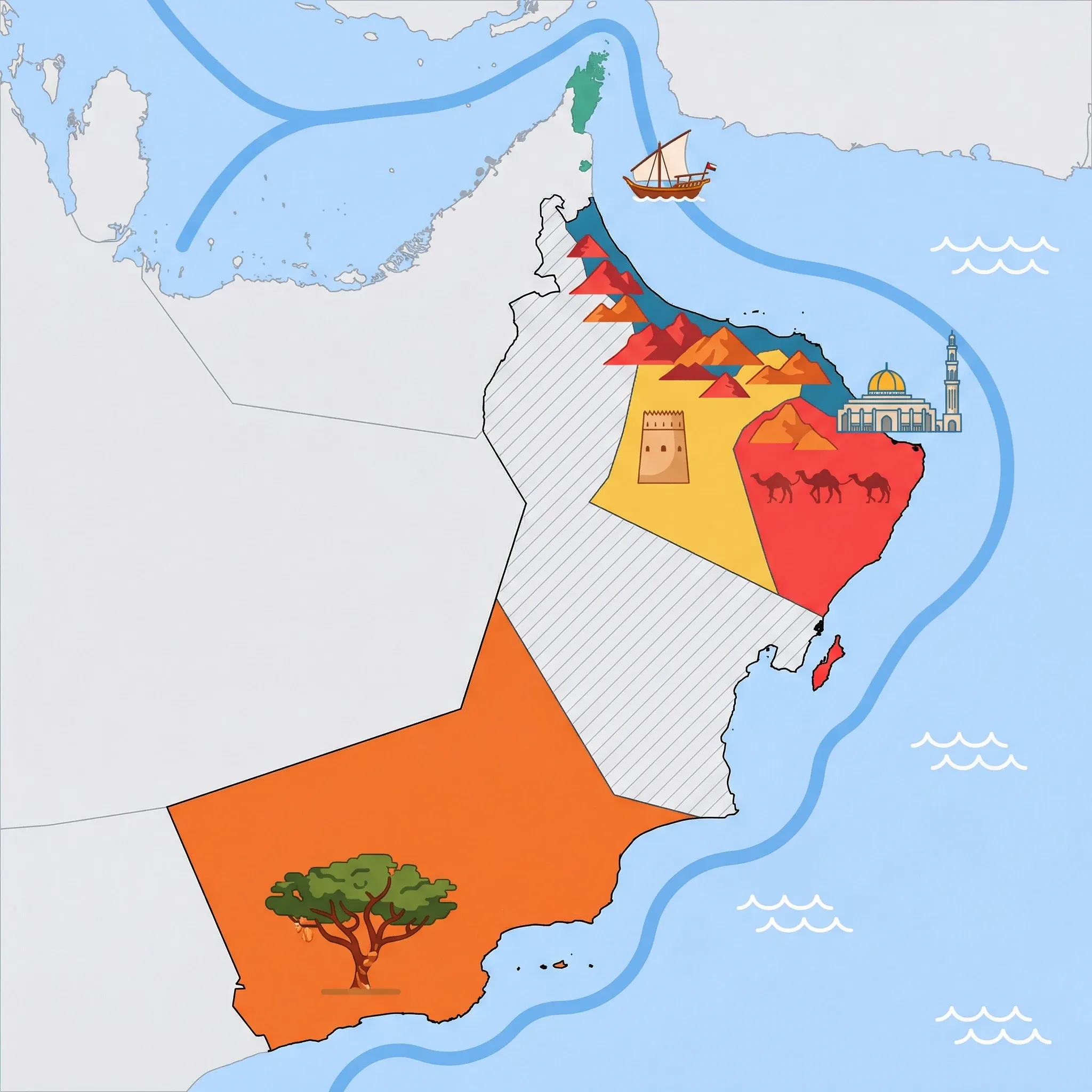
Click a region to explore
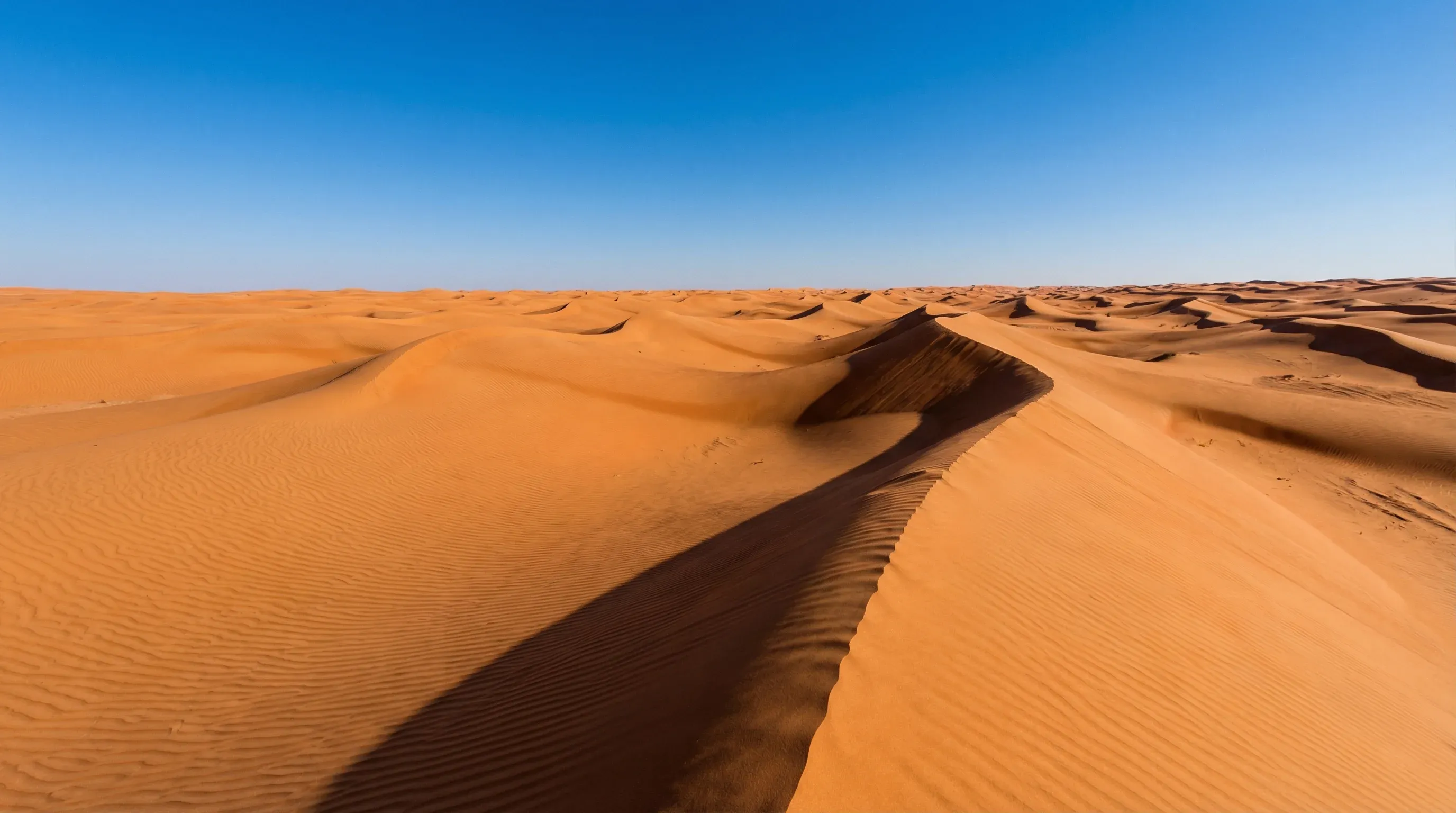
The Wahiba Sands is exactly what children imagine when they think of 'Arabia'. It is a sea of undulating sand dunes stretching as far as the eye can see, shifting from honey-yellow to deep red depending on the time of day. Visiting here is about disconnecting from the modern world. There is no reception in the deep dunes, no traffic noise, and no light pollution. For families, staying in a desert camp is an unforgettable adventure. The camps range from simple goat-hair tents to luxury air-conditioned pods, but the experience is shared: sitting around a campfire, listening to traditional Bedouin music, and counting shooting stars.
Activities here are thrill-focused. 'Dune bashing'—driving up and down the steep sand banks in a 4x4—is a roller coaster ride that kids adore (ensure you ask the driver to go gentle for younger children). Sandboarding is another popular activity, where you can slide down the dunes on modified snowboards. Culturally, this region is home to the Bedouin people. Many camps offer visits to local Bedouin houses for coffee and dates, giving children a glimpse into a nomadic lifestyle that has survived in these harsh conditions for centuries. It is a place to respect nature's power and enjoy its quiet beauty.
Key Attractions
The main attraction is the desert itself. Unlike other regions with specific monuments, here you come for the landscape. Sunset camel safaris are a must-do; watching the sun dip below the horizon from the top of a high dune is magical. Dune Bashing with experienced drivers is the primary adrenaline activity. Many families combine a trip here with a visit to the nearby Wadi Bani Khalid (located at the edge of the desert), which offers emerald pools for swimming, though it is technically just outside the sands. Inside the sands, the night sky is the star show—bring a constellation app to help kids identify the stars.
Practical Advice
The desert is best visited from October to March. Summer is dangerously hot. Never enter the sands in a car unless it is a 4WD and you know how to deflate tires/drive on sand. It is much safer to park in the town of Bidiyah and have your camp arrange a transfer. Pack layers—the desert is hot by day but can get very chilly at night.
Food & Drink
Typical meal times: Camps run on a set schedule. Dinner is usually a buffet served around 7:30 pm or 8:00 pm.
Typical meal costs: Meals are almost always included in the accommodation price (half-board). If not, expect to pay OMR 8–12 (approx. $21–31 USD / €19–29 EUR) for a camp buffet.
Dietary requirements: Camps typically serve buffet-style meals with rice, grilled meats (chicken/lamb), hummus, and salads. Vegetarians usually have enough sides to choose from, but vegan options may be limited to salads and fruit.
Signature dishes:
- Shuwa – Often served in desert camps as a special treat, prepared in traditional underground ovens.
- Omani Coffee (Kahwa) & Dates – The standard welcome in any Bedouin tent, served with cardamom-flavoured coffee and fresh dates.
- Camel Milk – Sometimes available to try if you visit a local Bedouin family.
Why this score?
Driving through shifting sand dunes and staying in off-grid Bedouin-style camps provides a significant sense of adventure. The environment is harsh and requires specialized 4x4 transport and desert survival awareness.
Why this score?
Within the sands themselves, there is virtually no medical infrastructure. Tourists must be transported back to the gateway town of Bidiyah for basic care or to Ibra for more serious issues, making rapid emergency response challenging.
Why this score?
The Wahiba Sands is a niche destination primarily visited for overnight stays in desert camps. While a staple of Omani itineraries, its capacity is limited by the number of desert camps compared to the urban hotels of Muscat.

Costs depend entirely on your choice of camp. Rustic camps can be OMR 40–60 (approx. $104–156 USD / €96–144 EUR) per night including meals. Luxury 'glamping' options can soar to OMR 150–250 (approx. $390–650 USD / €360–600 EUR). There are few opportunities to spend money once inside the desert.

Getting Here & Around
Getting Here
- Driving – The gateway town is Bidiyah, about a 2.5-hour drive from Muscat or 1.5 hours from Sur. The road to Bidiyah is paved.
- Transfer – Most camps offer a pickup service from Bidiyah for guests who do not have a 4WD vehicle.
Getting Around
- 4WD Vehicle – Mandatory. You cannot drive a sedan into the sands. If you self-drive, you must deflate your tires at the local shops in Bidiyah before entering.
- Camp Transfers – Once at the camp, you generally don't move around unless you book a specific tour (camel ride or dune drive) provided by the camp.
Nearby Airports (1 airport)
Masirah
MSHMasirah
View full flight map for Oman →

Packing List
Camps can be dimly lit and it helps when walking between tents at night
Sand gets hot during the day; flip-flops are hard to walk in on dunes
Desert nights in winter (Dec-Feb) are surprisingly cold
Sand gets everywhere; useful for quick cleanups before eating
Essential for swimming in public wadis where modest dress (covering shoulders/knees) is expected even in water.
Wadi beds are extremely slippery with mossy rocks; flip-flops will float away or cause slips.
To float your phone and car keys behind you while swimming through deep wadi pools.
You will frequently remove shoes at mosques, forts, and traditional majlis seating areas.
Mountains like Jebel Shams and desert nights drop to surprisingly cold temperatures.
The mountain roads to Jebel Akhdar and Jebel Shams are steep and incredibly winding.

Activities & Best Times

Hiking, wildlife, outdoor exploration, ecotourism
Features iconic desert dunes and the world-class emerald pools of Wadi Bani Khalid for high-quality immersion in nature. Peak winter months provide the essential cool temperatures required for safe desert camping and hiking.

Urban tourism, museums, historical sites, architecture
Offers authentic Bedouin heritage and well-preserved historic forts like Al Mintarib and Al Kamil. Visitation is concentrated in the cooler months to allow for comfortable exploration of outdoor heritage sites and local markets.

Scenic drives, countryside tours, route-based travel
Home to the legendary North-South desert crossing and scenic coastal drives along Highway 17. The winter season is preferred for driving to ensure vehicle reliability and comfortable temperatures during frequent outdoor stops.

Sport tourism, fitness activities, active recreation
A recognized destination for off-road dune bashing and guided desert trekking between permanent camps. Peak months offer the most favorable thermal conditions for physical activities, while summer heat makes these sports unsafe.

Beach resorts, marine activities: diving, snorkelling, kite surfing, wind surfing, sailing
Rugged coastal areas like Al Ashkhara provide a wild sea experience, though they lack the infrastructure of global resort destinations. Best visited in winter when the desert interior is cooler and coastal winds are more manageable.




Public Holidays & Calendar Next 12 months
Public holidays, festivals, cultural celebrations, and seasonal natural phenomena coming up in Wahiba Sands over the next 12 months.
Loading holidays and events...

Travel Advisory
A unanimous consensus among all six major agencies recommends reconsidering travel to Oman. This elevated risk is driven by recent regional military escalations, potential airspace disruptions, and the threat of falling debris from intercepted projectiles. Most agencies have issued specific shelter-in-place or departure advisories for certain regions.
Safety Topics
Traveller Advice (4 groups)

Travellers should maintain a high degree of situational awareness, keep communication devices charged, and ensure they have adequate supplies of food and water in case shelter-in-place orders are issued.

Homosexual acts are illegal in Oman and can lead to imprisonment. Travellers should exercise extreme discretion in public and avoid any public displays of affection.

Respect local cultural norms by dressing conservatively. Women should avoid walking alone in isolated areas, especially after dark, and be mindful of local sensitivities regarding public behavior.

Personnel operating near the Yemen border face extreme risks of kidnapping and being caught in armed conflict. Heightened security protocols are essential in these regions.
Agency Summaries
The U.S. has elevated the travel advisory to Level 3, advising citizens to reconsider travel because of the risk of armed conflict and terrorism. Non-emergency government employees have been authorized to depart, and there is a specific 'Do Not Travel' warning for the border region with Yemen.
New Zealand has updated its advice to Level 3, recommending that citizens avoid non-essential travel to Oman due to the deteriorating regional security situation and the risk of military strikes or armed conflict.
Canadians are advised to refrain from non-essential travel to Oman due to the risk of falling debris from intercepted missiles, potential airspace closures, and heightened regional tensions. Canadians currently in the country should follow local shelter-in-place orders if issued.
Ireland advises against non-essential travel to Oman as part of a broader regional safety warning. Citizens in Oman are urged to monitor local media closely and adhere to all instructions from local authorities, including potential shelter-in-place orders.
British nationals are advised against all but essential travel to Oman following regional escalation. Specific instructions have been issued for individuals in Duqm and Salalah to shelter in place or depart via commercial means if possible due to security risks.
Australia has raised the risk level for Oman to 'Reconsider your need to travel' citing the volatile security situation in the Middle East. Australians in the Duqm and Salalah regions are specifically advised to shelter in place and prioritize safety over movement.
Information is provided for general guidance only and does not constitute travel, safety, medical, or legal advice. Conditions may change. Users are responsible for independently verifying information before travel.