

For families willing to navigate the complexities of travel here, Pakistan offers one of the most raw and rewarding experiences in Asia. This is a destination for the adventurous spirit-a place where the Karakoram Highway cuts through some of the highest mountains on Earth and where centuries of history are etched into the walls of Mughal forts. The concept of mehman nawazi (hospitality) is the cultural heartbeat of the nation; locals often go out of their way to welcome foreigners, especially those traveling with children, who are doted on everywhere.
Geographically, the country is split between the sweltering, fertile plains of Islamabad & Punjab and the majestic peaks of the Karakoram & Northern Areas. For most families, a trip combines the history and food of Lahore and Islamabad with the breathtaking nature of the north. While the chaotic traffic and infrastructure gaps can be challenging, the sight of the Hunza Valley in autumn or the grandeur of the Badshahi Mosque makes the journey unforgettable.
Key Attractions
In the cultural capital of Lahore, the Lahore Fort and the adjacent Badshahi Mosque are absolute must-visits. These massive Mughal-era structures offer wide courtyards where children can run safely while parents admire the intricate frescoes and marble work. Nearby, the Lahore Zoo provides a familiar distraction for younger kids. South of Islamabad, the Khewra Salt Mine is a unique family adventure; you can take a small electric train deep into the mountain to see mosques and monuments carved entirely from pink salt.
Heading north into the mountains, the scenery becomes world-class. Attabad Lake, with its shocking turquoise water, offers boat and jet-ski rides that kids love. Further up the highway, Baltit Fort in Hunza looks like a fairy-tale castle perched on a hill, offering history lessons with a view. For a high-altitude thrill, a drive to Khunjerab Pass-the highest paved border crossing in the world-lets families touch snow even in summer and see wild yaks. Back in the modern capital, Lake View Park and the iconic Faisal Mosque offer relaxed, green spaces perfect for a gentle afternoon.
Practical Advice
The best time to visit is Spring (March–May) or Autumn (September–November). Summer is unbearably hot in the plains but perfect for the north; however, monsoon rains (July–August) can cause landslides. Visas are now easily available online for most nationalities. Healthcare in major cities like Islamabad is adequate, but remote areas lack facilities, so carry a robust medical kit.
Food & Drink
Typical meal times: Lunch is typically served from 1:00 pm to 3:00 pm. Dinner is a late affair, usually eaten between 8:00 pm and 10:00 pm.
Typical meal costs: 1,500–3,500 PKR (approx. $5.50–12.50 USD / €5–11.50 EUR) for a mid-range meal. Street food is significantly cheaper, often under 500 PKR.
Dietary requirements: Pakistani cuisine is heavily meat-based. Vegetarians can find options like daal (lentils) and sabzi (mixed vegetables), but cross-contamination is common. Gluten-free is difficult due to the ubiquity of roti/naan bread. Nut allergies should be communicated clearly, as almonds and pistachios are common garnishes.
Family-friendly dining: Pakistanis love children, and restaurants are very accommodating. Highchairs are available in upscale places but rare in local eateries. Most food is shared family-style, which is great for letting kids try small portions.
Signature dishes:
- Biryani – A fragrant, spiced rice dish usually with chicken or mutton; the country's unofficial national dish.
- Chicken Karahi – A rich, tomato-based curry cooked in a wok-like pan, best eaten with fresh naan.
- Halwa Puri – A beloved weekend breakfast consisting of deep-fried bread, sweet semolina pudding, and chickpea curry.
- Chapli Kebab – Large, flat minced meat patties fried in animal fat, famous in the north.
- Lassi – A yogurt-based drink, available sweet or salty; the perfect way to cool down a spicy meal.
Safety
Beyond the official advisories, day-to-day safety involves common sense. Petty crime exists in major cities like Karachi and Lahore; keep valuables hidden. Traffic is chaotic-hiring a driver is safer than driving yourself. In conservative areas, modest dress (covering shoulders and legs) is essential for both men and women to avoid unwanted attention. Always stick to tourist-approved routes and avoid political gatherings or protests, which can escalate quickly.

While local goods are very cheap, families often pay for higher comfort and security. A family of four can expect to spend around 35,000–60,000 PKR (approx. $125–215 USD / €115–200 EUR) per day. This budget covers a dedicated private car with driver (essential for families), mid-range guesthouses, and plenty of food. Luxury hotels in major cities or peak-season resorts in the north will significantly increase this cost.
Age Suitability





Did you know? Pakistan welcomes approximately 966,000 international visitors per year. Most visitors come from South Asia.
Explore Regions
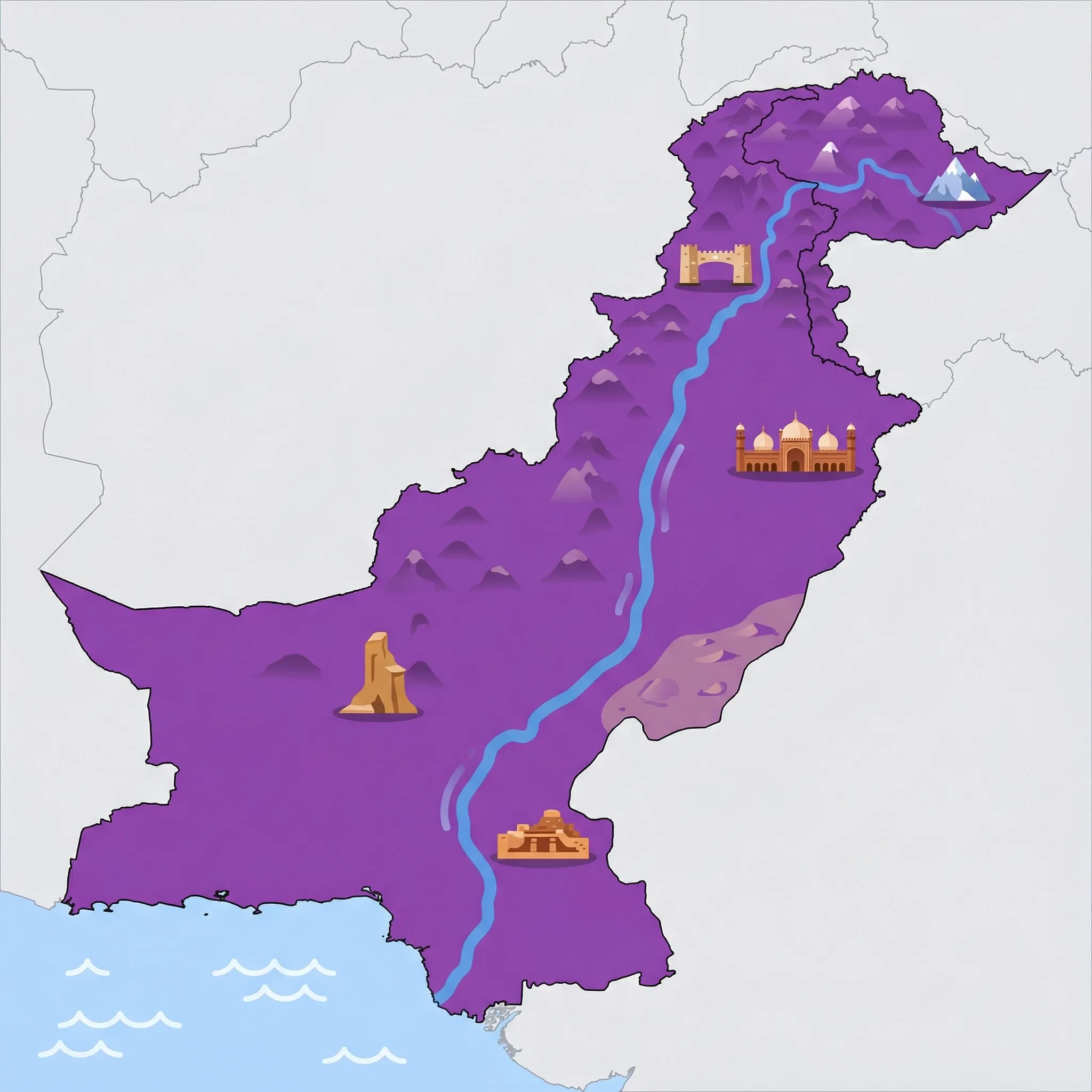
5 Regions
Balochistan (restricted)
Where desert canyons meet the Arabian Sea 🏜️🌊
Islamabad & Punjab (Lahore)
The cultural heart and modern soul of the nation 🕌🌳
Karakoram & Northern Areas (Hunza, Gilgit)
Peaks, glaciers, and the legendary Shangri-La 🏔️🦅
Khyber Pakhtunkhwa (Peshawar)
Ancient history and alpine splendor 🌲🕌
Sindh (Karachi)
The gateway to the Arabian Sea and ancient civilizations 🌊🏺
Click on a region marker to explore details. Use the dropdown to color regions by activity suitability.

Getting There & Around
Getting There
- By Air – Islamabad International Airport (ISB) is the primary gateway for the north, while Lahore (LHE) and Karachi (KHI) also serve major international carriers. Flights from the Gulf hubs (Dubai, Doha) are frequent.
- By Land – The Wagah Border near Lahore connects to India, but it is often restricted to pedestrians and political tensions can affect operations. Most families arrive by air.
- Entry Requirements – Pakistan now offers an Online Visa System for 190+ countries. Processing times vary. Check your government website for the latest visa requirements, or use the IATA Travel Centre entry-requirements checker.
Getting Around
- Private Car with Driver – The safest and most convenient option for families, especially for the long drives to Karakoram & Northern Areas. Prices are reasonable and it relieves the stress of navigating chaotic traffic.
- Domestic Flights – PIA and Fly Jinnah operate flights from Islamabad to Skardu and Gilgit. These are spectacular scenic flights but are frequently cancelled due to weather.
- Ride Hailing – Apps like Careem and Indrive work reliably in major cities like Islamabad & Punjab for short intra-city trips.
- Trains – The rail network connects Lahore and Karachi, but delays are common and cleanliness varies. The Green Line is the premium option, though most families prefer flying or driving.
Official Links

Packing List
Bathtubs or sinks in budget guesthouses often lack plugs; useful for washing kid's clothes.
Essential for women and girls for modesty in bazaars and mandatory for entering mosques.
Power outages (load shedding) are frequent nationwide; keep devices charged.
The mountain roads to Hunza and Skardu are incredibly winding and long.
Hygiene standards vary; soap is not always available in public restrooms.
You will frequently remove shoes at mosques, shrines, and some traditional homes.

Activities & Best Times

Adventure & Nature
ExcellentHiking, wildlife, outdoor exploration, ecotourism
Home to K2 and world-class trekking routes like Fairy Meadows, offering unparalleled high-altitude wilderness and authentic mountain immersion. Peak summer months provide the only reliable window for high-pass access and stable conditions for exploring national parks.
Home to the rare mud volcanoes of Hingol and the ancient Ziarat Juniper Forest, offering raw wilderness and unique geological formations. Peak visitation occurs during the cooler winter months to avoid extreme desert temperatures and ensure safe trekking.
The Margalla Hills and varied safari parks offer accessible wildlife and hiking experiences within reach of urban centers. Peak visitation occurs during the cool, dry winter months to avoid the extreme heat and monsoon humidity of the Punjabi plains.

City & Cultural
ExcellentUrban tourism, museums, historical sites, architecture
Contains 2 UNESCO World Heritage Sites (Moenjodaro, Makli) plus the Historic Monuments at Makli complex. This UNESCO density rivals top cultural destinations globally. Should be elevated to 'excellent'.
Home to UNESCO-listed Mughal architecture in Lahore and the iconic Faisal Mosque in Islamabad, the region offers deep historical immersion. Winter is peak for cultural exploration as summer temperatures frequently exceed 40°C, making urban walking tours difficult.
Features ancient Silk Road heritage and impeccably restored forts like Baltit and Shigar, offering a unique Tibeto-Dardic cultural experience. Spring blossom and autumn harvest months are peak for cultural vibrancy, while mid-summer can be hot in Gilgit and Skardu.

Sports & Active
Very GoodSport tourism, fitness activities, active recreation
Offers world-class high-altitude mountaineering and trekking infrastructure for serious athletes, alongside growing adventure centers for water sports. Activity is strictly seasonal due to extreme terrain, with peak months aligning with the mountaineering climbing window.
Features challenging trekking routes in Moola Chotok and long-distance cycling routes along the coast. Peak months offer the most comfortable temperatures for high-exertion sports, avoiding the dangerous heat of the Balochistan summer.
Excellent hiking infrastructure in the Margalla Hills and developed outdoor activity centers in urban parks provide solid options for active families. Activity peaks in the cooler months when the air quality and temperature are most conducive to physical exertion.

Educational & Exploratory
GoodLearning experiences, scientific sites, historical education
Takht-i-Bahi (UNESCO Buddhist ruins) and Peshawar Museum (world-class Gandhara collection) provide genuinely significant educational value beyond 'marginal'. Should be 'good'.
The Geological Museum of Pakistan provides significant insights into the region's complex tectonic history. While scientifically valuable, its infrastructure is modest compared to global natural history museums.
National museums and specialized science centers provide educational value, though they are primarily geared toward domestic audiences. These indoor facilities offer year-round access but see peak international interest during the general winter tourism window.

Relaxation & Wellness
GoodSpa retreats, wellness centers, peaceful getaways
Features authentic natural hot springs in remote mountain settings, providing a rustic but restorative experience for wellness-minded travelers. The best conditions coincide with the mild spring and autumn seasons when the surrounding scenery enhances the relaxation experience.
Natural sulfur and hot springs like Lakha offer traditional restorative bathing in a rugged, authentic setting. These sites are only appealing during the coldest months when the thermal waters provide a comfortable contrast to the environment.
The historic Shahi Hammam represents a unique cultural wellness experience, though the region lacks a high density of dedicated international-standard wellness retreats. The cooler winter months are the only appropriate time for traditional bathhouse experiences.

Road Trips & Scenic
GoodScenic drives, countryside tours, route-based travel
The Makran Coastal Highway provides a world-class scenic driving experience through surreal, canyon-like landscapes. Travel is optimal in the winter season when road conditions are stable and the heat is manageable for long-distance touring.
The M-2 motorway through the Salt Range and the scenic drives to Pir Sohawa offer well-maintained, picturesque routes for family touring. Travel is best in winter to avoid monsoon-related road hazards and the hazy visibility of the hot season.
The Karakoram Highway is a globally recognized scenic drive, though technical road conditions require experienced drivers or guides. Peak months offer the best visibility and access to high passes like Babusar, while winter snow and monsoon landslides pose significant off-season risks.

Theme Park & Entertainment
GoodAmusement parks, family entertainment venues
The region features several large-scale amusement and water resorts like Dino Valley that serve as significant regional draws. These facilities are most popular and comfortable during the cooler winter season and school holiday periods.
Askari Park offers basic recreational facilities catering mainly to local families. It lacks the scale and international standards of major entertainment destinations, serving as a minor diversion rather than a travel motivator.
Regional water parks and amusement centers like Nowshera Water World provide local family entertainment during the hot summer season. These facilities are generally modest by international standards and serve primarily as domestic recreational spots.

Beach & Sea
MarginalBeach resorts, marine activities: diving, snorkelling, kite surfing, wind surfing, sailing
While coastline like Astola Island is pristine, lack of infrastructure and restricted access makes 'good' rating too generous by international standards. Comparable to 'marginal' rating given to Sindh's more developed beaches.
While Karachi offers expansive beaches like Hawke's Bay and Manora, infrastructure lacks the world-class luxury of international resorts. The Arabian Sea is best enjoyed in winter when waters are calm and temperatures are mild; summer brings rough monsoon swells and unsafe swimming conditions.

Festivals & Seasonal
MarginalEvents, celebrations, seasonal attractions
Known for the unique Shandur Polo Festival and spectacular blossom/autumn foliage seasons which attract international photography enthusiasts. These are highly specific temporal events that define the peak visiting windows for seasonal tourism.
The high-altitude Shandur Polo Festival and Kalash cultural celebrations offer unique and authentic international-caliber experiences. These events are strictly tied to specific dates in May, July, and December, requiring precise travel planning.

Ski & Snow
MarginalWinter sports, ski resorts, snow activities

Public Holidays & Calendar Next 12 months
Public holidays, festivals, cultural celebrations, and seasonal natural phenomena coming up in Pakistan over the next 12 months.
Loading holidays and events...

Climate & Weather
Karakoram & Northern Areas (Hunza, Gilgit)
Show Details
| Month | Temp °C | Rain | Humidity |
|---|

Travel Advisory
The country presents serious safety and security risks. While major urban centers may have established security, the overall threat from terrorism, kidnapping, and regional conflict necessitates a careful evaluation of the necessity of travel.
Safety Topics
Traveller Advice (5 groups)

Ensure you carry valid identification at all times and stay away from political rallies or religious processions. Individuals with dual citizenship should be aware that local authorities may treat them exclusively as local citizens, potentially restricting access to foreign consular services.

Same-sex relationships are not legally recognized and can lead to criminal prosecution. Discretion is strongly advised as public displays of affection or advocacy may provoke hostile reactions.

Aid workers and those involved in humanitarian projects, such as health initiatives, are frequently targeted by extremist groups. Enhanced security protocols and armored transport are often necessary for movement in high-risk provinces.

Those visiting religious sites should check the status of specific corridors and border crossings, as many official routes for pilgrims are currently closed due to regional tensions.

Female visitors are advised to dress conservatively in accordance with local customs and to avoid traveling unaccompanied, particularly after sunset or in less populated areas.
Agency Summaries
The security environment is considered unpredictable with a high potential for terrorist activity and civil disorder. Australians are advised to avoid large gatherings and be aware that consular assistance is severely limited in many regions.
Travelers are urged to re-evaluate their plans because of persistent threats from terrorism, sectarian violence, and organized crime. Non-essential government personnel have been ordered to depart certain areas, and extreme risks exist in Balochistan and Khyber Pakhtunkhwa.
Significant regional escalations and border tensions have led to heightened security measures. Authorities advise against visiting most border areas and specific high-conflict districts, while warning of sudden disruptions to air travel and restricted movement for diplomatic staff.
Visitors should maintain extreme vigilance due to a volatile security landscape characterized by terrorist threats, civil unrest, and the risk of kidnapping. While the national level remains elevated, strict 'do not travel' warnings are in place for border regions and several provinces.
A heightened state of alert is recommended due to the threat of cross-border violence and internal political instability. Travelers should avoid traditional protest sites and remain updated on rapidly changing local conditions.
Due to a pervasive risk of terrorism and kidnapping, travelers should only visit for critical reasons. Security operations are ongoing in several provinces, and there is no resident New Zealand diplomatic representation to provide direct aid.
Information is provided for general guidance only and does not constitute travel, safety, medical, or legal advice. Conditions may change. Users are responsible for independently verifying information before travel.