

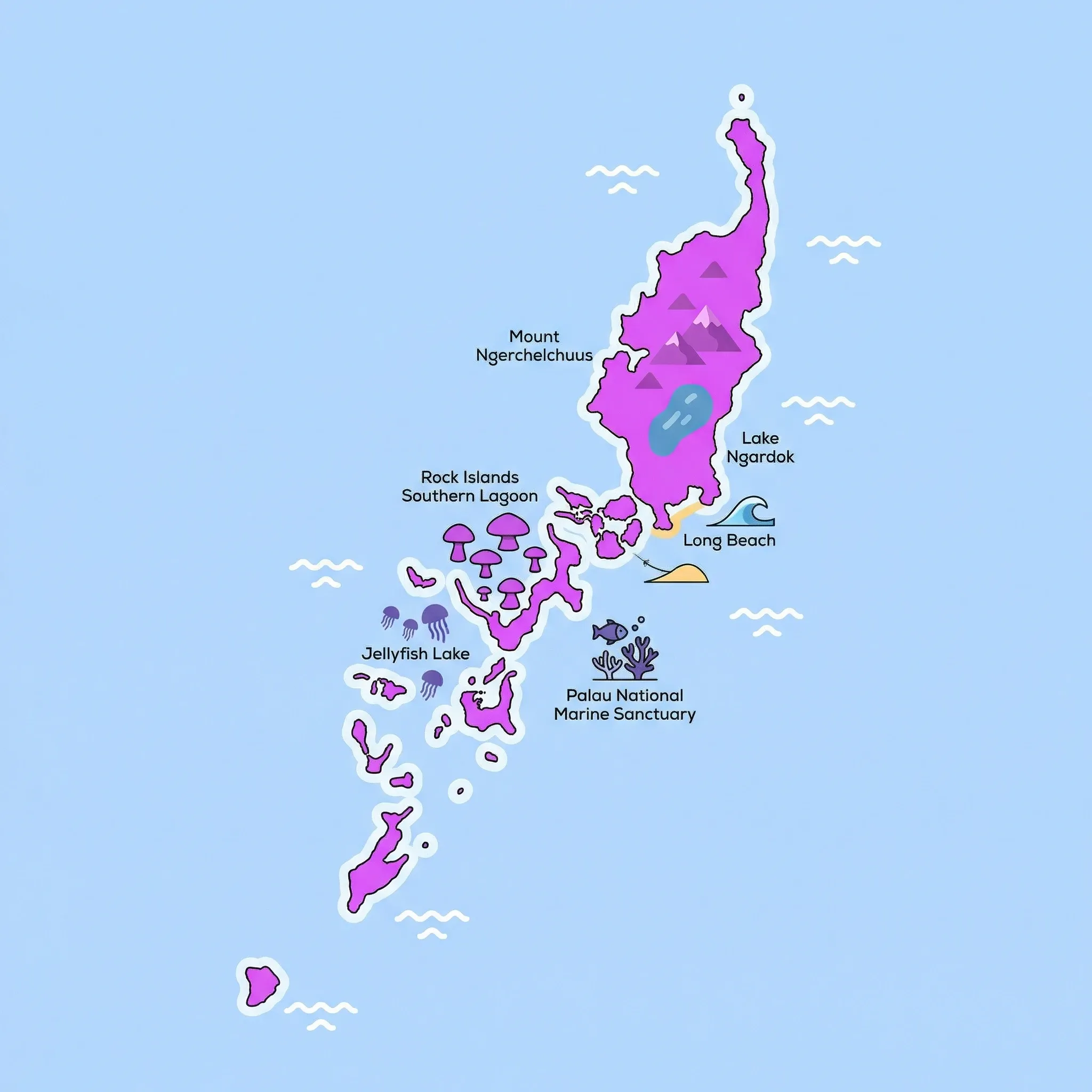
Overview
Floating like emeralds in the deep blue Pacific, Palau is an archipelago of over 500 islands that feels like a world apart. For families, it offers a rare opportunity to experience untouched nature in one of the world's most eco-conscious destinations. Upon arrival, every visitor signs the Palau Pledge stamped into their passport, promising the children of Palau to tread lightly-a powerful lesson in stewardship for young travelers. The main commercial hub, Koror, connects by bridge to the larger island of Babeldaob, where lush jungles and waterfalls await, while the southern lagoon teems with marine life.
Culturally, Palau is a blend of Micronesian traditions and complex history. Families will find a welcoming atmosphere where life revolves around the ocean and the village meeting houses known as bai. The climate is tropical and warm year-round, making it a perfect escape for water babies. Whether you are kayaking through limestone mazes, learning about coral conservation, or exploring hidden lakes, Palau provides an educational and awe-inspiring backdrop for a family holiday.
Key Attractions
The crown jewel of the country is the Rock Islands Southern Lagoon, a UNESCO World Heritage site consisting of hundreds of mushroom-shaped limestone islands. Families can take boat tours to weave through these formations, stopping at the Milky Way-a natural spa with white limestone mud that kids love painting on themselves. Within this area lies the famous Jellyfish Lake, where you can snorkel among millions of harmless, stingless golden jellyfish, a surreal experience suitable for confident swimmers.
Back on land, the Palau Aquarium at the Palau International Coral Reef Center is an essential stop. It offers a fascinating, child-friendly look at the underwater ecosystems you might see while snorkeling, with touch tanks and educational exhibits about reef protection. For a deep dive into local history, the Belau National Museum in Koror showcases traditional Palauan art, storyboards, and a full-sized bai (men's meeting house), giving families insight into the island's rich heritage and matriarchal society.
Practical Advice
The best time to visit is during the dry season from November to April, though diving and snorkeling are excellent year-round. US dollars are the official currency, which simplifies budgeting for many travelers. Visitors must complete the online Palau Entry Form within 72 hours of travel. Be aware that medical facilities are limited; the main hospital is in Koror, but serious conditions may require evacuation to Guam or Manila, so comprehensive travel insurance is non-negotiable. Families should also note that there is no public transport, so renting a car is necessary for exploring the big island of Babeldaob.
Food & Drink
Typical meal times: Breakfast is usually 7:00 am to 9:00 am. Lunch is the main meal for many locals, eaten between 11:30 am and 1:30 pm. Dinner is typically served from 6:00 pm to 8:30 pm, though tourist restaurants in Koror stay open later.
Typical meal costs: $15–25 USD (approx. €14–23 EUR / £12–20 GBP) for a casual lunch; $30–60 USD (approx. €28–55 EUR / £24–47 GBP) for a dinner at a mid-range restaurant.
Dietary requirements: Palauan cuisine relies heavily on fish, pork, and root vegetables like taro and cassava, making it naturally gluten-friendly. Vegetarians can find options at Indian and international restaurants in Koror, but strict vegan options may be limited in local eateries. Chefs are generally accommodating if requests are made clearly.
Family-friendly dining: Dining is casual and welcoming to children. Many restaurants in Koror offer international menus (Japanese, American, Filipino) with familiar favorites like fried chicken or pasta alongside local seafood.
Signature dishes:
- Ukaeb – Crushed crab meat cooked with creamy coconut milk, often served in the crab shell; a rich, savory favorite.
- Taro (Kukau) – The purple root vegetable is a sacred staple, served steamed or fried as a side dish to almost every meal.
- Tinola – A comforting chicken soup with ginger and green papaya, showing the strong Filipino culinary influence.
- Tama – Deep-fried batter balls, sometimes sweet and sometimes savory, found at local markets and perfect for snacking.
- Broiled Fish – Freshly caught reef fish cooked simply with garlic, onion, and soy sauce, often wrapped in banana leaves.
Family Travel Notice
Ensure children have all required travel documents and a consent letter if traveling with only one parent.

Palau is a premium destination due to its remote location and import reliance. A family of four should budget roughly $450–650 USD (approx. €415–600 EUR / £355–515 GBP) per day. This covers mid-range accommodation, car rental, and meals. High-ticket items like Rock Islands boat permits ($50–100 USD per person) and private tours will significantly increase daily spend.
Age Suitability





Did you know? Palau welcomes approximately 18,000 international visitors per year. Most visitors come from East Asia and the Pacific.
Why this score?
Palau offers a high degree of outdoor adventure centered on its unique maritime geography, including kayaking through limestone labyrinths and exploring WWII relics in the jungle. While the primary activities like snorkeling in Jellyfish Lake are well-organized, the remote archipelago setting and reliance on boat transport create a rugged environment for visiting families.
Why this score?
Medical facilities are primarily limited to the Belau National Hospital in Koror, which can manage basic healthcare needs and minor emergencies. However, for any serious trauma or specialized medical conditions, expensive air evacuation to Guam, the Philippines, or Taiwan is typically required due to the lack of advanced equipment and specialists.
Why this score?
With fewer than 20,000 annual international arrivals, Palau is a niche destination that remains largely unvisited by the global traveling public. While it is famous within the scuba diving community and for its UNESCO-listed Rock Islands, its isolation and limited flight connectivity keep it in the lowest tier of global tourist volume.
Palau is a high-end destination compared to Southeast Asia. The currency is the US Dollar. Mandatory environmental fees (e.g., Rock Island permits) add significant costs—expect to pay $50–100 USD (approx. €46–93 EUR / £39–78 GBP) per person for permits alone. Accommodation ranges from $150–400 USD (approx. €140–370 EUR / £118–315 GBP) per night for family rooms. Restaurant meals are priced similarly to the US or Western Europe.

Getting There & Around
Getting There
- By Air – Flights land at Roman Tmetuchl International Airport (ROR). Key hubs include Guam (United), Manila (United), Taipei (China Airlines), and Seoul.
- Entry Requirements – Citizens of the US, Micronesia, and Marshall Islands need no visa. Most other nationalities receive a free 30-day visa on arrival. All visitors must complete the Palau Entry Form online within 72 hours of arrival. Check your government website for the latest visa requirements, or use the IATA Travel Centre entry-requirements checker.
- Environmental Fees – The $100 Pristine Paradise Environmental Fee is typically included in the price of your international airline ticket.
Getting Around
- Car Hire – Essential for exploring the large island of Palau (Babeldaob). Driving is on the right, but many cars are right-hand drive (imported from Japan), which can be confusing. Roads are generally good but watch for chickens and dogs.
- Taxis – Available in Koror but not metered. Fares are fixed based on destination; negotiate and confirm the price before getting in. They are not readily available on Babeldaob.
- Boats – The only way to reach the Rock Islands Southern Lagoon. Most families join organized tours or hire private boat operators for island hopping and snorkeling excursions.
- Public Transport – There is virtually no public transport for tourists. The few buses that exist are for school children or local commuters in Koror only.
Official Links

Packing List
Mandatory by law. Toxic sunscreens (oxybenzone/octinoxate) are confiscated, and you can be fined $1000.
Coral and limestone rocks are razor-sharp; flip-flops will not protect your feet in the water.
Essential for keeping phones and clothes dry during bumpy boat rides to the Rock Islands.
Protects against strong equatorial sun and occasional small jellyfish stings while snorkeling.
Palau is strictly eco-conscious; single-use plastics are discouraged, and refill stations are common.

Activities & Best Times

Adventure & Nature
ExcellentHiking, wildlife, outdoor exploration, ecotourism
The UNESCO World Heritage Rock Islands, pristine marine ecosystems, Ngardmau Waterfall, and unparalleled kayaking/diving opportunities make this a world-class adventure/nature destination. The country is globally significant for ecotourism and marine conservation. Deserves 'excellent' rating.

Beach & Sea
ExcellentBeach resorts, marine activities: diving, snorkelling, kite surfing, wind surfing, sailing
Palau is internationally recognized as one of the world's premier marine destinations. The Rock Islands Southern Lagoon is UNESCO-listed, Jellyfish Lake is globally unique, and dive sites like Blue Corner rank among the world's best. This is a bucket-list destination for divers and marine enthusiasts worldwide. The current 'good' rating severely underestimates Palau's global standing.

Sports & Active
Very GoodSport tourism, fitness activities, active recreation
World-class diving and snorkeling, kayaking through the Rock Islands, the Babeldaob Compact Road cycling loop, and numerous water sports activities justify 'very_good'. While not a dedicated sports destination (no major marathons, ski resorts, etc.), the quality and variety of active pursuits available warrant an upgrade.

Educational & Exploratory
GoodLearning experiences, scientific sites, historical education
Palau's role in marine conservation, the educational value of the Palau Aquarium, Etpison Museum, and guided eco-tours through protected areas provide solid educational opportunities. 'Good' is more appropriate than 'marginal'.

City & Cultural
MarginalUrban tourism, museums, historical sites, architecture
Palau's capital has fewer than 400 residents and lacks the density of cultural institutions to justify 'very_good' by international standards. While Micronesian heritage (Bais, stone monoliths) exists, the country has limited museums, galleries, or urban cultural infrastructure. When calibrated against cities like Rome, Kyoto, or Istanbul, this rating is severely inflated. Should be 'marginal'.




Public Holidays & Calendar Next 12 months
Public holidays, festivals, cultural celebrations, and seasonal natural phenomena coming up in Palau over the next 12 months.
Loading holidays and events...

Travel Advisory
The majority of international agencies classify Palau as a destination requiring only standard safety awareness. Some caution is noted for specific remote islands and historical sites.
Safety Topics
Traveller Advice (5 groups)

Be aware that accessibility infrastructure and services for individuals with disabilities may be very limited.

Female visitors should review standard safety guidance for traveling independently.

Ensure all insurance policies include provisions for medical evacuation by air, as local medical facilities cannot handle serious emergencies.

Review guidance on local social norms and legal status before arrival.

Ensure children have all required travel documents and a consent letter if traveling with only one parent.
Agency Summaries
Visitors are advised to maintain standard safety awareness similar to what they would practice at home. The region experiences a typhoon season from June to December, which may necessitate sudden changes to travel itineraries.
Most visits are safe and without major incident. Travelers are encouraged to respect local customs and laws, particularly regarding environmental protection and banned substances.
No specific security threats are currently highlighted. Visitors must ensure they have comprehensive insurance that covers medical evacuation given the limited healthcare infrastructure in the Pacific islands.
Travelers should follow typical safety protocols. Entry requires a six-month passport validity and a mandatory environmental fee, while reef-toxic sunscreens are strictly prohibited.
Standard safety measures are recommended. Travelers should be aware that medical facilities are quite limited, and serious health issues will likely require air evacuation to a third country.
While generally safe, travelers should be more vigilant in specific areas like the Rock Islands due to the absence of emergency medical support. Peleliu remains a concern due to unexploded ordnance from the Second World War.
Information is provided for general guidance only and does not constitute travel, safety, medical, or legal advice. Conditions may change. Users are responsible for independently verifying information before travel.