

⚠️ SAFETY WARNING: Due to active armed conflict, terrorism, and civil unrest, government agencies (including the US, UK, Canada, Australia, Ireland, and New Zealand) advise travelers to avoid all travel to the Gaza Strip and to reconsider or avoid travel to the West Bank. The security situation is extremely volatile and can change without warning. Borders and checkpoints may close instantly, and consular assistance is severely limited or unavailable. Families are strongly urged to consult their own government's official travel advisory before considering a trip, as circumstances and risk assessments vary significantly.
Overview
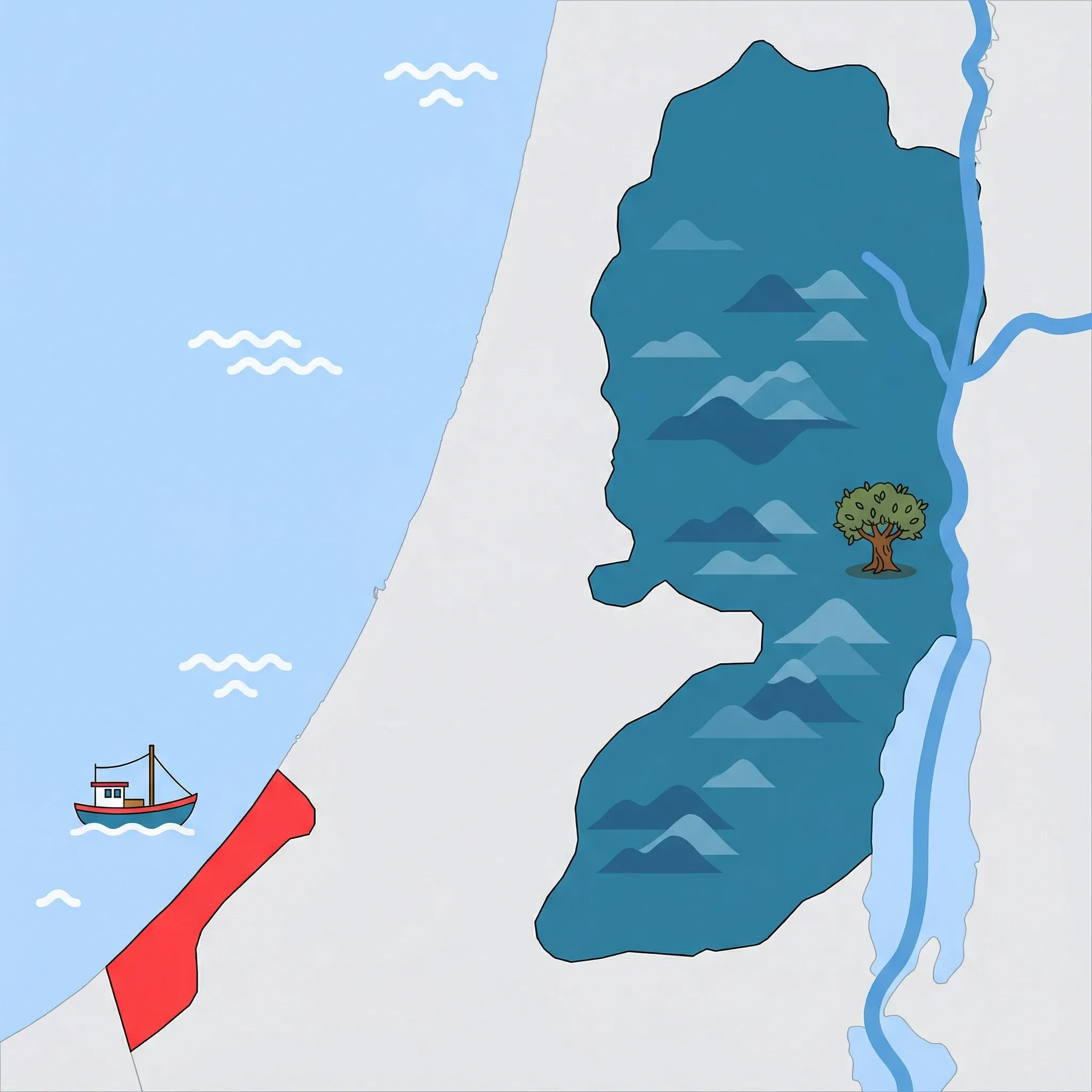
For families who do visit, Palestine offers a travel experience deeply rooted in human history. Located at the crossroads of continents, the West Bank is a landscape of terraced olive groves, ancient stone villages, and bustling markets that have served travelers for millennia. The region is physically beautiful, characterised by the rugged Judean Mountains that descend dramatically into the Jordan Valley and the Dead Sea. The climate is generally Mediterranean, with cool, wet winters and hot, dry summers, making spring and autumn the most pleasant times to explore.
Culturally, Palestine is defined by its immense hospitality. Children are cherished in Palestinian society, and families will often find themselves welcomed warmly by locals eager to share tea, food, and stories. For educational travel, few places on earth compare; this is where many of the foundational stories of Abrahamic religions took place. From the ancient stones of Jericho to the vibrant streets of Ramallah, a visit here is a living history lesson. However, the reality of the occupation-including checkpoints, the separation wall, and military presence-is visible everywhere. This provides a profound, if challenging, opportunity for older children and teenagers to learn about contemporary geopolitics alongside ancient history.
Key Attractions
A visit often begins in Bethlehem, a city central to the Christmas story. The Church of the Nativity is a UNESCO World Heritage site and a deeply significant stop for many families; the low "Door of Humility" entry fascinates children, and the ancient mosaics inside are stunning. Nearby, the Herodium National Park offers a different slice of history. This fortress-palace built by Herod the Great allows kids to explore underground tunnels and enjoy panoramic views of the Judean Desert, bringing Roman-era history to life in an engaging way.
Further east, the city of Jericho claims the title of the oldest continuously inhabited city in the world. Families can visit Ancient Jericho / Tell es-Sultan to see archaeological remains dating back 10,000 years. Just a short distance away is Hisham's Palace, an expansive Umayyad desert castle famous for its intricate "Tree of Life" mosaic, which is one of the largest and most beautiful preserved mosaics in the world. The site allows children to run around open ruins while learning about early Islamic art and architecture.
For a break from history, the Qalqilya Zoo is the only municipal zoo in the West Bank and a popular spot for local families, housing lions, monkeys, and a Giraffe. Nature lovers should head to the Ein Feshkha (Einot Tzukim) Nature Reserve near the Dead Sea. It is a unique oasis with freshwater pools and vegetation amidst the desert landscape, offering a place to cool off and spot local wildlife like hyraxes and migratory birds. In the north, The Palestinian Museum in Birzeit offers modern, interactive exhibitions on Palestinian culture and history set within beautiful terraced gardens.
Practical Advice
Best time to visit: Spring (March–May) and Autumn (September–November) offer the best weather, with temperatures around 20–25°C (68–77°F). Summer can be intensely hot, especially in Jericho and the Jordan Valley. Winter can be surprisingly cold and wet, with occasional snow in high-altitude areas like Hebron.
Visa Basics: Palestine does not control its own borders. Entry is controlled by Israeli authorities via the Allenby/King Hussein Bridge from Jordan or checkpoints from Israel. Tourists typically receive an entry permit slip instead of a passport stamp. Ensure you have 6 months validity on your passport. Wait times at crossings can range from one to several hours.
Health & Logistics: Medical facilities in major West Bank cities are adequate for minor issues but can be limited for serious emergencies. Comprehensive travel insurance that covers political unrest is essential, though hard to find. Tap water is generally not recommended for drinking; stick to bottled water.
Food & Drink
Typical meal times: Lunch is the main meal of the day, typically eaten between 2:00 pm and 4:00 pm. Dinner is often lighter and served later, from 8:00 pm onwards. Restaurants in tourist areas operate all day.
Typical meal costs: ₪40–80 (approx. $11–22 USD / €10–20 EUR). Street food like falafel sandwiches cost significantly less, around ₪5–10 (approx. $1.50–3 USD / €1.25–2.50 EUR).
Dietary requirements: Vegetarian options are abundant, with hummus, falafel, and salads being staples. Vegan food is naturally common, though ask about yoghurt or ghee usage. Gluten-free bread is rare, but rice dishes (maqlooba, mansaf) are widely available (check for vermicelli in rice).
Family-friendly dining: Palestinian culture is incredibly family-oriented. Children are welcome everywhere, and restaurant staff will often go out of their way to accommodate them. Highchairs are available in modern restaurants in Ramallah or Bethlehem but may be missing in smaller local eateries. Portions are generous and meant for sharing.
Signature dishes:
- Maqlooba – Meaning "upside down," this is a famous dramatic dish of rice, vegetables (cauliflower or eggplant), and chicken or lamb, flipped onto a serving tray at the table.
- Musakhan – Roast chicken baked with onions, sumac, allspice, and saffron, served over taboon bread. It is considered a national dish and is very hands-on to eat.
- Knafeh – A sweet, cheesy pastry soaked in sugar syrup and topped with pistachios. Nablus is famous for making the best Knafeh in the region.
- Qidreh – A Hebron specialty consisting of rice and meat cooked with chickpeas and garlic in a heavy copper pot in a communal wood-fired oven.
Safety
Travel to the West Bank involves navigating a complex security environment. Avoid all demonstrations, protests, and large gatherings, as they can turn violent quickly. Flashpoints include checkpoints (especially Qalandia), the Old City of Hebron, and areas near settlements. Always carry your passport and entry slip. Roads may close without warning; use local drivers who know the current situation. Do not photograph military personnel or installations. Dress modestly to respect local customs, particularly in religious sites and conservative cities like Hebron and Nablus.

A family of four can expect to spend around ₪600–900 (approx. $165–250 USD / €150–225 EUR) per day. This covers mid-range guesthouse accommodation, hearty local meals, and private transport or taxis between cities. Public transport (shared taxis/service) is very cheap but less convenient for families. Entrance fees to sites are generally low.
Age Suitability





Did you know? Palestine welcomes approximately 170,000 international visitors per year. Most visitors come from Europe.
Explore Regions
Click on a region marker to explore details. Use the dropdown to color regions by activity suitability.

Getting There & Around
Getting There
- By Air – There are no operating civilian airports in the Palestinian Territories. Travelers must fly into Tel Aviv Ben Gurion (TLV) in Israel or Queen Alia International (AMM) in Jordan and travel overland.
- By Land from Jordan – The King Hussein / Allenby Bridge crossing is the only direct international entry point to the West Bank that bypasses Israel's airport (though still controlled by Israel). It is a complex crossing involving shuttle buses and multiple passport checks.
- By Land from Israel – Travelers can cross into the West Bank via several checkpoints, such as the separation wall checkpoint near Bethlehem or Qalandia near Ramallah. Private taxis or specific bus lines (like bus 21 to Bethlehem) connect Jerusalem to these cities.
- Entry Requirements – Entry is controlled by Israeli authorities. Most Western tourists (US, EU, UK, AU, NZ) receive a free 3-month entry permit (B2 visa) upon arrival in Israel, which covers travel to the West Bank. However, political scrutiny at borders is high. Check your government website for the latest visa requirements, or use the IATA Travel Centre entry-requirements checker.
Getting Around
- Shared Taxis (Service) – The primary mode of inter-city transport. These yellow mini-buses run on fixed routes and leave when full. They are cheap-often ₪10–25 (approx. $3–7 USD)-but can be crowded and chaotic for families with luggage.
- Private Taxis – The most convenient option for families. You can hire a driver for the day to tour sites like Herodium National Park or Hisham's Palace. Negotiate the price beforehand or ensure the meter is used.
- Car Hire – Possible in major cities like Ramallah, but driving can be stressful due to checkpoints, aggressive local driving styles, and restricted roads (Area A, B, C distinctions). Rental cars with Palestinian plates cannot enter Israel or Jerusalem.
- Checkpoints – Expect delays when moving between cities. Always have passports ready. The West Bank is divided into areas with different control levels, affecting where you can drive.

Packing List
Essential for visiting religious sites (mosques/churches) and conservative cities like Hebron.
Mobile data can be unreliable or expensive; Google Maps often lacks local West Bank detail.
Delays at checkpoints or long travel days are common; keep phones charged for emergencies.
Many smaller shops, taxis, and local eateries in the West Bank do not accept cards.
You need your passport for checkpoints, but keeping a copy is smart in case of loss.
Public restrooms in bus stations or remote sites often lack basic supplies.

Activities & Best Times

City & Cultural
ExcellentUrban tourism, museums, historical sites, architecture

Adventure & Nature
Very GoodHiking, wildlife, outdoor exploration, ecotourism

Festivals & Seasonal
Very GoodEvents, celebrations, seasonal attractions

Relaxation & Wellness
GoodSpa retreats, wellness centers, peaceful getaways
Dead Sea therapeutic facilities are internationally recognized for wellness tourism. While historic Turkish baths are authentic, the Dead Sea's global reputation for therapeutic mud and mineral treatments elevates this beyond 'marginal'.
The historic Hammam al-Samra provides an authentic Ottoman-era thermal experience, though wellness facilities are limited to this single significant site. Visitation is most pleasant during the cooler winter months when the steam environment is most restorative, while the intense heat and humidity of the Mediterranean summer make the experience less appealing.

Beach & Sea
GoodBeach resorts, marine activities: diving, snorkelling, kite surfing, wind surfing, sailing

Road Trips & Scenic
GoodScenic drives, countryside tours, route-based travel

Sports & Active
GoodSport tourism, fitness activities, active recreation

Educational & Exploratory
MarginalLearning experiences, scientific sites, historical education

Theme Park & Entertainment
MarginalAmusement parks, family entertainment venues

Public Holidays & Calendar Next 12 months
Public holidays, festivals, cultural celebrations, and seasonal natural phenomena coming up in Palestine over the next 12 months.
Loading holidays and events...

Climate & Weather
Gaza Strip (currently not accessible)
Show Details
| Month | Temp °C | Rain | Humidity |
|---|
West Bank (Bethlehem, Ramallah, Hebron)
Show Details
| Month | Temp °C | Rain | Humidity |
|---|

Travel Advisory
Extreme risk due to ongoing armed conflict, military operations, and severe humanitarian crises. All major agencies advise against any travel to the region and suggest immediate departure for those already present.
Safety Topics
Traveller Advice (4 groups)

Any individuals currently in the territories should prioritize their safety by sheltering in place or seeking exit routes if commercial options remain. It is critical to stay informed through local media and adhere to instructions from security officials.

Aid workers are at extreme risk in Gaza and parts of the West Bank. Coordination with regional authorities is mandatory, though access remains severely restricted and safety cannot be guaranteed even with permits.

Respecting local social norms by dressing conservatively is recommended. Women should be aware of cultural expectations in more traditional areas and the heightened risk of harassment in crowded or tense environments.

Public displays of affection should be avoided as same-sex relationships are socially stigmatized and lack legal recognition, which may lead to discrimination or safety concerns.
Agency Summaries
New Zealand advises a total travel ban for the occupied territories, citing unpredictable military operations and the potential for life-threatening violence. New Zealanders in these areas are urged to leave if safe to do so, noting that government help is severely restricted in current conditions.
Ireland maintains its highest warning level for the Palestinian Territories, advising against all travel to Gaza and most of the West Bank. The security status is tense with limited consular reach, especially in the northern governorates and areas affected by settler violence or military raids.
Australia warns its citizens to stay away from Gaza and the West Bank (excluding East Jerusalem, where a 'reconsider' warning applies) due to the extreme danger posed by military strikes, civil unrest, and terrorism. The security environment is described as unpredictable and rapidly changing.
U.S. authorities advise that travelers should not visit Gaza or the West Bank because of ongoing armed conflict and the threat of terrorism. Consular services are essentially unavailable in Gaza, and the security landscape across the territories is extremely volatile, with potential for violence without warning.
The Canadian government warns against any travel to the Palestinian Territories due to intense military actions, a severe lack of humanitarian resources, and a highly unstable security environment. Infrastructure in Gaza is heavily damaged, while the West Bank faces unpredictable violence and frequent military presence.
British officials recommend against any travel to Palestine due to the high risk of regional escalation and active hostilities. The situation remains critical with potential for borders to close suddenly and limited routes for departure. High tension and military activity pose significant safety risks to foreign nationals.
Information is provided for general guidance only and does not constitute travel, safety, medical, or legal advice. Conditions may change. Users are responsible for independently verifying information before travel.