

Panama is more than just a canal; it is a living land bridge that connects North and South America, creating a biodiversity hotspot that thrills nature-loving families. For parents, Panama City & Canal offers the comforts of a modern metropolis-reliable Uber service, glossy malls, and high-quality hospitals-alongside the raw excitement of the rainforest. You can watch monkeys swing through the trees in the morning and enjoy a world-class dinner in the historic district by evening. The country is relatively compact, meaning you can swap the humid Caribbean vibe of Bocas del Toro for the cool, mist-covered mountains of the Boquete & Highlands in a single day.
The cultural mix is equally enriching for children. From the Guna people of the San Blas Islands to the Afro-Caribbean energy of the coast, Panama teaches kids about diversity in a safe, welcoming environment. While the heat can be intense and the city traffic chaotic, the infrastructure is far superior to many neighbours, making it an ideal "soft landing" for families exploring Central America for the first time.
Key Attractions
No trip is complete without witnessing the engineering marvel of the century. The Miraflores Visitor Center (Panama Canal) allows families to watch massive container ships traverse the locks from viewing platforms. Although the museum exhibits are currently undergoing renovation, the IMAX 3D movie narrated by Morgan Freeman captivates older children, and the sheer scale of the Panama Canal (Miraflores Locks) is unforgettable.
For a splash of colour and science, the Frank Gehry-designed BioMuseo on the Amador Causeway is a masterpiece. Its jumbled, colourful roof mimics the rainforest canopy, and inside, the 'Panamarama' projection surrounds kids with the sights and sounds of the jungle. Afterward, families can wander the cobblestone streets of Casco Viejo (Historic District), stopping for raspados (shaved ice) in the plazas while admiring colonial architecture.
Nature is never far away. The Metropolitan Natural Park is a genuine rainforest right within the city limits where toucans, sloths, and monkeys are frequently spotted on easy trails. For adventurous families heading west, Bastimentos Island National Marine Park in Bocas del Toro offers calm waters at Red Frog Beach, while the cooler Boquete & Highlands region invites you to explore Volcán Barú National Park, home to cloud forests and quetzals.
Practical Advice
The dry season (mid-December to April) is the best time to visit, as the rest of the year can see heavy tropical downpours, though these often pass quickly. English is widely spoken in tourist areas and by younger Panamanians. The currency is the Balboa (PAB), which is pegged 1:1 to the US Dollar; US paper money is used exclusively, while coins may be Panamanian or American. Tap water is generally safe to drink in Panama City and Boquete, but bottled water is recommended in Bocas and rural areas.
Food & Drink
Typical meal times: Lunch is typically served from 12:00 pm to 2:00 pm, and dinner from 6:30 pm to 9:00 pm. Restaurants in the city often stay open later.
Typical meal costs: Local fonda meals cost B/. 4.00–8.00 (approx. $4–8 USD / €3.70–7.40 EUR). Mid-range restaurant mains run B/. 15.00–25.00 (approx. $15–25 USD / €14–23 EUR). Domestic beer is around B/. 2.00 (approx. $2 USD / €1.85 EUR).
Dietary requirements: Vegetarian options are increasingly common in Panama City and tourist hubs like Boquete, though rural areas rely heavily on chicken and meat. Gluten-free is understood in upscale venues but rare in local eateries. Rice, beans, and plantains are staples.
Family-friendly dining: Panamanians love children, and restaurants are very welcoming. Highchairs are standard in the city. Kids usually enjoy the fried finger foods and fresh fruit juices (batidos).
Signature dishes:
- Sancocho – A comforting chicken stew with yam (ñame) and cilantro, often considered the national dish and very palatable for picky eaters.
- Patacones – Twice-fried green plantain discs, salted and served as a side dish or snack; a crunchy favourite with kids.
- Arroz con Pollo – Chicken and rice cooked with vegetables and mild spices, similar to paella but less seafood-focused.
- Raspados – Shaved ice topped with sweet fruit syrup and condensed milk, sold by street vendors everywhere.
- Carimañolas – Torpedo-shaped yuca fritters stuffed with ground meat or cheese, perfect for breakfast.
Safety
Panama is generally safe for tourists, but families should exercise normal caution. Petty theft and pickpocketing can occur in busy transport hubs and parts of Panama City (specifically Calidonia and El Chorrillo, which should be avoided). The San Blas Islands are safe, but the border region with Colombia (the Darién Gap) and the Mosquito Gulf are strictly off-limits due to criminal activity; however, these are far from typical tourist zones. Always use registered taxis or ride-share apps like Uber rather than hailing street taxis at night.
Family Travel Notice
Be aware that local authorities strictly enforce curfews for unaccompanied minors. Minors found out late at night may be detained until parents are contacted and potentially fined.

A family of four can expect to spend around B/. 150–250 (approx. $150–250 USD / €140–230 EUR) per day. This covers mid-range hotels, meals at a mix of local fondas and nice restaurants, and entry fees. Transport is cheap, but tours in tourist hubs like Bocas del Toro can add up.
Age Suitability





Did you know? Panama welcomes approximately 1.5 million international visitors per year. Most visitors come from Americas.
Explore Regions
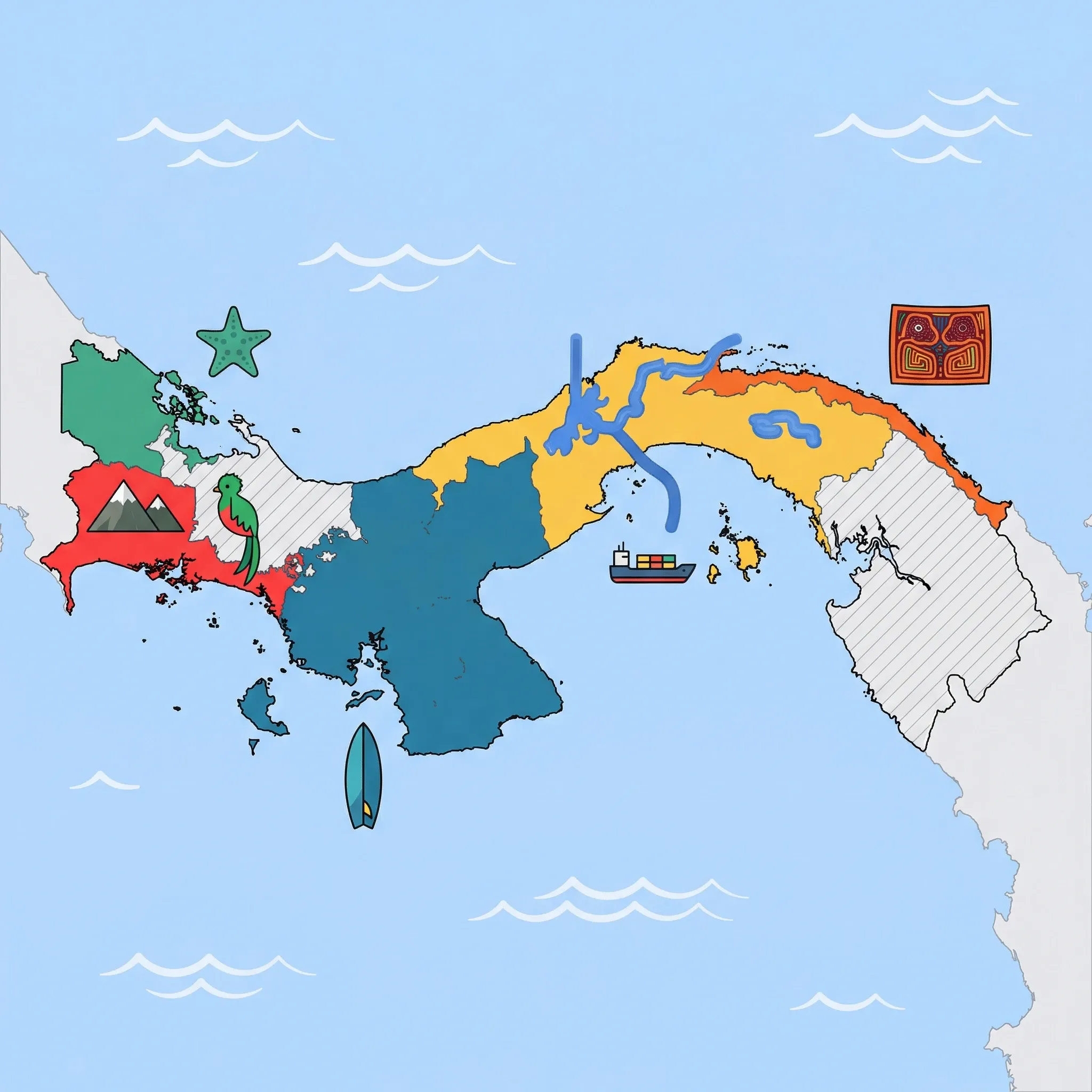
5 Regions
Bocas del Toro
Caribbean rhythms, emerald waters, and wild jungle adventures 🌴🐬
Boquete & Highlands
Eternal spring, cloud forests, and mountain adventures 🏔️☕
Pacific Beaches
Sun-drenched beaches and family resorts just an hour from the city 🏖️☀️
Panama City & Canal
Where skyscrapers meet the jungle and the world's greatest canal 🏙️🚢
San Blas Islands
A pristine indigenous paradise where island life is simple and pure 🌴🥥
Click on a region marker to explore details. Use the dropdown to color regions by activity suitability.

Getting There & Around
Getting There
- By Air – Tocumen International Airport (PTY) is the "Hub of the Americas" with direct flights from major US, European, and Latin American cities. It serves Panama City & Canal directly.
- By Land – The Paso Canoas and Guabito borders connect Panama with Costa Rica. Buses run from San José to Panama City, but the journey is long (16+ hours).
- Entry Requirements – Citizens of the US, UK, EU, and Canada usually do not need a visa for tourist stays of 90 to 180 days. You must show proof of economic solvency (usually $500 cash or credit card) and an onward ticket. Check your government website for the latest visa requirements, or use the IATA Travel Centre entry-requirements checker.
Getting Around
- City Transport – Panama City has the only metro system in Central America, which is clean, safe, and cheap (B/. 0.35 per ride). Uber is widely available, reliable, and safer than street taxis for families.
- Domestic Flights – Air Panama flies from Albrook (PAC) airport to major tourist spots like Bocas del Toro and David (for Boquete), saving hours of driving.
- Car Hire – Driving is feasible for the adventurous, especially to the Pacific Beaches. Roads are generally good, but city traffic is intense. Driving is on the right.
- Buses – Intercity buses leave from the Albrook Terminal. They are affordable and air-conditioned, but bring a sweater as the AC is often freezing.

Packing List
Essential for keeping phones and snacks dry during open boat rides (lanchas) in Bocas or San Blas.
The best hack for removing sticky wet sand from children's legs before getting back in the car.
Malls, cinemas, and long-distance buses blast freezing air conditioning; also needed for Boquete evenings.
Many beaches have rocky or coral bottoms, and sea urchins can be present in Caribbean shallows.
Sandflies (chitras) on beaches are tiny but fierce; they ignore nets but dislike oily repellents.
Older hotels may have few outlets; thunderstorms can cause power flickers.
Wildlife like sloths and monkeys are often high in the canopy; kids will miss them without these.

Activities & Best Times

City & Cultural
ExcellentUrban tourism, museums, historical sites, architecture
A world-class destination featuring the iconic Panama Canal and the historic UNESCO-listed Casco Viejo district. The dry season offers vibrant street life and breezy evenings, though the most significant rainfall in Oct-Nov can disrupt walking tours.
Offers a charming, high-altitude urban culture with a concentrated art scene, botanical gardens, and authentic highland character. Peak visitation occurs during the sunny months and local festival periods in January, while the heavy rains of June through October significantly impact the walkability and atmosphere of the town.
Home to the internationally significant El Caño Archaeological Park and colonial landmarks in Penonomé that provide authentic insight into Panama's heritage. Best visited during the drier months to comfortably explore open-air sites and rural historic districts.

Adventure & Nature
Very GoodHiking, wildlife, outdoor exploration, ecotourism
The region is a premier destination for cloud forest exploration and coffee heritage, offering high-quality wildlife encounters and ecotourism lodges. Peak dry season months (Jan-Apr) provide the best trail conditions for spotting the Resplendent Quetzal, while extreme mid-year rainfall can restrict access to wilderness areas.
Features exceptional biodiversity in Bastimentos National Marine Park and unique wildlife encounters like the starfish at Playa Estrella. Peak visitation aligns with the region's two dry windows, ensuring trail access and optimal conditions for observing marine life and jungle ecosystems.
Proximity to world-class birding at Pipeline Road and accessible rainforests like Gamboa makes this unique for a capital city. The dry season ensures trail accessibility, whereas the intense humidity and mud of the wet season can hinder jungle exploration.

Educational & Exploratory
GoodLearning experiences, scientific sites, historical education
Internationally significant learning at the Miraflores Visitor Center and the BioMuseo provides deep insights into global trade and biodiversity. While these are mostly indoor facilities, peak travel aligns with the broader regional dry season and school holidays.
The CEFATI center provides valuable interpretive services for families to learn about regional ecology and history. While it is an excellent educational supplement during the dry season, it does not represent a standalone international draw of global scientific or historical significance.
Small-scale but authentic educational experiences like the Plastic Bottle Village provide unique insights into sustainability and tropical ecology. Best visited during dry windows to ensure ease of travel between island-based facilities.

Road Trips & Scenic
GoodScenic drives, countryside tours, route-based travel
The highlands offer exceptionally scenic drives, particularly the Ruta Sur and the loop through Bajo Mono. Clear visibility is essential for these mountain routes; thus, the dry season (Jan-Mar) is peak for touring, as the heavy cloud cover and intense rain of the wet season frequently obscure the panoramic views.
The scenic drive through the Altos de Campana National Park and the Riviera Pacifica corridor offers sophisticated travelers dramatic mountain-to-ocean vistas. Peak season ensures clear visibility from coastal miradors and safer driving conditions on mountain routes.
The Cinta Costera and Amador Causeway offer scenic drives with world-class urban skyline and marine views. Visibility and road conditions are optimal during the dry months, providing clear vistas across the Pacific entrance of the Canal.

Sports & Active
GoodSport tourism, fitness activities, active recreation
Features world-class hiking routes such as the Volcán Barú trail and well-developed adventure centers for zip-lining. Optimal conditions for the strenuous volcano ascent and trail safety are limited to the dry season, with the high-altitude terrain becoming hazardous during the peak precipitation months.
Claims 'robust infrastructure for active families, including world-class canopy adventures' but no canopy/adventure park attractions are in the database. Without evidence of internationally significant sports/active infrastructure, 'very_good' is inflated. Downgrade to 'good'.
An established destination for surfing with world-class breaks and scenic coastal cycling routes to Bluff Beach. Surfing peaks from December to March, while cycling and canopy tours are best during the primary and secondary dry seasons.

Beach & Sea
GoodBeach resorts, marine activities: diving, snorkelling, kite surfing, wind surfing, sailing
Offers expansive white-sand beaches and high-end resort communities such as Buenaventura and Playa Blanca, suitable for discerning families. The dry season (Dec–Mar) provides the most consistent sunshine, while the 'Veranillo' in July and August offers a secondary window of drier weather.
Boasts iconic spots like Cayo Zapatilla and Red Frog Beach, offering authentic island experiences away from mass-market resorts. September and October are uniquely excellent as the Caribbean sea becomes remarkably calm and clear despite being the rainy season elsewhere in Panama.
Access to Taboga Island and the Amador Causeway offers pleasant coastal recreation and island day trips for families. The dry season (Jan-Apr) provides the necessary sun and calm sea conditions, while the heavy rainy season often diminishes beach appeal.

Relaxation & Wellness
MarginalSpa retreats, wellness centers, peaceful getaways
Natural thermal baths like Pozos Termales de Caldera provide a rustic restorative experience in a unique setting. While the highland climate is conducive to wellness, the region currently lacks the concentration of world-class, dedicated spa infrastructure required for a higher international rating.
Localized wellness experiences centered around the natural thermal springs of El Valle de Anton and San Carlos. While authentic and restorative, facilities are rustic compared to global spa hubs, making this a pleasant secondary activity during the drier months.

Public Holidays & Calendar Next 12 months
Public holidays, festivals, cultural celebrations, and seasonal natural phenomena coming up in Panama over the next 12 months.
Loading holidays and events...
Climate & Weather
Bocas del Toro
Show Details
| Month | Temp °C | Rain | Humidity |
|---|
Boquete & Highlands
Show Details
| Month | Temp °C | Rain | Humidity |
|---|
Pacific Beaches
Show Details
| Month | Temp °C | Rain | Humidity |
|---|
Panama City & Canal
Show Details
| Month | Temp °C | Rain | Humidity |
|---|
San Blas Islands
Show Details
| Month | Temp °C | Rain | Humidity |
|---|

Travel Advisory
While most of the country is relatively safe, major international agencies are split between recommending standard precautions and heightened vigilance. The primary risks involve street crime in urban areas and civil unrest. Extreme danger persists in specific border regions like the Darien Gap, though these do not dictate the country-wide level.
Safety Topics
Traveller Advice (5 groups)

Exercise high caution when walking alone after dark, particularly in poorly lit areas. Instances of harassment and sexual assault have been reported in tourist destinations.

Review guidance on accessibility standards and the availability of specialized support services in Panama prior to departure.

Be aware that local authorities strictly enforce curfews for unaccompanied minors. Minors found out late at night may be detained until parents are contacted and potentially fined.

Stay alert in crowded areas and transport hubs. Avoid all travel to the Darien Gap and the Mosquito Gulf due to severe security risks including drug trafficking and violent crime.

Consult dedicated government safety guides for detailed information on local attitudes and legal protections before travelling.
Agency Summaries
A high level of caution is advised nationwide because of the threat of crime. The border area with Colombia is extremely hazardous due to guerrilla activity and drug trafficking; travel there is strongly discouraged.
Visitors should be cautious regarding street crime and periodic protests. Specific areas near the Colombian border are considered highly dangerous and are subject to travel warnings due to the presence of armed groups.
Travellers are encouraged to follow the guidance of local authorities and stay informed of current events via local media. Ensure all entry requirements, including passport validity and proof of funds, are met before arrival.
Heightened vigilance is recommended due to crime and the potential for civil unrest. Serious safety threats, including kidnapping and violence, make the Darien Region and parts of the Mosquito Gulf off-limits to visitors.
Travellers should maintain standard safety awareness throughout most of the country. However, extreme danger exists in border regions like the Darien Gap and the Mosquito Gulf due to organized crime and drug smuggling, where all travel must be avoided.
New Zealanders should be vigilant due to the risks of violent crime and civil disturbances. Protests can occur without warning, and certain remote regions are extremely unsafe for tourists.
Information is provided for general guidance only and does not constitute travel, safety, medical, or legal advice. Conditions may change. Users are responsible for independently verifying information before travel.