
Bocas del Toro
Caribbean rhythms, emerald waters, and wild jungle adventures 🌴🐬
Click a region to explore
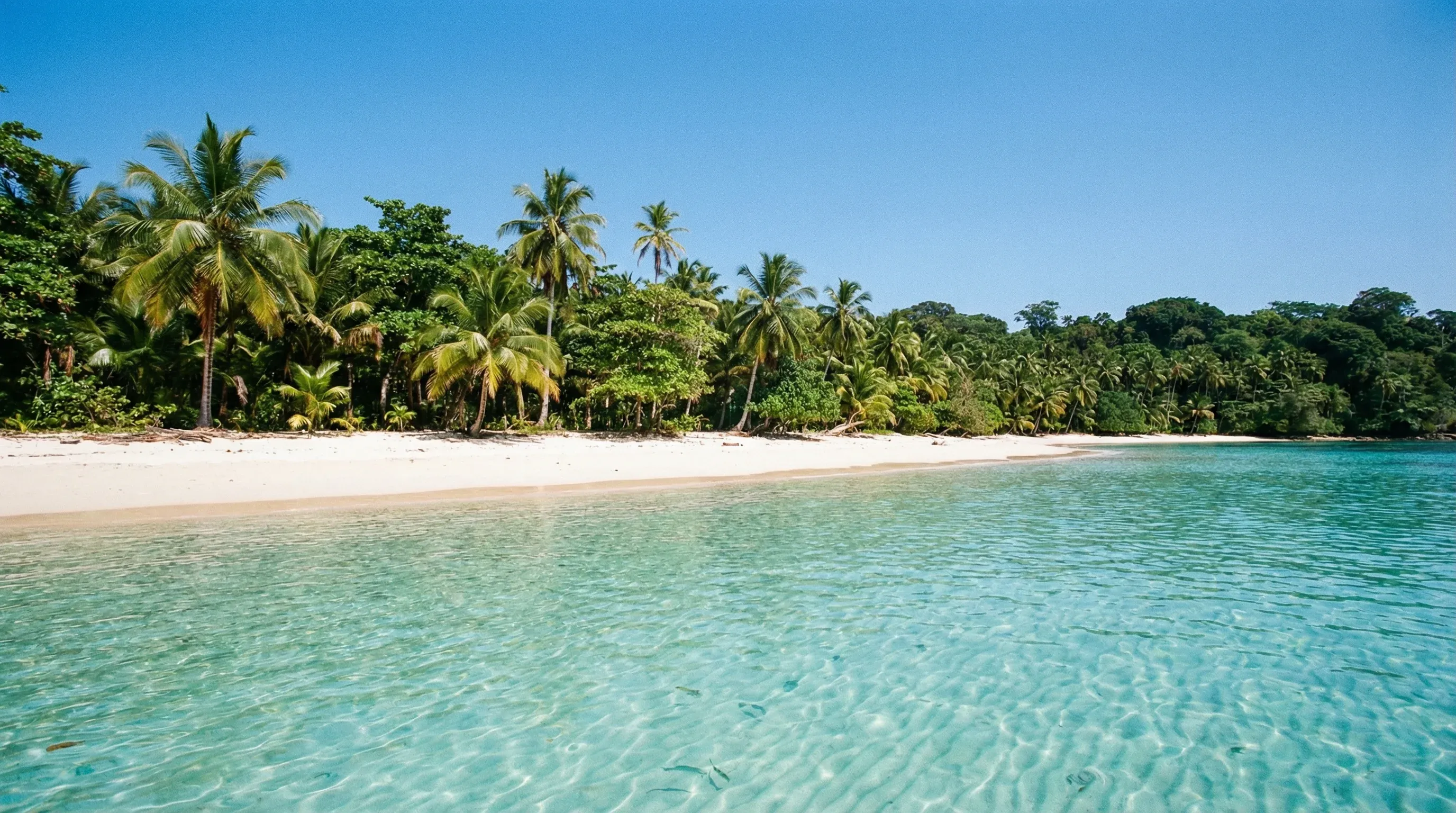
Bocas del Toro is not just a beach destination; it is a sensory immersion into a unique Caribbean ecosystem that captivates children and adults alike. Geographically, the region is a scattered puzzle of nine main islands and thousands of islets and mangrove cays, shielding the calm, emerald waters from the open Atlantic. The climate here is distinctly tropical and humid, differing from the Pacific side; while it can rain at any time, the showers often pass quickly, leaving behind steaming jungles and vibrant rainbows. For families, the primary appeal lies in the "water-first" lifestyle. There are few roads outside the main town on Isla Colón; instead, daily life revolves around narrow panga boats that zip between islands, serving as taxis, school buses, and delivery trucks. This boat-culture novelty is an adventure in itself for kids, turning every trip to dinner or the beach into an exciting aquatic journey.
Culturally, Bocas is a melting pot. The indigenous Ngäbe population shares the islands with Afro-Caribbean descendants who speak "Guari-Guari" (a rhythmic creole language), as well as a growing community of international expats. This fusion creates a welcoming, relaxed atmosphere where time seems to slow down. Families can expect a rustic charm—luxury here is defined by nature rather than gold taps. You might wake up to the sound of howler monkeys, snorkel in water so clear you can count the pebbles from the dock, and end the day eating fresh coconut bread. It is a place that teaches children about biodiversity firsthand, where sloths hang visibly in breadfruit trees and dolphins frequently break the surface of Dolphin Bay. While the nightlife in Bocas Town can be spirited, the outlying islands and beaches offer profound tranquility and safe, shallow waters perfect for young swimmers.
Key Attractions
The crown jewel for nature-loving families is undoubtedly Bastimentos Island National Marine Park. This protected area covers a massive swathe of island and sea, preserving critical mangrove forests and coral reefs. Within the park, families can visit the famous Zapatilla Cays—two uninhabited islands that look exactly like the deserted isle of your imagination, offering pristine white sands and gentle snorkeling. Another part of the park includes Red Frog Beach, named for the tiny strawberry poison-dart frogs that children love to spot in the undergrowth (from a safe distance!).
Beyond the park, the region offers accessible wildlife encounters that don't require arduous trekking. Starfish Beach (Playa Estrella) on Isla Colón is a family favorite; the water is as flat as a swimming pool, and the sandy bottom is dotted with large, bright orange sea stars. It’s an ideal spot for toddlers and younger children to wade safely. For a cultural twist, a visit to an indigenous Ngäbe chocolate farm on the mainland or larger islands allows families to see how cacao is processed from bean to bar—a delicious educational experience that usually ends with a sweet tasting.
Practical Advice
The best time to visit for calmer seas and drier weather is generally September/October (a Caribbean anomaly) and February/March. However, be prepared for rain year-round. Families should opt for accommodations on the water but away from the center of Bocas Town if they want quiet at night. Strollers are largely useless here due to sandy paths and water taxi travel; a baby carrier is essential. Safety-wise, always ensure your boat captain has life jackets for children before boarding.
Food & Drink
Typical meal times: Breakfast is usually 7:30 am to 10:00 am. Lunch runs from 12:00 pm to 2:00 pm. Dinner is served later, typically 6:30 pm to 9:00 pm.
Typical meal costs: Casual island dining is mid-range. A main dish costs $12–20 USD (approx. €11–18 EUR / £9–15 GBP). Budget street food can be found for $5–8 USD (approx. €4.50–7.50 EUR / £4–6 GBP).
Dietary requirements: Vegetarian options are plentiful due to the expat influence, with many places offering smoothie bowls and veggie burgers. Gluten-free is possible but cross-contamination in small kitchens is a risk. Coconut milk is the primary dairy substitute used traditionally.
Signature dishes:
- Rondón – A rich, coconut-milk based seafood soup with fish, snail, yucca, and plantains. The name comes from "run down," meaning whatever the cook could run down that day.
- Arroz con Coco – Rice cooked in fresh coconut milk, often served with kidney beans and a hint of thyme; a sweet and savory staple kids usually love.
- Patacones – Twice-fried green plantains, smashed into flat discs. They are the Caribbean equivalent of french fries, served with almost every meal.
Why this score?
The region offers diverse outdoor activities including surfing, jungle trekking to spots like Wizard Beach, and boat-based island hopping. The environment is lush and tropical, though the established tourism infrastructure in Bocas Town keeps it from being a true wilderness experience.
Why this score?
Medical facilities in the archipelago are limited to basic clinics and a small hospital on the mainland in Almirante. For serious emergencies or specialized care, patients typically require air transport to Panama City or a long drive to David.
Why this score?
Bocas del Toro is a cornerstone of the Central American travel circuit, drawing a consistent mix of international backpackers and boutique travelers. While iconic for its Caribbean charm, it lacks the massive arrival numbers of global mega-destinations, serving as a moderate-scale regional hub.

Bocas is more expensive than the mainland due to island logistics. A family room in a nice lodge costs $120–250 USD (approx. €110–230 EUR / £95–195 GBP) per night. Boat transport adds up daily; budget around $20–40 USD (approx. €18–37 EUR / £15–30 GBP) per day for family transport. Supermarket goods are priced about 20% higher than on the mainland.
Family Travel Notice
Be aware that local authorities strictly enforce curfews for unaccompanied minors. Minors found out late at night may be detained until parents are contacted and potentially fined.

Getting Here & Around
Getting Here
- Airports – Fly into Bocas del Toro "Isla Colón" International Airport (BOC). Air Panama flies directly from Panama City's Albrook Airport (PAC), taking about 50 minutes.
- Bus & Ferry – Buses run from Panama City to Almirante (approx. 10 hours overnight). From Almirante, water taxis take 30 minutes to reach Bocas Town.
- Driving – You can drive to Almirante (approx. 9 hours from Panama City), leave your car in a secure lot, and take the water taxi across.
Getting Around
- Water Taxi – The primary mode of transport. Small fiberglass panga boats connect all islands. Trips cost between $3–10 USD per person depending on distance. Always agree on the price before boarding.
- Bicycle – On Isla Colón, renting bikes is the best way to reach nearby beaches like Bluff Beach. Many rentals have child seats available.
- Walking – Bocas Town is small and easily walkable, though sidewalks can be uneven.
Nearby Airports (2 airports)
Bocas Del Toro
BOCBocas Del Toro
Cap Manuel Nino International
CHXChanguinola
View full flight map for Panama →
Official Links

Packing List
Essential for keeping phones and dry clothes safe during splashy water taxi rides.
Chemical sunscreens are damaging to the coral; strict regulations apply in marine parks.
Many paths on outer islands are unlit, and power cuts can occur occasionally.
Humidity is high, so thick cotton towels never truly dry out in hotel rooms.
The best hack for removing sticky wet sand from children's legs before getting back in the car.
Malls, cinemas, and long-distance buses blast freezing air conditioning; also needed for Boquete evenings.
Many beaches have rocky or coral bottoms, and sea urchins can be present in Caribbean shallows.
Sandflies (chitras) on beaches are tiny but fierce; they ignore nets but dislike oily repellents.
Older hotels may have few outlets; thunderstorms can cause power flickers.
Wildlife like sloths and monkeys are often high in the canopy; kids will miss them without these.

Activities & Best Times

Hiking, wildlife, outdoor exploration, ecotourism
Features exceptional biodiversity in Bastimentos National Marine Park and unique wildlife encounters like the starfish at Playa Estrella. Peak visitation aligns with the region's two dry windows, ensuring trail access and optimal conditions for observing marine life and jungle ecosystems.

Beach resorts, marine activities: diving, snorkelling, kite surfing, wind surfing, sailing
Boasts iconic spots like Cayo Zapatilla and Red Frog Beach, offering authentic island experiences away from mass-market resorts. September and October are uniquely excellent as the Caribbean sea becomes remarkably calm and clear despite being the rainy season elsewhere in Panama.

Urban tourism, museums, historical sites, architecture
Bocas Town offers a distinctive Caribbean-Antillean atmosphere with historic timber architecture and a vibrant, laid-back street life. The urban experience is best during drier months when walking between the historic sites and waterfront markets is most pleasant.

Sport tourism, fitness activities, active recreation
An established destination for surfing with world-class breaks and scenic coastal cycling routes to Bluff Beach. Surfing peaks from December to March, while cycling and canopy tours are best during the primary and secondary dry seasons.

Learning experiences, scientific sites, historical education
Small-scale but authentic educational experiences like the Plastic Bottle Village provide unique insights into sustainability and tropical ecology. Best visited during dry windows to ensure ease of travel between island-based facilities.

Scenic drives, countryside tours, route-based travel
The drive from the mainland port through the Gualaca-Chiriquí Grande route offers dramatic mountain and rainforest scenery. Travel is recommended during drier periods to avoid the visibility issues and potential road hazards associated with heavy tropical deluges.




Public Holidays & Calendar Next 12 months
Public holidays, festivals, cultural celebrations, and seasonal natural phenomena coming up in Bocas del Toro over the next 12 months.
Loading holidays and events...

Travel Advisory
While most of the country is relatively safe, major international agencies are split between recommending standard precautions and heightened vigilance. The primary risks involve street crime in urban areas and civil unrest. Extreme danger persists in specific border regions like the Darien Gap, though these do not dictate the country-wide level.
Safety Topics
Traveller Advice (5 groups)

Exercise high caution when walking alone after dark, particularly in poorly lit areas. Instances of harassment and sexual assault have been reported in tourist destinations.

Review guidance on accessibility standards and the availability of specialized support services in Panama prior to departure.

Be aware that local authorities strictly enforce curfews for unaccompanied minors. Minors found out late at night may be detained until parents are contacted and potentially fined.

Stay alert in crowded areas and transport hubs. Avoid all travel to the Darien Gap and the Mosquito Gulf due to severe security risks including drug trafficking and violent crime.

Consult dedicated government safety guides for detailed information on local attitudes and legal protections before travelling.
Agency Summaries
A high level of caution is advised nationwide because of the threat of crime. The border area with Colombia is extremely hazardous due to guerrilla activity and drug trafficking; travel there is strongly discouraged.
Visitors should be cautious regarding street crime and periodic protests. Specific areas near the Colombian border are considered highly dangerous and are subject to travel warnings due to the presence of armed groups.
Travellers are encouraged to follow the guidance of local authorities and stay informed of current events via local media. Ensure all entry requirements, including passport validity and proof of funds, are met before arrival.
Heightened vigilance is recommended due to crime and the potential for civil unrest. Serious safety threats, including kidnapping and violence, make the Darien Region and parts of the Mosquito Gulf off-limits to visitors.
Travellers should maintain standard safety awareness throughout most of the country. However, extreme danger exists in border regions like the Darien Gap and the Mosquito Gulf due to organized crime and drug smuggling, where all travel must be avoided.
New Zealanders should be vigilant due to the risks of violent crime and civil disturbances. Protests can occur without warning, and certain remote regions are extremely unsafe for tourists.
Information is provided for general guidance only and does not constitute travel, safety, medical, or legal advice. Conditions may change. Users are responsible for independently verifying information before travel.