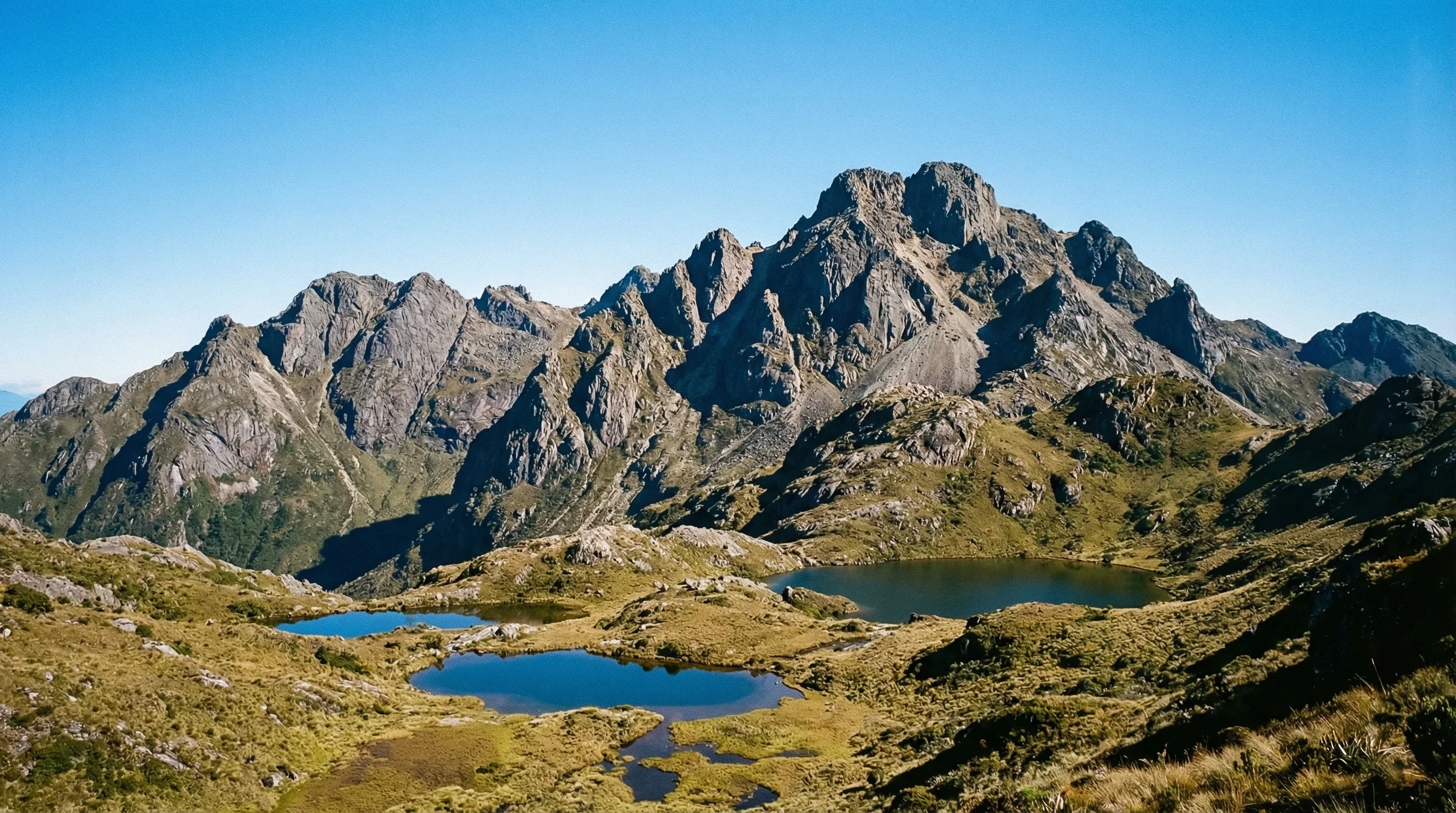

Highlands (Goroka, Mt Hagen)
Ancient cultures in the clouds ⛰️🎭
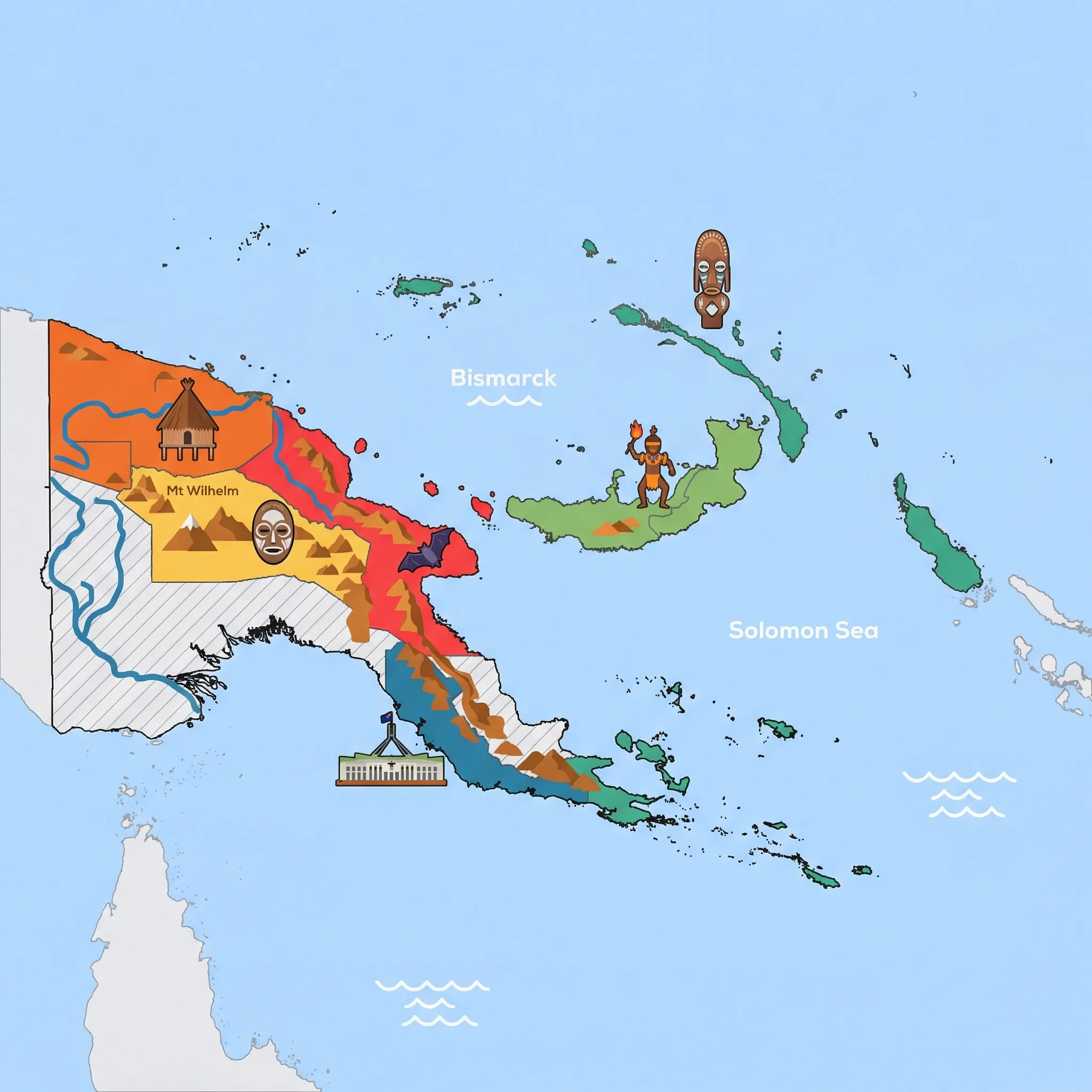
Click a region to explore
⚠️ SAFETY WARNING: Due to ongoing tribal fighting involving firearms and unpredictable roadblocks, government agencies (including the USA, UK, and Australia) advise travelers to reconsider or avoid travel to the Highlands region. The security situation is volatile and can change rapidly. Families are strongly urged to consult their own government's official travel advisory before considering a trip, as circumstances and risk assessments vary.
The Highlands region is the cultural engine of Papua New Guinea, a place of mist-shrouded valleys, patchwork gardens, and vibrant tribal identity. Unlike the humid coast, the air here is cool and fresh, making it a distinct experience for families. The landscape is dominated by the dramatic central cordillera, where life revolves around the fertile valley floors. While the region is famous for its coffee plantations, for a visitor, the real draw is the people. The local communities maintain deep connections to their ancestry, visible in the elaborate body decoration and sing-sings (cultural gatherings) that occur throughout the year. It is a place that feels untamed and raw, offering a profound lesson in human anthropology and resilience.
For families who choose to visit with reputable guides, the experience is unforgettable. The morning mist lifting over the Waghi Valley reveals a way of life that has blended the ancient with the modern. Children will be fascinated by the vivid costumes and the energy of the local markets, though the environment requires constant supervision and awareness. The region's geography is as challenging as it is beautiful, with the Highlands Highway (Okuk Highway) serving as the chaotic, vital artery connecting these mountain towns to the coast.
Key Attractions
The region's history is incredibly deep, best exemplified by the Kuk Early Agricultural Site. This UNESCO World Heritage site offers evidence of independent agricultural development dating back 9,000 years, a fascinating educational stop for older children interested in history. For those seeking natural grandeur, the area around Mount Wilhelm offers breathtaking scenery. While the full summit trek is demanding, the lower slopes and surrounding national park provide a glimpse of high-altitude biodiversity unique to this part of the world. Driving parts of the Highlands Highway (Okuk Highway) offers a window into local life, though road conditions can be rough.
Practical Advice
The best time to visit is during the dry season (May to October). The famous cultural shows, like the Goroka Show in September, are the safest and most structured way to experience tribal culture. Accommodation is generally secure lodges or hotels; camping is not recommended due to security concerns.
Food & Drink
Typical meal times: Breakfast is early, from 6:30 am to 9:00 am. Lunch is served 12:00 pm to 2:00 pm, and dinner typically runs from 6:30 pm to 8:30 pm.
Typical meal costs: Hotel dining is the norm for tourists. A family dinner costs around PGK 200–350 (approx. $50–90 USD / €45–80 EUR).
Dietary requirements: Root vegetables and greens are staples, making vegetarian meals easy to arrange. Gluten-free options are naturally available in local produce but check sauces in hotels.
Signature dishes:
- Mumu – A traditional dish where pork, sweet potatoes, and greens are slow-cooked in an earth oven heated by hot stones.
- Kaukau (Sweet Potato) – The staple of the highlands, roasted or boiled, often served with every meal.
- Highlands Coffee – World-renowned Arabica coffee grown locally, a must-try for parents.
Why this score?
This region serves as a global benchmark for extreme adventure, featuring high-altitude valleys, the rugged Mt Wilhelm, and deep-rooted tribal traditions. Travelers face challenging terrain, limited transport options, and a truly off-the-beaten-path experience that is physically demanding for families.
Why this score?
Provincial hospitals in Goroka and Mt Hagen provide only basic medical care and lack the equipment necessary for specialized treatment. Most serious conditions or injuries would require an expensive medical evacuation to Port Moresby or Australia.
Why this score?
While the region hosts famous cultural festivals like the Goroka Show, international visitor numbers remain extremely low outside of these specific event windows. Infrastructure is limited, and the area is primarily a niche destination for dedicated cultural enthusiasts and mountain trekkers.

Travel here is expensive due to the need for secure transport and guides. Mid-range hotel rooms cost PGK 500–800 (approx. $130–205 USD / €120–190 EUR) per night. Hiring a vehicle with a driver and security can cost PGK 800–1,200 (approx. $205–310 USD / €190–285 EUR) per day.

Getting Here & Around
Getting Here
- Air – Daily flights connect Port Moresby to Goroka (GKA) and Mt Hagen (HGU). This is the safest and most reliable method of entry.
- Road – The Highlands Highway (Okuk Highway) connects Lae to the Highlands, but conditions are poor and security issues are frequent. Flying is strongly preferred for families.
Getting Around
- Private Driver – Essential. Do not use public PMVs (buses) due to safety risks. Hotels can arrange secure transfers with experienced local drivers.
- Organized Tours – Most sightseeing should be done via a tour operator who can navigate local tribal protocols and ensure safety.
Nearby Airports (5 airports)
Goroka
GKAGoroka
Mount Hagen
HGUMount Hagen
Moro Airport
MXHMoro
Tari Airport
TIZTari
Wapenamanda Airport
WBMWapenamanda
View full flight map for Papua New Guinea →
Official Links

Packing List
High-altitude nights drop to 10°C (50°F), surprisingly cold for the tropics
ATMs are unreliable and markets often lack change for large notes
Walking paths and showgrounds can be extremely muddy and unpaved
Running water is not always available at attraction stops
School supplies (pencils, books) or balloons are appreciated if visiting tribal villages, where reciprocity is culturally important.
Power outages are frequent even in towns, and rural village stays often have no electricity at all.
You will frequently remove shoes when entering guest houses, village homes, or custom areas.
Essential for protecting feet from sharp coral and stonefish if exploring the coastal islands and beaches.
Medical facilities are basic; carrying a sterile kit is a wise precaution for remote adventure travel.
Consider buying a local string bag on arrival; it's durable, supports women, and helps you blend in slightly better.

Activities & Best Times

Hiking, wildlife, outdoor exploration, ecotourism
Home to Mt Wilhelm and Mt Giluwe, the region offers world-class high-altitude trekking and unique mountain biodiversity. Peak visitation occurs during the drier winter months when trails are safest and cloud cover is minimal.

Events, celebrations, seasonal attractions
Goroka Show and Mt Hagen Show are internationally renowned cultural festivals that draw global travelers. These are not marginal offerings - they are world-class events that justify very_good rating.

Urban tourism, museums, historical sites, architecture
While culturally rich, the Highlands lack the urban cultural infrastructure (museums, galleries, heritage districts) that justify very_good by international standards. Good is more appropriate for authentic cultural immersion without major urban institutions.

Learning experiences, scientific sites, historical education
Kuk Early Agricultural Site is a UNESCO World Heritage Site with profound historical significance. This warrants at least 'good' rating, not marginal.

Scenic drives, countryside tours, route-based travel
The Highlands Highway offers one of the world's most rugged and scenic driving experiences through dramatic mountain passes. Travel is restricted to the driest months to avoid frequent landslides and road washouts typical of the heavy monsoon season.

Sport tourism, fitness activities, active recreation
Mount Wilhelm and Mount Giluwe provide internationally recognized high-altitude trekking routes with established trail infrastructure. Active travel is prioritized during the dry season for optimal safety and visibility on technical summit pushes.




Public Holidays & Calendar Next 12 months
Public holidays, festivals, cultural celebrations, and seasonal natural phenomena coming up in Highlands (Goroka, Mt Hagen) over the next 12 months.
Loading holidays and events...

Travel Advisory
The majority of international agencies advise exercising a high degree of caution or increased vigilance across Papua New Guinea. While Canada and the US maintain higher 'Reconsider' ratings, the consensus baseline for the country is L1, heavily augmented by L2/L3 regional warnings for the Highlands and Bougainville.
Safety Topics
Traveller Advice (5 groups)

If trekking the Kokoda Track or other trails, always hire a guide from a reputable company. Be aware of unexploded ordnance from WWII in remote areas and monitor local security conditions for the risk of robberies at trailheads.

Do not walk alone or after dark, particularly in Port Moresby, Lae, and Mount Hagen. Use pre-arranged private transport and avoid displaying valuables or using ATMs in public areas.

Be aware of kidnapping risks for ransom or political purposes in remote regions and near industrial mining or logging sites.

Exercise extreme caution as sexual assault and harassment are significant risks. It is strongly recommended to travel in groups rather than alone.

Research local laws and cultural norms thoroughly, as social attitudes toward sexual and gender minorities can be conservative.
Agency Summaries
Maintain high vigilance across the country due to serious crime. Higher risk levels apply to the Highlands region where tribal clashes are frequent.
The security environment remains very challenging. Violent crime is a major concern in both urban centers like Port Moresby and rural provinces.
While general caution is advised nationwide, specific warnings against all but essential travel are in place for Hela, Southern Highlands, and most districts in Enga Province due to tribal violence.
Heightened safety awareness is necessary throughout PNG because of violent crime and the risk of civil disturbances. Regional warnings apply to the Hela and Enga provinces.
Travellers are urged to avoid non-essential trips to Papua New Guinea due to severe levels of violent crime, civil instability, and ethnic conflict.
Reconsider travel plans because of persistent crime, civil unrest, and maritime piracy. Particular areas, including parts of Bougainville and the Highlands, carry even higher risk levels.
Information is provided for general guidance only and does not constitute travel, safety, medical, or legal advice. Conditions may change. Users are responsible for independently verifying information before travel.