
Islands (New Ireland, Bougainville)
Volcanoes, history, and island paradise 🌋🏝️
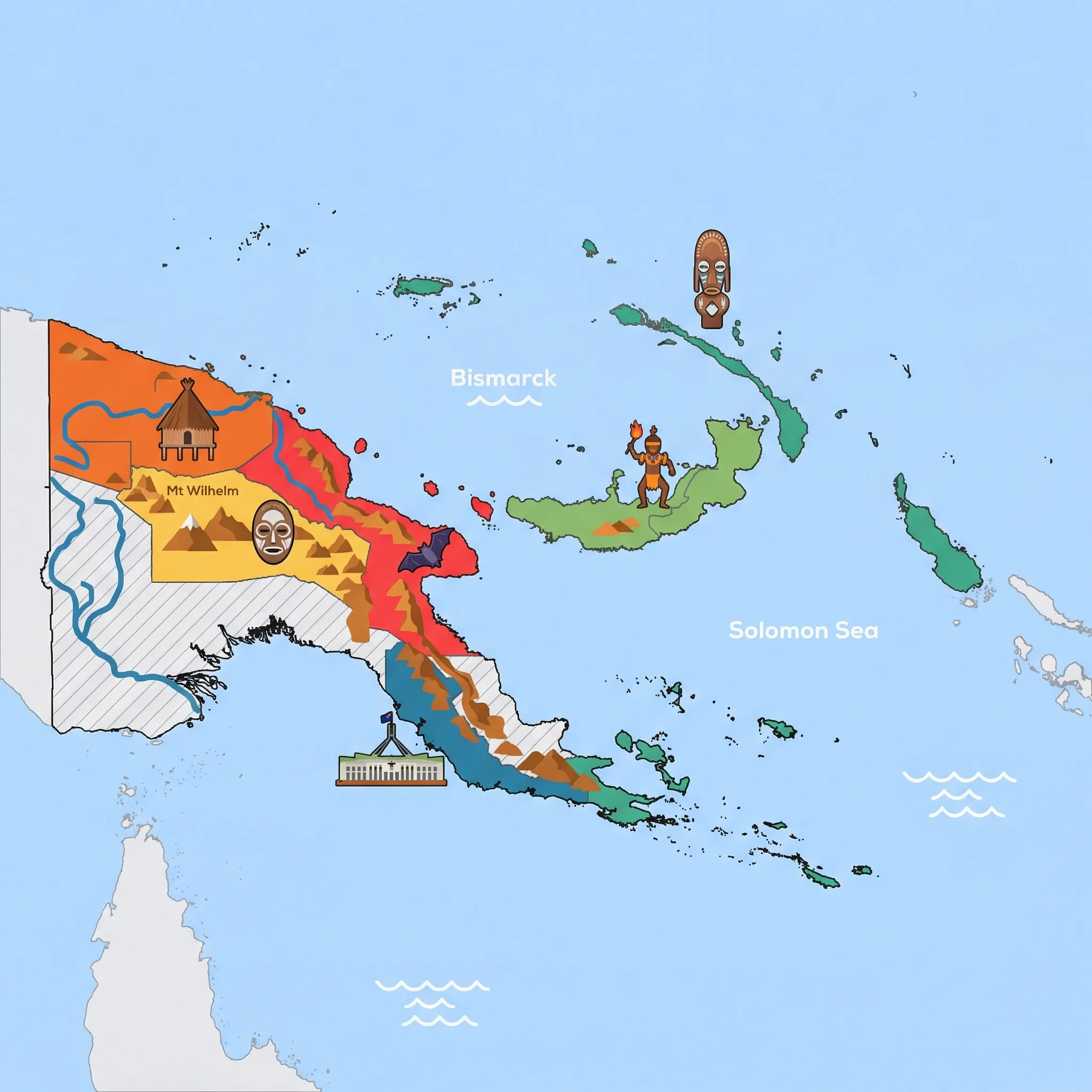
Click a region to explore
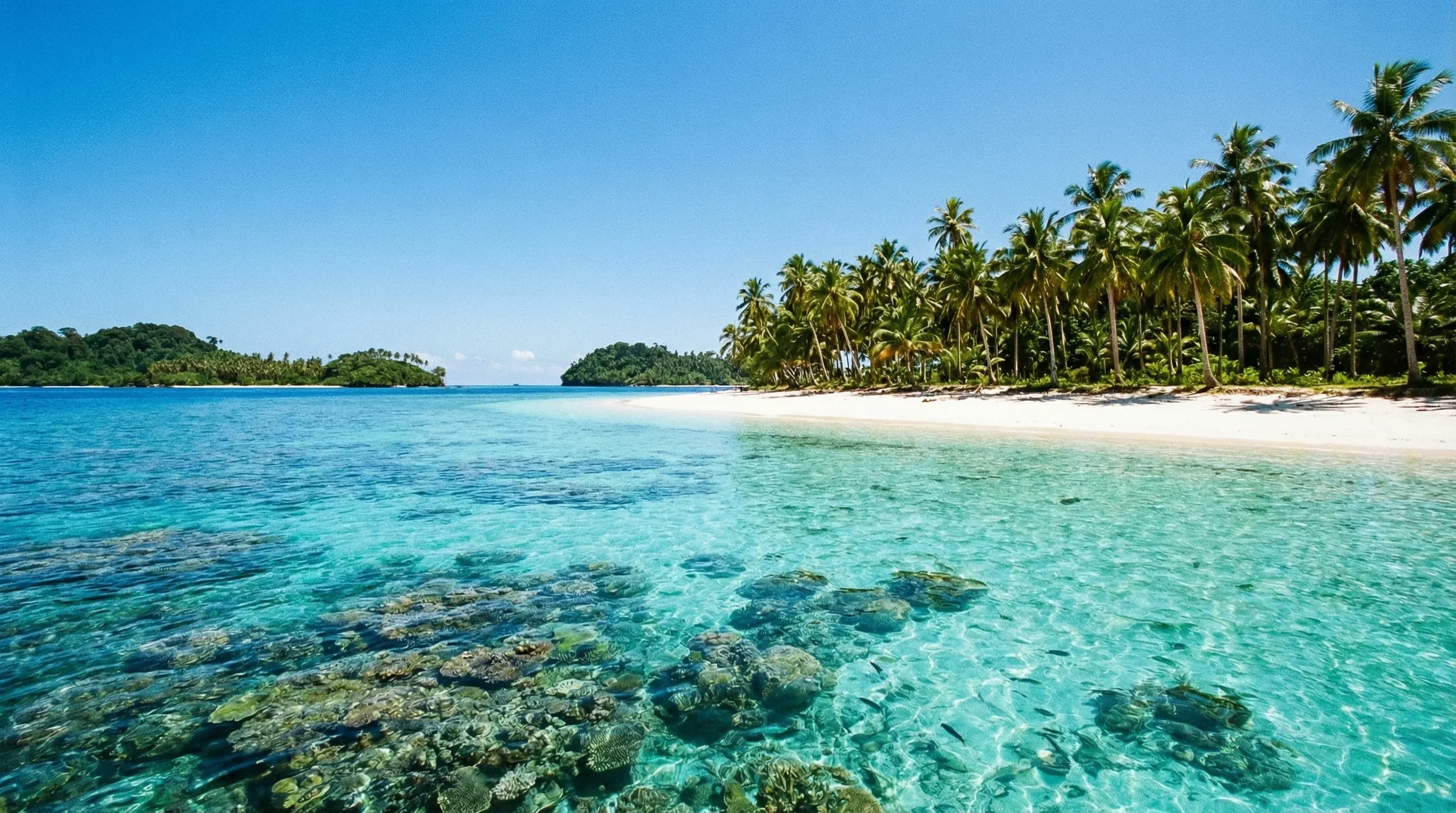
The Islands region offers a distinct contrast to the mainland, with a laid-back oceanic culture and some of the most stunning coastal scenery in the Pacific. For families, this area provides a mix of relaxation and adventure. The geography is dramatic, ranging from the long, slender province of New Ireland with its famous Boluminski Highway to the volcanic fury of New Britain. The ocean here is central to life; clear waters teem with fish, dolphins, and WWII wrecks that are often shallow enough for older children to snorkel over. The pace of life is slower, the people are incredibly welcoming, and the atmosphere feels more like a classic South Pacific getaway, albeit with a raw, adventurous edge.
Culturally, the islands are fascinating. You might encounter the unique Malagan mask culture in New Ireland or learn about the sheer resilience of the Tolai people living in the shadow of active volcanoes. The infrastructure is generally better than the Highlands, with coastal roads offering scenic drives past coconut plantations and traditional villages. It is a place where you can learn about history in the morning and swim in a turquoise lagoon in the afternoon.
Key Attractions
A major highlight of the wider region is the Rabaul caldera. Families can safely view the smoking cone of Mount Tavurvur from a distance, a geology lesson come to life that children will never forget. Nearby, the Old Rabaul Town Area offers a surreal experience; once a thriving capital, it was buried by ash in 1994. Walking its desolate streets and visiting the partially buried erratic buildings is a haunting but essential experience. The combination of natural power and human history here is unique in the world.
Practical Advice
The dry season (May to October) is ideal for calm seas and clear visibility. Malaria is present, so prophylaxis is recommended. Travel between islands is usually by air, as ferries can be overcrowded and safety standards vary.
Food & Drink
Typical meal times: Lunch is usually 12:00 pm to 1:30 pm. Dinner is served 6:00 pm to 8:30 pm.
Typical meal costs: Meals in lodges are pricey. Expect to pay PGK 60–100 (approx. $15–25 USD / €14–24 EUR) for a main course.
Dietary requirements: Fresh seafood is abundant. Vegetarians will find plenty of tropical fruit, root crops, and greens, though variety can be limited in smaller guesthouses.
Signature dishes:
- Aigir – A method of cooking where hot stones are dropped into a pot of coconut milk, vegetables, and chicken or fish.
- Singapore Tarpot – A savory tarot root dish often cooked with coconut cream and meats, a local favorite in Rabaul.
- Fresh Crayfish – Often available cheaply at local markets or roadside stalls.
Why this score?
The region offers significant adventure through its remote atolls and the long, unpaved stretches of the Boluminski Highway. Navigating between islands and exploring the interior of Bougainville involves logistical challenges and very basic living conditions.
Why this score?
Medical infrastructure is minimal across the archipelago, with small rural clinics offering only the most rudimentary services. Foreign travelers are far from reliable emergency care, and language barriers can be significant in local health posts.
Why this score?
These islands receive almost no regular international tourism, catering only to a tiny number of niche surfers, divers, and intrepid explorers. Bougainville is particularly emerging and lacks any established large-scale tourism infrastructure.

Slightly more affordable than the Highlands but still pricey for tourists. A bungalow night costs PGK 350–600 (approx. $90–155 USD / €80–140 EUR). Market food is cheap, with bunches of bananas for PGK 5 (approx. $1.30 USD / €1.20 EUR). Transport is the main expense.

Getting Here & Around
Getting Here
- Air – Air Niugini flies to Kavieng (KVG), Buka (BUA), and Rabaul/Tokua (RAB). Flights are the primary connectors.
- Ferry – Coastal shipping connects some islands, but these are generally not recommended for families due to safety and comfort issues.
Getting Around
- Car – The Boluminski Highway in New Ireland is one of the best roads in the country, perfect for a hired car adventure.
- Boat – Banana boats (dinghies) are common for short hops, but ensure life jackets are provided before boarding.
Nearby Airports (5 airports)
Alotau
GURAlotau
Kimbe Airport
HKNHoskins
Kineshma
KIEKieta
Kavieng
KVGKavieng
Londolovit Airport
LNVLihir Island
View full flight map for Papua New Guinea →

Packing List
Essential for protecting feet from sharp coral and stonefish in shallow waters
Travel often involves small open boats where spray soaks everything
Rental gear is scarce or poor quality; the underwater views are unmissable
Boat crossings between islands can be choppy even in good weather
School supplies (pencils, books) or balloons are appreciated if visiting tribal villages, where reciprocity is culturally important.
Power outages are frequent even in towns, and rural village stays often have no electricity at all.
You will frequently remove shoes when entering guest houses, village homes, or custom areas.
Essential for protecting feet from sharp coral and stonefish if exploring the coastal islands and beaches.
Medical facilities are basic; carrying a sterile kit is a wise precaution for remote adventure travel.
Consider buying a local string bag on arrival; it's durable, supports women, and helps you blend in slightly better.

Activities & Best Times

Hiking, wildlife, outdoor exploration, ecotourism
World-class volcano trekking at Mount Tavurvur and historic jungle paths like the Numa Numa Track offer deep wilderness immersion. The drier months (Jun-Sep) are peak for safety and accessibility, whereas the peak monsoon season (Dec-Mar) creates challenging trail conditions.

Beach resorts, marine activities: diving, snorkelling, kite surfing, wind surfing, sailing
Features remote islands like Little Pigeon and Sohano which offer exceptional marine life and pristine coastal environments for snorkeling. Peak visitation occurs during the calmer, clearer period from June to September, while the high-rainfall months of December to March can degrade visibility.

Urban tourism, museums, historical sites, architecture
WWII history is significant, but urban cultural infrastructure is limited. International calibration suggests 'good' rather than very_good for this level of development.

Sport tourism, fitness activities, active recreation
Provides high-quality active opportunities such as cycling the Boluminski Highway and trekking the Tavurvur volcano. Facilities and routes are best utilized during the drier months from June to September, as heavy rainfall between December and March increases difficulty and risk.

Scenic drives, countryside tours, route-based travel
Includes the Boluminski Highway and the Kokopo-Rabaul Coastal Road, providing scenic routes through tropical plantations and along volcanic coastlines. Best experienced during the drier window (Jun-Sep) to ensure better road safety and clearer vistas.

Attractions (4 total)



Public Holidays & Calendar Next 12 months
Public holidays, festivals, cultural celebrations, and seasonal natural phenomena coming up in Islands (New Ireland, Bougainville) over the next 12 months.
Loading holidays and events...

Travel Advisory
The majority of international agencies advise exercising a high degree of caution or increased vigilance across Papua New Guinea. While Canada and the US maintain higher 'Reconsider' ratings, the consensus baseline for the country is L1, heavily augmented by L2/L3 regional warnings for the Highlands and Bougainville.
Safety Topics
Traveller Advice (5 groups)

If trekking the Kokoda Track or other trails, always hire a guide from a reputable company. Be aware of unexploded ordnance from WWII in remote areas and monitor local security conditions for the risk of robberies at trailheads.

Do not walk alone or after dark, particularly in Port Moresby, Lae, and Mount Hagen. Use pre-arranged private transport and avoid displaying valuables or using ATMs in public areas.

Be aware of kidnapping risks for ransom or political purposes in remote regions and near industrial mining or logging sites.

Exercise extreme caution as sexual assault and harassment are significant risks. It is strongly recommended to travel in groups rather than alone.

Research local laws and cultural norms thoroughly, as social attitudes toward sexual and gender minorities can be conservative.
Agency Summaries
Maintain high vigilance across the country due to serious crime. Higher risk levels apply to the Highlands region where tribal clashes are frequent.
The security environment remains very challenging. Violent crime is a major concern in both urban centers like Port Moresby and rural provinces.
While general caution is advised nationwide, specific warnings against all but essential travel are in place for Hela, Southern Highlands, and most districts in Enga Province due to tribal violence.
Heightened safety awareness is necessary throughout PNG because of violent crime and the risk of civil disturbances. Regional warnings apply to the Hela and Enga provinces.
Travellers are urged to avoid non-essential trips to Papua New Guinea due to severe levels of violent crime, civil instability, and ethnic conflict.
Reconsider travel plans because of persistent crime, civil unrest, and maritime piracy. Particular areas, including parts of Bougainville and the Highlands, carry even higher risk levels.
Information is provided for general guidance only and does not constitute travel, safety, medical, or legal advice. Conditions may change. Users are responsible for independently verifying information before travel.