
Kokopo & East New Britain
Tropical adventures in the shadow of volcanoes 🌋🌿
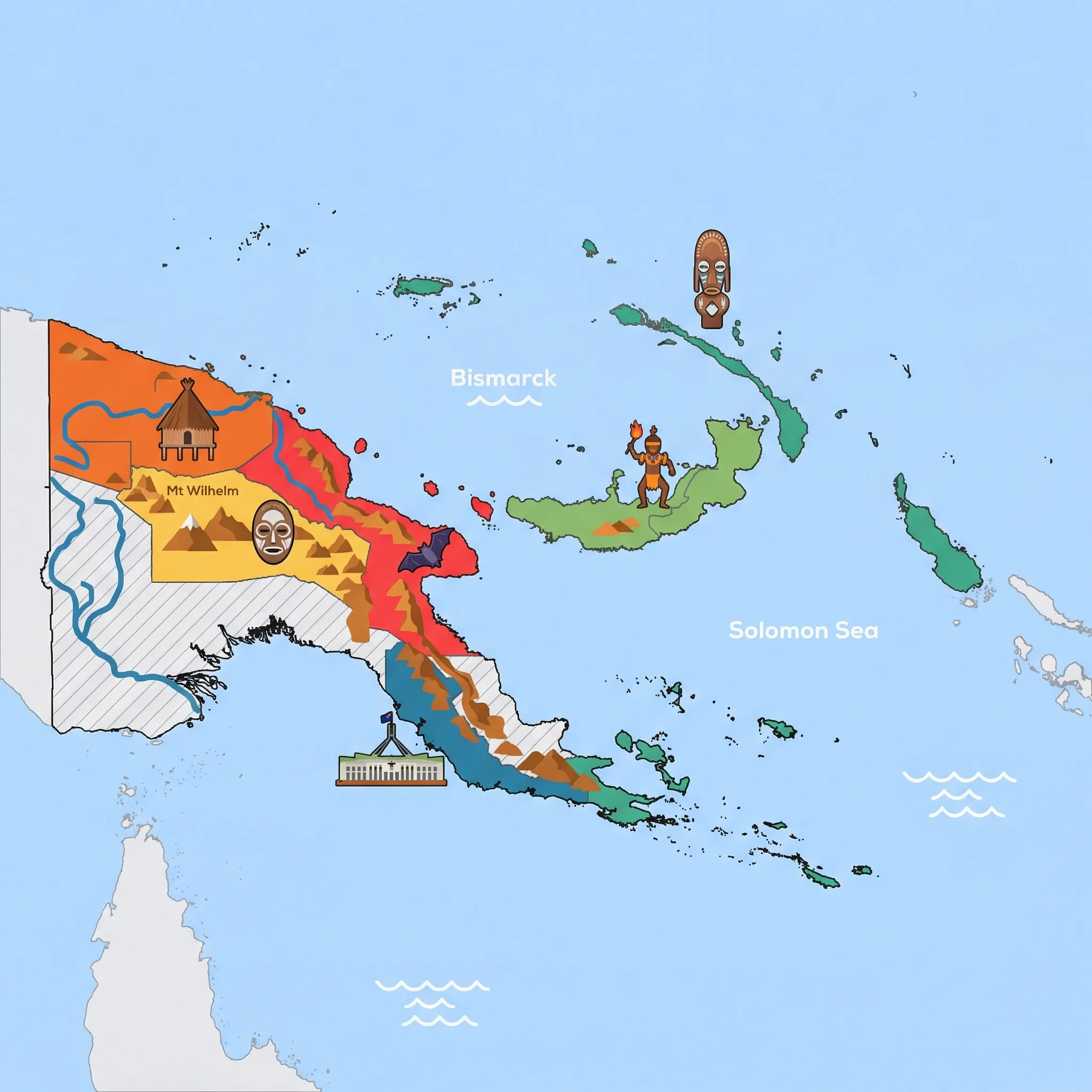
Click a region to explore
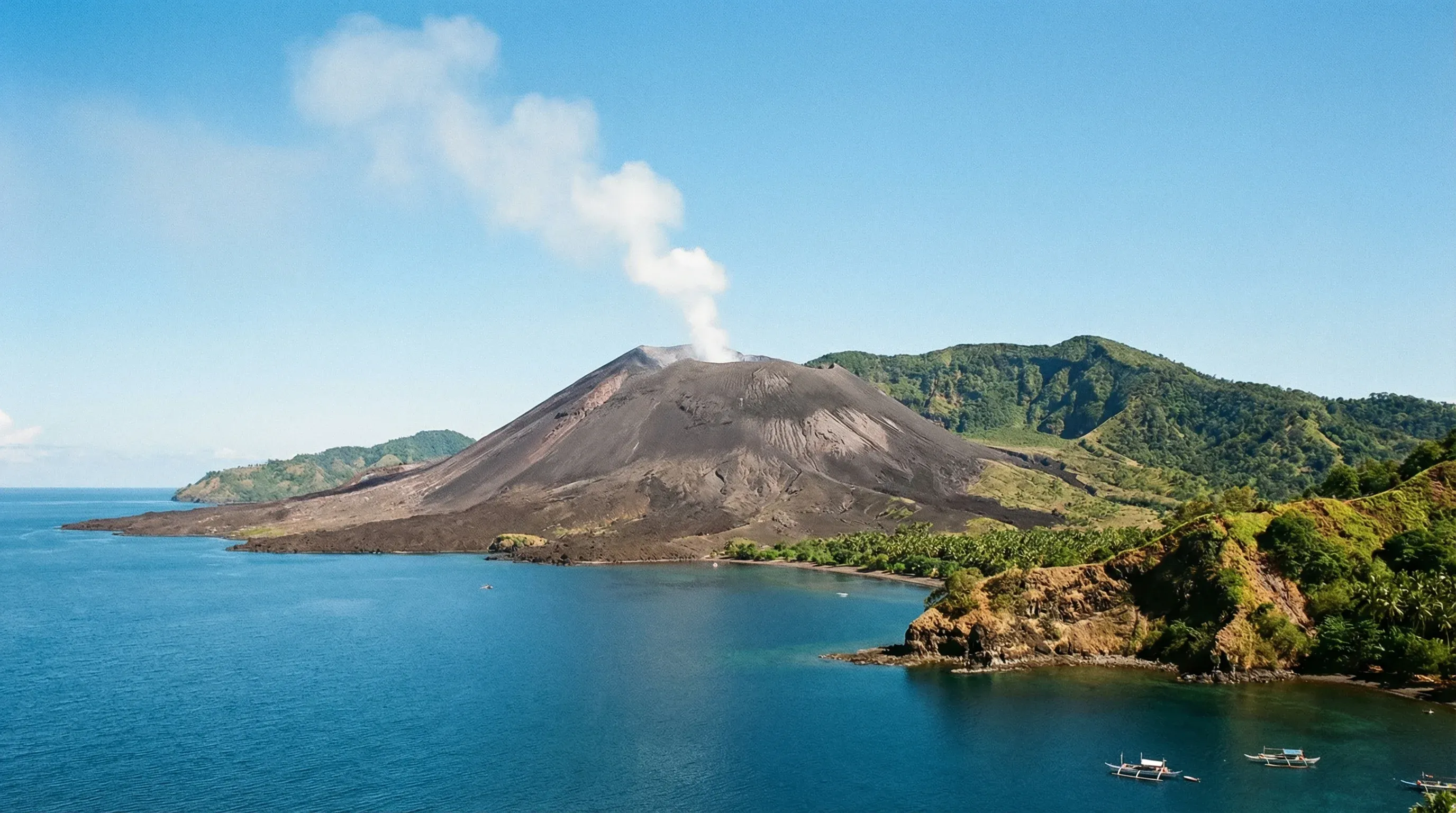
Kokopo has risen from the ashes of the 1994 volcanic eruptions to become the commercial and tourism hub of East New Britain. For families, this is often the most accessible and comfortable region in Papua New Guinea outside of the capital. The town itself is leafy, well-organized, and sits on a stunning coastline overlooking the calm waters of the Blanche Bay. The backdrop is dramatic: the smoldering cones of the volcanoes across the bay are a constant reminder of the earth's power. Unlike the chaotic energy of the mainland, Kokopo feels orderly and welcoming, with a well-developed tourism infrastructure that caters to international visitors.
The region is a living museum. The jungle is reclaimed WWII aircraft, Japanese barge tunnels, and Admiral Yamamoto's bunker, all of which are accessible to curious older children. The waters of Simpson Harbour offer incredible diving and snorkeling, often with dolphins spinning in the wake of your boat. Culturally, the Tolai people are famous for their 'shell money' (Tabu), which is still used in traditional exchanges today—a fascinating concept for kids to learn about. Whether you are watching the fireflies in the trees at night or visiting the bustling Kokopo Market by day, the region offers a blend of safety, culture, and nature.
Key Attractions
While the region is packed with history, the Kokopo War Museum is a highlight for families, displaying rusted tanks, planes, and artillery in a garden setting that allows kids to get up close to history. A boat trip to the Beehives (Dawapia Rocks) in the middle of the harbour offers great snorkeling in deep, clear water. For a unique cultural experience, a visit to the Bitapaka War Cemetery provides a serene and beautifully maintained place to reflect on the Pacific War's history. Finally, the bustling Kokopo Market is safe and clean, perfect for buying fresh tropical fruit and local handicrafts.
Practical Advice
Kokopo is a year-round destination, though the wet season (December to March) can bring heavy tropical downpours. It is one of the few places in PNG where walking around town during the day is generally considered safe, though normal precautions should apply.
Food & Drink
Typical meal times: Lunch is 12:00 pm to 2:00 pm. Dinner is usually 6:30 pm to 9:00 pm.
Typical meal costs: A meal at a resort or hotel will cost PGK 60–120 (approx. $15–30 USD / €14–28 EUR). Local kai bars are cheaper but less suited for delicate tourist stomachs.
Dietary requirements: Most resorts cater well to Western diets. Gluten-free travelers can rely on fresh fish, rice, and fruit, which are staples here.
Signature dishes:
- Kaukau and Coconut Cream – Sweet potato baked in rich, fresh coconut cream.
- Talapia – Fresh fish from the bay, often grilled simply with lime and chili.
- Taro – A starchy root vegetable that is a cultural staple of the Tolai people.
Why this score?
The presence of the active Mt Tavurvur volcano and jungle-clad WWII ruins provides a notable adventure profile for active families. Exploring the Duke of York Islands and snorkeling in remote reefs adds a layer of ruggedness to the coastal experience.
Why this score?
Kokopo has slightly better medical facilities than the mainland interior, but services are still basic and not geared toward international standards. While minor ailments can be treated, the region lacks high-level emergency or surgical capacity for tourists.
Why this score?
Kokopo is one of the more developed tourism hubs in the country due to its WWII history and diving, yet it remains obscure compared to global coastal destinations. It sees occasional cruise ship visits, but steady international tourist flow is very low.

Kokopo offers better value than Port Moresby. A good family room in a resort costs PGK 400–700 (approx. $100–180 USD / €95–165 EUR). Tours can be pricey, often around PGK 300 (approx. $75 USD / €70 EUR) per person, but include transport and guides.

Getting Here & Around
Getting Here
- Air – Tokua Airport (RAB) is about 20 minutes from Kokopo. Daily flights arrive from Port Moresby.
- Sea – Cruise ships often dock here, making it a popular day-trip stop.
Getting Around
- Car Hire – Rental cars and taxis are readily available and reliable in Kokopo.
- Tours – Many hotels offer comprehensive half-day or full-day tours of the Rabaul area, which is the easiest way to see the volcanic sites safely.
Nearby Airports (1 airport)
Tokua Airport
RABRabaul
View full flight map for Papua New Guinea →
Official Links

Packing List
Useful for exploring the dark WWII Japanese barge tunnels
The sun is intense and you will likely be spending time in the water
Mosquitoes are active day and night; malaria risk is present
Tropical downpours are sudden and heavy even in the dry season
School supplies (pencils, books) or balloons are appreciated if visiting tribal villages, where reciprocity is culturally important.
Power outages are frequent even in towns, and rural village stays often have no electricity at all.
You will frequently remove shoes when entering guest houses, village homes, or custom areas.
Essential for protecting feet from sharp coral and stonefish if exploring the coastal islands and beaches.
Medical facilities are basic; carrying a sterile kit is a wise precaution for remote adventure travel.
Consider buying a local string bag on arrival; it's durable, supports women, and helps you blend in slightly better.

Activities & Best Times

Hiking, wildlife, outdoor exploration, ecotourism
Active volcanology and unique ecosystems, like the megapode egg sites, provide highly authentic wilderness encounters. Treks to Mount Tavurvur are best during drier months to ensure safe footing and clear views.

Beach resorts, marine activities: diving, snorkelling, kite surfing, wind surfing, sailing
The Duke of York Islands offer pristine snorkeling and marine biodiversity, though infrastructure is rustic. Peak season aligns with the calmer seas and higher visibility of the southeast trade wind season.

Urban tourism, museums, historical sites, architecture
The 'Pompeii of the Pacific' is a unique niche attraction, but international calibration for very_good city_cultural requires more comprehensive urban cultural infrastructure. Good is more appropriate.

Scenic drives, countryside tours, route-based travel
The coastal drive between Kokopo and Rabaul offers dramatic volcanic landscapes and harbour vistas on well-maintained primary routes. Peak travel occurs when dry conditions ensure the best visibility and road safety.

Sport tourism, fitness activities, active recreation
Challenging volcanic ascents provide recognized trekking routes for active travelers seeking physical engagement. These activities are heavily seasonal, as the tropical wet season makes the volcanic ash slopes dangerously unstable.

Learning experiences, scientific sites, historical education
The Volcanological Observatory provides niche scientific insight, though it serves more as a specialized stop than a primary travel motivator. Visiting is most reliable when regional tourism infrastructure is fully operational in the dry season.

Events, celebrations, seasonal attractions
The National Mask and Warwagira Festival in July is a world-class display of Tolai Baining fire dances and traditional culture. Outside of this specific event window, the region lacks major internationally-recognized seasonal celebrations.




Public Holidays & Calendar Next 12 months
Public holidays, festivals, cultural celebrations, and seasonal natural phenomena coming up in Kokopo & East New Britain over the next 12 months.
Loading holidays and events...

Travel Advisory
The majority of international agencies advise exercising a high degree of caution or increased vigilance across Papua New Guinea. While Canada and the US maintain higher 'Reconsider' ratings, the consensus baseline for the country is L1, heavily augmented by L2/L3 regional warnings for the Highlands and Bougainville.
Safety Topics
Traveller Advice (5 groups)

If trekking the Kokoda Track or other trails, always hire a guide from a reputable company. Be aware of unexploded ordnance from WWII in remote areas and monitor local security conditions for the risk of robberies at trailheads.

Do not walk alone or after dark, particularly in Port Moresby, Lae, and Mount Hagen. Use pre-arranged private transport and avoid displaying valuables or using ATMs in public areas.

Be aware of kidnapping risks for ransom or political purposes in remote regions and near industrial mining or logging sites.

Exercise extreme caution as sexual assault and harassment are significant risks. It is strongly recommended to travel in groups rather than alone.

Research local laws and cultural norms thoroughly, as social attitudes toward sexual and gender minorities can be conservative.
Agency Summaries
Maintain high vigilance across the country due to serious crime. Higher risk levels apply to the Highlands region where tribal clashes are frequent.
The security environment remains very challenging. Violent crime is a major concern in both urban centers like Port Moresby and rural provinces.
While general caution is advised nationwide, specific warnings against all but essential travel are in place for Hela, Southern Highlands, and most districts in Enga Province due to tribal violence.
Heightened safety awareness is necessary throughout PNG because of violent crime and the risk of civil disturbances. Regional warnings apply to the Hela and Enga provinces.
Travellers are urged to avoid non-essential trips to Papua New Guinea due to severe levels of violent crime, civil instability, and ethnic conflict.
Reconsider travel plans because of persistent crime, civil unrest, and maritime piracy. Particular areas, including parts of Bougainville and the Highlands, carry even higher risk levels.
Information is provided for general guidance only and does not constitute travel, safety, medical, or legal advice. Conditions may change. Users are responsible for independently verifying information before travel.