
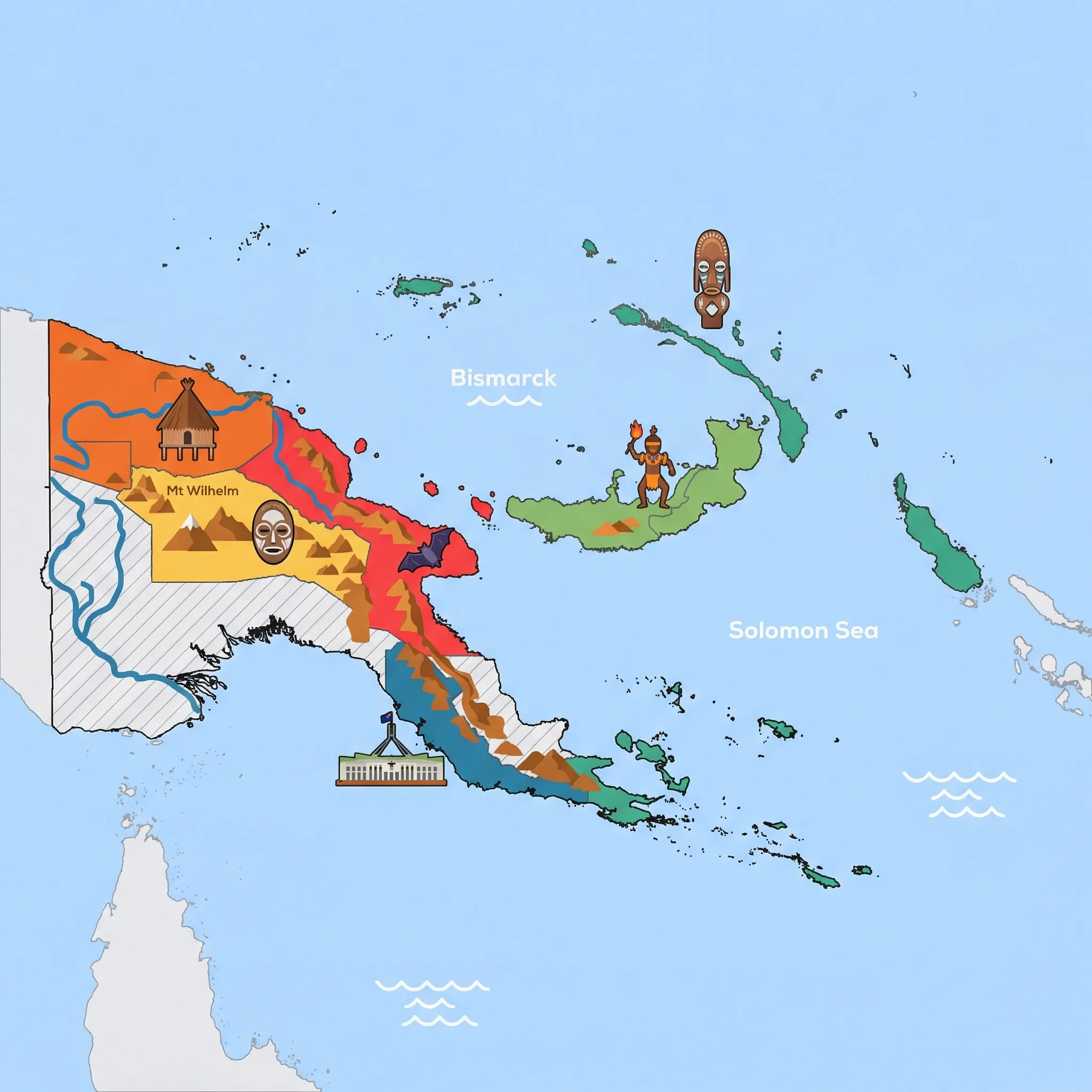
Click a region to explore
⚠️ SAFETY WARNING: Due to remoteness, limited medical infrastructure, and unpredictable security, government agencies (including the USA and UK) advise travelers to reconsider travel to the Sepik region. Emergency evacuation is extremely difficult. Families are strongly urged to consult their own government's official travel advisory before considering a trip, as circumstances and risk assessments vary.
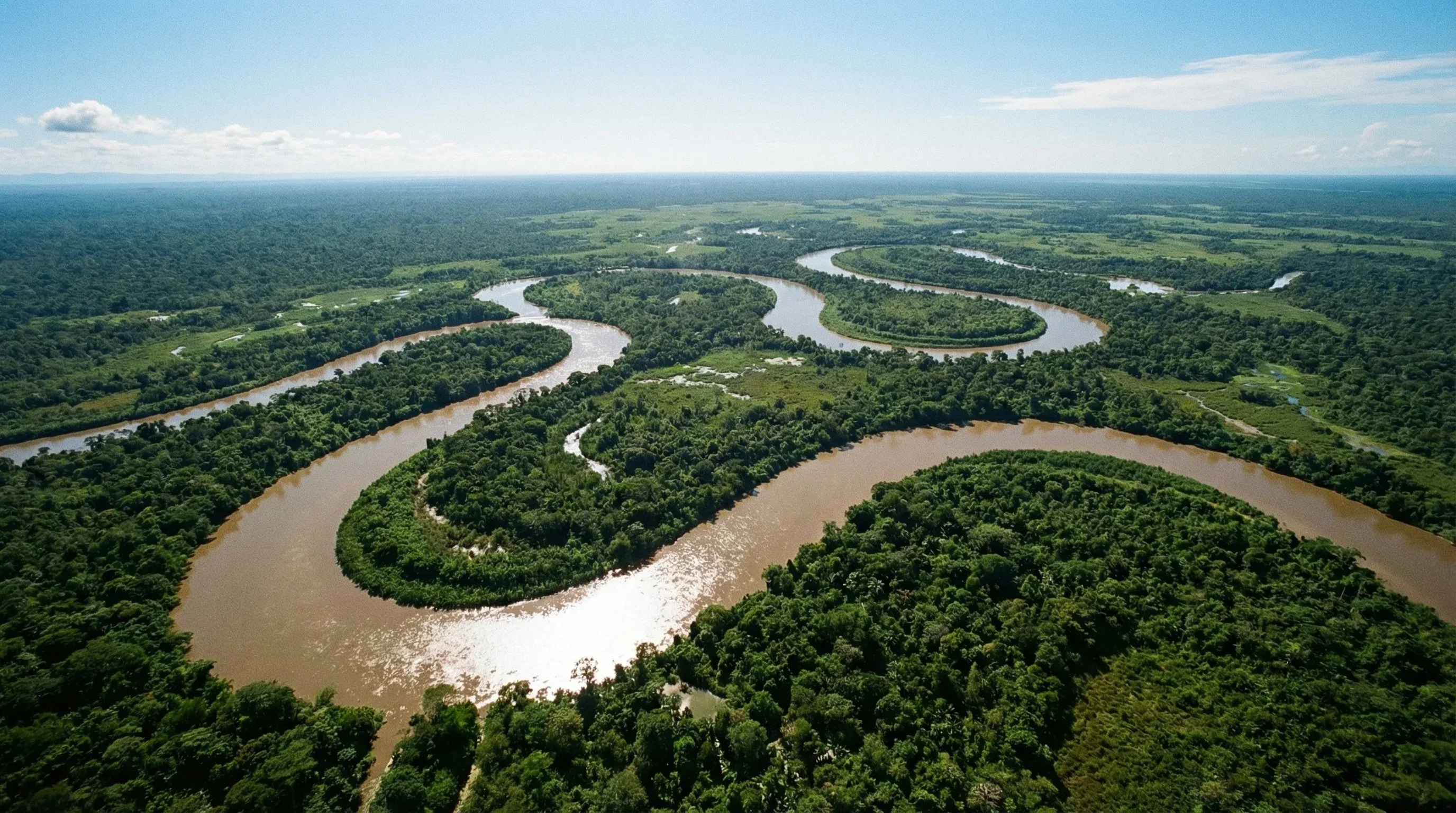
The Sepik is not just a place; it is an experience. Dominated by the massive, serpentine Sepik River, this region is the artistic heart of the country. For families, this is a true expedition. There are no roads here; the river is the highway. Life revolves around the water, with villages built on stilts to survive the floods. The culture is incredibly rich, famous for its 'Haus Tambarans' (Spirit Houses) and intricate crocodile carvings. It is a place where children can see a way of life completely different from their own, where dug-out canoes are the family car and crocodiles are revered ancestors.
Visiting the Sepik requires planning. You will likely stay in simple village guesthouses, sleeping under mosquito nets and eating local produce. It is hot, humid, and buggy, but the reward is a cultural immersion that is vanishing from the rest of the world. Watching the sun set over the river while local guides tell legends of the crocodile spirits is a magical experience. However, it is suited only for older children and teenagers who can handle rough travel conditions and basic amenities.
Key Attractions
The Sepik River itself is the main attraction. A typical tour involves travelling by motorized canoe between villages like Kanganaman or Palembei. Here, families can enter the impressive Spirit Houses (note: some may have gender restrictions, though tourists are often exempted). Wewak, the coastal gateway, offers a chance to see Cape Wom, where the Japanese forces surrendered in WWII, and provides a comfortable base before or after the river expedition.
Practical Advice
The dry season (May to October) is easier for travel, though the river levels drop. The wet season brings fewer mosquitoes but more mud. Travel here MUST be with a reputable tour operator who provides boats, fuel, and community liaisons.
Food & Drink
Typical meal times: Village life dictates meal times; usually sunrise, midday, and sunset.
Typical meal costs: All-inclusive in tour packages. If buying in Wewak, a meal costs PGK 30–60 (approx. $8–15 USD / €7–14 EUR).
Dietary requirements: Very limited. You will eat what is available—sago, river fish, greens, and fruit. Bring your own snacks if you have picky eaters.
Signature dishes:
- Sago – The absolute staple, processed from the sago palm, often eaten as a rubbery jelly.
- River Prawns – Large freshwater prawns caught in the river, delicious when grilled.
- Crocodile Meat – Sometimes available, tasting like a mix of chicken and fish.
Why this score?
Traveling by dugout canoe through the vast Sepik river system is a serious adventure destination involving challenging terrain and total immersion in remote rainforests. The lack of electricity, roads, and modern amenities makes it an expedition-style experience.
Why this score?
Medical facilities along the Sepik River are virtually non-existent, consisting of tiny aid posts with no modern supplies. Anyone visiting the river is many hours or even days away from a hospital capable of performing even minor surgeries.
Why this score?
The Sepik River is a legendary destination for tribal art, yet its extreme remoteness means it is visited by only a few hundred foreign tourists annually. Logistics are difficult and expensive, keeping it firmly in the category of almost no foreign tourism.

While village living costs are low, the logistics of getting there (fuel, boat hire, guides) make it expensive. A 3-4 day river tour can cost PGK 3,000–5,000 (approx. $770–1,280 USD / €710–1,190 EUR) per person. It is an expedition, not a holiday.

Getting Here & Around
Getting Here
- Air – Fly from Port Moresby to Wewak (WWK). From Wewak, it is a drive and then a boat journey to reach the river proper.
- River – Once on the river, all transport is by motorized dug-out canoe.
Getting Around
- Motorized Canoe – The only way to travel between villages. Long days on the water are common.
- Walking – Inside villages, footpaths are the only infrastructure.
Nearby Airports (2 airports)
Vanimo
VAIVanimo
Wewak International
WWKWewak
View full flight map for Papua New Guinea →

Packing List
Bottled water is unavailable in remote villages; you must treat river/rain water
Village guesthouses may have holes in theirs; malaria risk is high
There is no electricity in most river villages to charge cameras or phones
School supplies (pens, books) are greatly appreciated by village communities
School supplies (pencils, books) or balloons are appreciated if visiting tribal villages, where reciprocity is culturally important.
Power outages are frequent even in towns, and rural village stays often have no electricity at all.
You will frequently remove shoes when entering guest houses, village homes, or custom areas.
Essential for protecting feet from sharp coral and stonefish if exploring the coastal islands and beaches.
Medical facilities are basic; carrying a sterile kit is a wise precaution for remote adventure travel.
Consider buying a local string bag on arrival; it's durable, supports women, and helps you blend in slightly better.

Activities & Best Times

Hiking, wildlife, outdoor exploration, ecotourism
Sepik River expeditions are globally iconic adventure experiences, comparable to Amazon or Mekong journeys. The region offers world-class river exploration and wilderness immersion that justifies very_good rating.

Urban tourism, museums, historical sites, architecture
Home to the world-renowned Spirit Houses (Haus Tambaran) and ancient woodcarving traditions in villages like Kanganamun. Access to these remote heritage sites is significantly easier during the drier months when flooding is less frequent.

Beach resorts, marine activities: diving, snorkelling, kite surfing, wind surfing, sailing
Muschu and Kairiru Islands provide secluded, pristine coastal experiences, though facilities are basic compared to international standards. Sea visibility for snorkeling is optimal during the drier window outside of the heavy monsoon rains.

Events, celebrations, seasonal attractions
The Sepik River Crocodile Festival in Ambunti is a globally unique cultural event showcasing tribal rites and traditions. The peak occurs specifically in August, with months outside this window offering very little in the way of major international festivals.

Scenic drives, countryside tours, route-based travel
The Sepik Highway offers an adventurous transit through the region's diverse landscapes, but requires 4WD and experienced handling. Trips are discouraged during the peak wet season due to high risks of road washouts and river crossings becoming impassable.




Public Holidays & Calendar Next 12 months
Public holidays, festivals, cultural celebrations, and seasonal natural phenomena coming up in Sepik Region over the next 12 months.
Loading holidays and events...

Travel Advisory
The majority of international agencies advise exercising a high degree of caution or increased vigilance across Papua New Guinea. While Canada and the US maintain higher 'Reconsider' ratings, the consensus baseline for the country is L1, heavily augmented by L2/L3 regional warnings for the Highlands and Bougainville.
Safety Topics
Traveller Advice (5 groups)

If trekking the Kokoda Track or other trails, always hire a guide from a reputable company. Be aware of unexploded ordnance from WWII in remote areas and monitor local security conditions for the risk of robberies at trailheads.

Do not walk alone or after dark, particularly in Port Moresby, Lae, and Mount Hagen. Use pre-arranged private transport and avoid displaying valuables or using ATMs in public areas.

Be aware of kidnapping risks for ransom or political purposes in remote regions and near industrial mining or logging sites.

Exercise extreme caution as sexual assault and harassment are significant risks. It is strongly recommended to travel in groups rather than alone.

Research local laws and cultural norms thoroughly, as social attitudes toward sexual and gender minorities can be conservative.
Agency Summaries
Maintain high vigilance across the country due to serious crime. Higher risk levels apply to the Highlands region where tribal clashes are frequent.
The security environment remains very challenging. Violent crime is a major concern in both urban centers like Port Moresby and rural provinces.
While general caution is advised nationwide, specific warnings against all but essential travel are in place for Hela, Southern Highlands, and most districts in Enga Province due to tribal violence.
Heightened safety awareness is necessary throughout PNG because of violent crime and the risk of civil disturbances. Regional warnings apply to the Hela and Enga provinces.
Travellers are urged to avoid non-essential trips to Papua New Guinea due to severe levels of violent crime, civil instability, and ethnic conflict.
Reconsider travel plans because of persistent crime, civil unrest, and maritime piracy. Particular areas, including parts of Bougainville and the Highlands, carry even higher risk levels.
Information is provided for general guidance only and does not constitute travel, safety, medical, or legal advice. Conditions may change. Users are responsible for independently verifying information before travel.