

Often overlooked by travelers rushing to its larger neighbors, Paraguay offers a refreshingly authentic South American experience. Known as the "Heart of America" due to its central location, this landlocked nation is defined by its contrasting landscapes: the humid, green Orient to the east and the dry, thorny Gran Chaco to the west. For families, Paraguay provides a safe, affordable, and adventurous destination where the pace of life is relaxed and the people are famously hospitable. Cultural immersion is easy here; it is the only country in the Americas where the indigenous language, Guaraní, is spoken by the majority of the population alongside Spanish.
Traveling in Paraguay is an off-the-beaten-path adventure. While it lacks the massive tourist infrastructure of Brazil or Argentina, it makes up for it with charm and accessibility. Families can visit impressive colonial ruins without fighting crowds, enjoy modern amenities in the capital of Asunción, and discover a riverside holiday atmosphere in the south. The climate is subtropical and hot, making water activities and leisurely afternoons a must. Whether you are drinking ice-cold tereré with locals or watching capybaras in the wetlands, Paraguay offers memories distinct from anywhere else on the continent.
Key Attractions
A highlight for any family visiting Paraguay is the Jesuit Missions & South region. Here, the UNESCO World Heritage sites of the Jesuit Mission of La Santísima Trinidad de Paraná and the Jesuit Mission of Jesús de Tavarangue offer a fascinating glimpse into history. Children will love exploring the massive red-stone ruins, wandering through the ancient archways, and learning about the unique utopian societies built here centuries ago. At night, Trinidad often hosts a magical light and sound show that brings the history to life.
In the capital, Asunción, families can admire the flamingo-pink Palacio de los López, the seat of the government, before taking a stroll along the Costanera corniche. For a break from the city heat, the Asunción Botanical Garden and Zoo provides a sprawling green space with shade trees and native animals. Nearby, Parque Ñu Guasú is the perfect spot for kids to run free, fly kites, or ride bicycles on safe, paved paths away from traffic.
For nature-loving families willing to venture further, the vast Gran Chaco (west) offers a true wilderness experience. The Defensores del Chaco National Park is home to jaguars, pumas, and tapirs, though the sheer remoteness means this is best for older children and adventurous parents. Closer to civilization, the city of Encarnación is known as the "Pearl of the South" and features the beautiful Playa San José, a wide river beach with calm waters perfect for swimming and building sandcastles.
Practical Advice
The best time to visit is during the cooler months from May to September, when temperatures are pleasant (15°C–25°C). The summer (December to March) can be intensely hot and humid. Paraguay is generally safe for families, but dengue fever is a risk, so high-quality insect repellent is essential. Shops and smaller businesses often close for a siesta between 12:00 pm and 3:00 pm, so plan your days accordingly. English is not widely spoken outside major hotels, so a translation app or phrasebook is highly recommended.
Food & Drink
Typical meal times: Lunch is the main meal of the day, typically served from 12:00 pm to 2:30 pm. Dinner is eaten late, usually from 8:00 pm to 11:00 pm, though family restaurants will serve earlier.
Typical meal costs: 30,000–80,000 PYG (approx. $4–10.50 USD / €3.80–10 EUR). Street snacks like empanadas cost significantly less.
Dietary requirements: Paraguayan cuisine is heavy on meat (beef/pork) and starch (corn/manioc). Vegetarians can rely on corn-based dishes like sopa paraguaya and fresh fruit, but vegan options are limited outside Asunción. Gluten-free travelers will find manioc (cassava) dishes helpful, but cross-contamination is possible.
Family-friendly dining: Paraguayans love children, and they are welcome everywhere. Most restaurants are casual and offer highchairs. Rodizio style steakhouses (churrasquerías) are popular and allow kids to try small portions of many different foods.
Signature dishes:
- Sopa Paraguaya – Surprisingly, this is not a soup but a dense, savory cornbread made with cheese, onions, and milk; a national staple kids usually love.
- Chipa – A chewy, bagel-shaped bread made from manioc starch and cheese, sold everywhere as a snack.
- Mbeju – A pan-fried starch cake made of manioc flour and cheese, crispy on the outside and gooey on the inside.
- Vorí Vorí – A comforting, thick chicken soup with small cornmeal and cheese dumplings.
- Tereré – The national drink; a cold herbal tea sipped through a metal straw (bombilla) from a shared horn or cup (older kids might enjoy the ritual).

Paraguay is one of the most affordable destinations in South America. A family of four can expect to spend around 900,000–1,400,000 PYG (approx. $115–180 USD / €110–170 EUR) per day, covering mid-range accommodation, car hire, and hearty meals. Entrance fees to major sites like the Jesuit Missions are very low compared to global standards.
Age Suitability





Did you know? Paraguay welcomes approximately 1.1 million international visitors per year.
Explore Regions
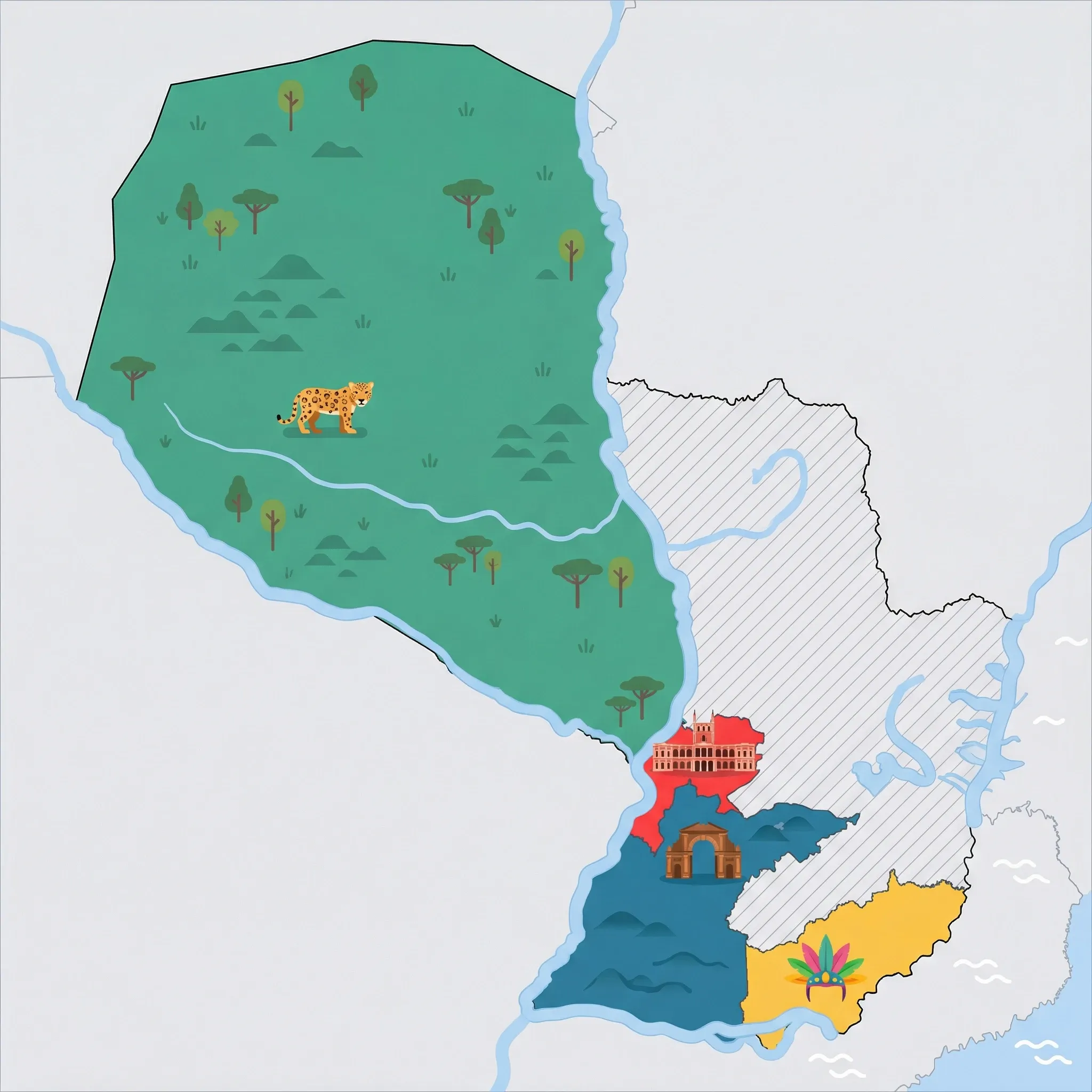
4 Regions
Asunción
Colonial charm and subtropical rhythms in South America's greenest capital 🌿🏛️
Encarnación (Carnival)
The Pearl of the South: River beaches, carnival rhythms, and ancient ruins 🏖️🎭
Gran Chaco (west)
A wild frontier of thorny forests, jaguars, and endless skies 🌵🐆
Jesuit Missions & South
Walk through history on the red earth road of the Jesuit Missions 🏛️🌿
Click on a region marker to explore details. Use the dropdown to color regions by activity suitability.

Getting There & Around
Getting There
- By Air – Silvio Pettirossi International Airport (ASU) in Luque serves Asunción. It receives flights from major South American hubs like São Paulo, Buenos Aires, and Santiago, plus a direct route from Madrid.
- By Land – Many travelers arrive by bus from Foz do Iguaçu (Brazil) or Puerto Iguazú (Argentina) via the Friendship Bridge into Ciudad del Este. Borders can be busy.
- Entry Requirements – US, UK, and EU citizens generally do not need a visa for stays up to 90 days. Check your government website for the latest visa requirements, or use the IATA Travel Centre entry-requirements checker.
Getting Around
- Car Hire – The most convenient option for families, especially for reaching the Jesuit Missions & South. Main roads (Rutas) are generally good, but rural roads can be unpaved.
- Buses – Long-distance buses connect Asunción with major towns like Encarnación and Ciudad del Este. Companies like NSA offer comfortable double-decker seats.
- Taxis & Ride Apps – Uber and Bolt operate in Asunción and Encarnación and are very affordable for getting around cities.

Packing List
Essential for the extreme heat; locals carry large thermos flasks everywhere for ice water.
The humidity is intense; it's common practice to carry a small cloth to wipe sweat from your face.
Dengue fever is a genuine risk in cities and rural areas; local brands may differ in strength.
Paraguay uses a mix of Europlug (Type C) and the unique Type L (three pins in a row).
English is rarely spoken outside luxury hotels; basic phrases are necessary for daily interactions.

Activities & Best Times

Adventure & Nature
Very GoodHiking, wildlife, outdoor exploration, ecotourism
Home to the unique Dunes of San Cosme and Damian and the biodiversity of San Rafael National Park. Best visited in milder transitional months to avoid the extreme humidity and heat of the peak summer.
The region offers raw, authentic wilderness across massive national parks like Defensores del Chaco, ideal for wildlife tracking and birdwatching. Peak winter months provide the only comfortable temperatures and dry roads for accessing remote trails that become impassable during the muddy, sweltering summer.
The region features unique riverfront environments and large urban parks like Ñu Guasú that offer a blend of outdoor recreation and local biodiversity. Peak visitation occurs during the mild winter when humidity is lower and trails are most accessible, while the peak of summer is generally avoided due to extreme heat and tropical rainfall.

City & Cultural
Very GoodUrban tourism, museums, historical sites, architecture
Asunción offers a rich tapestry of colonial history and authentic South American urban culture through sites like the Palacio de los López and Museo del Barro. The cooler, drier months of May to September are essential for exploring the historic center on foot, as summer temperatures frequently become oppressive for international travelers.
Gateway to the UNESCO-listed Jesuit Missions of Trinidad and Jesús, and home to the country's premier Sambadrome. Peak months coincide with the major Carnival events and cooler winter break for heritage exploration.
Home to UNESCO-listed Jesuit Missions which offer a globally unique architectural and historical fusion of European and Guarani cultures. Best explored from May to September to avoid the punishing subtropical heat and humidity of the Paraguayan summer.

Educational & Exploratory
GoodLearning experiences, scientific sites, historical education
The region hosts significant scientific and natural history museums, including MuCi, which offer high-quality engagement with Paraguayan ecology and history. While these are indoor attractions, the peak travel window aligns with the general tourist season when regional transport and guided services are most reliable.
Features specialized facilities like the Buenaventura Suárez Astronomy Center, reflecting the Jesuit legacy of scientific research in the region. These sites serve as excellent educational supplements to the main cultural ruins during the mild, clear-sky months of winter.
Niche museums like the Jakob Unger provide high-quality insights into Mennonite history and local biodiversity for curious families. These are best visited during the cooler months when the significant travel time required to reach these remote facilities is more pleasant.

Road Trips & Scenic
GoodScenic drives, countryside tours, route-based travel
As the gateway to the Circuito de Oro and the Jesuit Missions Route, Asunción serves as an excellent base for sophisticated cultural driving tours. Travel is best from May to September to avoid the heavy summer storms that can affect road conditions and visibility on rural routes.
The Ruta Jesuítica provides a well-defined cultural driving circuit through historic missions and rural landscapes. Cooler winter months offer the most comfortable driving conditions and best visibility for scenic exploration.
The legendary Trans-Chaco Highway and Bioceanic Corridor offer a world-class frontier driving experience for adventurous families. Travel is restricted to the dry winter months to ensure road stability and vehicle safety against the extreme heat and flooding typical of the summer.

Sports & Active
GoodSport tourism, fitness activities, active recreation
Facilities like Rakiura Resort and the dedicated cycling circuits at Parque Ñu Guasú provide high-quality infrastructure for active families. Outdoor sporting activities are most enjoyable during the cooler months, as the intense summer heat from November to March presents significant discomfort and health risks for vigorous activity.
The Costanera Republica del Paraguay offers a major dedicated cycling circuit and outdoor activity centers. Peak periods avoid the intense summer heat while providing pleasant conditions for riverside exercise.
Rugged trails like Cerro León and specialized biological stations provide infrastructure for hiking and scientific exploration. Peak season avoids the dangerous heat of the tropical summer, which makes strenuous outdoor activity high-risk for families.
Theme Park & Entertainment
MarginalAmusement parks, family entertainment venues
Offers regional water parks like El Dorado which provide family entertainment during the hot summer months. Facilities are smaller in scale compared to international benchmarks, catering primarily to domestic travelers.
Local water parks such as Manantial provide family entertainment during the peak of the tropical summer. These are regional-scale facilities that offer a welcome cooling break for families traveling during the hottest months of the year.

Public Holidays & Calendar Next 12 months
Public holidays, festivals, cultural celebrations, and seasonal natural phenomena coming up in Paraguay over the next 12 months.
Loading holidays and events...

Climate & Weather
Asunción
Show Details
| Month | Temp °C | Rain | Humidity |
|---|
Encarnación (Carnival)
Show Details
| Month | Temp °C | Rain | Humidity |
|---|
Gran Chaco (west)
Show Details
| Month | Temp °C | Rain | Humidity |
|---|
Jesuit Missions & South
Show Details
| Month | Temp °C | Rain | Humidity |
|---|

Travel Advisory
While several agencies maintain a baseline level for the country as a whole, half of the reporting agencies advise increased caution due to a significant rise in violent crime. A split consensus exists between standard precautions and elevated vigilance, with specific warnings consistently issued for border regions and northern departments.
Safety Topics
Traveller Advice (3 groups)

Carry identification at all times as police may request it. Avoid displaying wealth or using expensive mobile phones in public. In the event of a robbery, do not resist as assailants are likely to be armed.

Female travellers should exercise standard safety protocols, particularly when travelling alone. While major cities are generally safe during the day, extra caution is needed in poorly lit areas or when using public transport at night.

While there are no legal restrictions on same-sex relationships, Paraguay is a socially conservative country where public displays of affection may attract negative attention or discrimination outside of specialized venues in Asunción.
Agency Summaries
Travellers should be more vigilant than usual due to rising crime rates across the country. Violent crime incidents, often involving armed groups, have been noted more frequently in recent years. Specific risks exist in the Tri-border region and northern areas near Brazil where drug and weapons trafficking is prevalent.
Heightened vigilance is recommended due to the prevalence of violent crimes such as armed robbery and kidnapping. Crime is especially concentrated in northern departments and border cities. Public protests can occur and may lead to transport disruptions.
Most visits are incident-free, but caution is advised in specific regional 'hotspots' near the Brazilian border. Armed groups and criminal networks operate in departments like Concepción and Amambay. Petty theft is common in major urban centers.
General safety awareness is advised. Visitors should be conscious of their personal belongings and monitor local media for potential civil unrest or demonstrations in the capital and other large cities.
There is no specific high-level travel advisory, but travellers should maintain standard security awareness. Comprehensive medical insurance is essential as local medical facilities vary greatly in quality and accessibility.
While general travel is considered safe under normal safety protocols, certain departments including Alto Paraná, Amambay, and San Pedro carry a higher risk. In these border zones, transnational criminal groups are active, and the police presence is noticeably weaker.
Information is provided for general guidance only and does not constitute travel, safety, medical, or legal advice. Conditions may change. Users are responsible for independently verifying information before travel.