

⚠️ SAFETY WARNING: Exercise increased caution due to crime and civil unrest in certain areas. Avoid the Colombia-Peru border in the Loreto region and the Valley of the Apurímac, Ene, and Mantaro Rivers (VRAEM). Tourist hubs like Cusco and Machu Picchu are generally safe but stay alert in crowded areas.
Overview
Peru is a destination that feels like stepping into an adventure movie, offering a diversity of landscapes that few countries can match. From the arid desert coast to the soaring peaks of the Southern Andes & Inca Heartland and the steaming depths of the jungle, every region offers a distinct experience for families. The climate varies wildly: the coast is dry and mild, the Andes have sunny days and freezing nights, and the Amazon is hot and humid year-round. This variety keeps the journey exciting for children, who might find themselves spotting penguins on a beach one day and feeding llamas in the mountains the next.
Culturally, Peru is incredibly welcoming to children. In the highlands, family is the center of life, and you will find locals eager to interact with your little ones. The blend of Spanish and Indigenous traditions creates a colorful tapestry of festivals, music, and textiles that brings history to life in a way textbooks never could. Whether it is exploring the mysterious Historic Sanctuary of Machu Picchu or navigating the chaotic but charming streets of the capital, Peru challenges and rewards families with memories of a lifetime.
Key Attractions
No family trip to Peru is complete without visiting Machu Picchu. The train ride there is an adventure in itself, winding through the cloud forest, and the site offers plenty of open space for kids to explore (and llamas to photograph). Nearby in the Southern Andes & Inca Heartland, the city of Cusco serves as a perfect base. Kids will be fascinated by the massive stone walls of the Cusco Historic Centre, which fit together like a giant puzzle without mortar.
For wildlife enthusiasts, the Amazon Basin & Eastern Rainforest is a must. A boat trip into the Tambopata National Reserve offers the chance to see macaws, monkeys, and caymans in the wild. On the coast, the Huacachina Oasis provides a thrill with dune buggies and sandboarding, while a boat tour to the Ballestas Islands-often called the "Poor Man's Galapagos"-lets families see sea lions and penguins up close. Back in the capital, the Magic Water Circuit (Circuito Mágico del Agua) is a massive hit with children, featuring choreographed fountains and light shows.
Practical Advice
Best time to visit: The dry season (May to October) is ideal for the Andes and Amazon, offering sunny days and clear views, though nights are cold. Altitude Sickness: This is a real concern in Cusco and Puno. Acclimatise by spending a few days at lower altitudes (like the Sacred Valley) before ascending, and keep kids hydrated. Logistics: Distances are vast. Domestic flights save days of travel compared to buses. Strollers are difficult to use on cobblestone streets; a sturdy carrier is better for younger children.
Food & Drink
Typical meal times: Lunch is the main meal, typically served from 12:30 pm to 3:00 pm. Dinner is eaten later, usually from 7:00 pm to 9:00 pm.
Typical meal costs: 40–80 PEN (approx. $10–20 USD / €9–19 EUR) for a mid-range main dish. Fine dining in Lima can exceed 300 PEN (approx. $80 USD / €75 EUR) per person, while local menú lunches cost 10–20 PEN (approx. $2.50–5 USD / €2.50–5 EUR).
Dietary requirements: Vegetarian options are increasingly common in tourist hubs like Cusco and Lima. Quinoa, corn, and potato-based dishes make gluten-free dining relatively easy, though cross-contamination can occur. Dairy is common in sauces but can usually be omitted.
Family-friendly dining: Peruvian food is generally not spicy (hot sauce is served on the side). Most restaurants are very child-friendly and will happily provide highchairs or modify dishes for "niños."
Signature dishes:
- Pollo a la Brasa – Peruvian rotisserie chicken served with thick-cut fries and salad; a universal family favourite.
- Lomo Saltado – A stir-fry of beef strips, onions, and tomatoes served over fries and rice; safe and delicious for kids.
- Ají de Gallina – Shredded chicken in a creamy, mild yellow pepper and walnut sauce, served with rice and boiled eggs.
- Causa Rellena – A cold, layered potato cake filled with chicken or tuna salad and avocado; colourful and mild.
- Picarones – Sweet, ring-shaped doughnuts made from squash and sweet potato, drenched in syrup.
Safety
While Peru is a popular destination, families should stay vigilant. Petty theft is common in crowded markets and transport hubs. Stick to registered taxis (or Uber/Cabify) and avoid hailing cars on the street. Water hygiene is critical: never drink tap water. Use bottled or purified water for drinking and brushing teeth. In the Andes, the sun is incredibly strong; high-SPF sunscreen and hats are non-negotiable for children. Finally, altitude sickness (soroche) can affect anyone; consult your doctor about medication and plan a slow itinerary.
Family Travel Notice
Minors residing in Peru or travelling with only one parent may be required to present notarized authorization from the non-travelling parent to leave the country; requirements should be verified with the nearest consulate before departure.

A family of four can expect to spend around 550–900 PEN (approx. $150–240 USD / €140–225 EUR) per day. This covers mid-range hotels, meals at decent restaurants, and entry fees. High-ticket items like the Machu Picchu train and entrance significantly increase daily averages. Street food and local transport are very cheap, but guided family tours and safe private transfers raise costs.
Age Suitability





Did you know? Peru welcomes approximately 2.0 million international visitors per year. Most visitors come from Americas.

Explore Regions
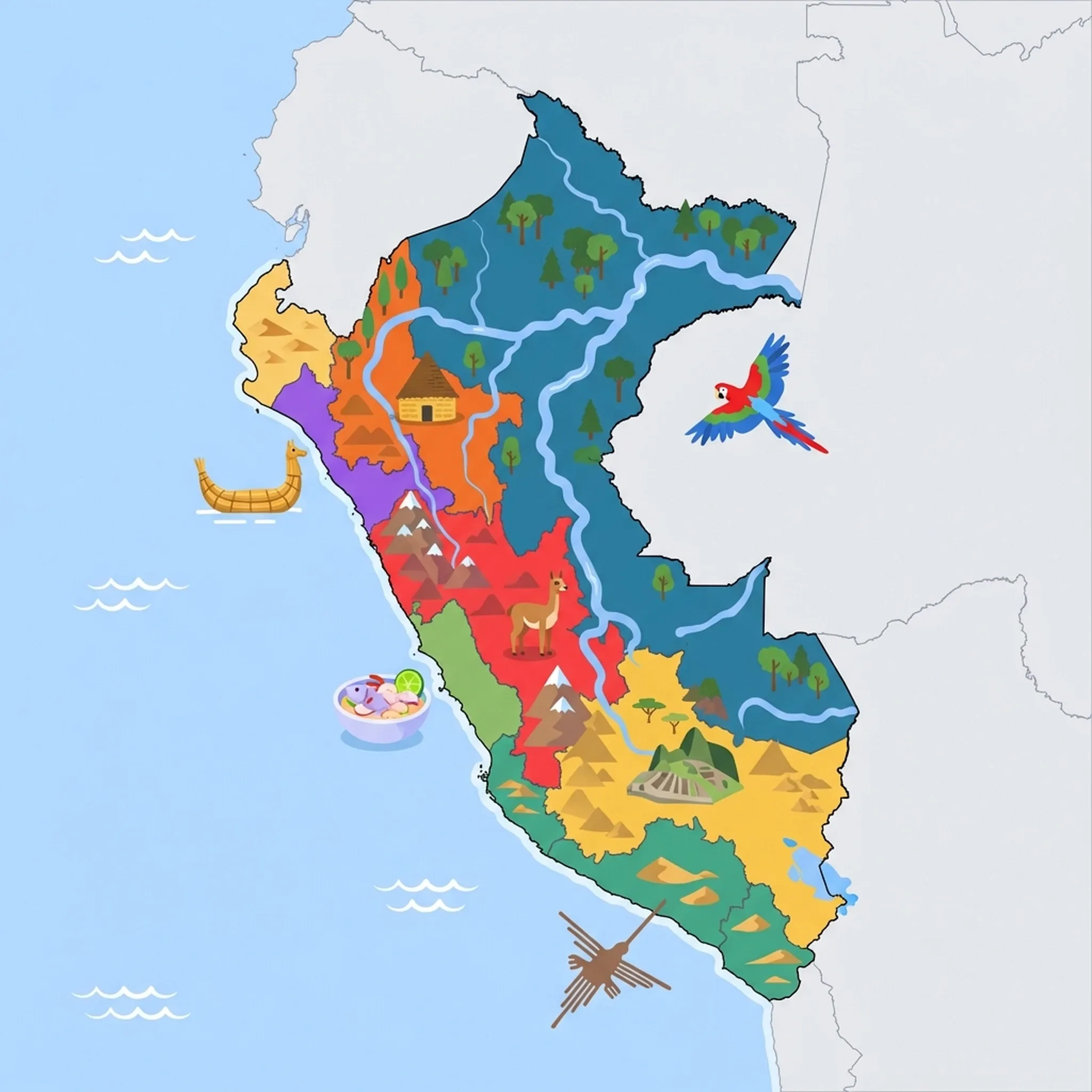
7 Regions
Amazon Basin & Eastern Rainforest
Where the wild jungle comes alive 🦜🌿
Central Highlands & Andean Core
The authentic heart of the Andes ❤️⛰️
Lima & Central Coast
The City of Kings and culinary delights 👑🍽️
North Coast & Moche Heartland
Sun, surf, and ancient kingdoms ☀️🌊
Northern Andes & Cloud Forests
Land of the Cloud People and hidden waterfalls 🚠💦
Southern Andes & Inca Heartland
Empire of the Incas and soaring peaks 🦙🏔️
Southern Coast & Desert Valleys
Where the desert meets the sea 🏜️🐧
Click on a region marker to explore details. Use the dropdown to color regions by activity suitability.

Getting There & Around
Getting There
- By Air – Jorge Chávez International Airport (LIM) in Lima & Central Coast is the main gateway. Direct flights arrive from major hubs in North and South America and Europe.
- Entry Requirements – Citizens of the US, UK, EU, Canada, and Australia do not typically need a visa for tourist stays up to 90 days. Check your government website for the latest visa requirements, or use the IATA Travel Centre entry-requirements checker.
- By Land – Border crossings exist with Ecuador, Chile, and Bolivia (via Lake Titicaca), though air travel is safer and faster for families.
Getting Around
- Domestic Flights – The most efficient way to cover long distances, such as Lima to Cusco or Iquitos. Delays are common, so leave buffer time.
- Trains – Essential for reaching Machu Picchu. Operators like PeruRail and Inca Rail offer comfortable service with panoramic windows. Book months in advance.
- Private Transfers – Recommended for families traveling between towns in the Southern Andes & Inca Heartland. It allows you to stop for photos and bathroom breaks at your own pace.
- Taxis/Rideshare – In Lima, use Apps like Uber or Cabify for safety. Never hail street taxis at night.

Packing List
Natural, widely used local remedy to help children cope with altitude sickness in Cusco.
The high-altitude Andean sun burns quickly; chapped lips are a common complaint.
Essential for paying to use public toilets, which rarely provide change or paper.
Strollers are useless on the cobblestones of Cusco and the steps of Inca ruins.
Tap water is not potable; a filter bottle saves money and reduces plastic waste.
Sudden downpours occur even in the dry season in the Andes and Amazon.

Activities & Best Times

Adventure & Nature
ExcellentHiking, wildlife, outdoor exploration, ecotourism
A world-class destination for biodiversity, featuring major reserves like Pacaya-Samiria and Tambopata with high-end eco-lodges. Peak dry season (June-September) is optimal for jungle trekking and wildlife viewing, while the wet season (December-April) can severely limit trail access.
World-class trekking and wildlife observation centered around the high Andes and the fringes of the Amazon. The dry winter months offer clear skies and optimal trail accessibility, while the heavy summer rains lead to trail closures and safety risks.
Home to the Ballestas Islands and Paracas National Reserve, offering unique coastal desert ecosystems and marine wildlife encounters. Peak summer months provide optimal visibility, while winter 'Paracas' winds and coastal mist can disrupt boat tours and exploration.

City & Cultural
ExcellentUrban tourism, museums, historical sites, architecture
Home to the historic Inca capital and UNESCO sites like Machu Picchu, offering a dense concentration of world-class museums and living heritage. While cultural sites are open year-round, the experience is most authentic and visually stunning during the dry season.
Lima is a global culinary powerhouse with world-class museums and significant archaeological sites like Pachacamac and Huaca Pucllana. Summer months offer sunny skies for exploring the colonial center and Miraflores, whereas the winter 'garua' mist can be gloomy for sightseers.
A globally significant archaeological hub featuring Chan Chan, the world's largest adobe city, and the Moche pyramids. The dry winter months (May-Sep) provide comfortable temperatures for exploring vast outdoor ruins, whereas summer humidity and rare heavy rains can threaten adobe structures.

Sports & Active
Very GoodSport tourism, fitness activities, active recreation
Famous for high-altitude endurance trekking and unique facilities like the vertical Skylodge and organized Inca Trail routes. Infrastructure is world-class but highly seasonal, with the iconic Inca Trail closing annually in February for maintenance.
The region is an international hotspot for paragliding from Miraflores cliffs and year-round surfing along the Costa Verde. Summer provides the most reliable winds and pleasant temperatures for active coastal recreation and cycling.
Boasts significant infrastructure for high-altitude trekking and the modern Kuelap cable car system. Peak season follows the dry weather pattern required for technical hikes like the Gran Vilaya Trek.

Beach & Sea
GoodBeach resorts, marine activities: diving, snorkelling, kite surfing, wind surfing, sailing
Offers dramatic coastal scenery and marine activities in the Paracas Reserve, though the Humboldt Current keeps water temperatures cool. Visitation peaks during the sunniest months (Jan-Mar) when air temperatures are high enough for comfortable beach recreation.
While the Pacific water is cold, the Costa Verde offers extensive coastal access for swimming and boating during the sunny summer. Winter months are dominated by heavy mist and cold sea temperatures, making them unsuitable for beach recreation.
Home to Máncora and Punta Sal, offering Peru's best tropical beach experiences with warm waters and a growing luxury boutique hotel scene. Peak season aligns with the Peruvian summer (Dec-Mar) for optimal sun, while shoulder months offer whale watching opportunities despite cooler winds.

Educational & Exploratory
GoodLearning experiences, scientific sites, historical education
Features internationally recognized conservation sites like the Amazon Rescue Center (CREA), offering significant scientific engagement for families. Visitation follows the general tourism peak when dry weather facilitates transport to these specialized facilities.
Significant archaeological and natural history museums, such as the Museo Regional de Ica, provide deep context for the Paracas and Nazca civilizations. These facilities are primary destinations for those seeking to understand Peru's ancient coastal heritage.
High-quality facilities like the Natural History Museum and the Planetario provide strong educational value for families. These indoor and structured sites are accessible year-round, though visitor comfort is highest during the sunnier months.

Relaxation & Wellness
GoodSpa retreats, wellness centers, peaceful getaways
Home to unique natural thermal features like the Boiling River and San Mateo baths, providing authentic restorative experiences. Access to these remote natural wellness sites is significantly easier and safer during the low-water dry season.
Natural thermal spring complexes at Aguas Calientes and Lares provide authentic restorative experiences after mountain exploration. These facilities are best enjoyed during the cooler, drier months which align with the peak Andean travel season.
Centrally focused on the historic thermal baths of Cajamarca, offering genuine restorative experiences in a traditional setting. Best visited when the highland air is cooler and drier to fully appreciate the hot spring experience.

Road Trips & Scenic
GoodScenic drives, countryside tours, route-based travel
The Sacred Valley and 'Route of the Sun' offer spectacular scenic drives through high-altitude landscapes and rural villages. Roads are most reliable and visibility is at its peak during the dry winter, avoiding the risk of mudslides common in the rainy season.
The Pan-American highway and the 'Ruta del Pisco' offer iconic desert transit and high-end vineyard-hopping experiences. Best driven when visibility is high and the vineyards are active during the summer harvest and distillation window.
The Pan-American Highway provides access to major sites like Caral or Paracas through dramatic coastal desert landscapes. Clear visibility is essential for safety and scenery, making the foggy winter months less than ideal for driving tours.

Theme Park & Entertainment
GoodAmusement parks, family entertainment venues
The Magic Water Circuit is a globally recognized aquatic attraction, complemented by regional parks like La Granja Villa. These outdoor entertainment venues are best enjoyed during the warm, dry summer months.
Regional water parks like Yakupark provide entertainment for domestic tourists but lack the world-class facilities expected by international travelers. They are best visited during the sunniest months to avoid the tropical downpours of the wet season.
Includes niche regional parks such as Apukunaq Tianan, which offer unique sculpture and landscape art rather than commercial mass-market rides. These sites are most enjoyable during dry conditions when families can comfortably explore the outdoor installations.

Festivals & Seasonal
MarginalEvents, celebrations, seasonal attractions
Hosts the globally recognized Inti Raymi in June and Fiesta de la Candelaria in February, though major international events are concentrated in these specific windows. These festivals provide profound cultural authenticity for families seeking deep heritage connections.
The Lord of Miracles procession in October is one of the world's largest religious gatherings, offering a profound cultural spectacle. Other months have fewer internationally significant events for the sophisticated traveler.
The region is famous for Ayacucho's Holy Week, one of the most significant and authentic cultural festivals in the Andes. Outside of this March-April window, international-scale festival opportunities are limited, resulting in a highly concentrated peak period.

Public Holidays & Calendar Next 12 months
Public holidays, festivals, cultural celebrations, and seasonal natural phenomena coming up in Peru over the next 12 months.
Loading holidays and events...
Climate & Weather
Amazon Basin & Eastern Rainforest
Show Details
| Month | Temp °C | Rain | Humidity |
|---|
Central Highlands & Andean Core
Show Details
| Month | Temp °C | Rain | Humidity |
|---|
Lima & Central Coast
Show Details
| Month | Temp °C | Rain | Humidity |
|---|
North Coast & Moche Heartland
Show Details
| Month | Temp °C | Rain | Humidity |
|---|
Northern Andes & Cloud Forests
Show Details
| Month | Temp °C | Rain | Humidity |
|---|
Southern Andes & Inca Heartland
Show Details
| Month | Temp °C | Rain | Humidity |
|---|

Travel Advisory
All major agencies recommend exercising a high degree of caution or increased vigilance throughout Peru due to crime and civil unrest. While most tourist areas remain accessible, regional escalations are common.
Safety Topics
Traveller Advice (4 groups)

Visitors should maintain situational awareness in large cities and avoid any form of political demonstration. Dual nationals should verify entry and exit rules specifically applicable to their status to avoid legal complications or travel delays. Registering with national consular services is recommended to receive emergency updates during localized states of emergency.

Personnel operating in remote border regions or the VRAEM zone face significant threats from organized crime, drug trafficking, and remnants of insurgent groups; specialized security protocols are essential in these areas.

Extreme caution is advised for those participating in spiritual or traditional ceremonies involving substances like Ayahuasca or Kambo, as there have been reports of sexual assault and personal safety incidents in these settings.

Minors residing in Peru or travelling with only one parent may be required to present notarized authorization from the non-travelling parent to leave the country; requirements should be verified with the nearest consulate before departure.
Agency Summaries
Travellers should be very vigilant due to widespread crime and the potential for social unrest and industrial action. Specific regions, including the VRAEM and certain border areas, have higher restrictions.
Irish visitors are advised to avoid regional roadblocks and stay informed about local protests. Consular assistance is limited as there is no resident embassy in Peru.
Heightened vigilance is recommended because of crime, civil disturbances, and kidnapping risks. The Loreto border and VRAEM regions are designated as 'Do Not Travel' zones.
Violent crime and civil unrest are common concerns. Travellers are encouraged to avoid demonstrations and be wary of express kidnappings in urban areas.
There is a persistent threat of violent crime across the country. A state of emergency in certain metropolitan areas means a visible military and police presence is likely.
While most travel is standard, the FCDO warns against visiting specific high-risk areas near the Colombian border and within the VRAEM. Political protests may cause sudden disruptions.
Information is provided for general guidance only and does not constitute travel, safety, medical, or legal advice. Conditions may change. Users are responsible for independently verifying information before travel.