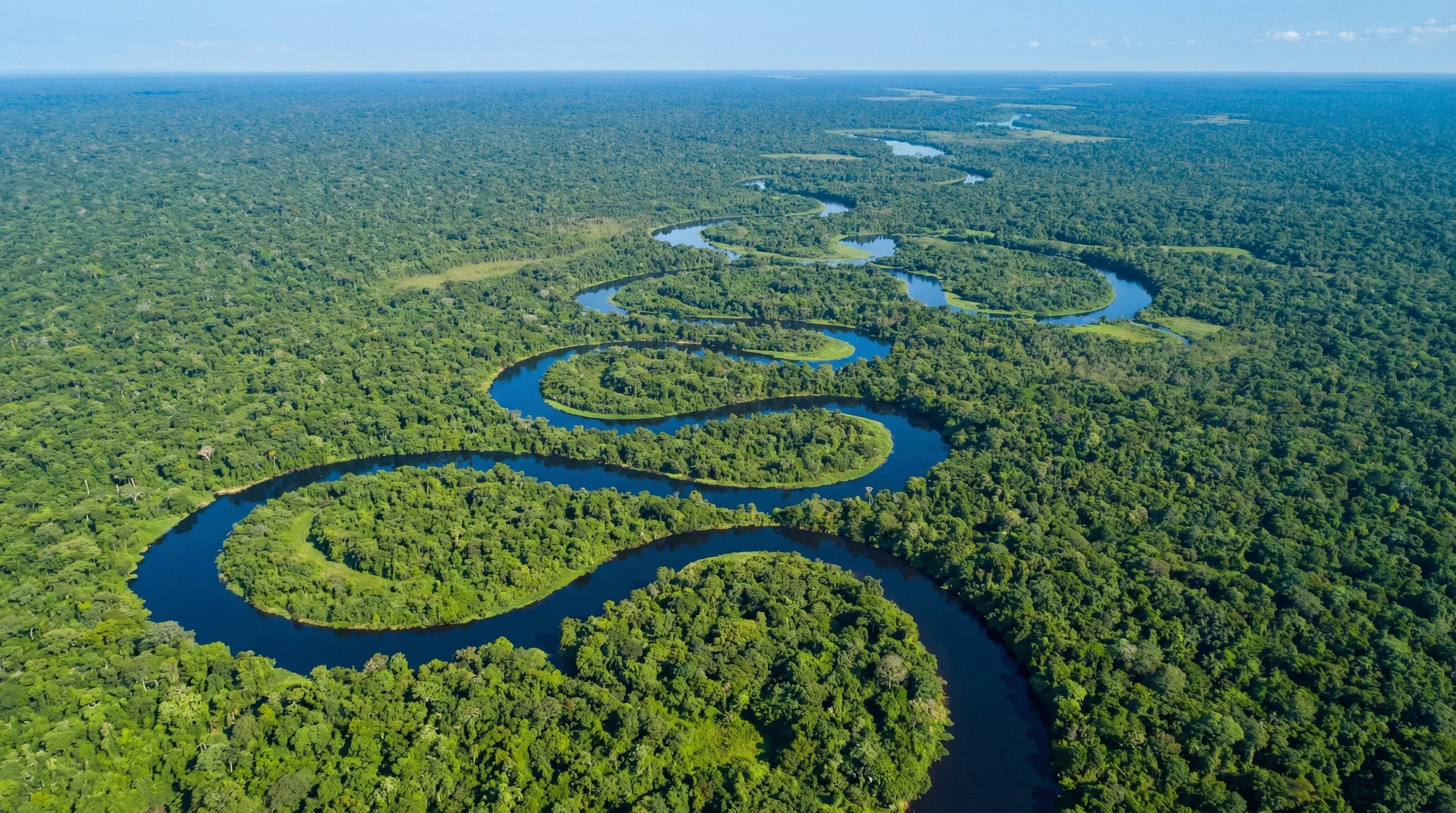

Amazon Basin & Eastern Rainforest
Where the wild jungle comes alive 🦜🌿
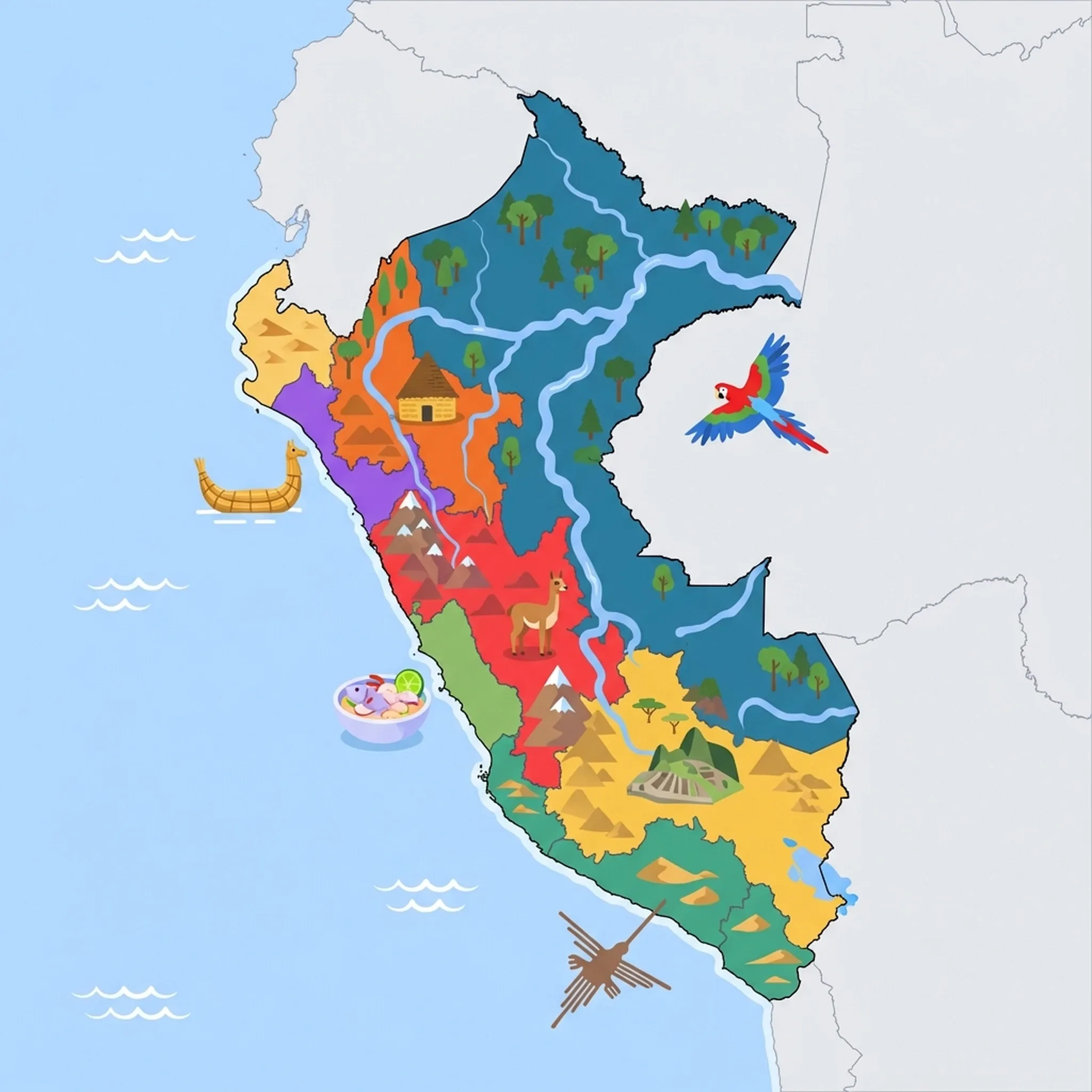
Click a region to explore
⚠️ SAFETY WARNING: Due to the presence of drug trafficking activities in remote areas and limited medical infrastructure, government agencies (including the US, UK, and Canada) advise travelers to exercise increased caution in the Amazon region. Specific border areas near Colombia are designated as high-risk zones. However, established tourist corridors in Iquitos, Puerto Maldonado, and registered eco-lodges are generally considered safe. Families are strongly urged to consult their own government's official travel advisory before considering a trip, as circumstances and risk assessments vary.
The Amazon Basin is not just a forest; it is a breathing, living entity that captures the imagination of children like nowhere else on Earth. Covering more than 60% of Peru's territory, this verdant expanse is split into two main hubs for travelers: the northern jungle accessible via Iquitos (which cannot be reached by road) and the southern jungle accessible via Puerto Maldonado. For families, the Amazon offers a living classroom where biology textbooks come to life. The humidity is high, the sounds of cicadas and howler monkeys are constant, and the sense of adventure is palpable. Whether you are navigating the murky waters of The Amazon River on a riverboat or sleeping in a wooden lodge surrounded by the symphony of the jungle, the experience is immersive. Children are fascinated by the sheer scale of the trees, the strange insects, and the thrill of spotting a sloth moving in slow motion.
Culturally, the region is distinct from the Andes or the coast. Life here revolves around the rhythm of the rivers. The cuisine uses exotic fruits and river fish, and the local legends speak of river spirits and forest guardians. For families, visiting an eco-lodge is the most practical way to explore. These lodges provide safe, guided excursions suitable for various ages, including piranha fishing, night walks to spot caimans, and visits to indigenous communities to learn about traditional ways of life. It is a place that teaches resilience and appreciation for the natural world, leaving a lasting impact on young minds.
Key Attractions
The crown jewel of the northern Amazon is the Pacaya-Samiria National Reserve, often called the "Jungle of Mirrors" due to the perfect reflections on its black waters. It is one of the best places for families to spot the elusive pink river dolphins, a sight that delights children and adults alike. Guided boat tours here allow you to venture deep into the flooded forest without the need for strenuous hiking, making it accessible for school-aged children. Near the city of Iquitos, the Plaza de Armas de Iquitos offers a glimpse into the rubber boom era with its tiled mansions, while the nearby Manatee Rescue Centre (though not in the table, it is a common stop) teaches kids about conservation.
In the southern jungle, the Tambopata National Reserve is renowned for its clay licks, where hundreds of macaws and parrots gather at dawn—a colorful spectacle that feels like a scene from a movie. For families seeking a deeper wilderness experience, Manu National Park offers unparalleled biodiversity, though it requires more travel time. Back in civilization, a walk through the Belén District in Iquitos (best done by boat during high water) reveals the "Venice of the Amazon," where houses float on rafts, offering a stark but educational contrast to Western living standards.
Practical Advice
The dry season (June to October) is generally better for hiking and fewer mosquitoes, while the wet season (November to April) allows for deeper boat penetration into the forest. For families, the "shoulder" months are ideal. Malaria and Yellow Fever vaccinations are typically recommended; consult a tropical medicine doctor beforehand.
Food & Drink
Typical meal times: Breakfast is early (7:00 am), lunch is the main meal between 12:00 pm and 2:00 pm, and dinner is served from 6:30 pm to 8:30 pm at most lodges.
Typical meal costs: In towns like Iquitos, a family meal costs S/ 80–150 (approx. $22–40 USD / €20–37 EUR). Most lodges operate on an all-inclusive basis where food is included in the package price.
Dietary requirements: Lodges are very accustomed to tourists and can cater to vegetarian, vegan, and gluten-free diets if notified in advance. In towns, options may be more limited to grilled fish and plantains.
Signature dishes:
- Juane – Rice seasoned with turmeric and chicken, wrapped in bijao leaves (resembling a tamale) and boiled; a jungle staple often eaten during the Feast of San Juan.
- Tacacho con Cecina – Balls of mashed roasted plantain mixed with pork fat, served with salty, dried pork meat (cecina).
- Patarashca – River fish seasoned with local spices, wrapped in leaves, and grilled over charcoal.
- Camu Camu Juice – A refreshing drink made from a native berry that has one of the highest Vitamin C contents in the world.
Why this score?
Navigating the dense rainforest, staying in remote jungle lodges, and exploring the Pacaya-Samiria National Reserve presents significant environmental challenges. The humid climate, presence of wildlife, and reliance on river transport create a truly rugged and wild experience for families.
Why this score?
Medical facilities in Iquitos are limited and often lack specialized equipment, while remote lodges are several hours away from even basic care. For international families, emergency medical evacuation to Lima is often the only viable option for serious health issues.
Why this score?
This region serves as a bucket-list destination for nature enthusiasts, with Iquitos and Puerto Maldonado acting as primary gateways for thousands of international visitors annually. While world-renowned for biodiversity and luxury river cruises, its relative inaccessibility compared to the Andean highlands keeps visitor numbers at a moderate level.

While street food is cheap, the logistics of the Amazon make tourism pricier. A reputable family-friendly eco-lodge package (including meals, transfers, and guides) typically costs S/ 1,500–2,600 (approx. $400–700 USD / €370–650 EUR) per person for a 3-night stay. In Iquitos city, a budget hotel is S/ 110–190 (approx. $30–50 USD / €27–47 EUR) per night.
Family Travel Notice
Minors residing in Peru or travelling with only one parent may be required to present notarized authorization from the non-travelling parent to leave the country; requirements should be verified with the nearest consulate before departure.

Getting Here & Around
Getting Here
- Airports – Iquitos (IQT) and Puerto Maldonado (PEM) are the primary gateways. Iquitos is accessible only by air or river; there are no roads connecting it to Lima. Flights from Lima take approx. 2 hours.
- River – For the adventurous, multi-day river barges travel from Pucallpa to Iquitos via The Amazon River, though this is rough for young children. Luxury cruises also operate from Iquitos.
- Bus – Puerto Maldonado is accessible via the Interoceanic Highway (Southern Section) from Cusco, a winding journey of about 10 hours.
Getting Around
- Boat – The primary mode of transport. "Peke-pekes" (small motorized canoes) act as water taxis. Most lodges provide private boat transfers from the airport.
- Motocarro – In cities like Iquitos, the auto-rickshaw (tuk-tuk) is king. It's a fun, breezy way for families to zip between the Plaza de Armas de Iquitos and restaurants.
- Walking – Within the jungle reserves like Tambopata National Reserve, travel is strictly on foot along guided trails or via boat.
Nearby Airports (3 airports)
Coronel Fap Francisco Secada Vignetta
IQTIquitos
Cap Fap David Avenzur Rengifo
PCLPucallpa
Padre Aldamiz
PEMPuerto Maldonado
View full flight map for Peru →
Official Links

Packing List
Essential for night walks to spot wildlife without scaring animals; many lodges cut power at night.
Humidity is extreme; keep these in your camera bag to prevent lens fungus and electronics damage.
Tuck pants into socks to prevent ants and chiggers from biting ankles during jungle hikes.
Protects electronics and dry clothes during open boat rides where splashes are guaranteed.
Natural, widely used local remedy to help children cope with altitude sickness in Cusco.
The high-altitude Andean sun burns quickly; chapped lips are a common complaint.
Essential for paying to use public toilets, which rarely provide change or paper.
Strollers are useless on the cobblestones of Cusco and the steps of Inca ruins.
Tap water is not potable; a filter bottle saves money and reduces plastic waste.
Sudden downpours occur even in the dry season in the Andes and Amazon.

Activities & Best Times

Hiking, wildlife, outdoor exploration, ecotourism
A world-class destination for biodiversity, featuring major reserves like Pacaya-Samiria and Tambopata with high-end eco-lodges. Peak dry season (June-September) is optimal for jungle trekking and wildlife viewing, while the wet season (December-April) can severely limit trail access.

Urban tourism, museums, historical sites, architecture
While Iquitos has unique rubber-boom heritage, 'very_good' suggests internationally outstanding urban cultural infrastructure. Without major museums or UNESCO heritage designation, 'good' is more internationally calibrated.

Learning experiences, scientific sites, historical education
Features internationally recognized conservation sites like the Amazon Rescue Center (CREA), offering significant scientific engagement for families. Visitation follows the general tourism peak when dry weather facilitates transport to these specialized facilities.

Spa retreats, wellness centers, peaceful getaways
Home to unique natural thermal features like the Boiling River and San Mateo baths, providing authentic restorative experiences. Access to these remote natural wellness sites is significantly easier and safer during the low-water dry season.

Sport tourism, fitness activities, active recreation
Provides specialized infrastructure for active exploration, including major canopy walkways and well-maintained rainforest trail networks. These facilities are safest and most enjoyable during the drier months when mud and humidity are more manageable.

Beach resorts, marine activities: diving, snorkelling, kite surfing, wind surfing, sailing
Unique freshwater river beaches like Playa Santa Clara only emerge during the peak dry season when river levels drop. While charming for a local experience, they lack the clarity and high-end infrastructure of international marine resorts.

Scenic drives, countryside tours, route-based travel
The Interoceanic Highway offers a rugged scenic route through the rainforest, though infrastructure is better suited to adventure travelers than typical family rentals. Road travel is only recommended during the dry window to avoid frequent landslides and washouts.

Amusement parks, family entertainment venues
Regional water parks like Yakupark provide entertainment for domestic tourists but lack the world-class facilities expected by international travelers. They are best visited during the sunniest months to avoid the tropical downpours of the wet season.

Attractions (14 total)



Public Holidays & Calendar Next 12 months
Public holidays, festivals, cultural celebrations, and seasonal natural phenomena coming up in Amazon Basin & Eastern Rainforest over the next 12 months.
Loading holidays and events...

Travel Advisory
All major agencies recommend exercising a high degree of caution or increased vigilance throughout Peru due to crime and civil unrest. While most tourist areas remain accessible, regional escalations are common.
Safety Topics
Traveller Advice (4 groups)

Visitors should maintain situational awareness in large cities and avoid any form of political demonstration. Dual nationals should verify entry and exit rules specifically applicable to their status to avoid legal complications or travel delays. Registering with national consular services is recommended to receive emergency updates during localized states of emergency.

Personnel operating in remote border regions or the VRAEM zone face significant threats from organized crime, drug trafficking, and remnants of insurgent groups; specialized security protocols are essential in these areas.

Extreme caution is advised for those participating in spiritual or traditional ceremonies involving substances like Ayahuasca or Kambo, as there have been reports of sexual assault and personal safety incidents in these settings.

Minors residing in Peru or travelling with only one parent may be required to present notarized authorization from the non-travelling parent to leave the country; requirements should be verified with the nearest consulate before departure.
Agency Summaries
Travellers should be very vigilant due to widespread crime and the potential for social unrest and industrial action. Specific regions, including the VRAEM and certain border areas, have higher restrictions.
Irish visitors are advised to avoid regional roadblocks and stay informed about local protests. Consular assistance is limited as there is no resident embassy in Peru.
Heightened vigilance is recommended because of crime, civil disturbances, and kidnapping risks. The Loreto border and VRAEM regions are designated as 'Do Not Travel' zones.
Violent crime and civil unrest are common concerns. Travellers are encouraged to avoid demonstrations and be wary of express kidnappings in urban areas.
There is a persistent threat of violent crime across the country. A state of emergency in certain metropolitan areas means a visible military and police presence is likely.
While most travel is standard, the FCDO warns against visiting specific high-risk areas near the Colombian border and within the VRAEM. Political protests may cause sudden disruptions.
Information is provided for general guidance only and does not constitute travel, safety, medical, or legal advice. Conditions may change. Users are responsible for independently verifying information before travel.