
Central Highlands & Andean Core
The authentic heart of the Andes ❤️⛰️
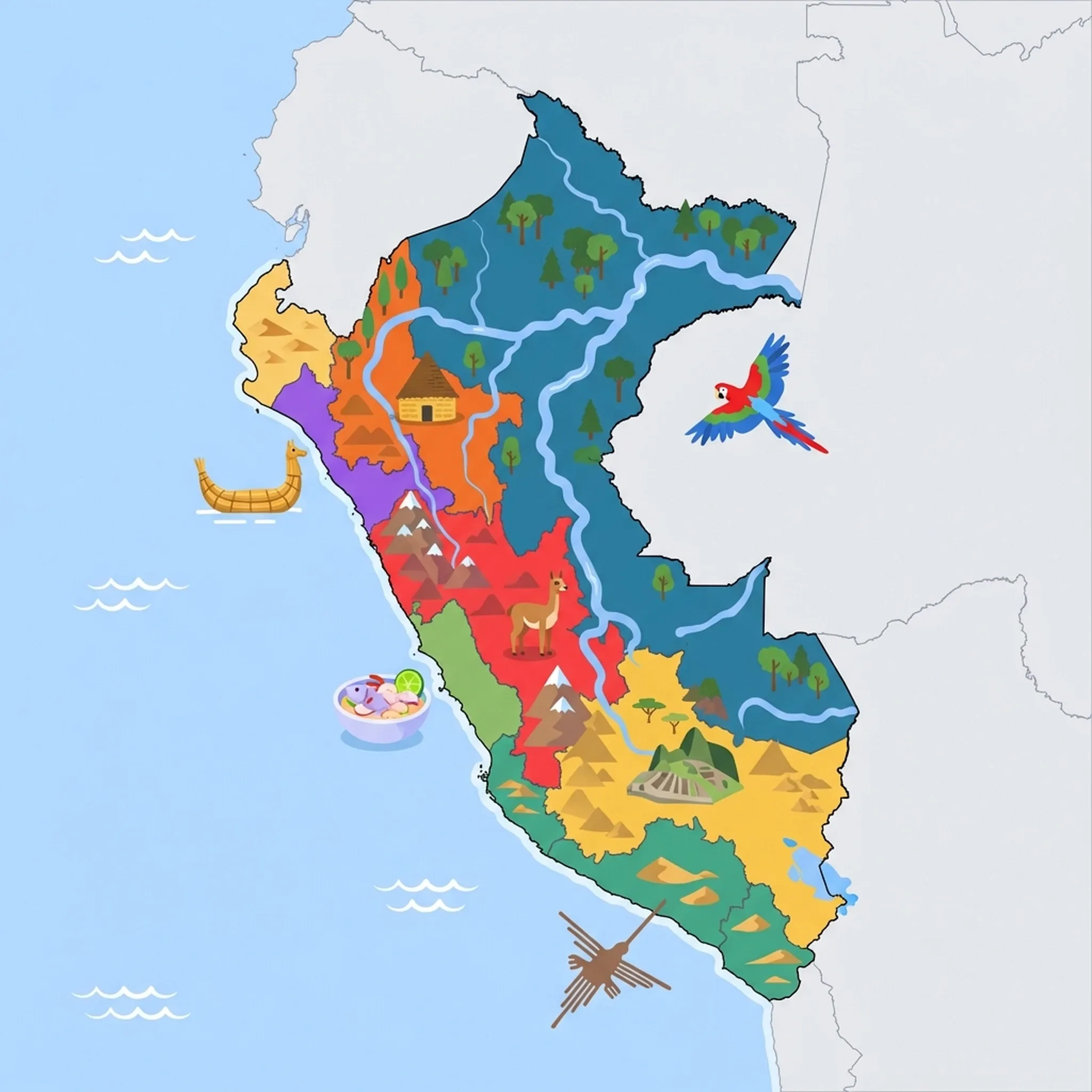
Click a region to explore
⚠️ SAFETY WARNING: Due to the presence of remnants of the Shining Path terrorist group and drug trafficking activities, government agencies (including the US, UK, and Australia) advise travelers to exercise increased caution in this region. Specifically, the VRAEM (Valley of the Apurímac, Ene and Mantaro Rivers) is designated as a 'Do Not Travel' zone. However, the main tourist cities of Huancayo and Ayacucho are generally safe for visitors who stick to established routes and travel during daylight. Families are strongly urged to consult their own government's official travel advisory before considering a trip, as circumstances and risk assessments vary.
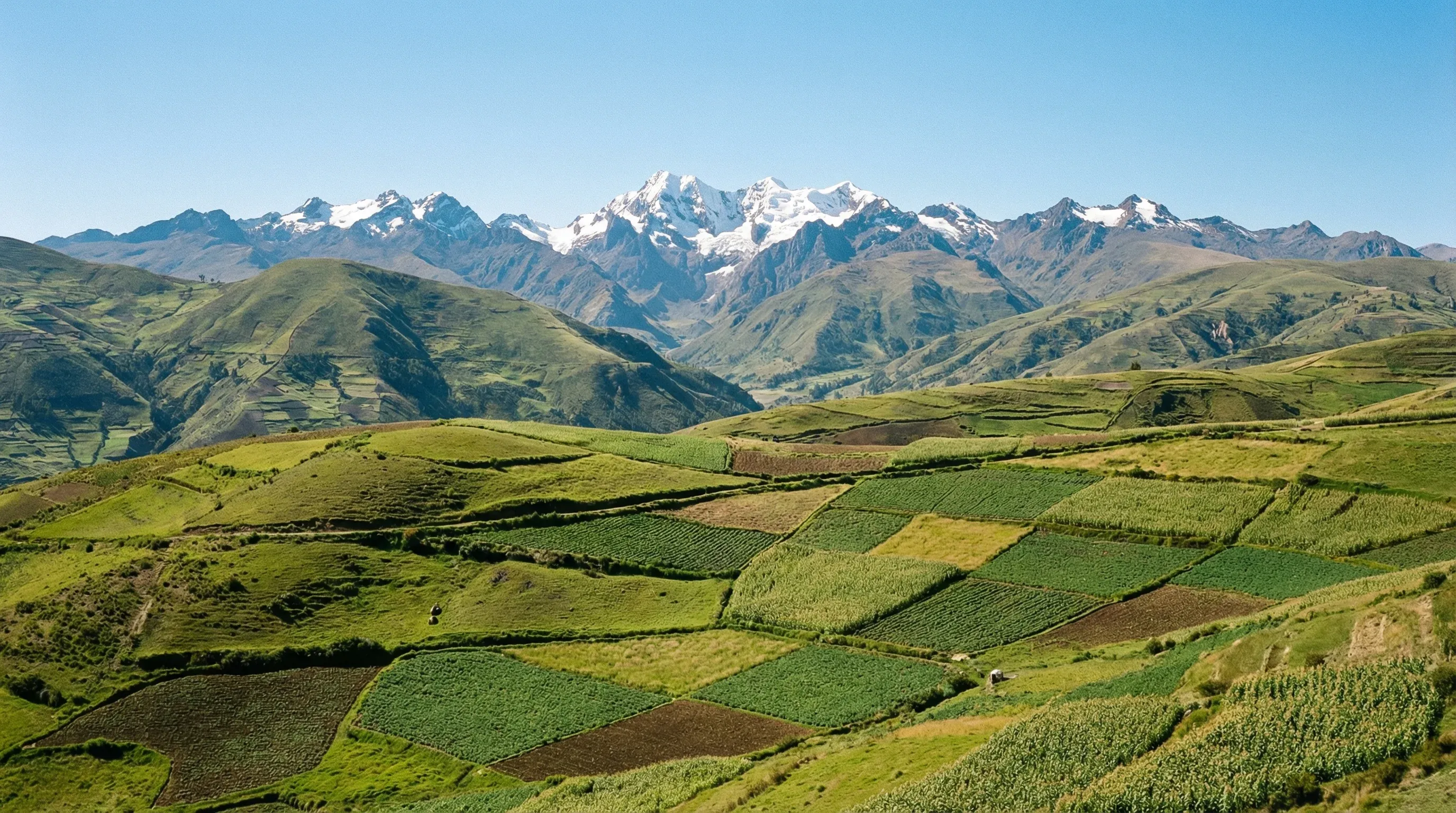
For families willing to venture off the "Gringo Trail," the Central Highlands offer a profound look at the soul of Peru. This is a region of rolling agricultural quilts, colonial churches, and artisans who have passed down their crafts for centuries. Unlike the south, you won't find massive tour buses here; instead, you'll find genuine hospitality and a pace of life dictated by the harvest and the church bells. The city of Ayacucho is famous for its 33 churches—one for each year of Jesus's life—and its elaborate religious festivals. For children, the appeal lies in the visual vibrancy of the region: the colorful retablos (diorama boxes), the lively markets, and the open spaces where they can run freely.
The geography is dramatic, shifting from the fertile Mantaro Valley to the stark, high-altitude punas. It is a place to learn about the independence of Peru, as major battles were fought on these plains. Families visiting here often find it a humbling and educational experience, providing context to the history of South America. The altitude is significant (often over 3,000 meters), so a slow pace is necessary, which naturally suits family travel. The lack of crowds means parents can relax a bit more while exploring plazas and museums, knowing they aren't fighting for space.
Key Attractions
A short drive from Ayacucho lies the Quinua Village, a town entirely dedicated to pottery. Almost every house is a workshop, and the rooftops are adorned with ceramic churches. Children love watching the potters at work and can often try molding clay themselves. Just beyond the village is the Pampa de Ayacucho Historical Sanctuary, a vast plain featuring a massive white obelisk, the Obelisco de la Pampa de Ayacucho. This creates a perfect space for kids to run, fly kites, or ride horses while parents soak in the history of the 1824 battle that sealed South American independence.
In Huancayo, the Huayllay National Sanctuary (a bit further afield) offers a "stone forest" of geological formations that look like elephants, alpacas, and monks—a natural Rorschach test that keeps kids entertained for hours. Back in Ayacucho, the Basílica Catedral de Ayacucho anchors the main square and is stunningly lit at night. If visiting during Easter, the Holy Week in Ayacucho is a spectacle of flower carpets and candlelit processions unmatched in the Americas.
Practical Advice
The dry season (May to September) is the best time to visit, offering sunny days and cold nights. The rainy season can make road travel difficult. Acclimatization is essential; plan a low-activity first day.
Food & Drink
Typical meal times: Lunch is the main event, served 12:30 pm to 2:30 pm. Dinner is lighter and eaten around 7:00 pm to 8:30 pm.
Typical meal costs: This region is very affordable. A hearty family lunch costs S/ 50–90 (approx. $13–24 USD / €12–22 EUR). Street snacks are pennies.
Dietary requirements: Vegetarian options are available but basic (potatoes, corn, cheese, eggs). Vegan options are scarce in rural areas; bring snacks.
Signature dishes:
- Puca Picante – Abeetroot-red stew made with potatoes, peanuts, and chili peppers (mild to medium), usually served with rice and pork.
- Cuy Chactado – Fried guinea pig, flattened under a stone. While confronting for some, it is a regional delicacy often tried by adventurous older kids.
- Papa a la Huancaína – Sliced boiled potatoes smothered in a creamy, spicy cheese sauce (originally from Huancayo).
- Qapchi – A fresh appetizer of cheese, rocoto pepper, and herbs, served with potatoes.
Why this score?
The region offers high-altitude challenges including the Huaytapallana Glacier and the Millpu turquoise pools, which require physical stamina. Its off-the-beaten-path nature and rugged mountain roads provide a notable sense of discovery and isolation.
Why this score?
While cities like Huancayo and Ayacucho have regional hospitals, they generally lack English-speaking staff and specialized care for international tourists. Facilities are basic and primarily serve the local population with limited resources for complex emergencies.
Why this score?
This region is primarily a domestic tourism hub known for its authentic festivals like Holy Week in Ayacucho, but it remains niche for international travelers. Infrastructure is less developed for non-Spanish speakers, and the area lacks the global 'must-see' icons found in the south.

The Central Highlands are significantly cheaper than Cusco or Lima. A nice colonial-style hotel in Ayacucho costs S/ 150–250 (approx. $40–67 USD / €37–62 EUR) per night. Local transport and museum entries are nominal.
Family Travel Notice
Minors residing in Peru or travelling with only one parent may be required to present notarized authorization from the non-travelling parent to leave the country; requirements should be verified with the nearest consulate before departure.

Getting Here & Around
Getting Here
- Airports – Coronel FAP Alfredo Mendívil Duarte Airport (AYP) in Ayacucho receives daily flights from Lima (approx. 1 hour). Huancayo does not have a commercial airport; Jauja (JAU) is the nearest, 45 mins away.
- Bus – High-quality buses connect Lima to Huancayo (approx. 7–8 hours) and Ayacucho (approx. 9–10 hours). The routes are winding and scenic but can cause motion sickness.
- Train – The "Tren Macho" runs between Huancayo and Huancavelica, a rugged and authentic experience, though schedules can be erratic.
Getting Around
- Taxi/Mototaxi – In cities like Ayacucho, taxis are cheap (S/ 5–8). Mototaxis are fun for short hops but avoid them on highways.
- Colectivos – Shared vans connect towns like Ayacucho and Quinua Village. They are cheap but can be cramped.
- Walking – The historic centers are compact and best explored on foot, though the altitude may tire little legs quickly.
Nearby Airports (5 airports)
Commandante Fap German Arias Grazziani
ATAAnta
Huanuco
HUUHuanuco
Jauja Airport
JAUJauja
Manuel Prado Airport
MZAMazamari
Tingo Maria Airport
TGITingo Maria
View full flight map for Peru →
Official Links

Packing List
The high altitude air is extremely dry and can cause nosebleeds in children.
Roads in the central Andes are notoriously winding with constant switchbacks.
Hotels in this region rarely have central heating, and nights drop to freezing.
High UV index and dry wind will chap lips very quickly.
Natural, widely used local remedy to help children cope with altitude sickness in Cusco.
The high-altitude Andean sun burns quickly; chapped lips are a common complaint.
Essential for paying to use public toilets, which rarely provide change or paper.
Strollers are useless on the cobblestones of Cusco and the steps of Inca ruins.
Tap water is not potable; a filter bottle saves money and reduces plastic waste.
Sudden downpours occur even in the dry season in the Andes and Amazon.

Activities & Best Times

Hiking, wildlife, outdoor exploration, ecotourism
Features spectacular natural wonders like the turquoise pools of Millpu and the Nor Yauyos-Cochas reserve, offering elite Andean immersion. Peak season coincides with the dry winter months (May-September) when high-altitude trails are accessible and sky visibility is at its maximum.

Urban tourism, museums, historical sites, architecture
Home to deep historical sites like the Wari Archaeological Complex and the 'City of Churches,' Ayacucho, providing an authentic, less commercialized cultural experience. The dry season is ideal for exploring colonial architecture and ruins, while heavy summer rains (January-March) make urban exploration difficult.

Sport tourism, fitness activities, active recreation
World-class trekking and high-altitude challenges exist at Marcahuasi and the Huaytapallana Glacier for active families. These activities are safest and most rewarding during the stable weather of the dry season, whereas trail conditions become treacherous during the wet summer months.

Learning experiences, scientific sites, historical education
Sites like the Ocopa Convent and its historic museum offer profound scientific and historical insights for intellectually curious families. While primarily indoor activities, visiting is best integrated into the dry season when regional travel is most reliable.

Spa retreats, wellness centers, peaceful getaways
The region features authentic thermal bath complexes like San Cristóbal and Niñobamba that utilize natural volcanic springs. These restorative sites are most popular during the cooler dry season when the contrast between the mountain air and the hot mineral waters is most enjoyable.

Scenic drives, countryside tours, route-based travel
The Central Highway and Vía de los Libertadores offer dramatic mountain passes and scenic valley loops that are iconic for Andean touring. Driving is best during the dry season to avoid the significant risk of landslides and fog that plague the high-altitude routes during the rainy season.

Events, celebrations, seasonal attractions
The region is famous for Ayacucho's Holy Week, one of the most significant and authentic cultural festivals in the Andes. Outside of this March-April window, international-scale festival opportunities are limited, resulting in a highly concentrated peak period.

Amusement parks, family entertainment venues
Local identity and recreational parks offer regional charm but lack the world-class infrastructure sophisticated families expect from international theme parks. Activity peaks during the dry season's domestic school holiday windows.

Attractions (22 total)



Public Holidays & Calendar Next 12 months
Public holidays, festivals, cultural celebrations, and seasonal natural phenomena coming up in Central Highlands & Andean Core over the next 12 months.
Loading holidays and events...

Travel Advisory
All major agencies recommend exercising a high degree of caution or increased vigilance throughout Peru due to crime and civil unrest. While most tourist areas remain accessible, regional escalations are common.
Safety Topics
Traveller Advice (4 groups)

Visitors should maintain situational awareness in large cities and avoid any form of political demonstration. Dual nationals should verify entry and exit rules specifically applicable to their status to avoid legal complications or travel delays. Registering with national consular services is recommended to receive emergency updates during localized states of emergency.

Personnel operating in remote border regions or the VRAEM zone face significant threats from organized crime, drug trafficking, and remnants of insurgent groups; specialized security protocols are essential in these areas.

Extreme caution is advised for those participating in spiritual or traditional ceremonies involving substances like Ayahuasca or Kambo, as there have been reports of sexual assault and personal safety incidents in these settings.

Minors residing in Peru or travelling with only one parent may be required to present notarized authorization from the non-travelling parent to leave the country; requirements should be verified with the nearest consulate before departure.
Agency Summaries
Travellers should be very vigilant due to widespread crime and the potential for social unrest and industrial action. Specific regions, including the VRAEM and certain border areas, have higher restrictions.
Irish visitors are advised to avoid regional roadblocks and stay informed about local protests. Consular assistance is limited as there is no resident embassy in Peru.
Heightened vigilance is recommended because of crime, civil disturbances, and kidnapping risks. The Loreto border and VRAEM regions are designated as 'Do Not Travel' zones.
Violent crime and civil unrest are common concerns. Travellers are encouraged to avoid demonstrations and be wary of express kidnappings in urban areas.
There is a persistent threat of violent crime across the country. A state of emergency in certain metropolitan areas means a visible military and police presence is likely.
While most travel is standard, the FCDO warns against visiting specific high-risk areas near the Colombian border and within the VRAEM. Political protests may cause sudden disruptions.
Information is provided for general guidance only and does not constitute travel, safety, medical, or legal advice. Conditions may change. Users are responsible for independently verifying information before travel.