
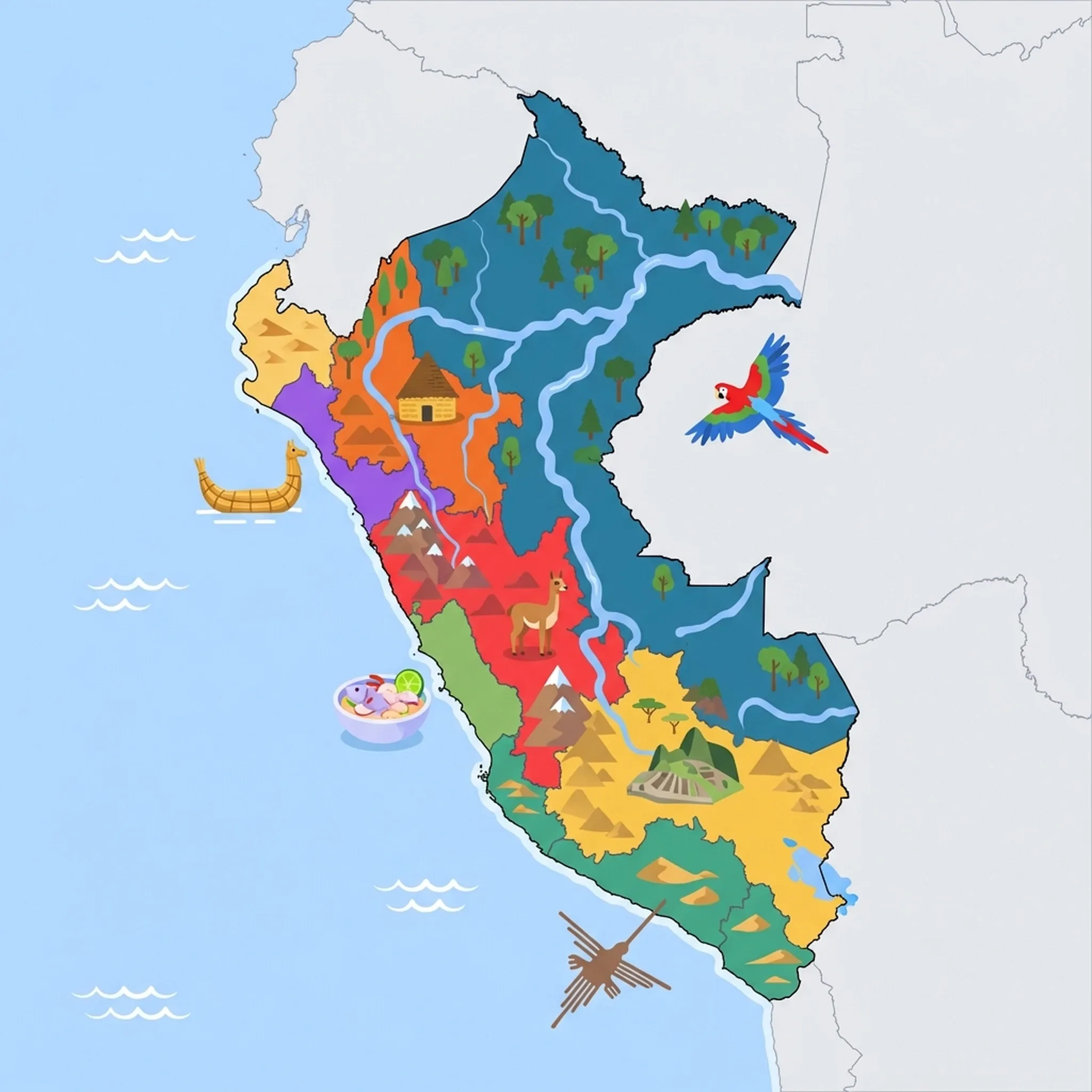
Click a region to explore
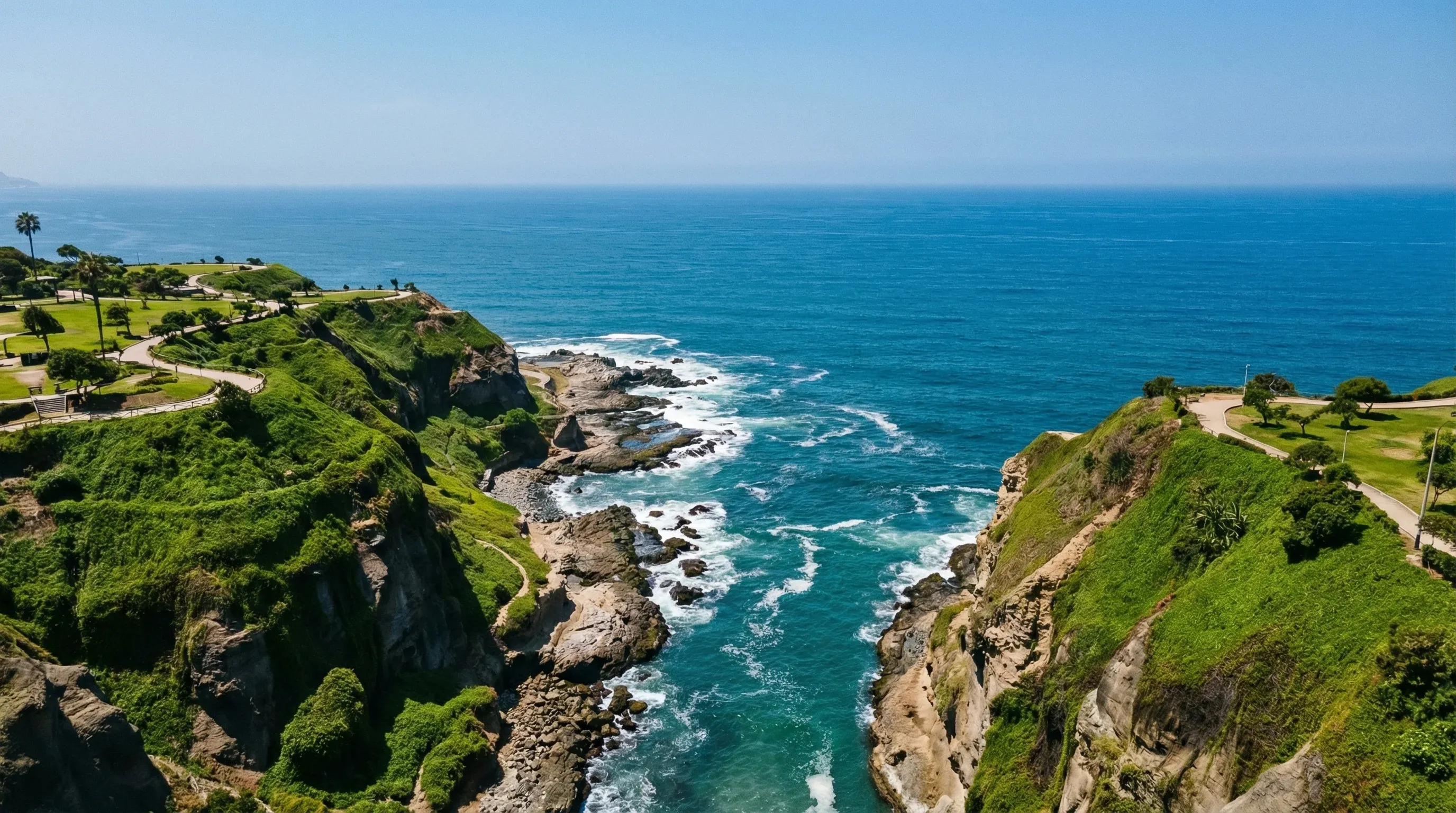
Lima is often used merely as a stopover, which is a mistake for families. As the only South American capital located on the ocean, it offers a unique blend of cosmopolitan energy and coastal relaxation. The city is massive, but the tourist districts of Miraflores and Barranco are walkable, safe, and filled with green spaces. For children, Lima is surprisingly engaging. The boardwalks (Malecón) are perfect for cycling or watching paragliders float over the cliffs. The contrast between the modern glass towers and the pre-Inca adobe pyramids located right in the middle of residential neighborhoods sparks immediate curiosity about the past.
The climate is mild but humid (often overcast with a white mist called "la garúa"), making it comfortable for walking year-round without the exhaustion of extreme heat. Museums here are world-class and many have modernized to become interactive. Beyond the history, Lima is the gastronomic capital of the Americas. While parents indulge in world-renowned ceviche, kids can enjoy the incredible variety of tropical fruits and the sweet treats that are a legacy of the colonial era. It’s a city that rewards a slow exploration of its parks, cliffs, and hidden courtyards.
Key Attractions
The absolute highlight for families is the Magic Water Circuit (Circuito Mágico del Agua). It holds the Guinness Record for the largest fountain complex in the world. At night, a laser and light show projects Peruvian history onto walls of water—a magical experience that toddlers and teenagers alike adore. For a daytime adventure, the Malecón de Miraflores offers miles of cliffside parks with playgrounds, bike paths, and views of the Pacific. You can rent bikes here and ride all the way to the bohemian district of Barranco.
History comes alive at the Huaca Pucllana, a massive adobe clay pyramid in Miraflores. The guided tours are excellent and allow kids to climb the structure, seeing the city from a new angle. For animal lovers, the Parque de las Leyendas - Zona Costa is part zoo, part botanical garden, and part archaeological site, showcasing Peru's three regions (coast, jungle, highlands) in one place. Finally, the Museo Larco is not only home to incredible gold and pottery artifacts but also has beautiful gardens and a cafe where kids can spot colorful birds.
Practical Advice
Summer (December to April) is sunny and warm; the rest of the year is gray and misty but not cold. Traffic in Lima is chaotic—allow extra time to get anywhere. Taxis are the best way to move between districts.
Food & Drink
Typical meal times: Lunch is 12:30 pm to 3:00 pm. Dinner is late, typically starting at 8:00 pm, though family restaurants open earlier (7:00 pm).
Typical meal costs: Lima has everything from street food to world-ranked dining. A mid-range family meal in Miraflores costs S/ 180–300 (approx. $48–80 USD / €45–75 EUR).
Dietary requirements: Lima is very accommodating. Vegetarian, vegan, and gluten-free options are abundant in Miraflores, Barranco, and San Isidro.
Signature dishes:
- Ceviche – Raw fish cured in lime juice with onions and chili (aji). Kids often prefer "Tiradito," which is similar but without the onions and often with a creamy sauce.
- Lomo Saltado – Stir-fried beef tenderloin with onions, tomatoes, and soy sauce, served with french fries and rice. A guaranteed hit with kids.
- Anticuchos – Grilled skewers, traditionally beef heart, marinated in vinegar and spices. Don't tell the kids what it is until they've admitted it's delicious!
- Picarones – Sweet, ring-shaped fritters made from squash and sweet potato, soaked in fig syrup. The ultimate street dessert.
Why this score?
Lima is a highly developed metropolitan area where the primary activities are cultural, culinary, and urban exploration. While paragliding over the Costa Verde cliffs offers a minor thrill, the environment is almost entirely urbanized and family-friendly.
Why this score?
Lima hosts the country's best private clinics, such as Clínica Delgado, which offer international standards of care and some English-speaking staff. While better than the rest of the country, it still faces some language and bureaucratic barriers compared to top-tier global medical hubs like Singapore or London.
Why this score?
As the primary international gateway and a global culinary capital, Lima receives nearly every foreign visitor entering the country. While it serves as a transit point, its historic center, Miraflores district, and world-class restaurants make it a major destination in its own right.

Lima is the most expensive city in Peru. A hotel in a safe district like Miraflores averages S/ 300–550 (approx. $80–150 USD / €75–140 EUR) per night. While cheap eats exist, tourist-standard restaurants charge international prices.
Family Travel Notice
Minors residing in Peru or travelling with only one parent may be required to present notarized authorization from the non-travelling parent to leave the country; requirements should be verified with the nearest consulate before departure.

Getting Here & Around
Getting Here
- Airports – Jorge Chávez International Airport (LIM) is the main international hub. It is located in Callao, about 45–60 minutes from Miraflores depending on traffic.
- Bus – Lima is the hub for all long-distance buses in Peru. Terminals are scattered, so check which company you are using. Cruz del Sur and Oltursa are top-tier for families.
Getting Around
- Taxi/Ride-share – Uber and Cabify are safe and widely used. Street taxis should generally be avoided by tourists for safety.
- Bus – The "Metropolitano" is a rapid transit bus connecting the Historic Centre of Lima with Miraflores and Barranco. It avoids traffic but gets very crowded during rush hour.
- Walking – Districts like Miraflores and Barranco are best explored on foot, especially along the Malecón de Miraflores.
Nearby Airports (1 airport)
Jorge Chávez International Airport
LIMLima
View full flight map for Peru →
Official Links

Packing List
Traffic noise in Lima is constant and honking is aggressive, even at night.
The 'garúa' mist creates 98% humidity; hair frizz is instant and inevitable.
Evenings on the coast get breezy and cool, even after a warm day.
Many small museums and street vendors struggle to break bills larger than S/ 20.
Natural, widely used local remedy to help children cope with altitude sickness in Cusco.
The high-altitude Andean sun burns quickly; chapped lips are a common complaint.
Essential for paying to use public toilets, which rarely provide change or paper.
Strollers are useless on the cobblestones of Cusco and the steps of Inca ruins.
Tap water is not potable; a filter bottle saves money and reduces plastic waste.
Sudden downpours occur even in the dry season in the Andes and Amazon.

Activities & Best Times

Urban tourism, museums, historical sites, architecture
Lima is a global culinary powerhouse with world-class museums and significant archaeological sites like Pachacamac and Huaca Pucllana. Summer months offer sunny skies for exploring the colonial center and Miraflores, whereas the winter 'garua' mist can be gloomy for sightseers.

Hiking, wildlife, outdoor exploration, ecotourism
Unique biodiversity exists at the Islas Palomino and the Lomas de Lachay, a desert-mist ecosystem that blooms in the winter/spring months. Peak months align with summer sun for marine wildlife and the greenest periods for the coastal hills.

Sport tourism, fitness activities, active recreation
The region is an international hotspot for paragliding from Miraflores cliffs and year-round surfing along the Costa Verde. Summer provides the most reliable winds and pleasant temperatures for active coastal recreation and cycling.

Beach resorts, marine activities: diving, snorkelling, kite surfing, wind surfing, sailing
While the Pacific water is cold, the Costa Verde offers extensive coastal access for swimming and boating during the sunny summer. Winter months are dominated by heavy mist and cold sea temperatures, making them unsuitable for beach recreation.

Learning experiences, scientific sites, historical education
High-quality facilities like the Natural History Museum and the Planetario provide strong educational value for families. These indoor and structured sites are accessible year-round, though visitor comfort is highest during the sunnier months.

Scenic drives, countryside tours, route-based travel
The Pan-American Highway provides access to major sites like Caral or Paracas through dramatic coastal desert landscapes. Clear visibility is essential for safety and scenery, making the foggy winter months less than ideal for driving tours.

Amusement parks, family entertainment venues
The Magic Water Circuit is a globally recognized aquatic attraction, complemented by regional parks like La Granja Villa. These outdoor entertainment venues are best enjoyed during the warm, dry summer months.

Events, celebrations, seasonal attractions
The Lord of Miracles procession in October is one of the world's largest religious gatherings, offering a profound cultural spectacle. Other months have fewer internationally significant events for the sophisticated traveler.

Attractions (22 total)



Public Holidays & Calendar Next 12 months
Public holidays, festivals, cultural celebrations, and seasonal natural phenomena coming up in Lima & Central Coast over the next 12 months.
Loading holidays and events...

Travel Advisory
All major agencies recommend exercising a high degree of caution or increased vigilance throughout Peru due to crime and civil unrest. While most tourist areas remain accessible, regional escalations are common.
Safety Topics
Traveller Advice (4 groups)

Visitors should maintain situational awareness in large cities and avoid any form of political demonstration. Dual nationals should verify entry and exit rules specifically applicable to their status to avoid legal complications or travel delays. Registering with national consular services is recommended to receive emergency updates during localized states of emergency.

Personnel operating in remote border regions or the VRAEM zone face significant threats from organized crime, drug trafficking, and remnants of insurgent groups; specialized security protocols are essential in these areas.

Extreme caution is advised for those participating in spiritual or traditional ceremonies involving substances like Ayahuasca or Kambo, as there have been reports of sexual assault and personal safety incidents in these settings.

Minors residing in Peru or travelling with only one parent may be required to present notarized authorization from the non-travelling parent to leave the country; requirements should be verified with the nearest consulate before departure.
Agency Summaries
Travellers should be very vigilant due to widespread crime and the potential for social unrest and industrial action. Specific regions, including the VRAEM and certain border areas, have higher restrictions.
Irish visitors are advised to avoid regional roadblocks and stay informed about local protests. Consular assistance is limited as there is no resident embassy in Peru.
Heightened vigilance is recommended because of crime, civil disturbances, and kidnapping risks. The Loreto border and VRAEM regions are designated as 'Do Not Travel' zones.
Violent crime and civil unrest are common concerns. Travellers are encouraged to avoid demonstrations and be wary of express kidnappings in urban areas.
There is a persistent threat of violent crime across the country. A state of emergency in certain metropolitan areas means a visible military and police presence is likely.
While most travel is standard, the FCDO warns against visiting specific high-risk areas near the Colombian border and within the VRAEM. Political protests may cause sudden disruptions.
Information is provided for general guidance only and does not constitute travel, safety, medical, or legal advice. Conditions may change. Users are responsible for independently verifying information before travel.