
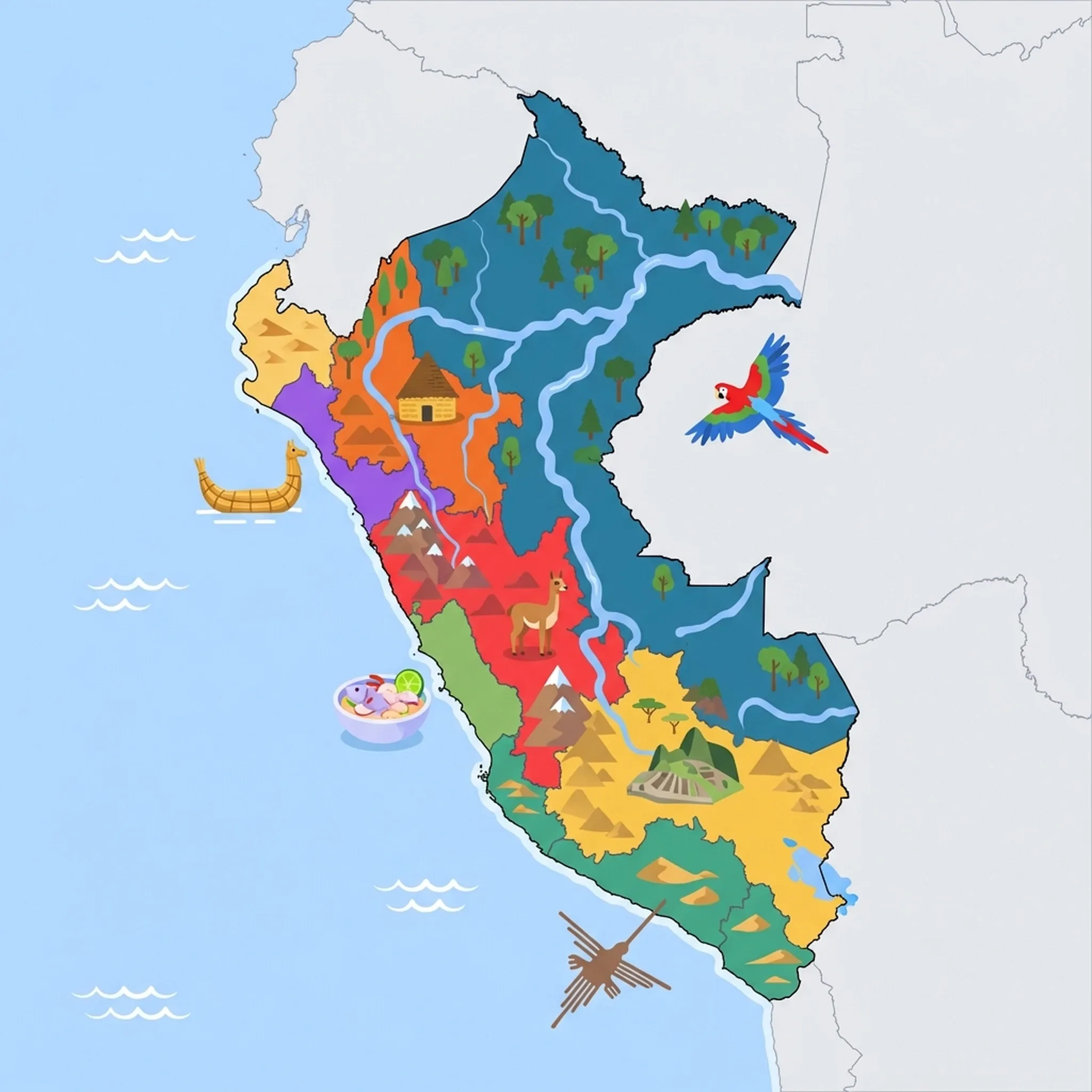
Click a region to explore
For families who love history mixed with beach time, the North Coast is the ideal playground. While the south gets the glory of the Incas, the north was home to the Moche and Chimú civilizations—cultures that built massive pyramids and wore gold long before Machu Picchu existed. The climate here is drier and sunnier than Lima, making it a year-round destination. The region is split into two vibes: the cultural heavyweights of Trujillo and Chiclayo in the south, and the relaxing beaches of Máncora and Tumbes in the north.
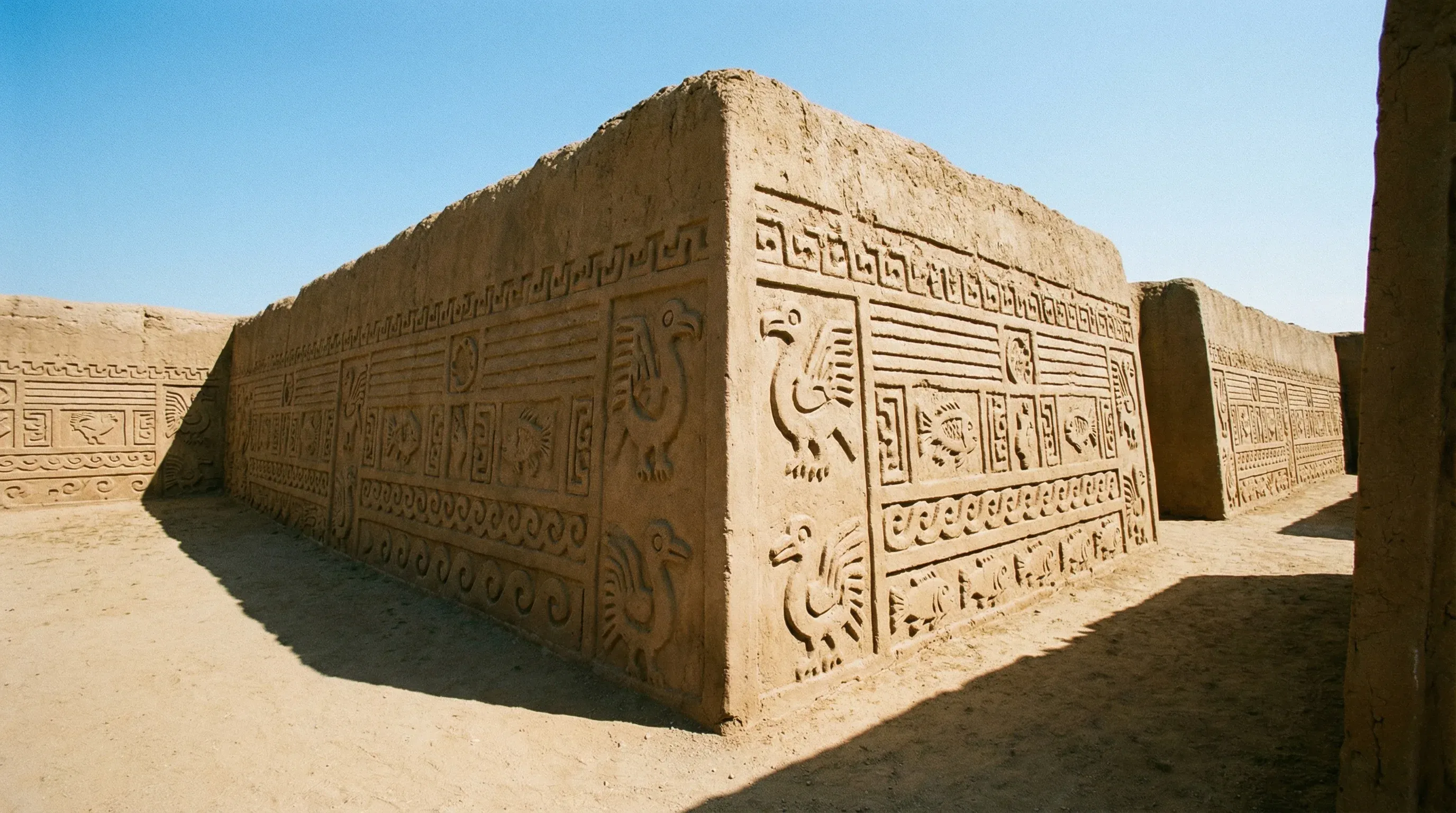
Exploring the archaeological sites here feels like a real adventure. Unlike the manicured lawns of Machu Picchu, places like the Huaca de la Luna retain a dusty, raw feel that makes kids feel like genuine explorers. The walls are covered in colorful friezes of warriors and dragons that are visually striking. After the history lesson, the coast offers some of the best water temperatures in Peru. The town of Huanchaco is famous for its "caballitos de totora" (reed watercraft), which fishermen have used for 3,000 years. Watching them surf the waves—and maybe trying a ride—is a highlight for any active family.
Key Attractions
The Chan Chan Archaeological Zone near Trujillo is a must. It is a labyrinth of adobe walls decorated with fish and pelican motifs where children can run through the endless corridors of what was once a royal palace. Nearby, Huanchaco Beach is the perfect place to base yourself; it’s a laid-back fishing village where kids can play in the sand while parents watch the sunset. Further north in Chiclayo, the Royal Tombs of Sipán Museum is arguably the best museum in Peru. It houses the gold and jewels of the Lord of Sipán (the "King Tut of the Americas"). The museum is designed like a pyramid and is fascinating, though note that photography is usually restricted inside.
For pure relaxation, head further north to Máncora Beach. While known for nightlife, the areas just south (Las Pocitas) are tranquil and family-focused, with warm water and opportunities to see humpback whales (July–October) or swim with turtles at nearby El Ñuro.
Practical Advice
This is a desert region; the sun is intense. High SPF and hats are non-negotiable. The region is well-connected by flights and buses. It's safe, but standard precautions apply in city centers at night.
Food & Drink
Typical meal times: Lunch is sacred here and can last from 1:00 pm to 4:00 pm. Dinner is usually lighter.
Typical meal costs: Very affordable. A seafood feast for a family costs S/ 100–180 (approx. $27–48 USD / €25–45 EUR).
Dietary requirements: Seafood dominates. Vegetarians can find options (rice dishes, beans, salads), but it's less varied than in Lima. Gluten-free travelers should watch out for soy sauce in marinades.
Signature dishes:
- Cabrito a la Norteña – Tender young goat stewed in chicha de jora (corn beer) and cilantro, served with beans and rice. The meat falls off the bone.
- Arroz con Pato – Rice cooked with cilantro and dark beer, served with duck. A flavorful green rice dish.
- Shambar – A thick, hearty soup made of wheat, beans, and pork skin, traditionally served only on Mondays in Trujillo.
- King Kong – A massive, brick-sized sweet made of layers of cookie filled with manjar blanco (dulce de leche), pineapple jam, and peanut paste. Kids go crazy for it.
Why this score?
The region offers moderate adventure through coastal surfing and desert explorations, though much of the tourism is centered around accessible archaeological sites and beach resorts. The terrain is less demanding than the Andes or the Amazon.
Why this score?
Major cities like Trujillo and Chiclayo have functional public and private hospitals that can handle basic medical needs. However, these facilities are not specifically tailored to international tourists, and English proficiency among medical staff is rare outside of emergency triage.
Why this score?
This area attracts international surfers to Máncora and archaeology buffs to the ruins of Chan Chan, though it sees far less traffic than the south. It remains a popular domestic holiday spot, providing a mix of coastal relaxation and niche cultural tourism.

The north is great value. A beachfront family bungalow in Máncora can cost S/ 350–600 (approx. $95–160 USD / €90–150 EUR) per night, while city hotels in Trujillo are cheaper at S/ 180–300 (approx. $48–80 USD / €45–75 EUR). Food is abundant and inexpensive.
Family Travel Notice
Minors residing in Peru or travelling with only one parent may be required to present notarized authorization from the non-travelling parent to leave the country; requirements should be verified with the nearest consulate before departure.

Getting Here & Around
Getting Here
- Airports – Captain FAP Carlos Martínez de Pinillos International Airport (TRU) in Trujillo, FAP Captain José Abelardo Quiñones González International Airport (CIX) in Chiclayo, and Capitán FAP Víctor Montes Arias Airport (TYL) in Talara (for Máncora Beach). Flights from Lima take 1–1.5 hours.
- Bus – Comfortable overnight buses run from Lima to Trujillo (9 hours) and Chiclayo (12 hours).
Getting Around
- Taxi – Cheap and plentiful in cities. In Huanchaco Beach, you can walk everywhere.
- Mototaxi – The standard transport in smaller beach towns like Máncora. Negotiate the fare before getting in.
- Private Driver – Recommended for visiting the spread-out archaeological sites like Túcume Pyramids and Sipán efficiently.
Nearby Airports (4 airports)
Capt Jose Abelardo Quinones Gonzales
CIXChiclayo
Capitan Concha
PIUPiura
Pedro Canga
TBPTumbes
Capitan Montes
TYLTalara
View full flight map for Peru →
Official Links

Packing List
The equatorial sun is incredibly strong; sunscreen alone often isn't enough for kids in the water.
Mosquitoes are present in the northern dry forests and beach areas, especially at dusk.
Coastal winds can be strong, easily blowing loose hats off during archaeological tours.
Hot sand at beaches and archaeological sites makes closed shoes uncomfortable but flip-flops impractical.
Natural, widely used local remedy to help children cope with altitude sickness in Cusco.
The high-altitude Andean sun burns quickly; chapped lips are a common complaint.
Essential for paying to use public toilets, which rarely provide change or paper.
Strollers are useless on the cobblestones of Cusco and the steps of Inca ruins.
Tap water is not potable; a filter bottle saves money and reduces plastic waste.
Sudden downpours occur even in the dry season in the Andes and Amazon.

Activities & Best Times

Urban tourism, museums, historical sites, architecture
A globally significant archaeological hub featuring Chan Chan, the world's largest adobe city, and the Moche pyramids. The dry winter months (May-Sep) provide comfortable temperatures for exploring vast outdoor ruins, whereas summer humidity and rare heavy rains can threaten adobe structures.

Hiking, wildlife, outdoor exploration, ecotourism
Features unique ecosystems like the Tumbes Mangroves and dry equatorial forests, alongside world-class humpback whale watching. Peak timing is driven by the whale migration (July-Oct) and dry conditions; the rainy summer (Jan-Mar) can make mangrove access difficult and buggy.

Sport tourism, fitness activities, active recreation
World-class surfing infrastructure exists at Huanchaco (a World Surfing Reserve) and Máncora, attracting international enthusiasts. The best swells arrive between April and October; while surfing is year-round, mid-summer often sees smaller waves and crowded local beaches.
Beach resorts, marine activities: diving, snorkelling, kite surfing, wind surfing, sailing
Home to Máncora and Punta Sal, offering Peru's best tropical beach experiences with warm waters and a growing luxury boutique hotel scene. Peak season aligns with the Peruvian summer (Dec-Mar) for optimal sun, while shoulder months offer whale watching opportunities despite cooler winds.

Scenic drives, countryside tours, route-based travel
The 'Ruta Moche' connects significant archaeological sites and coastal towns along the Pan-American Highway. Peak travel occurs during the dry season to ensure road stability and visibility; summer months carry risks of flash floods (huaycos) that can disrupt coastal transit.

Spa retreats, wellness centers, peaceful getaways
Natural thermal mud baths at Hervideros offer a rustic wellness experience in a unique landscape. These are best enjoyed during the cooler months (June-Aug) when the ambient temperature makes the hot springs more restorative than in the sweltering coastal summer.

Amusement parks, family entertainment venues
Features local-scale water parks and themed sculptures like Paseo Yortuque that serve regional families. These are most appealing during the hot summer months but lack the international infrastructure for discerning travelers to visit as a primary destination.

Attractions (16 total)



Public Holidays & Calendar Next 12 months
Public holidays, festivals, cultural celebrations, and seasonal natural phenomena coming up in North Coast & Moche Heartland over the next 12 months.
Loading holidays and events...

Travel Advisory
All major agencies recommend exercising a high degree of caution or increased vigilance throughout Peru due to crime and civil unrest. While most tourist areas remain accessible, regional escalations are common.
Safety Topics
Traveller Advice (4 groups)

Visitors should maintain situational awareness in large cities and avoid any form of political demonstration. Dual nationals should verify entry and exit rules specifically applicable to their status to avoid legal complications or travel delays. Registering with national consular services is recommended to receive emergency updates during localized states of emergency.

Personnel operating in remote border regions or the VRAEM zone face significant threats from organized crime, drug trafficking, and remnants of insurgent groups; specialized security protocols are essential in these areas.

Extreme caution is advised for those participating in spiritual or traditional ceremonies involving substances like Ayahuasca or Kambo, as there have been reports of sexual assault and personal safety incidents in these settings.

Minors residing in Peru or travelling with only one parent may be required to present notarized authorization from the non-travelling parent to leave the country; requirements should be verified with the nearest consulate before departure.
Agency Summaries
Travellers should be very vigilant due to widespread crime and the potential for social unrest and industrial action. Specific regions, including the VRAEM and certain border areas, have higher restrictions.
Irish visitors are advised to avoid regional roadblocks and stay informed about local protests. Consular assistance is limited as there is no resident embassy in Peru.
Heightened vigilance is recommended because of crime, civil disturbances, and kidnapping risks. The Loreto border and VRAEM regions are designated as 'Do Not Travel' zones.
Violent crime and civil unrest are common concerns. Travellers are encouraged to avoid demonstrations and be wary of express kidnappings in urban areas.
There is a persistent threat of violent crime across the country. A state of emergency in certain metropolitan areas means a visible military and police presence is likely.
While most travel is standard, the FCDO warns against visiting specific high-risk areas near the Colombian border and within the VRAEM. Political protests may cause sudden disruptions.
Information is provided for general guidance only and does not constitute travel, safety, medical, or legal advice. Conditions may change. Users are responsible for independently verifying information before travel.