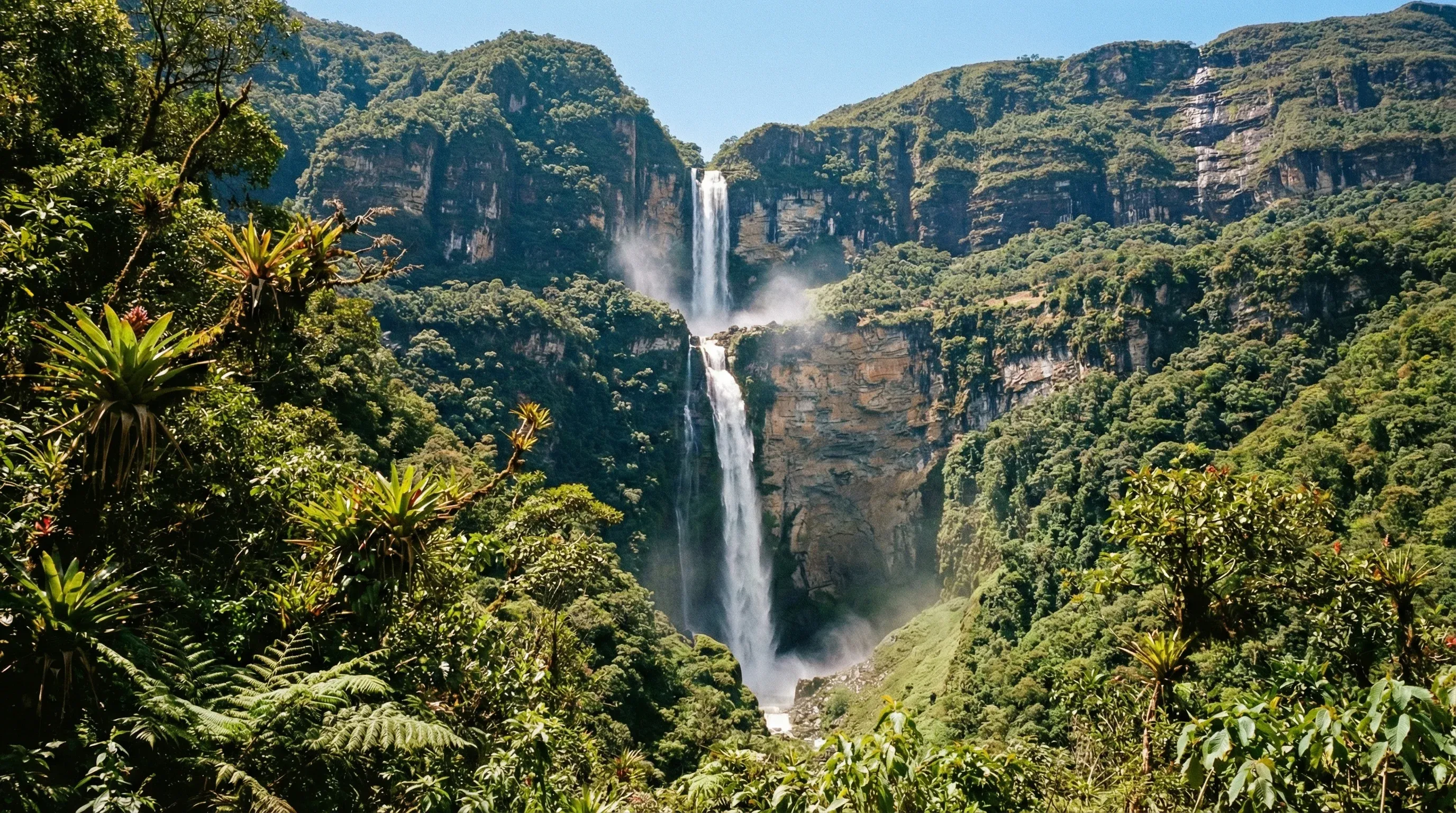

Northern Andes & Cloud Forests
Land of the Cloud People and hidden waterfalls 🚠💦
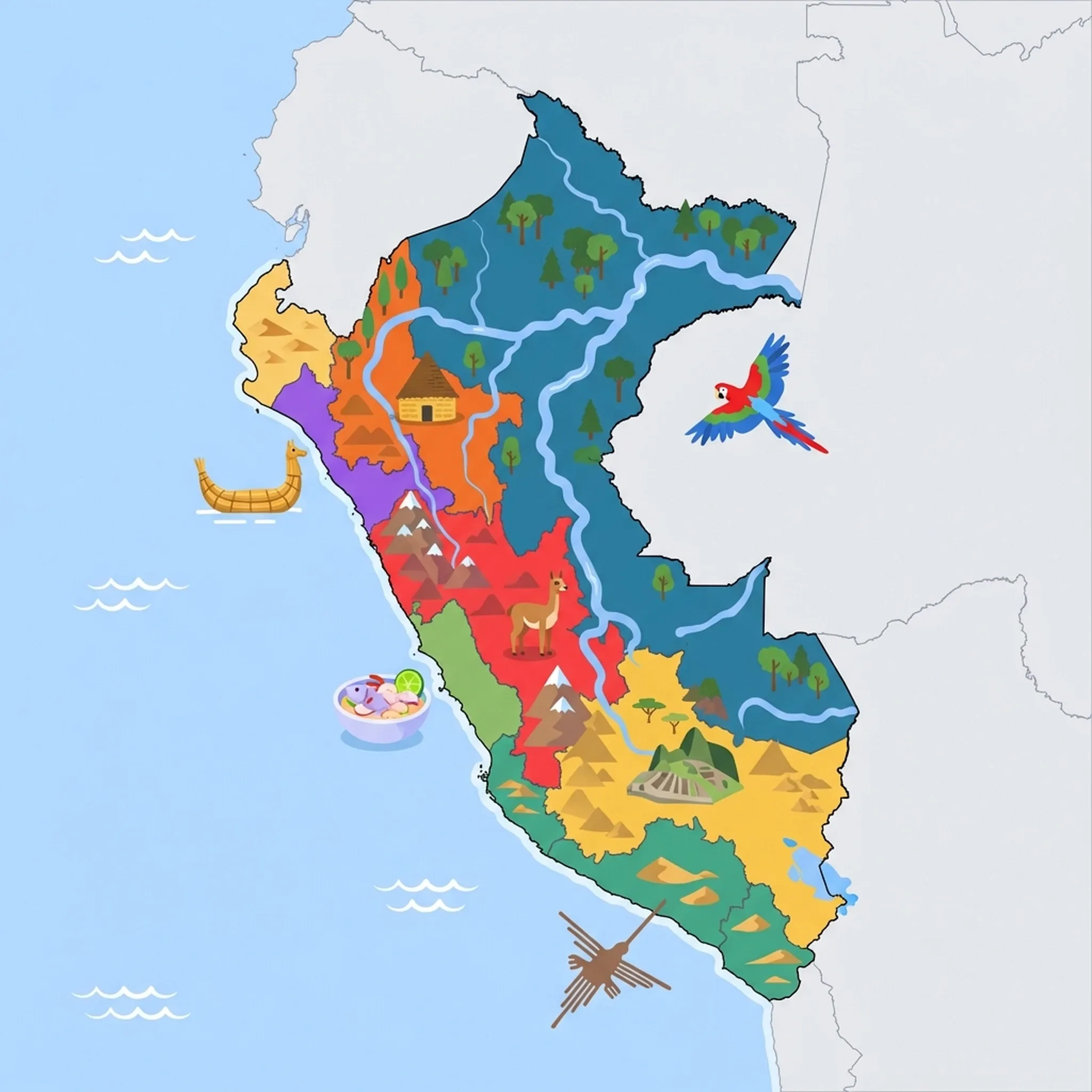
Click a region to explore
This is Peru's best-kept secret. The Northern Andes region, centered around Chachapoyas and Cajamarca, offers a landscape that feels almost prehistoric. Green mountains shrouded in mist, waterfalls that drop from the heavens, and ancient ruins perched on cliff edges define the area. For families who find the crowds of Cusco overwhelming, this is the alternative. The culture here is distinct—the Chachapoya people (Warriors of the Clouds) built round stone houses and buried their dead in sarcophagi on sheer cliff faces, a concept that fascinates older children and teenagers.
The region has become much more accessible in recent years thanks to the cable car to Kuelap and improved roads. The climate is "ceja de selva" (eyebrow of the jungle), meaning it is greener, warmer, and more humid than the southern Andes. It feels like a jungle adventure but with the cool fresh air of the mountains. Hiking here is world-class. The trails are generally well-marked and often shaded by orchids and bromeliads. It is an active destination—you will be walking a lot—but the rewards are spectacular views and a sense of discovering something "lost."
Key Attractions
The headline act is Kuelap Fortress. Often compared to Machu Picchu, it sits higher (3,000m) and is older. The Kuelap Cable Car ride to get there is an attraction in itself, offering a thrilling 20-minute flight over the valley that kids absolutely love. Inside the fortress, the massive defensive walls and roundhouses are fun to explore. Another unmissable sight is Gocta Waterfall. The hike to the base is about 5-6km each way, which can be tough for little legs, but horses can be hired for the majority of the route, turning a hike into a horseback adventure.
In Cajamarca, the Granja Porcón is a community cooperative and pine forest where families can see alpacas, vicuñas, and even bears in a zoo-like setting, while learning about sustainable farming. The The Ransom Room (Cuarto del Rescate) in the city center offers a tangible history lesson about the Spanish conquest and the Inca Atahualpa.
Practical Advice
The best time to visit is the dry season (May to October). Rain showers can happen anytime, though. The altitude is high but generally lower than Cusco, so acclimatization is easier. Bring sturdy hiking shoes.
Food & Drink
Typical meal times: Lunch 12:30 pm to 2:00 pm. Dinner 7:00 pm to 9:00 pm.
Typical meal costs: Very reasonable. A family dinner costs S/ 60–100 (approx. $16–27 USD / €15–25 EUR).
Dietary requirements: Dairy is huge here. If you are lactose intolerant, be careful. Vegetarians will find plenty of cheese and corn dishes.
Signature dishes:
- Cuy con Papas – Roasted guinea pig served with potatoes and a spicy peanut sauce. Cajamarca is famous for this.
- Caldo Verde – A green potato soup flavored with paico (a local herb) and cheese. Warm and comforting for kids.
- Manjar Blanco – A sweet, caramel-like milk spread sold everywhere in Cajamarca. A great souvenir.
- Quesillo con Miel – Fresh, mild cheese served with cane syrup (chancaca). A simple, delicious dessert.
Why this score?
Hikes to Gocta Waterfall and the remote Gran Vilaya trek offer significant physical challenges in a misty, rugged cloud forest environment. The infrastructure is developing but still requires visitors to navigate steep terrain and remote mountain passes.
Why this score?
Medical infrastructure in Chachapoyas is very limited, and the surrounding rural areas have almost no accessible care for foreigners. Any serious injury in the cloud forest would require a long and difficult transit to a major city with better facilities.
Why this score?
Despite the impressive Kuelap fortress and Gocta Waterfall, this region remains an emerging destination hindered by long travel times. It appeals to adventurous travelers seeking to avoid the crowds of Cusco but hasn't yet reached a high volume of international visitors.

Tourism here is less developed than the south, keeping prices down. A nice lodge near Chachapoyas costs S/ 180–300 (approx. $48–80 USD / €45–75 EUR). Meals and transport are inexpensive.
Family Travel Notice
Minors residing in Peru or travelling with only one parent may be required to present notarized authorization from the non-travelling parent to leave the country; requirements should be verified with the nearest consulate before departure.

Getting Here & Around
Getting Here
- Airports – Shumba Airport (JAE) near Jaén is the gateway to Chachapoyas (4-hour drive from airport). Mayor General FAP Armando Revoredo Iglesias Airport (CJA) serves Cajamarca directly.
- Bus – The overnight bus from Lima to Chachapoyas takes 22+ hours and is grueling for families. Flights are strongly recommended.
Getting Around
- Private Transfer/Tour – The distances between sights like Gocta Waterfall and Kuelap Fortress are significant. Hiring a driver or joining small group tours is essential.
- Cable Car – The Kuelap Cable Car is the only way to reach the fortress efficiently.
- Mototaxi – Common in the small towns for short local hops.
Nearby Airports (4 airports)
Chachapoyas Airport
CHHChachapoyas
Mayor General FAP Armando Revoredo Iglesias Airport
CJACajamarca
Shumba Airport
JAEJaen
Tarapoto
TPPTarapoto
View full flight map for Peru →
Official Links

Packing List
The 'high jungle' weather is unpredictable; downpours occur even in the dry season.
Trails to waterfalls can be muddy and slippery; poles help stabilize parents carrying kids.
Essential for spotting the colorful Cock-of-the-Rock bird and hummingbirds in the cloud forest.
Roads are winding (serpentine); these help kids with car sickness.
Natural, widely used local remedy to help children cope with altitude sickness in Cusco.
The high-altitude Andean sun burns quickly; chapped lips are a common complaint.
Essential for paying to use public toilets, which rarely provide change or paper.
Strollers are useless on the cobblestones of Cusco and the steps of Inca ruins.
Tap water is not potable; a filter bottle saves money and reduces plastic waste.

Activities & Best Times

Hiking, wildlife, outdoor exploration, ecotourism
Home to the spectacular Gocta Waterfall and the unique cloud forest ecosystems of the Utcubamba Valley. The dry season from May to September is essential for safe trekking and clear views, while heavy rains from January to March can make forest trails impassable.

Urban tourism, museums, historical sites, architecture
Features the massive Kuelap Fortress and the historic center of Cajamarca, site of the Inca-Spanish encounter. While museums are year-round, the primary cultural draws are outdoor archaeological sites that are best visited during the dry winter months.

Sport tourism, fitness activities, active recreation
Boasts significant infrastructure for high-altitude trekking and the modern Kuelap cable car system. Peak season follows the dry weather pattern required for technical hikes like the Gran Vilaya Trek.

Spa retreats, wellness centers, peaceful getaways
Centrally focused on the historic thermal baths of Cajamarca, offering genuine restorative experiences in a traditional setting. Best visited when the highland air is cooler and drier to fully appreciate the hot spring experience.

Scenic drives, countryside tours, route-based travel
The drive through the Marañón Canyon is one of South America's most dramatic scenic routes. Travel is highly seasonal, as heavy rains in the first quarter of the year significantly increase the risk of landslides on mountain passes.

Learning experiences, scientific sites, historical education
The Museo de Leymebamba offers a world-class look at Chachapoyas mummies, providing a significant educational anchor. However, the region lacks the density of specialized scientific facilities required for a higher international rating.

Amusement parks, family entertainment venues
Limited to thermal water parks like Baños del Inca, which offer family-friendly aquatic recreation. Peak interest aligns with Peruvian school holidays in July and August, though facilities are primarily geared toward domestic tourists.

Attractions (15 total)



Public Holidays & Calendar Next 12 months
Public holidays, festivals, cultural celebrations, and seasonal natural phenomena coming up in Northern Andes & Cloud Forests over the next 12 months.
Loading holidays and events...

Travel Advisory
All major agencies recommend exercising a high degree of caution or increased vigilance throughout Peru due to crime and civil unrest. While most tourist areas remain accessible, regional escalations are common.
Safety Topics
Traveller Advice (4 groups)

Visitors should maintain situational awareness in large cities and avoid any form of political demonstration. Dual nationals should verify entry and exit rules specifically applicable to their status to avoid legal complications or travel delays. Registering with national consular services is recommended to receive emergency updates during localized states of emergency.

Personnel operating in remote border regions or the VRAEM zone face significant threats from organized crime, drug trafficking, and remnants of insurgent groups; specialized security protocols are essential in these areas.

Extreme caution is advised for those participating in spiritual or traditional ceremonies involving substances like Ayahuasca or Kambo, as there have been reports of sexual assault and personal safety incidents in these settings.

Minors residing in Peru or travelling with only one parent may be required to present notarized authorization from the non-travelling parent to leave the country; requirements should be verified with the nearest consulate before departure.
Agency Summaries
Travellers should be very vigilant due to widespread crime and the potential for social unrest and industrial action. Specific regions, including the VRAEM and certain border areas, have higher restrictions.
Irish visitors are advised to avoid regional roadblocks and stay informed about local protests. Consular assistance is limited as there is no resident embassy in Peru.
Heightened vigilance is recommended because of crime, civil disturbances, and kidnapping risks. The Loreto border and VRAEM regions are designated as 'Do Not Travel' zones.
Violent crime and civil unrest are common concerns. Travellers are encouraged to avoid demonstrations and be wary of express kidnappings in urban areas.
There is a persistent threat of violent crime across the country. A state of emergency in certain metropolitan areas means a visible military and police presence is likely.
While most travel is standard, the FCDO warns against visiting specific high-risk areas near the Colombian border and within the VRAEM. Political protests may cause sudden disruptions.
Information is provided for general guidance only and does not constitute travel, safety, medical, or legal advice. Conditions may change. Users are responsible for independently verifying information before travel.