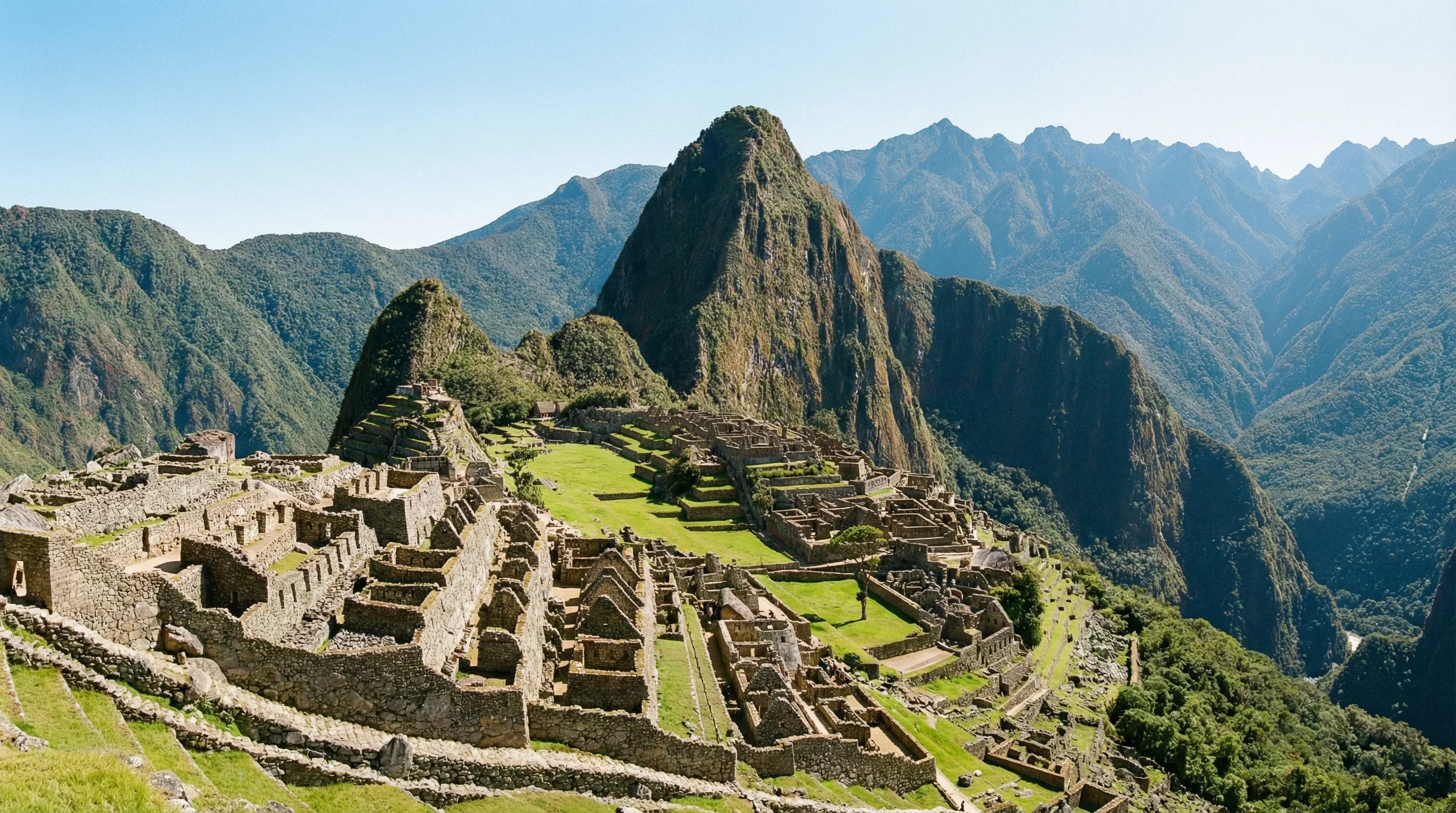

Southern Andes & Inca Heartland
Empire of the Incas and soaring peaks 🦙🏔️
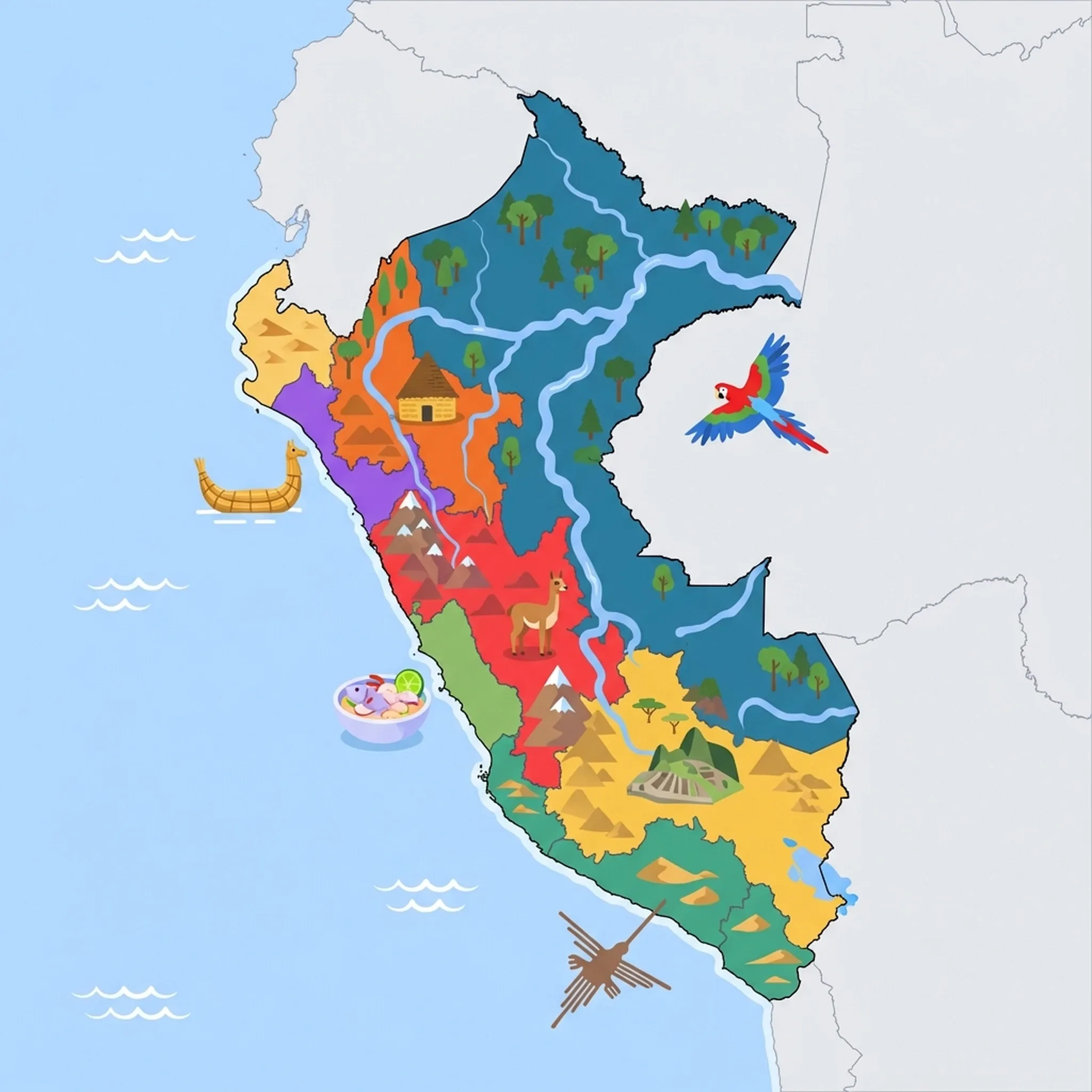
Click a region to explore
The Southern Andes is the undisputed heart of Peruvian tourism, and for good reason. It is a place of breathtaking beauty—quite literally, given the altitude. For families, this region offers a seamless mix of education and adventure. Cusco, the ancient Inca capital, is built on stone foundations that have withstood earthquakes for centuries. The streets are filled with women in traditional dress leading llamas, a sight that never fails to delight children. However, the altitude in Cusco (3,400m) is serious. Smart families head straight to the Sacred Valley, which is lower and warmer, to acclimatize before tackling the city.
The infrastructure here is excellent. You can choose between luxury trains, comfortable tourist buses, and world-class hotels. The Sacred Valley is particularly family-friendly, offering open spaces, relatively flat terrain, and activities like chocolate-making workshops, pottery classes, and animal sanctuaries. Further south, Lake Titicaca offers a different kind of magic. Exploring the floating reed islands of the Uros people is a surreal experience where kids can learn about a completely different way of living—walking on islands made of grass!
Key Attractions
Naturally, Machu Picchu is the star. For families, the train ride there is half the fun, winding through the jungle along the rushing Urubamba River. Once there, the llamas grazing on the terraces are often as big a hit as the ruins themselves. In the Sacred Valley, Ollantaytambo Archaeological Park is a favorite; it is one of the few places where you can see a living Inca town, with water still rushing through original stone channels. The fortress ruins above the town are steep but rewarding to climb.
In Cusco city, Sacsayhuaman is an immense fortress with stones weighing up to 120 tons. The site has natural rock slides ("rodaderos") polished smooth by centuries of use—kids (and parents) slide down them on their bottoms, which is often their favorite memory of the trip. Finally, the Qorikancha (Temple of the Sun) shows the incredible precision of Inca masonry, with gold-plated walls recreated to show its former glory.
Practical Advice
Acclimatization is the #1 priority. Spend the first 2-3 days in the Sacred Valley (2,800m) before sleeping in Cusco. Drink plenty of water. The dry season (May–October) is cold at night but sunny.
Food & Drink
Typical meal times: Lunch 12:00 pm to 2:30 pm. Dinner 6:30 pm to 9:00 pm.
Typical meal costs: Prices vary wildly. A tourist menu costs S/ 40–80 (approx. $11–21 USD / €10–20 EUR), while fine dining can reach S/ 300+ ($80+ USD). Local markets are cheap.
Dietary requirements: Cusco is very international. You will find excellent pizza, pasta, and veggie options everywhere. Quinoa is a local staple and great for gluten-free travelers.
Signature dishes:
- Choclo con Queso – Giant Andean corn kernels served with a slab of salty cheese. A ubiquitous street snack in the Sacred Valley.
- Lomo Saltado de Alpaca – A twist on the classic beef dish, using lean, healthy alpaca meat. It's tender and delicious.
- Quinoa Soup – A hearty, warming vegetable soup with quinoa, perfect for cold Andean nights.
- Chicharrón de Cerdo – Deep-fried pork chunks served with mint salad and potatoes, famous in the town of Saylla near Cusco.
Why this score?
The extreme altitude and world-famous trekking routes like the Classic Inca Trail provide a notable adventure element. However, the presence of high-end trains, luxury hotels, and well-managed sites balances the ruggedness for less adventurous families.
Why this score?
Cusco has several private clinics experienced in treating international travelers, particularly for altitude sickness and digestive issues. While staff are more accustomed to foreigners than in other regions, serious surgical cases are still often referred to Lima.
Why this score?
Home to Machu Picchu, one of the New Seven Wonders of the World, this region is a global tourism powerhouse. It consistently attracts millions of international visitors who come for the Inca trails, the Sacred Valley, and the historic charm of Cusco.

As Peru's prime destination, costs here are higher. Entrance fees are significant (Machu Picchu is approx. $45 USD for adults). A mid-range family hotel costs S/ 300–550 (approx. $80–150 USD / €75–140 EUR). Budget options exist but fill up fast.
Family Travel Notice
Minors residing in Peru or travelling with only one parent may be required to present notarized authorization from the non-travelling parent to leave the country; requirements should be verified with the nearest consulate before departure.

Getting Here & Around
Getting Here
- Airports – Alejandro Velasco Astete International Airport (CUZ) in Cusco is the main hub. Juliaca (JUL) serves Lake Titicaca. Flights from Lima take 1 hour 15 mins.
- Train – The luxury Lake Titicaca train runs between Cusco and Puno (10 hours), a stunning scenic journey.
- Bus – The tourist bus route between Cusco and Puno (stopping at ruins along the way) is a fantastic full-day family activity.
Getting Around
- Train – The primary way to reach Historic Sanctuary of Machu Picchu. Operators like PeruRail and Inca Rail offer various service levels.
- Colectivo/Taxi – Easy to hire private drivers for days in the Sacred Valley. This gives families flexibility to stop whenever kids need a break.
- Walking – Be prepared for lots of stairs and cobblestones. Strollers are useless in ruins; bring a carrier for small children.
Nearby Airports (4 airports)
Rodriguez Ballon
AQPArequipa
Coronel Fap Alfredo Mendivil Duarte
AYPAyacucho
Velazco Astete
CUZCuzco
Juliaca
JULJuliaca
View full flight map for Peru →
Official Links

Packing List
Helps children manage mild altitude sickness symptoms pleasantly.
Strollers are impossible on Inca cobblestones and stairs; a carrier is mandatory for toddlers.
Temperature swings are extreme; it can be 20°C in the sun and 5°C in the shade/night.
The sun at 3,400m burns lips rapidly.
Natural, widely used local remedy to help children cope with altitude sickness in Cusco.
Essential for paying to use public toilets, which rarely provide change or paper.
Strollers are useless on the cobblestones of Cusco and the steps of Inca ruins.
Tap water is not potable; a filter bottle saves money and reduces plastic waste.
Sudden downpours occur even in the dry season in the Andes and Amazon.

Activities & Best Times

Hiking, wildlife, outdoor exploration, ecotourism
World-class trekking and wildlife observation centered around the high Andes and the fringes of the Amazon. The dry winter months offer clear skies and optimal trail accessibility, while the heavy summer rains lead to trail closures and safety risks.

Urban tourism, museums, historical sites, architecture
Home to the historic Inca capital and UNESCO sites like Machu Picchu, offering a dense concentration of world-class museums and living heritage. While cultural sites are open year-round, the experience is most authentic and visually stunning during the dry season.

Sport tourism, fitness activities, active recreation
Famous for high-altitude endurance trekking and unique facilities like the vertical Skylodge and organized Inca Trail routes. Infrastructure is world-class but highly seasonal, with the iconic Inca Trail closing annually in February for maintenance.

Spa retreats, wellness centers, peaceful getaways
Natural thermal spring complexes at Aguas Calientes and Lares provide authentic restorative experiences after mountain exploration. These facilities are best enjoyed during the cooler, drier months which align with the peak Andean travel season.

Scenic drives, countryside tours, route-based travel
The Sacred Valley and 'Route of the Sun' offer spectacular scenic drives through high-altitude landscapes and rural villages. Roads are most reliable and visibility is at its peak during the dry winter, avoiding the risk of mudslides common in the rainy season.

Beach resorts, marine activities: diving, snorkelling, kite surfing, wind surfing, sailing
Offers unique high-altitude shoreline experiences at Lake Titicaca rather than traditional ocean resorts. The southern summer months provide the most tolerable air and water temperatures for lakeside relaxation in a stunning alpine environment.

Learning experiences, scientific sites, historical education
Specialized facilities like the Cusco Planetarium offer destination-level insights into Inca cosmology and archaeological science. These provide valuable educational depth as a complement to regional heritage visits during the peak tourist season.

Events, celebrations, seasonal attractions
Hosts the globally recognized Inti Raymi in June and Fiesta de la Candelaria in February, though major international events are concentrated in these specific windows. These festivals provide profound cultural authenticity for families seeking deep heritage connections.

Amusement parks, family entertainment venues
Includes niche regional parks such as Apukunaq Tianan, which offer unique sculpture and landscape art rather than commercial mass-market rides. These sites are most enjoyable during dry conditions when families can comfortably explore the outdoor installations.

Attractions (20 total)



Public Holidays & Calendar Next 12 months
Public holidays, festivals, cultural celebrations, and seasonal natural phenomena coming up in Southern Andes & Inca Heartland over the next 12 months.
Loading holidays and events...

Travel Advisory
All major agencies recommend exercising a high degree of caution or increased vigilance throughout Peru due to crime and civil unrest. While most tourist areas remain accessible, regional escalations are common.
Safety Topics
Traveller Advice (4 groups)

Visitors should maintain situational awareness in large cities and avoid any form of political demonstration. Dual nationals should verify entry and exit rules specifically applicable to their status to avoid legal complications or travel delays. Registering with national consular services is recommended to receive emergency updates during localized states of emergency.

Personnel operating in remote border regions or the VRAEM zone face significant threats from organized crime, drug trafficking, and remnants of insurgent groups; specialized security protocols are essential in these areas.

Extreme caution is advised for those participating in spiritual or traditional ceremonies involving substances like Ayahuasca or Kambo, as there have been reports of sexual assault and personal safety incidents in these settings.

Minors residing in Peru or travelling with only one parent may be required to present notarized authorization from the non-travelling parent to leave the country; requirements should be verified with the nearest consulate before departure.
Agency Summaries
Travellers should be very vigilant due to widespread crime and the potential for social unrest and industrial action. Specific regions, including the VRAEM and certain border areas, have higher restrictions.
Irish visitors are advised to avoid regional roadblocks and stay informed about local protests. Consular assistance is limited as there is no resident embassy in Peru.
Heightened vigilance is recommended because of crime, civil disturbances, and kidnapping risks. The Loreto border and VRAEM regions are designated as 'Do Not Travel' zones.
Violent crime and civil unrest are common concerns. Travellers are encouraged to avoid demonstrations and be wary of express kidnappings in urban areas.
There is a persistent threat of violent crime across the country. A state of emergency in certain metropolitan areas means a visible military and police presence is likely.
While most travel is standard, the FCDO warns against visiting specific high-risk areas near the Colombian border and within the VRAEM. Political protests may cause sudden disruptions.
Information is provided for general guidance only and does not constitute travel, safety, medical, or legal advice. Conditions may change. Users are responsible for independently verifying information before travel.