

The Philippines is an archipelago defined by its staggering natural beauty and the legendary hospitality of its people. For families, this is a destination where children are treated like VIPs-locals genuinely adore kids, and you will find help and friendly faces everywhere you go. Geographically, the country is split into three main island groups: Luzon (home to the capital, Manila), the Visayas (the central hub of beaches and coral reefs), and Mindanao in the south. The tropical climate means it is warm year-round, making it perfect for water babies and outdoor explorers who want to trade winter coats for swimsuits.
Culturally, the Philippines is unique in Asia due to its Spanish colonial history and American influence, resulting in a Catholic-majority nation where English is widely spoken. This makes travel logistics-from asking for directions to ordering food-exceptionally easy for English-speaking families. The vibe is laid-back and festive; life here revolves around food, family gatherings, and fiestas. Whether you are island-hopping by boat, riding a colourful jeepney, or trekking to hidden waterfalls, the sense of adventure is always balanced by the comforting familiarity of a culture that prioritises family above all else.
Key Attractions
Start your journey in Manila & Luzon, where history comes alive at Intramuros, the ancient walled city. Kids can ride horse-drawn carriages (calesas) along cobblestone streets before visiting Manila Ocean Park to see marine life up close. For a full day of thrills, Enchanted Kingdom is the country's premier theme park, offering rides for all ages.
Head central to Cebu & Visayas for world-class nature. In Bohol, the surreal Chocolate Hills look like giant Hershey's Kisses, a sight that fascinates children. Nearby, you can take a floating lunch cruise on the Loboc River. On Cebu island, older kids will love the adventure of Kawasan Falls, while the Cebu Ocean Park offers another fantastic educational stop.
For the ultimate beach holiday, Boracay is famous for White Beach, where the water is calm, shallow, and safe for toddlers. If you prefer nature over resorts, Palawan is unmissable. The Puerto Princesa Subterranean River National Park offers a boat tour into a massive underground cave system filled with bats and rock formations that will spark any child's imagination.
Practical Advice
Best time to visit: The dry season (December to May) is ideal for beach trips. The wet season (June to November) can bring typhoons, so check forecasts. Visas: Citizens of the US, UK, and EU usually get 30 days visa-free entry. Health: Tap water is not potable; stick to bottled or filtered water. Mosquito repellent is essential to prevent dengue. Logistics: Island hopping often involves ferries or small planes (“bangkas” are traditional outrigger boats used for short trips). Pack light and use backpacks if possible.
Food & Drink
Typical meal times: Lunch is usually 11:30 am to 1:30 pm, and dinner from 6:00 pm to 8:00 pm. Malls and fast-food chains often stay open late.
Typical meal costs: ₱300–800 (approx. $5.50–14.50 USD / €5.00–13.50 EUR) per person in a mid-range restaurant. Local eateries can be much cheaper, while resort dining will be higher.
Dietary requirements: Filipino food is meat-heavy (pork is king). Vegetarians may find it challenging outside major cities, though fresh fruit and rice are always available. Nut allergies are less common here, but peanuts are used in some sauces (like Kare-Kare).
Family-friendly dining: Filipinos love children, and you will be welcome everywhere. Jollibee, the local fast-food giant, is a cultural phenomenon that kids must try. Highchairs are standard in malls and hotels.
Signature dishes:
- Chicken Adobo – Chicken braised in vinegar, soy sauce, and garlic. It is savoury, tender, and generally loved by picky eaters.
- Sinigang – A sour soup made with tamarind, vegetables, and meat or seafood. The tangy flavour is unique and refreshing.
- Lechon – Whole roasted pig with crispy skin. It is the centrepiece of any celebration and delicious for meat-eaters.
- Pancit – Stir-fried noodles with vegetables and meat. A staple birthday dish representing long life.
- Halo-halo – The ultimate dessert: shaved ice, evaporated milk, and various sweet beans, jellies, and fruits. A colourful, messy treat kids adore.
Safety
The Philippines is generally safe for family tourists, especially in major resort areas like Boracay, Bohol, and Palawan. Violent crime against tourists is rare, but petty theft can happen in crowded cities like Manila. Stick to reputable transport (Grab app is safer than hailing taxis on the street). Be cautious of stray dogs in rural areas. Water safety is key-always supervise children near the ocean and use life jackets on boat transfers, which are mandatory.

A family of four can expect to spend around ₱7,000–12,000 (approx. $125–215 USD / €115–200 EUR) per day. This covers mid-range family accommodation, three meals including some western options, and activities. Local transport like tricycles is very cheap, while island-hopping tours and domestic flights will be the main expenses.
Age Suitability





Did you know? Philippines welcomes approximately 2.7 million international visitors per year. Most visitors come from East Asia and the Pacific.
Explore Regions
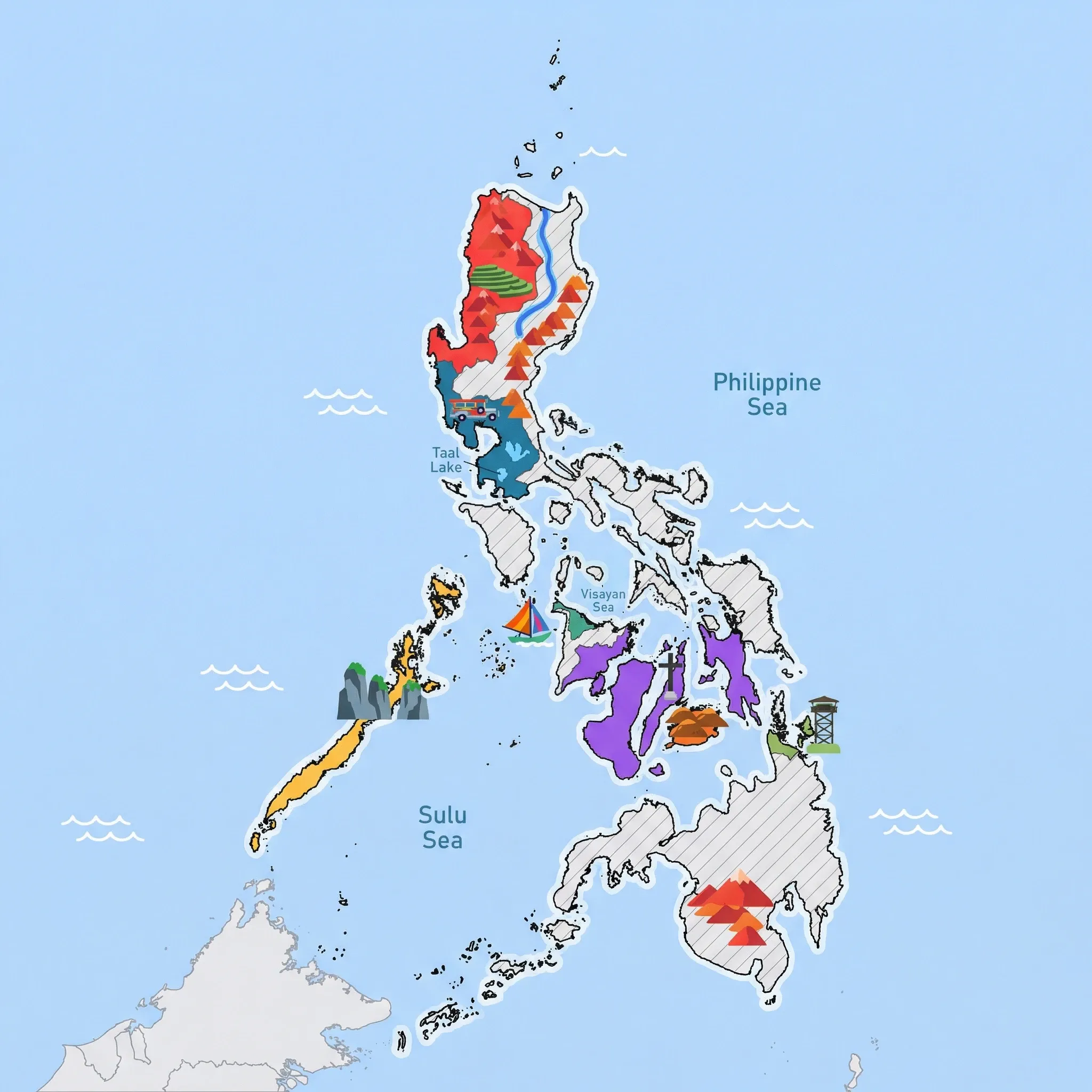
7 Regions
Bohol
Home to tiny primates and chocolate-drop hills 🍫🐒
Boracay
Powder-soft white sand and the world's best sunsets 🌅🏖️
Cebu & Visayas
The Queen City of the South: History, malls, and whale sharks 🦈🏙️
Manila & Luzon
The bustling capital gateway to volcanic adventures 🌋🏙️
Northern Luzon (Banaue, Sagada)
Cool mountain air and stairways to the sky 🏔️🌲
Palawan (El Nido, Coron)
The last ecological frontier with crystal lagoons 🛶🏝️
Siargao (surfing)
Surf, coconuts, and endless island vibes 🏄♂️🌴
Click on a region marker to explore details. Use the dropdown to color regions by activity suitability.

Getting There & Around
Getting There
- By Air – Ninoy Aquino International Airport (MNL) in Manila & Luzon is the main gateway. Mactan-Cebu International Airport (CEB) is an excellent alternative for bypassing Manila traffic and going straight to the beaches.
- Entry Requirements – Most Western citizens (US, UK, EU, AU) receive a 30-day visa-free entry. You must register with the eTravel system (etravel.gov.ph) within 72 hours before arrival. Check your government website for the latest visa requirements, or use the IATA Travel Centre entry-requirements checker.
Getting Around
- Domestic Flights – The quickest way to hop between major islands like Cebu, Palawan, and Boracay. Carriers include Cebu Pacific and Philippine Airlines.
- Ferries – Essential for connecting islands. Fast crafts (like OceanJet) connect Cebu & Visayas hubs efficiently. Always book in advance during peak season.
- Tricycles – A motorbike with a sidecar, these are the Philippine version of the tuk-tuk. They are fun for short trips, cheap, and kids love the novelty.
- Ride Hailing – The Grab app is widely available in Manila and Cebu. It is safer, cleaner, and more reliable than street taxis for families.

Packing List
Essential for protecting feet from sharp coral and rocks during island hopping and waterfalls.
You will be on and off small boats (bangkas) constantly; keeps your phone dry and sand-free.
Keeps towels and spare clothes dry during boat splashes or sudden tropical rain showers.
Sun is intense and jellyfish are common; locals wear them and they save on sunscreen.
Dengue fever is a real risk in tropical areas; bring a DEET or picaridin-based formula.
Long travel days on ferries and remote islands often mean no access to power outlets.

Activities & Best Times

Adventure & Nature
ExcellentHiking, wildlife, outdoor exploration, ecotourism
A world-class destination for immersion in nature, featuring the Calauit Safari Park and unique karst ecosystems; monsoon rains from June to October can restrict access to remote lagoons and trails.
Home to the UNESCO-listed Ifugao Rice Terraces and Mt. Pulag, this region offers globally unique trekking through ancient cultural landscapes and mossy cloud forests. The dry season (Dec-Apr) is critical for safe hiking conditions and witnessing the iconic 'sea of clouds' vistas.
Home to world-class canyoneering at Kawasan Falls and the unique geological Chocolate Hills, this region offers deep immersion in tropical wilderness and endemic wildlife. Peak conditions from January to April ensure dry trails and safe water levels for river-based expeditions.

City & Cultural
Very GoodUrban tourism, museums, historical sites, architecture
Features a distinct mountain culture, from the colonial hill station heritage of Baguio to the ancient hanging coffins and indigenous rituals of Sagada. Travel is best during the cooler, dry months to ensure accessibility via mountain roads and comfortable exploration of open-air botanical gardens.
Boasts significant heritage sites including some of the Philippines' oldest stone churches and the Blood Compact Shrine. Sightseeing is most comfortable during the cooler dry months, avoiding the heavy rains that can impact outdoor historic sites.
The region boasts significant heritage including UNESCO-listed Vigan and the Banaue Rice Terraces, alongside the colonial history of Intramuros. The cooler months from December to February are the most comfortable for exploring these sites, as humidity and urban heat become intense from March onwards.

Sports & Active
Very GoodSport tourism, fitness activities, active recreation
Strong infrastructure for active families including the Taraw Cliff Canopy Walk and spelunking at Ugong Rock; these high-altitude and cave activities require the dry conditions of peak season for safety.
A globally recognized destination for kiteboarding and windsurfing on Bulabog Beach, supported by established hiking and biking infrastructure. Peak activity aligns with the consistent Amihan trade winds that blow from November through March.
High-infrastructure adventure parks offer specialized activities like bike-ziplining and river trekking. These facilities are most accessible and enjoyable when the trails and equipment are dry.

Beach & Sea
GoodBeach resorts, marine activities: diving, snorkelling, kite surfing, wind surfing, sailing
Features iconic limestone lagoons and major coastal sites like Nacpan Beach and Big Lagoon; optimal sea visibility and calm waters for island hopping occur during the dry season (Dec–Apr).
Features iconic powdery white sand and crystal-clear waters at White Beach and Puka Shell Beach. The dry Amihan season (December-May) provides calm, pristine conditions, whereas the Habagat monsoon brings wind and rain to the main beach front.
Home to the world-class Balicasag Marine Sanctuary for diving and the iconic white sands of Panglao Island. Peak visitation occurs during the dry season when sea conditions are calmest for snorkeling and island hopping.

Relaxation & Wellness
GoodSpa retreats, wellness centers, peaceful getaways
Natural hot springs like Mainit provide a restorative and authentic wellness experience that perfectly suits the region's cool highland climate. These thermal baths are most enjoyable in the dry season when the crisp mountain air provides a refreshing contrast to the warm waters.
Unique geothermal experiences like Puning Hot Spring and established retreats like Hidden Valley offer authentic wellness escapes within driving distance of the capital. These natural hot springs are most enjoyable during the cooler 'Amihan' season from December to February.
Includes unique natural saltwater hot springs like Maquinit; these are most popular as restorative stops during the cooler, drier months before the heavy monsoon arrives.

Road Trips & Scenic
GoodScenic drives, countryside tours, route-based travel
The Halsema Highway and Cordillera Heritage Loop provide some of the world's most spectacular high-altitude driving routes through rugged mountain terrain. Peak travel aligns with the dry season, as the monsoon months (Jun-Oct) frequently see heavy rain and road-closing landslides.
The route from Puerto Princesa to El Nido offers significant scenic vistas; travel is recommended in the dry season to ensure safe road conditions and clear coastal views.
Having a scenic route doesn't make a region 'good' for road trips - that rating should apply to regions internationally/nationally known for driving tourism. Unless the Circumferential Road is genuinely exceptional, 'marginal' is more appropriate.

Theme Park & Entertainment
GoodAmusement parks, family entertainment venues
Featuring major regional attractions like Anjo World and Jpark Island's waterpark, the region serves families looking for high-standard entertainment. These outdoor venues are most enjoyable during the dry season to avoid closures caused by heavy tropical rains.
Luzon hosts the Philippines' primary family entertainment hubs like Enchanted Kingdom and Aqua Planet, which offer solid international-style attractions. Peak periods align with local school holidays and the Christmas season, while outdoor operations are frequently disrupted by heavy rains during the monsoon.
Limited to the Palawan Waterpark which serves as a secondary family attraction; peak usage aligns with the local summer and the height of the dry tourist season.

Educational & Exploratory
GoodLearning experiences, scientific sites, historical education
High-quality, purpose-built facilities like The Mind Museum and the National Museum of Natural History provide sophisticated learning environments for families. These indoor attractions are accessible year-round, but the monsoon months (June-September) present significant urban transit challenges in Manila.
The Nova Shell Museum offers niche scientific insight into marine biodiversity but is a secondary attraction. Visiting is best paired with broader island tours during the stable weather of the dry season.
Cebu Ocean Park and the anthropology museums at Silliman University provide significant scientific and historical insights into the Visayas. While primarily indoor, travel between these geographically dispersed sites is most efficient during the dry season.

Festivals & Seasonal
MarginalEvents, celebrations, seasonal attractions
Centered almost exclusively on the International Surfing Festival in late September, which attracts a global crowd. Outside of this window, there are few organized events with significant international draw for sophisticated travelers.
The Sinulog-Santo Niño Festival in January is an internationally significant cultural spectacle that transforms Cebu City. Outside of this major event and the Easter period, there are few seasonal attractions that would motivate a specific international journey.
While local festivals are numerous, the Giant Lantern Festival in December and Pahiyas in May are the primary events with international appeal for families. These events are strictly date-bound and often occur during transition periods between weather systems.

Public Holidays & Calendar Next 12 months
Public holidays, festivals, cultural celebrations, and seasonal natural phenomena coming up in Philippines over the next 12 months.
Loading holidays and events...
Climate & Weather
Bohol
Show Details
| Month | Temp °C | Rain | Humidity |
|---|
Boracay
Show Details
| Month | Temp °C | Rain | Humidity |
|---|
Cebu & Visayas
Show Details
| Month | Temp °C | Rain | Humidity |
|---|
Manila & Luzon
Show Details
| Month | Temp °C | Rain | Humidity |
|---|
Northern Luzon (Banaue, Sagada)
Show Details
| Month | Temp °C | Rain | Humidity |
|---|
Palawan (El Nido, Coron)
Show Details
| Month | Temp °C | Rain | Humidity |
|---|

Travel Advisory
All major agencies agree that a baseline of increased vigilance is necessary when visiting the Philippines. While much of the country is safe for tourism, the presence of active extremist groups, kidnapping risks, and violent crime necessitates higher-than-normal caution. Several agencies maintain severe warnings for the Mindanao region.
Safety Topics
Traveller Advice (4 groups)

Ensure you register with the e-Travel system at least 72 hours before arrival. Carry identification at all times and be prepared for security checkpoints in public areas like shopping malls and transport terminals. Avoid walking alone at night and use reputable ride-sharing apps rather than hailing street taxis.

While generally tolerant in urban areas, social attitudes can be conservative in rural regions. Public displays of affection may attract unwanted attention. There are no laws criminalizing same-sex relationships, but legal protections against discrimination are limited.

Infrastructure in many parts of the country, including public transport and older buildings, may not be fully accessible. Modern malls and hotels in Manila and Cebu typically offer better facilities, but advance planning is recommended for those with mobility challenges.

Exercise caution when travelling alone, especially at night or in less populated areas. There have been reports of drink-spiking; never leave food or beverages unattended. Dress conservatively in rural or religious areas to respect local customs.
Agency Summaries
New Zealanders should be alert to the risks of kidnapping, terrorism, and violent crime, which are more prevalent than in New Zealand. While Manila and most tourist spots require standard caution, specific southern islands and provinces are under strict 'do not travel' or 'avoid non-essential travel' advisories due to security volatility.
Heightened vigilance is recommended across the country because of crime, terrorism, civil unrest, and kidnapping. Some southern regions, specifically the Sulu Archipelago and Marawi City, are designated as no-go zones where the U.S. government has extremely limited ability to assist citizens. Terrorist organizations continue to plot attacks in public areas.
Travellers should maintain a high level of vigilance throughout the Philippines due to the ongoing threats of kidnapping, terrorism, and violent crime. While major tourist areas are generally accessible, significant regional risks exist in Mindanao, where extreme caution or total avoidance is advised for certain provinces due to active insurgent groups and safety concerns.
While most of the country is open for travel, there are strict warnings against visiting western and central Mindanao and the Sulu archipelago due to the high likelihood of terrorist activity. Demonstrations in major cities like Manila can occur and may lead to disruptions; travellers are advised to avoid large gatherings.
Irish citizens are advised to be highly cautious due to security risks, including terrorism and kidnapping. Most visits are trouble-free, but regional instability in the south requires careful planning. Registration on the official e-Travel portal is mandatory for all arriving passengers.
Australia recommends a high level of caution for the entire Philippines due to the threats of violent crime and terrorism. Severe travel restrictions are in place for central and western Mindanao and the Sulu Sea, where the risk of kidnapping and conflict between armed groups is very high. Use official transport and stay alert in public hubs.
Information is provided for general guidance only and does not constitute travel, safety, medical, or legal advice. Conditions may change. Users are responsible for independently verifying information before travel.