
Bohol
Home to tiny primates and chocolate-drop hills 🍫🐒
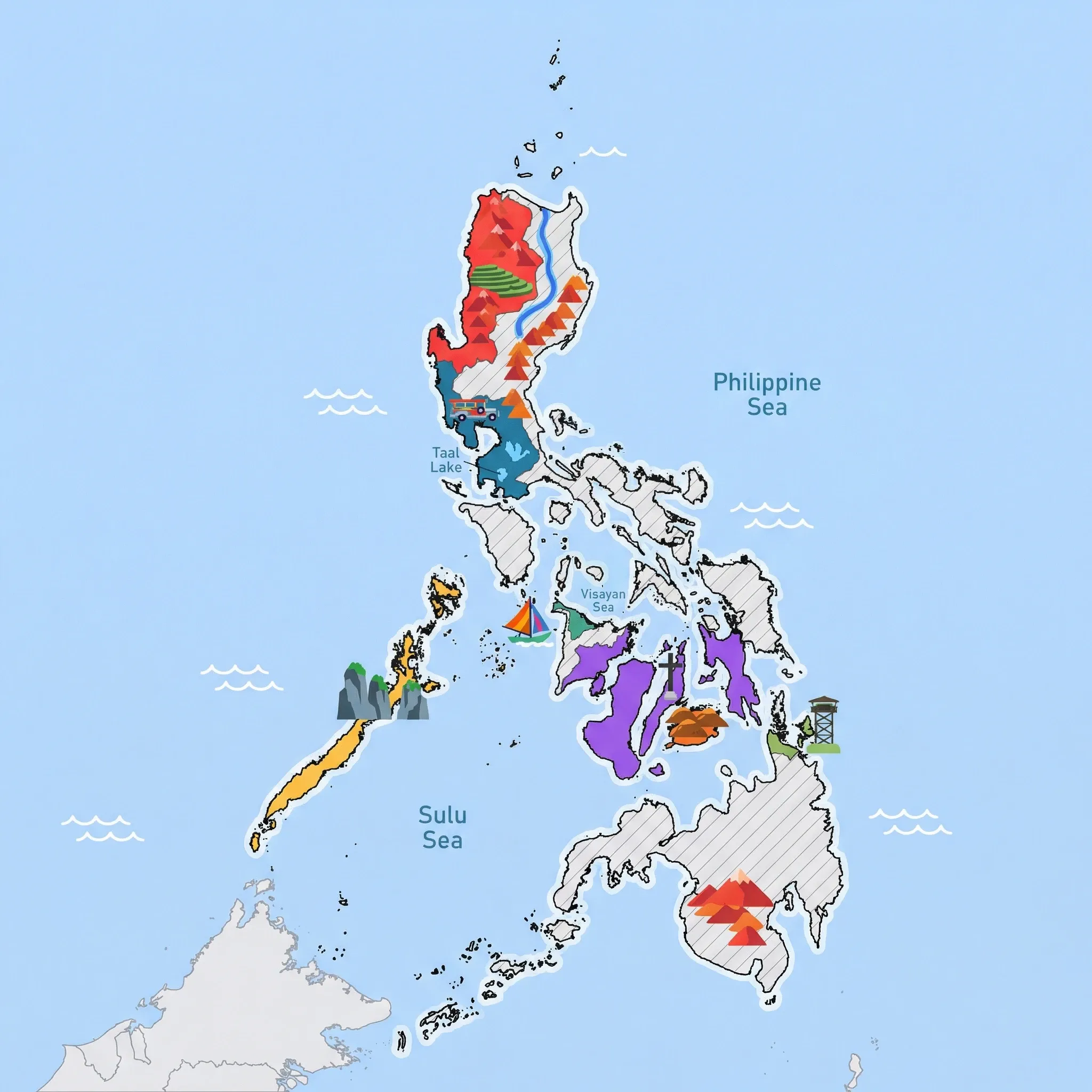
Click a region to explore
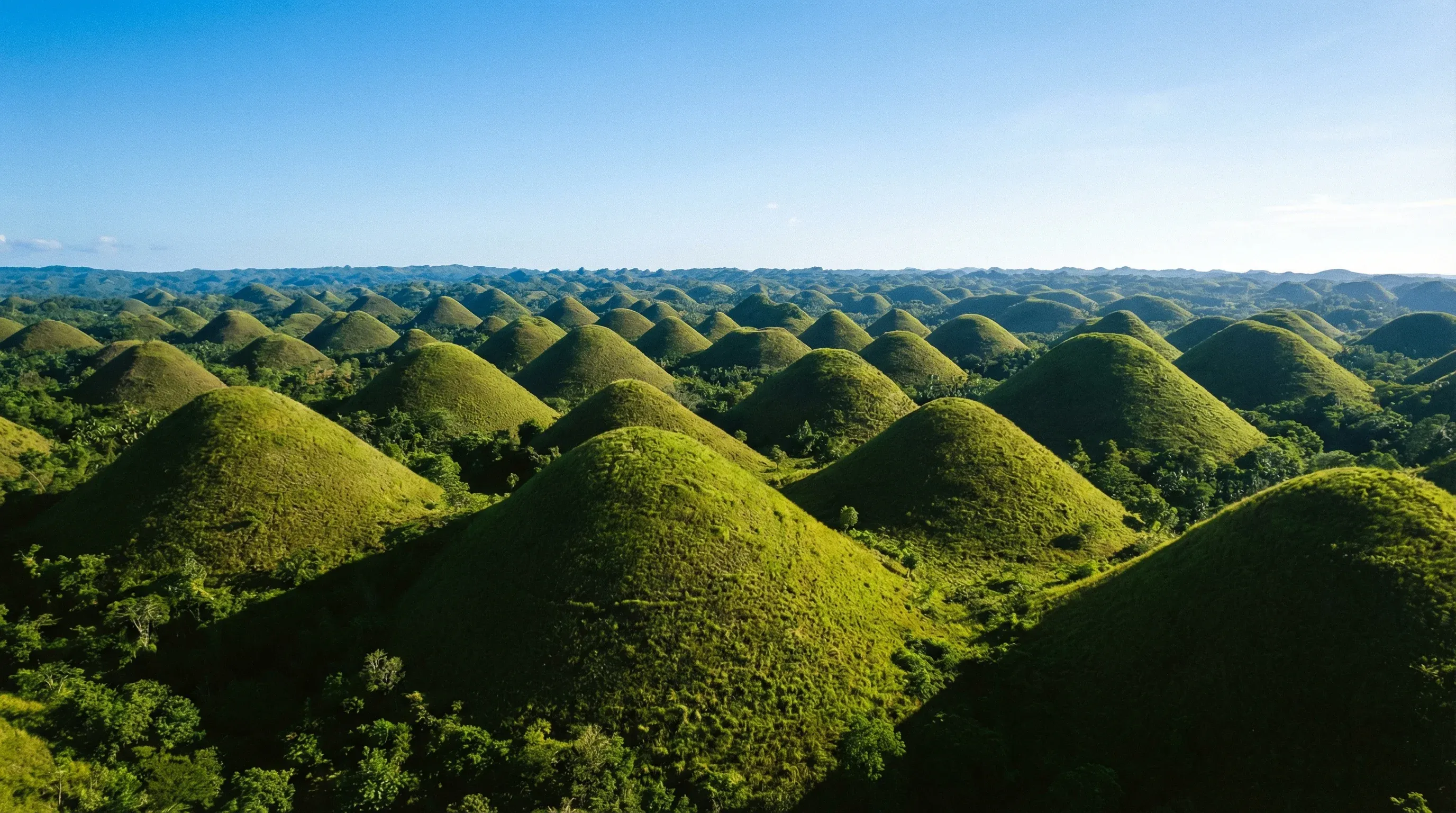
Bohol is often cited as the most family-friendly destination in the Philippines because it offers a manageable mix of adventure, history, and relaxation without the chaotic logistics of larger archipelagos. The province feels safe and provincial, yet it possesses world-class infrastructure on Panglao Island. For children, the landscape feels like it was drawn by a cartoonist: over 1,000 symmetrical grass-covered limestone mounds known as the Chocolate Hills dot the interior, turning cocoa-brown in the dry season. The jungle feels alive but accessible, with river cruises that double as floating restaurants, providing a sensory feast of local music, food, and scenery that keeps even restless kids entertained.
Culturally, Bohol is deeply rooted in history, evident in its centuries-old stone churches made of coral. The atmosphere is slower than Cebu or Manila, allowing families to explore at a leisurely pace. Whether you are paddle-boarding on the Loboc River, watching dolphins near Balicasag Island, or simply building sandcastles on Panglao, Bohol strikes a rare balance: it is exciting enough for teenagers but safe and comfortable enough for visiting with infants.
Key Attractions
The crown jewel is undoubtedly the Chocolate Hills; families can view these geological oddities from the main complex in Carmen, which has stairs manageable for active children. Nearby, the Baclayon Church offers a glimpse into the Spanish colonial past with its coral stone facade and museum, interesting for older school-age kids. For a relaxing day out, Alona Beach on Panglao Island serves as the main tourist hub, offering white sand and calm waters, though it can get busy. A short drive away, the Loboc Church stands near the starting point for the famous floating river buffets.
Practical Advice
The best time to visit is from November to April (dry season). While Panglao is the main accommodation hub, spend at least one full day exploring the mainland countryside. Renting a private van with a driver is the most stress-free way for families to tour the inland sites.
Food & Drink
Typical meal times: Lunch is typically 11:30 am to 1:30 pm, and dinner is served from 6:00 pm to 9:00 pm.
Typical meal costs: A meal in a mid-range resort costs ₱400–800 (approx. $7–14 USD / €6.50–13 EUR). Local carinderias are cheaper at ₱150–250 (approx. $2.50–4.50 USD / €2.50–4 EUR).
Dietary requirements: Seafood and pork are dominant. Vegetarians can find options at resort restaurants on Alona Beach, but inland choices may be limited to vegetable stir-fries (chopsuey) or fresh fruit.
Signature dishes:
- Calamay – A sticky, sweet treat made from coconut milk, brown sugar, and ground glutinous rice, traditionally sold in coconut shells.
- Halang-halang – A spicy chicken dish simmered in creamy coconut milk and chilies, popular in local markets.
- Peanut Kisses – Cookies shaped like the Chocolate Hills, made of high-quality Bohol peanuts and egg whites.
Why this score?
The region offers accessible outdoor activities like the Loboc River cruise and gentle hiking through the Alicia Panoramic Park. While the Chocolate Hills Adventure Park adds some thrill, the overall terrain is manageable for families with moderate fitness levels. It balances natural beauty with well-trodden paths and developed tourist facilities.
Why this score?
Medical facilities in Tagbilaran City can handle basic emergencies and routine care for tourists. However, specialized services are limited, and major medical emergencies often require transfer to nearby Cebu City. English is widely spoken, but hospital infrastructure is basic compared to international standards.
Why this score?
Bohol is a well-established destination with a steady mix of domestic and international travelers visiting the Chocolate Hills and Panglao Island. While popular within the Philippines, it lacks the massive global visitor volume seen in major Southeast Asian hubs. Its infrastructure supports moderate tourism but remains quieter than Boracay or Cebu.

Bohol offers a range of price points. Staying on <a data-attraction-id="53896">Alona Beach</a> commands premium prices, with family resort rooms costing ₱5,000–9,000 (approx. $90–160 USD / €80–145 EUR) per night. Inland tours are great value; a private van with driver for the day costs around ₱3,500–4,500 (approx. $60–80 USD / €55–75 EUR). Food prices are generally lower than in Boracay or Manila.

Getting Here & Around
Getting Here
- Airports – Bohol-Panglao International Airport (TAG) is the main gateway, located on Panglao Island. It receives daily flights from Manila and regular flights from other hubs.
- Ferry – Fast ferries (OceanJet, SuperCat) connect Cebu City to Tagbilaran Seaport in roughly 2 hours. It is a smooth and popular route for families island-hopping.
Getting Around
- Tricycles – The most common transport for short distances. These motorized rickshaws can squeeze in a small family (2 adults, 1-2 small kids) but are noisy and bumpy.
- Van Hire – Highly recommended for countryside tours (visiting Chocolate Hills and Loboc Church). Air-conditioned and flexible for nap times.
- Car Rental – Self-drive is possible but roads can be narrow; hiring a driver is usually better value and lower stress.
Nearby Airports (2 airports)
Camiguin Airport
CGMMambajao
Bohol International Airport
TAGPanglao
View full flight map for Philippines →
Official Links

Packing List
Many beaches have rocky patches or sea urchins in the shallows.
Essential for jungle areas and river cruises, especially for kids.
Protects devices during the Loboc River cruise and island hopping.
Street lighting can be sparse in areas outside Alona Beach.
Essential for protecting feet from sharp coral and rocks during island hopping and waterfalls.
Keeps towels and spare clothes dry during boat splashes or sudden tropical rain showers.
Sun is intense and jellyfish are common; locals wear them and they save on sunscreen.
Dengue fever is a real risk in tropical areas; bring a DEET or picaridin-based formula.
Long travel days on ferries and remote islands often mean no access to power outlets.

Activities & Best Times

Hiking, wildlife, outdoor exploration, ecotourism
While Bohol offers quality adventure experiences (Chocolate Hills, tarsiers, Balicasag diving), it lacks the ecosystem diversity and scale of Palawan (safari park, underground river, multiple bioregions) or Northern Luzon (UNESCO terraces, Mt. Pulag). 'Very_good' more accurately reflects its standing versus Philippines' top-tier nature destinations.

Urban tourism, museums, historical sites, architecture
Boasts significant heritage sites including some of the Philippines' oldest stone churches and the Blood Compact Shrine. Sightseeing is most comfortable during the cooler dry months, avoiding the heavy rains that can impact outdoor historic sites.

Sport tourism, fitness activities, active recreation
High-infrastructure adventure parks offer specialized activities like bike-ziplining and river trekking. These facilities are most accessible and enjoyable when the trails and equipment are dry.

Beach resorts, marine activities: diving, snorkelling, kite surfing, wind surfing, sailing
Home to the world-class Balicasag Marine Sanctuary for diving and the iconic white sands of Panglao Island. Peak visitation occurs during the dry season when sea conditions are calmest for snorkeling and island hopping.

Learning experiences, scientific sites, historical education
The Nova Shell Museum offers niche scientific insight into marine biodiversity but is a secondary attraction. Visiting is best paired with broader island tours during the stable weather of the dry season.

Scenic drives, countryside tours, route-based travel
Having a scenic route doesn't make a region 'good' for road trips - that rating should apply to regions internationally/nationally known for driving tourism. Unless the Circumferential Road is genuinely exceptional, 'marginal' is more appropriate.

Amusement parks, family entertainment venues
Regional water parks like Panglao Water World provide local family entertainment but lack international scale. Peak interest aligns with the hot local summer months of April and May.

Attractions (14 total)



Public Holidays & Calendar Next 12 months
Public holidays, festivals, cultural celebrations, and seasonal natural phenomena coming up in Bohol over the next 12 months.
Loading holidays and events...

Travel Advisory
All major agencies agree that a baseline of increased vigilance is necessary when visiting the Philippines. While much of the country is safe for tourism, the presence of active extremist groups, kidnapping risks, and violent crime necessitates higher-than-normal caution. Several agencies maintain severe warnings for the Mindanao region.
Safety Topics
Traveller Advice (4 groups)

Ensure you register with the e-Travel system at least 72 hours before arrival. Carry identification at all times and be prepared for security checkpoints in public areas like shopping malls and transport terminals. Avoid walking alone at night and use reputable ride-sharing apps rather than hailing street taxis.

While generally tolerant in urban areas, social attitudes can be conservative in rural regions. Public displays of affection may attract unwanted attention. There are no laws criminalizing same-sex relationships, but legal protections against discrimination are limited.

Infrastructure in many parts of the country, including public transport and older buildings, may not be fully accessible. Modern malls and hotels in Manila and Cebu typically offer better facilities, but advance planning is recommended for those with mobility challenges.

Exercise caution when travelling alone, especially at night or in less populated areas. There have been reports of drink-spiking; never leave food or beverages unattended. Dress conservatively in rural or religious areas to respect local customs.
Agency Summaries
New Zealanders should be alert to the risks of kidnapping, terrorism, and violent crime, which are more prevalent than in New Zealand. While Manila and most tourist spots require standard caution, specific southern islands and provinces are under strict 'do not travel' or 'avoid non-essential travel' advisories due to security volatility.
Heightened vigilance is recommended across the country because of crime, terrorism, civil unrest, and kidnapping. Some southern regions, specifically the Sulu Archipelago and Marawi City, are designated as no-go zones where the U.S. government has extremely limited ability to assist citizens. Terrorist organizations continue to plot attacks in public areas.
Travellers should maintain a high level of vigilance throughout the Philippines due to the ongoing threats of kidnapping, terrorism, and violent crime. While major tourist areas are generally accessible, significant regional risks exist in Mindanao, where extreme caution or total avoidance is advised for certain provinces due to active insurgent groups and safety concerns.
While most of the country is open for travel, there are strict warnings against visiting western and central Mindanao and the Sulu archipelago due to the high likelihood of terrorist activity. Demonstrations in major cities like Manila can occur and may lead to disruptions; travellers are advised to avoid large gatherings.
Irish citizens are advised to be highly cautious due to security risks, including terrorism and kidnapping. Most visits are trouble-free, but regional instability in the south requires careful planning. Registration on the official e-Travel portal is mandatory for all arriving passengers.
Australia recommends a high level of caution for the entire Philippines due to the threats of violent crime and terrorism. Severe travel restrictions are in place for central and western Mindanao and the Sulu Sea, where the risk of kidnapping and conflict between armed groups is very high. Use official transport and stay alert in public hubs.
Information is provided for general guidance only and does not constitute travel, safety, medical, or legal advice. Conditions may change. Users are responsible for independently verifying information before travel.