
Cebu & Visayas
The Queen City of the South: History, malls, and whale sharks 🦈🏙️
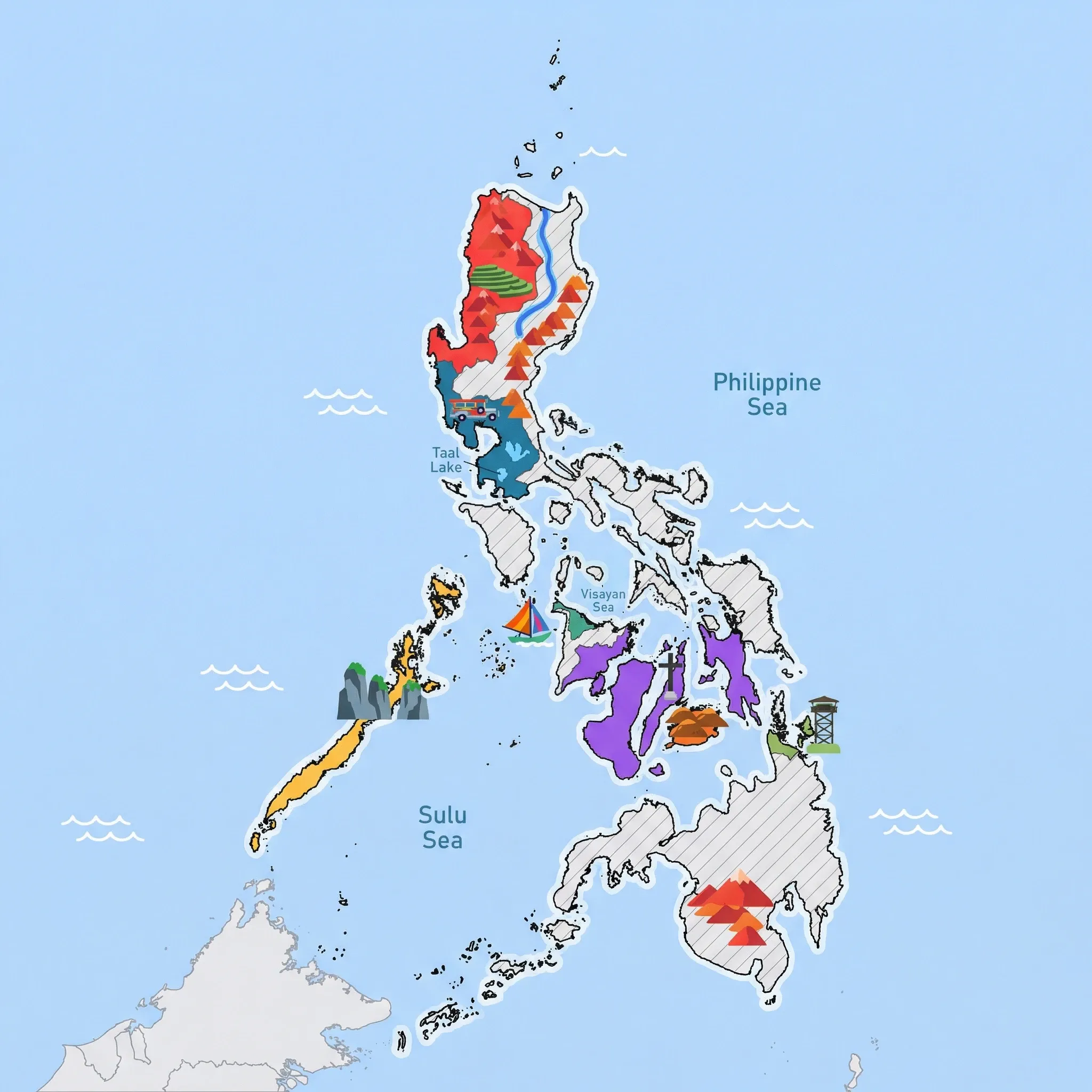
Click a region to explore
Cebu is unique in the Philippines as it offers a fully modern metropolis—complete with massive malls, hospitals, and luxury hotels—just minutes away from world-class beaches. For families who are nervous about going fully 'off-grid', Cebu is the perfect compromise. You can stay in a 5-star resort on Mactan Island with extensive kids' clubs and pools, and take day trips to heritage sites or nature spots. The traffic in the city can be heavy, but the access to amenities is reassuring for parents traveling with infants.
Venture a few hours south of the city, and the landscape transforms into a jungle adventure playground. The coastlines of Moalboal are famous for the 'sardine run', where millions of sardines congregate just offshore—a spectacle accessible even to snorkeling children. Further south, the controversial but popular whale shark interaction in Oslob draws crowds. While the ethics are debated, seeing these gentle giants is undeniably a bucket-list item for many families. Cebu is also the gateway to the Central Visayas, making it easy to hop over to Dumaguete or Bohol.
Key Attractions
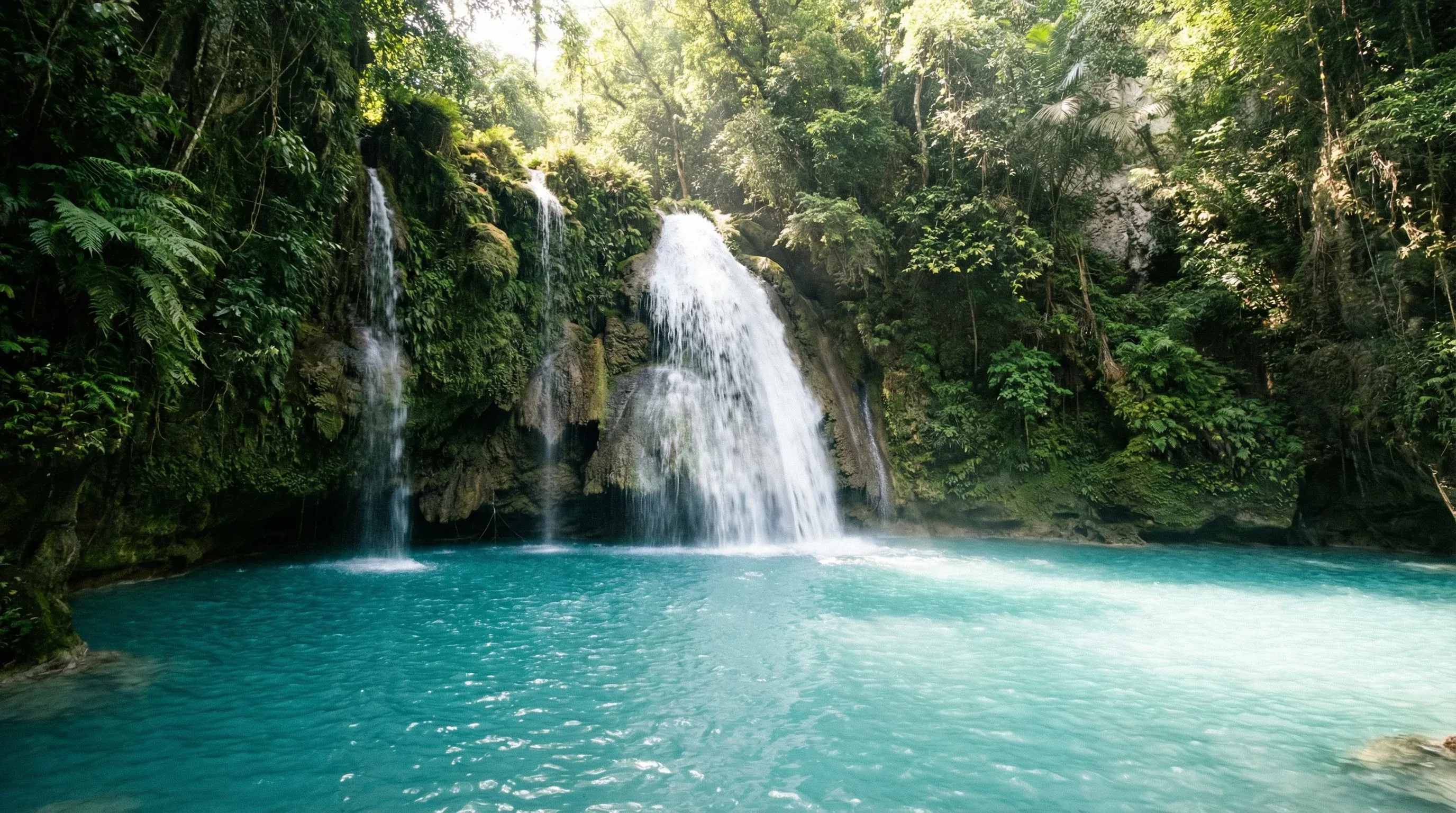
Start with the history of colonization at Magellan's Cross and the nearby Basilica Minore del Sto. Niño, the oldest Roman Catholic church in the country. For a break from the heat, the expansive Cebu Ocean Park is a hit with toddlers, featuring a tunnel aquarium and bird shows. Teenagers seeking thrills will love Kawasan Falls for canyoneering adventures (jumping off waterfalls into blue pools). On Mactan Island, the Mactan Shrine commemorates the Battle of Mactan.
Practical Advice
Cebu City traffic is notorious; try to stay near the area you want to explore (e.g., stay on Mactan for beaches/resorts, stay in Cebu City for history/shopping). If visiting Oslob or Moalboal, consider staying overnight in those towns rather than attempting a grueling day trip from the city.
Food & Drink
Typical meal times: Lunch 11:30 am to 1:30 pm. Dinner 6:00 pm to 9:00 pm. Mall restaurants stay open later.
Typical meal costs: Cebu Lechon meals are good value at ₱250–500 (approx. $4.50–9 USD / €4–8 EUR). Upscale resort buffets cost ₱1,500–2,500 (approx. $27–45 USD / €24–40 EUR).
Dietary requirements: Very accommodating in the city and Mactan. Vegan cafes are growing in popularity in Cebu City and Moalboal. In rural areas, pork is ubiquitous.
Signature dishes:
- Cebu Lechon – Roasted whole pig, famous for being savory enough to need no sauce. The skin is incredibly crispy.
- Puso (Hanging Rice) – Rice cooked inside woven coconut leaves, a convenient and iconic way to eat rice on the go.
- SuTuKil – An acronym for Sugba (grilled), Tuwa (stewed), and Kilaw (raw vinegar salad)—a style of seafood dining popular near the Mactan shrine.
Why this score?
The region offers significant outdoor recreation including world-renowned diving, sardine runs in Moalboal, and canyoneering at Kawasan Falls. While many sites are accessible, the rugged southern coastline and underwater activities provide a genuine sense of adventure for active families. It strikes a balance between developed resort comforts and wilder nature experiences.
Why this score?
Cebu City is home to several high-quality private hospitals, such as Chong Hua and Cebu Doctors' University Hospital, which are among the best in the country. These facilities are used to dealing with international patients and offer a wide range of specialized services. While slightly below the level of Manila's top-tier hospitals, the medical care here is reliable for most travelers.
Why this score?
Cebu serves as a major international gateway with its own world-class airport and a high volume of foreign visitors. It combines urban historical sites like Magellan's Cross with popular coastal hubs like Mactan, Moalboal, and Oslob. It is one of the most visited regions in the country due to its central location and diversity of attractions.

Cebu offers extreme variety. Street food and local transport (Jeepneys) are very cheap (₱15 / $0.25). However, Mactan's high-end resorts like Shangri-La or Crimson charge international rates of ₱12,000–20,000 (approx. $215–360 USD / €195–325 EUR) per night. Entry fees to attractions like <a data-attraction-id="30657">Cebu Ocean Park</a> are around ₱600–800 (approx. $11–14 USD / €10–13 EUR).

Getting Here & Around
Getting Here
- Airports – Mactan-Cebu International Airport (CEB) is the second busiest in the country, with direct flights from many Asian hubs (Singapore, Hong Kong, Tokyo) and domestic cities.
- Ferry – The port of Cebu is the domestic shipping hub. Ferries connect to Bohol, Dumaguete, and Manila.
Getting Around
- Taxi & Grab – White taxis and Grab (ride-hailing app) are the most convenient and safe ways for families to move around Metro Cebu and Mactan.
- MyBus – A modern European-style bus system connecting the airport, SM City Cebu, and other key points. Stroller-friendly and cheap.
- Bus – For trips to Kawasan Falls or Oslob, utilize the Ceres Liners from the South Bus Terminal.
Nearby Airports (5 airports)
Silay International Airport
BCDBacolod
Mactan–Cebu International
CEBCebu City
Dumaguete
DGTDumaguete
Iloilo International Airport
ILOIloilo
Daniel Z Romualdez
TACTacloban
View full flight map for Philippines →
Official Links

Packing List
Jellyfish are common in warm waters; full coverage protects kids better than sunscreen.
Roads to Oslob and Kawasan are winding and can cause car sickness in children.
Essential for canyoneering or exploring rocky falls.
Older hotels may not have USB ports; Type A (US style) is standard.
Essential for protecting feet from sharp coral and rocks during island hopping and waterfalls.
You will be on and off small boats (bangkas) constantly; keeps your phone dry and sand-free.
Keeps towels and spare clothes dry during boat splashes or sudden tropical rain showers.
Sun is intense and jellyfish are common; locals wear them and they save on sunscreen.
Dengue fever is a real risk in tropical areas; bring a DEET or picaridin-based formula.
Long travel days on ferries and remote islands often mean no access to power outlets.

Activities & Best Times

Hiking, wildlife, outdoor exploration, ecotourism
Home to world-class canyoneering at Kawasan Falls and the unique geological Chocolate Hills, this region offers deep immersion in tropical wilderness and endemic wildlife. Peak conditions from January to April ensure dry trails and safe water levels for river-based expeditions.

Sport tourism, fitness activities, active recreation
The region boasts established infrastructure for adventure sports, including major outdoor activity centers and famous hiking routes like the Osmeña Peak traverse. Activities are best during the dry months when trails are firm and weather-dependent adventure parks are fully operational.

Beach resorts, marine activities: diving, snorkelling, kite surfing, wind surfing, sailing
Renowned for the Moalboal sardine run and the pristine sandbars of Sumilon and Alona Beach, the region offers high-quality diving and coastal relaxation. Peak visibility and calm seas occur from January to April, avoiding the rough swells and lower clarity of the monsoon season.

Urban tourism, museums, historical sites, architecture
Current database shows only Baroque Churches for cultural heritage. While Cebu City has significant colonial history, the attraction density doesn't yet support 'very_good' compared to Manila/Luzon which has Intramuros + Vigan + Baroque Churches. After adding missing heritage sites (Magellan's Cross, Fort San Pedro), this could be reconsidered.

Amusement parks, family entertainment venues
Featuring major regional attractions like Anjo World and Jpark Island's waterpark, the region serves families looking for high-standard entertainment. These outdoor venues are most enjoyable during the dry season to avoid closures caused by heavy tropical rains.

Learning experiences, scientific sites, historical education
Cebu Ocean Park and the anthropology museums at Silliman University provide significant scientific and historical insights into the Visayas. While primarily indoor, travel between these geographically dispersed sites is most efficient during the dry season.

Events, celebrations, seasonal attractions
The Sinulog-Santo Niño Festival in January is an internationally significant cultural spectacle that transforms Cebu City. Outside of this major event and the Easter period, there are few seasonal attractions that would motivate a specific international journey.

Spa retreats, wellness centers, peaceful getaways
Natural hot springs like Mainit and Red Rock offer rustic relaxation, though they lack the world-class retreat infrastructure found in global wellness hubs. Best visited during the cooler, drier months of the first quarter for the most comfortable outdoor experience.

Scenic drives, countryside tours, route-based travel
The Transcentral Highway is a regional scenic route but not a primary tourism draw compared to internationally famous drives like Northern Luzon's Halsema Highway. 'Marginal' better reflects its secondary appeal.

Attractions (27 total)



Public Holidays & Calendar Next 12 months
Public holidays, festivals, cultural celebrations, and seasonal natural phenomena coming up in Cebu & Visayas over the next 12 months.
Loading holidays and events...

Travel Advisory
All major agencies agree that a baseline of increased vigilance is necessary when visiting the Philippines. While much of the country is safe for tourism, the presence of active extremist groups, kidnapping risks, and violent crime necessitates higher-than-normal caution. Several agencies maintain severe warnings for the Mindanao region.
Safety Topics
Traveller Advice (4 groups)

Ensure you register with the e-Travel system at least 72 hours before arrival. Carry identification at all times and be prepared for security checkpoints in public areas like shopping malls and transport terminals. Avoid walking alone at night and use reputable ride-sharing apps rather than hailing street taxis.

While generally tolerant in urban areas, social attitudes can be conservative in rural regions. Public displays of affection may attract unwanted attention. There are no laws criminalizing same-sex relationships, but legal protections against discrimination are limited.

Infrastructure in many parts of the country, including public transport and older buildings, may not be fully accessible. Modern malls and hotels in Manila and Cebu typically offer better facilities, but advance planning is recommended for those with mobility challenges.

Exercise caution when travelling alone, especially at night or in less populated areas. There have been reports of drink-spiking; never leave food or beverages unattended. Dress conservatively in rural or religious areas to respect local customs.
Agency Summaries
New Zealanders should be alert to the risks of kidnapping, terrorism, and violent crime, which are more prevalent than in New Zealand. While Manila and most tourist spots require standard caution, specific southern islands and provinces are under strict 'do not travel' or 'avoid non-essential travel' advisories due to security volatility.
Heightened vigilance is recommended across the country because of crime, terrorism, civil unrest, and kidnapping. Some southern regions, specifically the Sulu Archipelago and Marawi City, are designated as no-go zones where the U.S. government has extremely limited ability to assist citizens. Terrorist organizations continue to plot attacks in public areas.
Travellers should maintain a high level of vigilance throughout the Philippines due to the ongoing threats of kidnapping, terrorism, and violent crime. While major tourist areas are generally accessible, significant regional risks exist in Mindanao, where extreme caution or total avoidance is advised for certain provinces due to active insurgent groups and safety concerns.
While most of the country is open for travel, there are strict warnings against visiting western and central Mindanao and the Sulu archipelago due to the high likelihood of terrorist activity. Demonstrations in major cities like Manila can occur and may lead to disruptions; travellers are advised to avoid large gatherings.
Irish citizens are advised to be highly cautious due to security risks, including terrorism and kidnapping. Most visits are trouble-free, but regional instability in the south requires careful planning. Registration on the official e-Travel portal is mandatory for all arriving passengers.
Australia recommends a high level of caution for the entire Philippines due to the threats of violent crime and terrorism. Severe travel restrictions are in place for central and western Mindanao and the Sulu Sea, where the risk of kidnapping and conflict between armed groups is very high. Use official transport and stay alert in public hubs.
Information is provided for general guidance only and does not constitute travel, safety, medical, or legal advice. Conditions may change. Users are responsible for independently verifying information before travel.