
Manila & Luzon
The bustling capital gateway to volcanic adventures 🌋🏙️
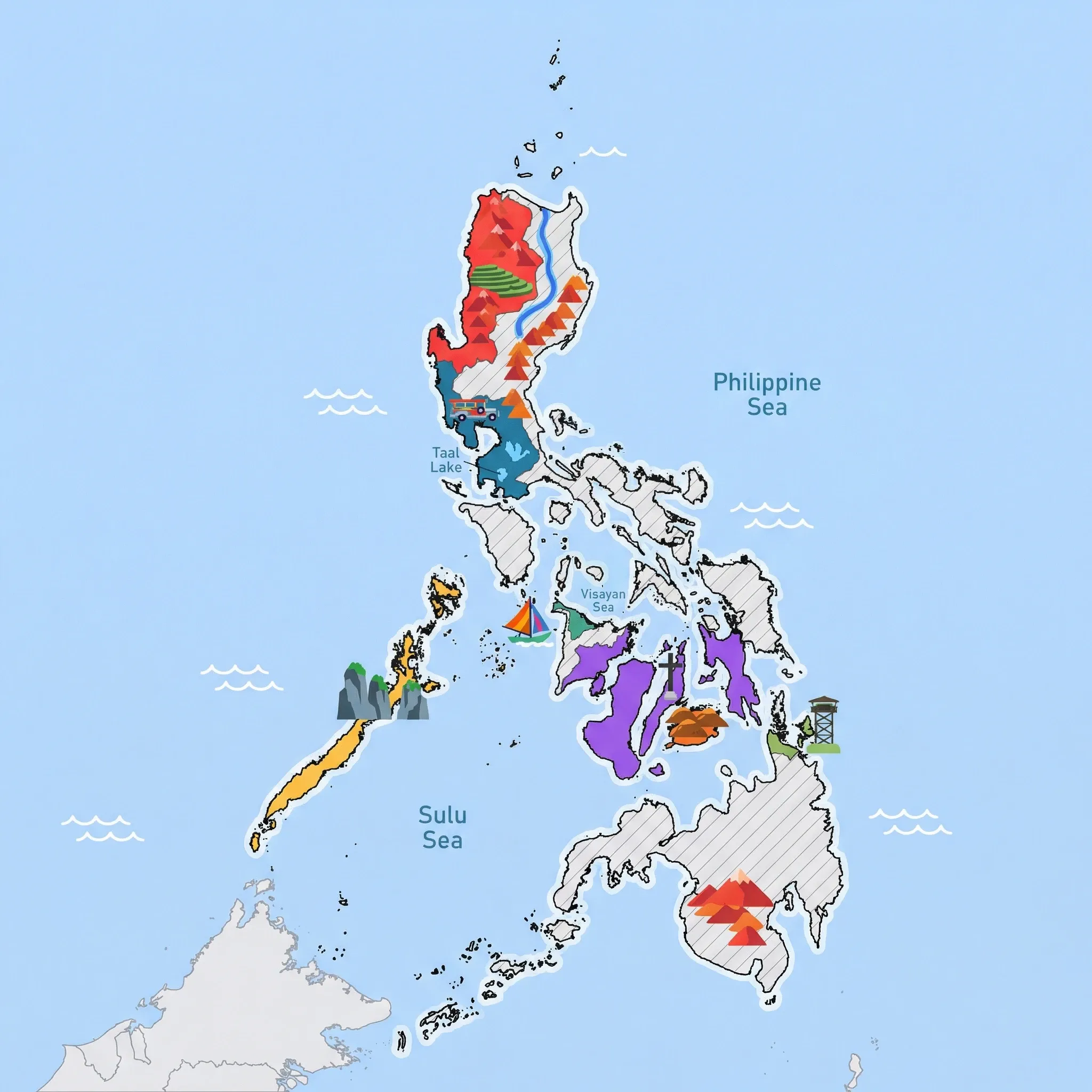
Click a region to explore
Manila is a polarizing city—chaotic, hot, and congested—but beneath the grit lies the cultural soul of the Philippines. For families, it is a treasure trove of history. The ancient walled city of Intramuros allows children to walk atop colonial fortifications and visit dungeons, bringing history books to life. The city is also the mall capital of Asia; these aren't just shopping centers but air-conditioned sanctuaries with indoor playgrounds, ice skating rinks, and vast food courts, which are vital for escaping the midday tropical heat.
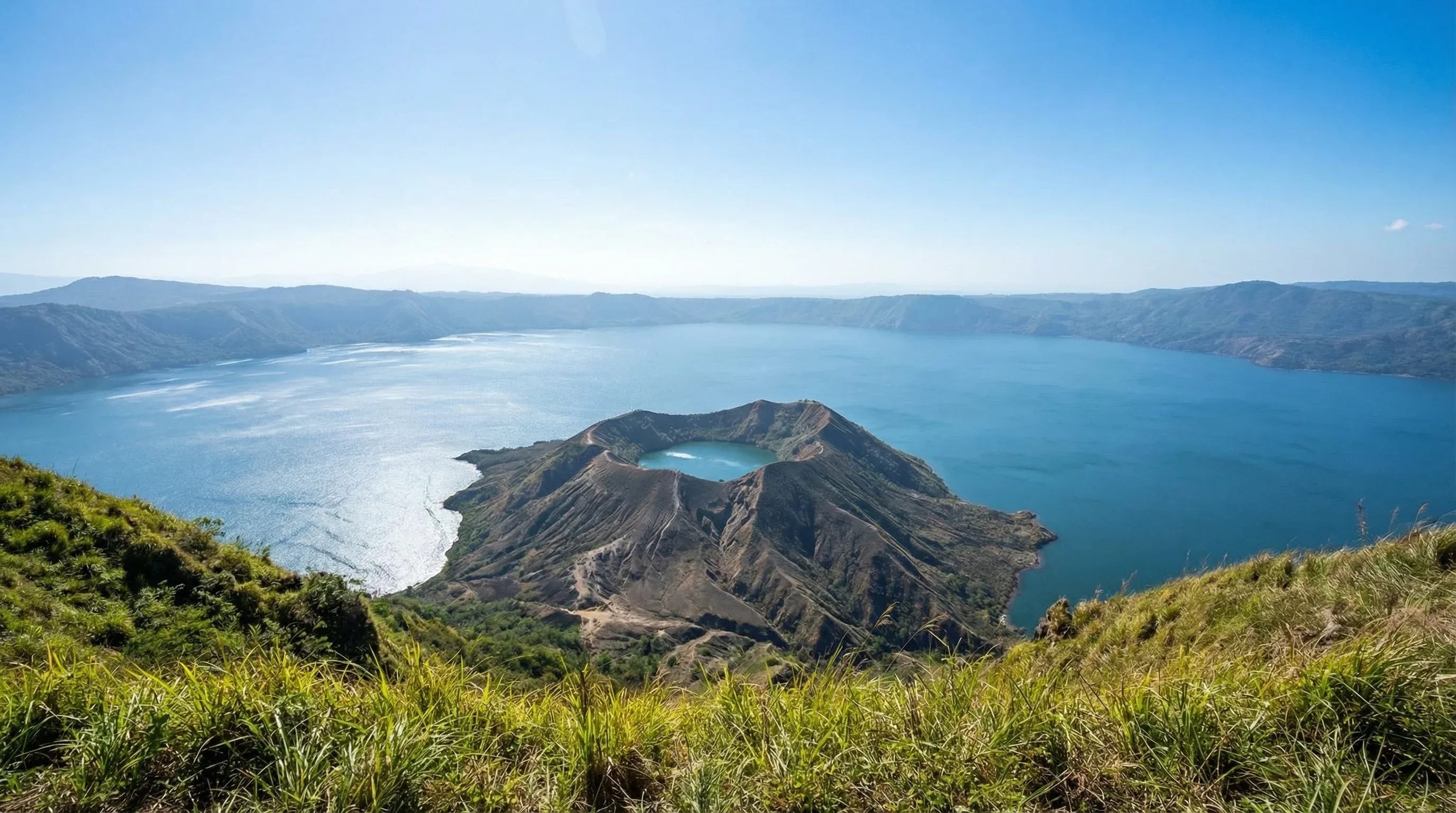
Beyond the capital, Luzon opens up into accessible adventures. A few hours south lies Tagaytay, where families can enjoy cooler air and view the Taal Volcano. To the south-east lies the Bicol region, home to the perfect cone of Mayon Volcano (best reached via flight to Legazpi). To the north, Subic and Clark offer former US military bases converted into family-friendly zones with zoos and theme parks. Luzon is the most developed island, meaning better hospitals and road networks than the remote provinces.
Key Attractions
In the heart of Manila, Intramuros is a must-visit; exploring Fort Santiago gives kids plenty of green space to run around within historic walls. Just nearby, Manila Ocean Park offers a marine mammal show and a tunnel aquarium. For a full day of fun, Enchanted Kingdom in Laguna (about 1-2 hours from Manila) is the country's premier theme park with rides for all ages. Nature lovers willing to travel further can marvel at the perfect cone of Mayon Volcano in Albay or visit the Avilon Zoo in Rizal.
Practical Advice
Traffic in Manila is among the worst in the world. Plan one major activity per day and choose a hotel near that activity. Sunday mornings are the best time to explore the city as traffic is lighter. Always carry umbrellas—Manila weather can switch from scorching sun to torrential rain in minutes.
Food & Drink
Typical meal times: Lunch 12:00 pm to 1:30 pm. Dinner 6:30 pm to 9:00 pm.
Typical meal costs: Manila has the widest range. A mall food court meal is ₱200–350 (approx. $3.50–6.50 USD / €3–5.50 EUR). High-end dining in Makati/BGC can cost ₱2,000–4,000+ (approx. $35–70+ USD / €32–65 EUR) per person.
Dietary requirements: Excellent in Makati and Bonifacio Global City (BGC), where vegan and gluten-free options are common. Harder in traditional Filipino restaurants where shrimp paste and soy sauce are staples.
Signature dishes:
- Adobo – Meat (usually chicken or pork) marinated in vinegar, soy sauce, garlic, and peppercorns. Every family has their own version.
- Sinigang – A sour soup usually made with tamarind, pork/shrimp, and vegetables. Refreshing in the heat.
- Halo-Halo – A crushed ice dessert topped with sweet beans, jellies, flan, and purple yam ice cream. Kids love mixing the colorful ingredients.
Why this score?
Outside of some volcano trekking at Taal or Pinatubo, the region is heavily urbanized and developed. Most family activities revolve around malls, museums like the Ayala Museum, and highly managed theme parks. It lacks the rugged wilderness or remote exploration characteristics of the more northern or southern islands.
Why this score?
Metro Manila offers the highest standard of healthcare in the Philippines, with world-class institutions like St. Luke's Medical Center and Makati Medical Center. These hospitals feature internationally trained staff, advanced technology, and seamless insurance processing for foreigners. It is the only region in the country where healthcare quality consistently approaches top-tier global standards.
Why this score?
As the primary international gateway, Metro Manila receives the highest volume of foreign arrivals in the country, though many use it as a transit hub. The surrounding areas like Tagaytay and Batangas are massive draws for domestic tourists and regional visitors. Sites like Intramuros and Enchanted Kingdom maintain its status as a core cultural and entertainment center.

Manila is generally more expensive than the provinces but cheaper than Cebu's resorts. A decent 3-4 star family hotel in Makati or BGC costs ₱4,000–7,000 (approx. $70–125 USD / €65–115 EUR). Transport via Grab is affordable, with most city rides costing ₱300–600 (approx. $5.50–11 USD / €5–10 EUR). Entrance to <a data-attraction-id="54082">Fort Santiago</a> is very cheap (under ₱100).

Getting Here & Around
Getting Here
- Airports – Ninoy Aquino International Airport (MNL) is the primary hub. Clark International Airport (CRK) is a great alternative for avoiding Manila traffic if you are heading to northern resorts.
- Driving – Luzon is connected by expressways (NLEX, SLEX, TPLEX). Renting a car is possible, but driving habits are aggressive.
Getting Around
- Grab (Car) – The safest and most convenient option for families in Manila. It fixes the price and avoids taxi scams.
- LRT/MRT Trains – Generally too crowded for families with strollers and small children. Best avoided during rush hour.
- Jeepneys – Colorful, open-air minibuses. Fun for a short novelty ride but not practical for long trips with luggage.
Nearby Airports (2 airports)
Diosdado Macapagal International
CRKAngeles
Ninoy Aquino International
MNLManila
View full flight map for Philippines →
Official Links

Packing List
Manila weather is unpredictable; sudden downpours are common even in dry season.
Pollution can be heavy on street level; useful for open-air jeepney rides.
Essential for cleaning hands after touching public transport or mall surfaces.
Hydration is key in the humid city; cold water warms up in minutes without insulation.
Essential for protecting feet from sharp coral and rocks during island hopping and waterfalls.
You will be on and off small boats (bangkas) constantly; keeps your phone dry and sand-free.
Keeps towels and spare clothes dry during boat splashes or sudden tropical rain showers.
Sun is intense and jellyfish are common; locals wear them and they save on sunscreen.
Dengue fever is a real risk in tropical areas; bring a DEET or picaridin-based formula.
Long travel days on ferries and remote islands often mean no access to power outlets.

Activities & Best Times

Hiking, wildlife, outdoor exploration, ecotourism
Featuring world-class conservation projects like Masungi Georeserve and iconic treks like Mt. Pinatubo, the region excels in accessible yet authentic wilderness. Visitation is highly seasonal, with peak conditions during the dry months when trails are safe and visibility of volcanic landscapes is optimal.

Urban tourism, museums, historical sites, architecture
The region boasts significant heritage including UNESCO-listed Vigan and the Banaue Rice Terraces, alongside the colonial history of Intramuros. The cooler months from December to February are the most comfortable for exploring these sites, as humidity and urban heat become intense from March onwards.

Sport tourism, fitness activities, active recreation
Luzon is a hub for active tourism, offering world-class hiking on Mount Pulag and recognized surfing breaks in San Juan. Activities are best pursued in the dry season to ensure trail accessibility and consistent surf conditions before the typhoon season begins.

Beach resorts, marine activities: diving, snorkelling, kite surfing, wind surfing, sailing
Luzon offers diverse coastal experiences from the surf of La Union to the unique geological formations of Hundred Islands, though it lacks the ultra-luxury resort density of Palawan. The dry season from February to May provides the clearest waters and calmest seas, while the monsoon season brings significant typhoon risks.

Learning experiences, scientific sites, historical education
High-quality, purpose-built facilities like The Mind Museum and the National Museum of Natural History provide sophisticated learning environments for families. These indoor attractions are accessible year-round, but the monsoon months (June-September) present significant urban transit challenges in Manila.

Spa retreats, wellness centers, peaceful getaways
Unique geothermal experiences like Puning Hot Spring and established retreats like Hidden Valley offer authentic wellness escapes within driving distance of the capital. These natural hot springs are most enjoyable during the cooler 'Amihan' season from December to February.

Amusement parks, family entertainment venues
Luzon hosts the Philippines' primary family entertainment hubs like Enchanted Kingdom and Aqua Planet, which offer solid international-style attractions. Peak periods align with local school holidays and the Christmas season, while outdoor operations are frequently disrupted by heavy rains during the monsoon.

Events, celebrations, seasonal attractions
While local festivals are numerous, the Giant Lantern Festival in December and Pahiyas in May are the primary events with international appeal for families. These events are strictly date-bound and often occur during transition periods between weather systems.

Scenic drives, countryside tours, route-based travel
While north Luzon coastal roads offer scenery, the broader Manila/Luzon region is not primarily known for road trip tourism compared to specialized mountain routes. 'Marginal' more accurately reflects road trips as a secondary activity.

Attractions (36 total)



Public Holidays & Calendar Next 12 months
Public holidays, festivals, cultural celebrations, and seasonal natural phenomena coming up in Manila & Luzon over the next 12 months.
Loading holidays and events...

Travel Advisory
All major agencies agree that a baseline of increased vigilance is necessary when visiting the Philippines. While much of the country is safe for tourism, the presence of active extremist groups, kidnapping risks, and violent crime necessitates higher-than-normal caution. Several agencies maintain severe warnings for the Mindanao region.
Safety Topics
Traveller Advice (4 groups)

Ensure you register with the e-Travel system at least 72 hours before arrival. Carry identification at all times and be prepared for security checkpoints in public areas like shopping malls and transport terminals. Avoid walking alone at night and use reputable ride-sharing apps rather than hailing street taxis.

While generally tolerant in urban areas, social attitudes can be conservative in rural regions. Public displays of affection may attract unwanted attention. There are no laws criminalizing same-sex relationships, but legal protections against discrimination are limited.

Infrastructure in many parts of the country, including public transport and older buildings, may not be fully accessible. Modern malls and hotels in Manila and Cebu typically offer better facilities, but advance planning is recommended for those with mobility challenges.

Exercise caution when travelling alone, especially at night or in less populated areas. There have been reports of drink-spiking; never leave food or beverages unattended. Dress conservatively in rural or religious areas to respect local customs.
Agency Summaries
New Zealanders should be alert to the risks of kidnapping, terrorism, and violent crime, which are more prevalent than in New Zealand. While Manila and most tourist spots require standard caution, specific southern islands and provinces are under strict 'do not travel' or 'avoid non-essential travel' advisories due to security volatility.
Heightened vigilance is recommended across the country because of crime, terrorism, civil unrest, and kidnapping. Some southern regions, specifically the Sulu Archipelago and Marawi City, are designated as no-go zones where the U.S. government has extremely limited ability to assist citizens. Terrorist organizations continue to plot attacks in public areas.
Travellers should maintain a high level of vigilance throughout the Philippines due to the ongoing threats of kidnapping, terrorism, and violent crime. While major tourist areas are generally accessible, significant regional risks exist in Mindanao, where extreme caution or total avoidance is advised for certain provinces due to active insurgent groups and safety concerns.
While most of the country is open for travel, there are strict warnings against visiting western and central Mindanao and the Sulu archipelago due to the high likelihood of terrorist activity. Demonstrations in major cities like Manila can occur and may lead to disruptions; travellers are advised to avoid large gatherings.
Irish citizens are advised to be highly cautious due to security risks, including terrorism and kidnapping. Most visits are trouble-free, but regional instability in the south requires careful planning. Registration on the official e-Travel portal is mandatory for all arriving passengers.
Australia recommends a high level of caution for the entire Philippines due to the threats of violent crime and terrorism. Severe travel restrictions are in place for central and western Mindanao and the Sulu Sea, where the risk of kidnapping and conflict between armed groups is very high. Use official transport and stay alert in public hubs.
Information is provided for general guidance only and does not constitute travel, safety, medical, or legal advice. Conditions may change. Users are responsible for independently verifying information before travel.