
Northern Luzon (Banaue, Sagada)
Cool mountain air and stairways to the sky 🏔️🌲
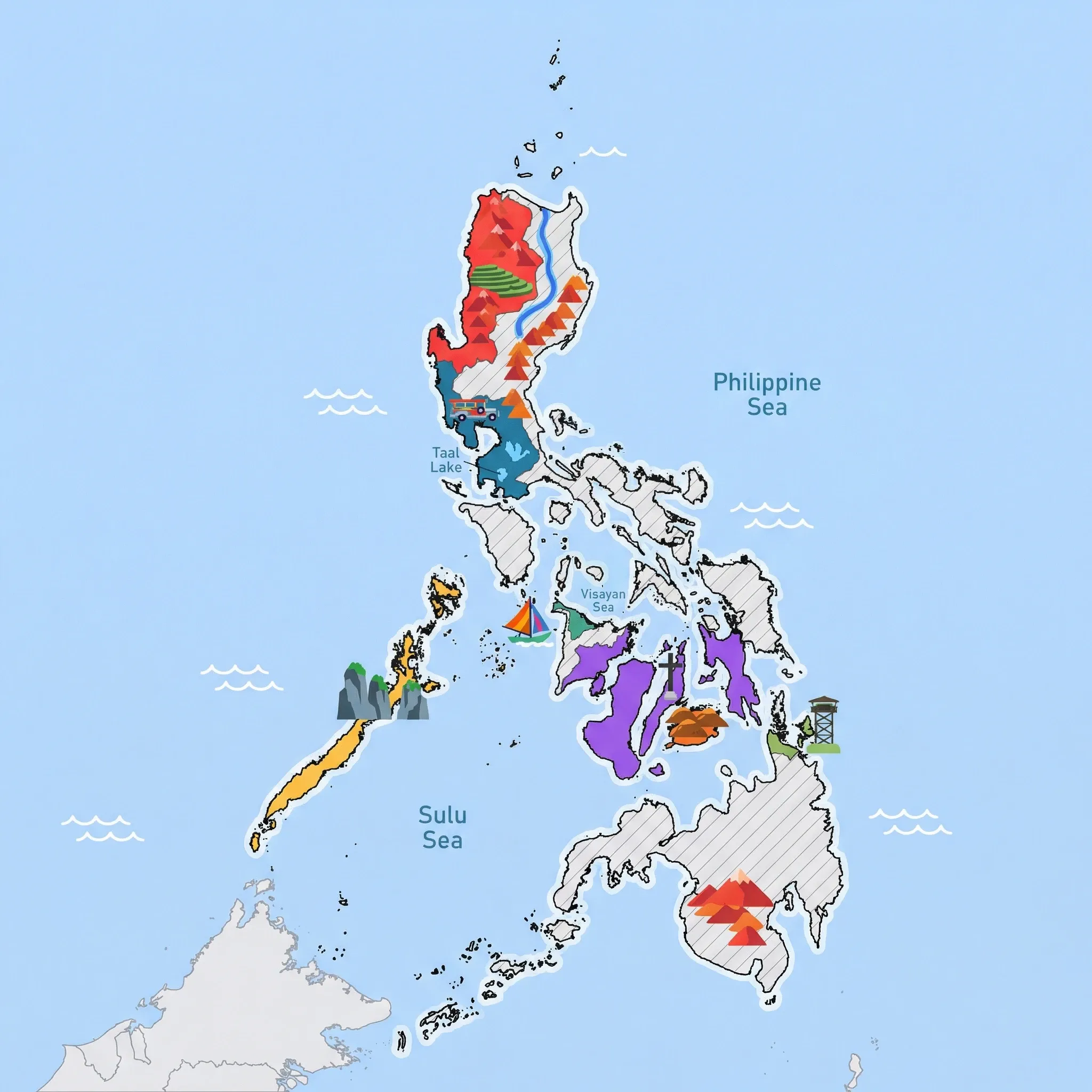
Click a region to explore
For families struggling with the tropical heat, Northern Luzon is a literal breath of fresh air. The region sits high in the Cordillera mountains, where temperatures are significantly cooler (sometimes requiring jackets!). This is an adventure destination. It is not for families seeking poolside lounging, but rather for those who want to hike, explore caves, and learn about indigenous Igorot cultures. The journey itself is part of the experience, with winding roads offering spectacular views of cloud-covered peaks.
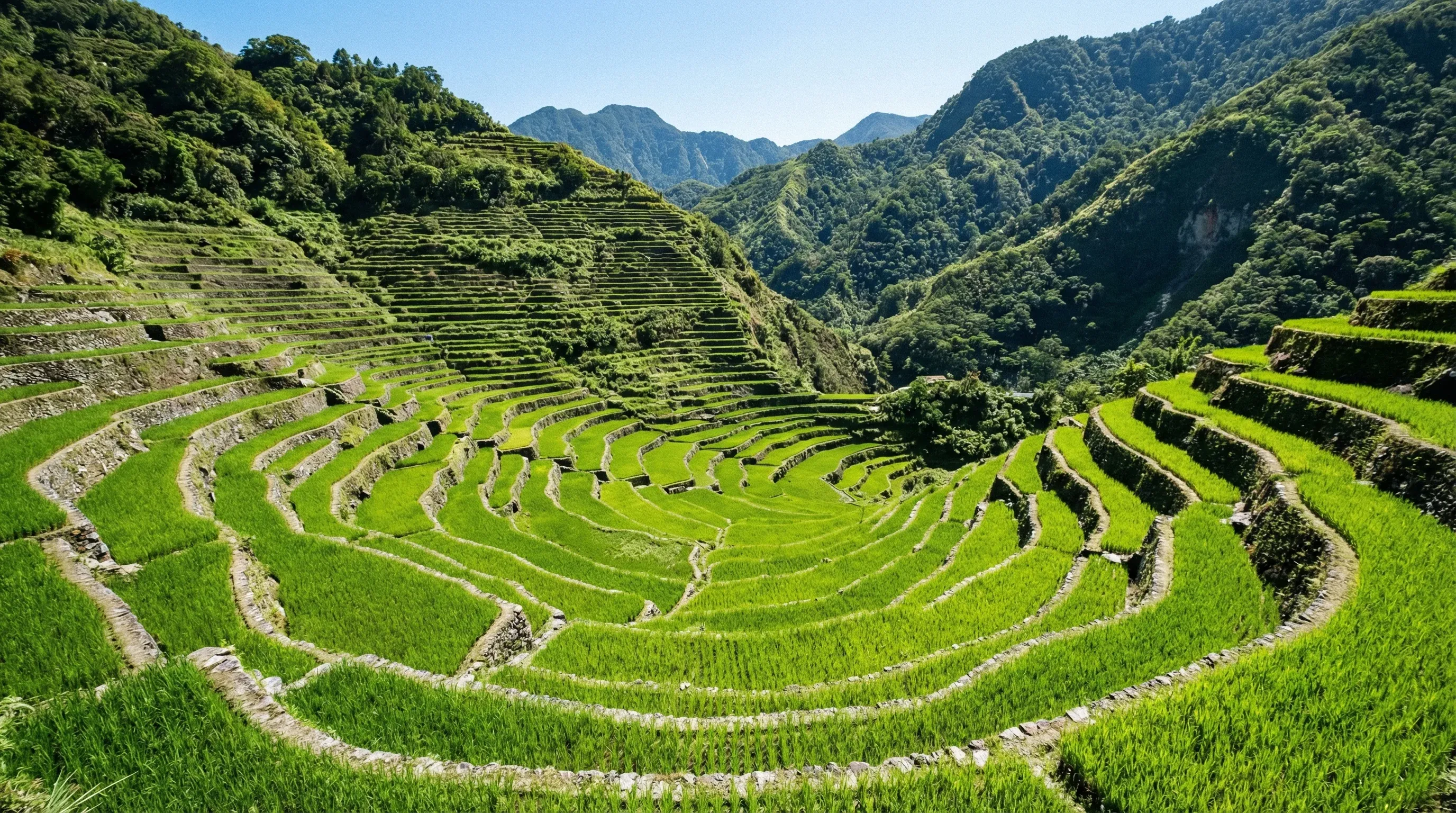
Banaue is home to the 2,000-year-old rice terraces, carved by hand into the mountainsides. Walking these paths is like hiking through a living museum, though parents should note it involves steep steps and can be physically demanding. Sagada offers a mystical vibe with its limestone caves and hanging coffins, while Baguio City serves as the urban hub—a former American hill station filled with parks, strawberry farms, and pine trees. It is a fantastic region for older children and teenagers who enjoy physical activity and nature.
Key Attractions
The Banaue Rice Terraces are the headline act; the view from the main viewpoint is accessible, but trekking into the terraces requires stamina. In Baguio, families flock to Burnham Park to rent pedal boats on the lagoon or cycle around the gardens. The Baguio Botanical Garden is another relaxed spot for kids to explore. For the brave, the Sumaguing Cave in Sagada offers spelunking adventures (best for teens with guides). The Hanging Coffins of Echo Valley are a fascinating, if slightly macabre, cultural sight unique to the region.
Practical Advice
Travel times are long. The bus from Manila to Banaue takes 9+ hours, often overnight. Motion sickness is a real issue on the winding Halsema Highway; bring medication. The best time to visit is December to February for the coolest weather, but bring layers—it gets cold at night.
Food & Drink
Typical meal times: Early. Lunch 11:30 am to 1:00 pm. Dinner 6:00 pm to 8:00 pm. Rural towns sleep early.
Typical meal costs: Very affordable. A hearty meal in Sagada or Banaue costs ₱200–400 (approx. $3.50–7 USD / €3–6.50 EUR).
Dietary requirements: Simple mountain food. Fresh vegetables are abundant (the region supplies Manila's veggies), so vegetarian chop suey is easy to find. Vegan options are limited to basic vegetable dishes.
Signature dishes:
- Pinikpikan – A controversial chicken soup used in rituals, with a smoky flavor from charred feathers. (Maybe skip the preparation details for sensitive kids).
- Strawberry Taho – A Baguio exclusive. Silken tofu with sweet syrup and whole local strawberries. A must-try street snack.
- Etag – Smoked, cured pork, often used to flavor soups and stews in the Cordilleras.
Why this score?
The Cordillera mountains offer significant adventure with steep rice terrace trekking, limestone caving in Sagada, and high-altitude hiking on Mount Pulag. The terrain is rugged, the roads are winding and often subject to landslides, and the infrastructure is much more basic than in the lowlands. It is one of the most physically demanding regions for families to visit.
Why this score?
Medical services are very limited and basic in the mountain towns of Banaue and Sagada. While Baguio City offers better facilities, it is several hours away, and the most serious cases require evacuation to Manila. Foreigners will find very few specialized services or modern hospital facilities in the immediate vicinity of the main attractions.
Why this score?
This region is a niche destination primarily attracting backpackers and outdoor enthusiasts interested in the Rice Terraces and indigenous culture. While globally recognized as a UNESCO site, the long travel times from Manila keep international visitor numbers relatively low compared to the beach hubs. It remains a bucket-list item that many travelers skip due to accessibility challenges.

Northern Luzon is one of the most affordable regions. Accommodation is often in simple homestays or guesthouses costing ₱1,500–3,000 (approx. $27–55 USD / €24–50 EUR) per night. Transport is cheap, but private guide fees for hikes (mandatory in many places like Sagada and Batad) add up, typically ₱500–1,000 (approx. $9–18 USD / €8–16 EUR) per group.

Getting Here & Around
Getting Here
- Bus – The primary way to reach the region. Premium night buses (e.g., Victory Liner, Coda Lines) run from Manila to Baguio (4–6 hours) and Banaue/Sagada (9–10 hours). They have toilets and reclining seats.
- Driving – Possible but challenging due to steep, winding mountain roads and fog. Only recommended for experienced drivers.
Getting Around
- Jeepney – The main transport between towns. Rugged and capable of climbing steep grades. Top-loading (riding on the roof) is a local custom but risky for tourists.
- Walking – Essential within the villages of Sagada and Batad (near Banaue Rice Terraces). Paths are often unpaved steps.
Nearby Airports (1 airport)
Laoag Intl
LAOLaoag
View full flight map for Philippines →
Official Links

Packing List
Temperatures in Sagada and Baguio can drop below 15°C (59°F) at night.
The Halsema Highway is endlessly winding; essential for kids and adults alike.
Better than sneakers for navigating muddy rice terrace paths and wet caves.
Power outages can occur in remote mountain areas like Sagada.
Essential for protecting feet from sharp coral and rocks during island hopping and waterfalls.
You will be on and off small boats (bangkas) constantly; keeps your phone dry and sand-free.
Keeps towels and spare clothes dry during boat splashes or sudden tropical rain showers.
Sun is intense and jellyfish are common; locals wear them and they save on sunscreen.
Dengue fever is a real risk in tropical areas; bring a DEET or picaridin-based formula.
Long travel days on ferries and remote islands often mean no access to power outlets.

Activities & Best Times

Hiking, wildlife, outdoor exploration, ecotourism
Home to the UNESCO-listed Ifugao Rice Terraces and Mt. Pulag, this region offers globally unique trekking through ancient cultural landscapes and mossy cloud forests. The dry season (Dec-Apr) is critical for safe hiking conditions and witnessing the iconic 'sea of clouds' vistas.

Urban tourism, museums, historical sites, architecture
Features a distinct mountain culture, from the colonial hill station heritage of Baguio to the ancient hanging coffins and indigenous rituals of Sagada. Travel is best during the cooler, dry months to ensure accessibility via mountain roads and comfortable exploration of open-air botanical gardens.

Spa retreats, wellness centers, peaceful getaways
Natural hot springs like Mainit provide a restorative and authentic wellness experience that perfectly suits the region's cool highland climate. These thermal baths are most enjoyable in the dry season when the crisp mountain air provides a refreshing contrast to the warm waters.

Scenic drives, countryside tours, route-based travel
The Halsema Highway and Cordillera Heritage Loop provide some of the world's most spectacular high-altitude driving routes through rugged mountain terrain. Peak travel aligns with the dry season, as the monsoon months (Jun-Oct) frequently see heavy rain and road-closing landslides.

Attractions (12 total)



Public Holidays & Calendar Next 12 months
Public holidays, festivals, cultural celebrations, and seasonal natural phenomena coming up in Northern Luzon (Banaue, Sagada) over the next 12 months.
Loading holidays and events...

Travel Advisory
All major agencies agree that a baseline of increased vigilance is necessary when visiting the Philippines. While much of the country is safe for tourism, the presence of active extremist groups, kidnapping risks, and violent crime necessitates higher-than-normal caution. Several agencies maintain severe warnings for the Mindanao region.
Safety Topics
Traveller Advice (4 groups)

Ensure you register with the e-Travel system at least 72 hours before arrival. Carry identification at all times and be prepared for security checkpoints in public areas like shopping malls and transport terminals. Avoid walking alone at night and use reputable ride-sharing apps rather than hailing street taxis.

While generally tolerant in urban areas, social attitudes can be conservative in rural regions. Public displays of affection may attract unwanted attention. There are no laws criminalizing same-sex relationships, but legal protections against discrimination are limited.

Infrastructure in many parts of the country, including public transport and older buildings, may not be fully accessible. Modern malls and hotels in Manila and Cebu typically offer better facilities, but advance planning is recommended for those with mobility challenges.

Exercise caution when travelling alone, especially at night or in less populated areas. There have been reports of drink-spiking; never leave food or beverages unattended. Dress conservatively in rural or religious areas to respect local customs.
Agency Summaries
New Zealanders should be alert to the risks of kidnapping, terrorism, and violent crime, which are more prevalent than in New Zealand. While Manila and most tourist spots require standard caution, specific southern islands and provinces are under strict 'do not travel' or 'avoid non-essential travel' advisories due to security volatility.
Heightened vigilance is recommended across the country because of crime, terrorism, civil unrest, and kidnapping. Some southern regions, specifically the Sulu Archipelago and Marawi City, are designated as no-go zones where the U.S. government has extremely limited ability to assist citizens. Terrorist organizations continue to plot attacks in public areas.
Travellers should maintain a high level of vigilance throughout the Philippines due to the ongoing threats of kidnapping, terrorism, and violent crime. While major tourist areas are generally accessible, significant regional risks exist in Mindanao, where extreme caution or total avoidance is advised for certain provinces due to active insurgent groups and safety concerns.
While most of the country is open for travel, there are strict warnings against visiting western and central Mindanao and the Sulu archipelago due to the high likelihood of terrorist activity. Demonstrations in major cities like Manila can occur and may lead to disruptions; travellers are advised to avoid large gatherings.
Irish citizens are advised to be highly cautious due to security risks, including terrorism and kidnapping. Most visits are trouble-free, but regional instability in the south requires careful planning. Registration on the official e-Travel portal is mandatory for all arriving passengers.
Australia recommends a high level of caution for the entire Philippines due to the threats of violent crime and terrorism. Severe travel restrictions are in place for central and western Mindanao and the Sulu Sea, where the risk of kidnapping and conflict between armed groups is very high. Use official transport and stay alert in public hubs.
Information is provided for general guidance only and does not constitute travel, safety, medical, or legal advice. Conditions may change. Users are responsible for independently verifying information before travel.