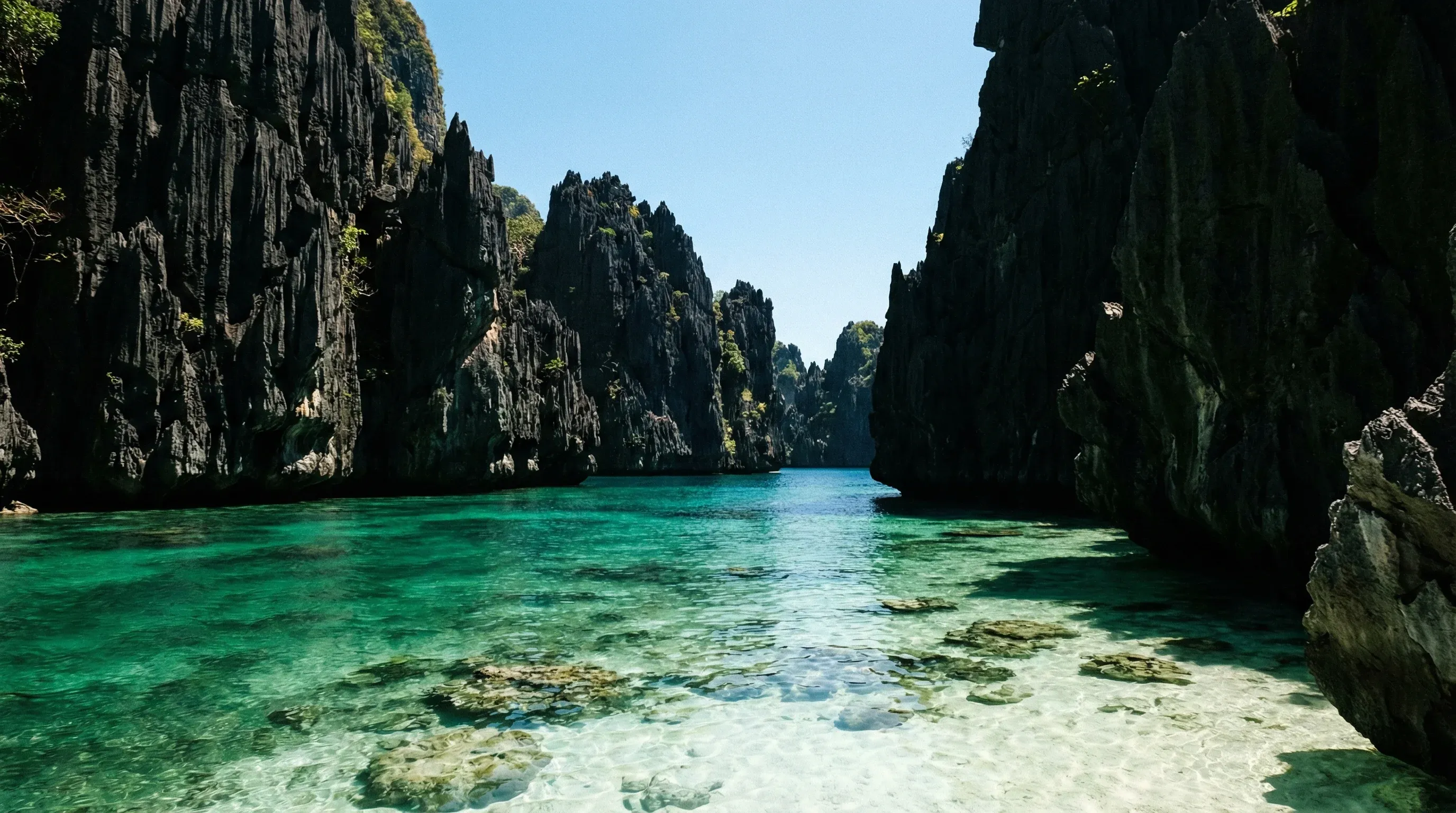

Palawan (El Nido, Coron)
The last ecological frontier with crystal lagoons 🛶🏝️
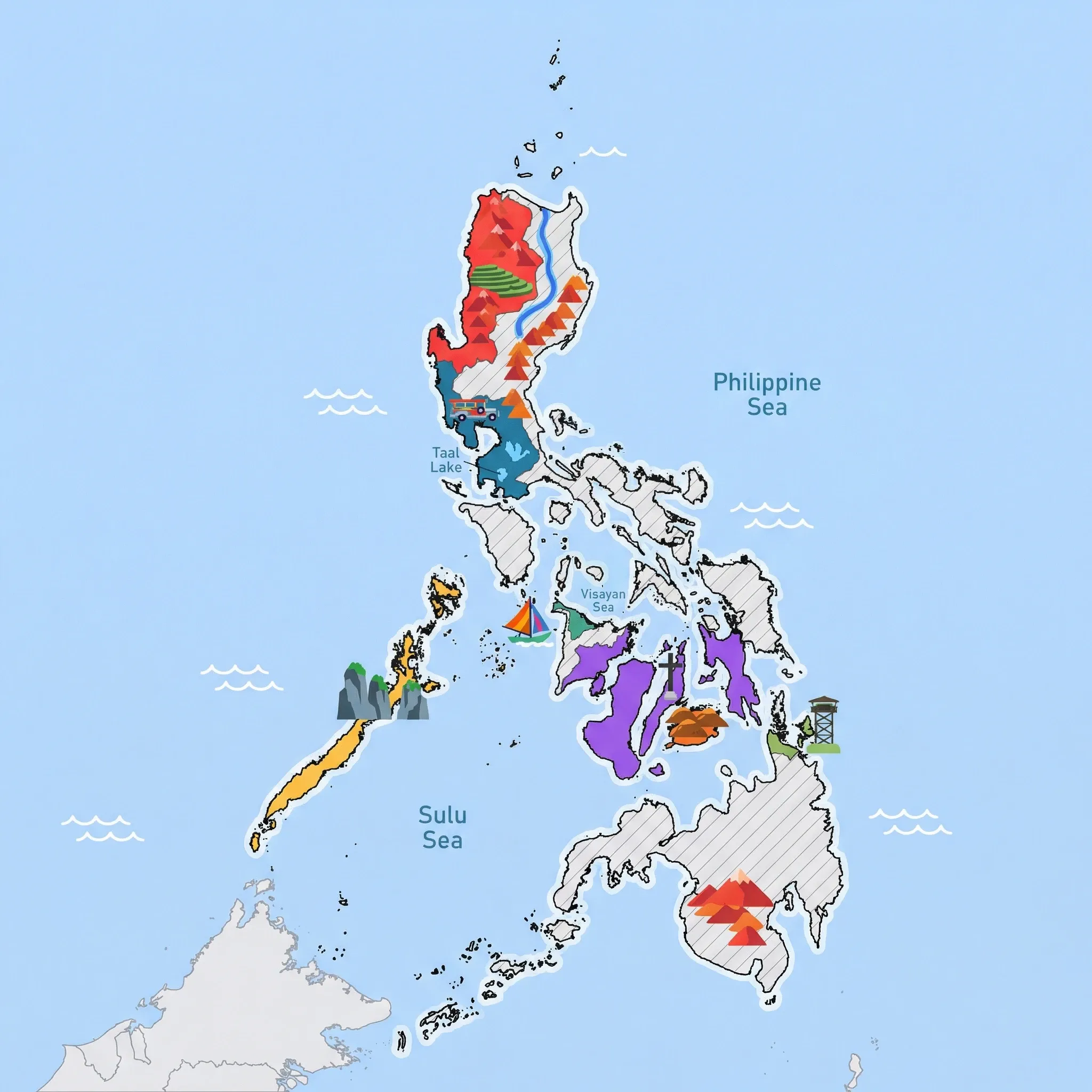
Click a region to explore
Palawan consistently ranks among the most beautiful islands in the world. For families, it offers a Robinson Crusoe experience with a safety net. The geography is defined by jagged limestone cliffs that shoot out of turquoise water, creating hidden lagoons and secret beaches that can only be reached by boat. This is a water-based holiday: expect to spend most days on an outrigger boat (banca) island-hopping between snorkeling spots and white sand beaches. While El Nido and Coron are the most scenic, the capital Puerto Princesa is the most accessible and home to the famous Underground River.
Children love the sense of adventure here—climbing through holes in rocks to find 'Secret Lagoon' in El Nido or swimming in the mix of fresh and saltwater at the lakes in Coron. Wildlife is abundant; you might spot monitor lizards, monkeys, and colorful reef fish. However, accessibility can be tricky for toddlers or those with mobility issues, as getting on and off boats requires balance and wading through water. It is best suited for kids who are comfortable in the water (ages 5+).
Key Attractions
The Puerto Princesa Subterranean River National Park is a UNESCO World Heritage site and a must-do; the guided paddle boat tour into the cave is safe and mesmerizing for kids. In Coron, Kayangan Lake involves a steep climb but rewards families with iconic views and calm, brackish water perfect for swimming. For a wildlife encounter, the Calauit Safari Park (accessible from Coron) lets kids feed giraffes in an unexpected African-style savannah setting on a tropical island.
Practical Advice
Travel between Puerto Princesa and El Nido takes 5-6 hours by van and can be grueling; flying directly to El Nido (Lio Airport) is worth the extra cost for families. Cash is king—ATMs run out of money in El Nido and Coron, so bring plenty of pesos.
Food & Drink
Typical meal times: Island tours include lunch (usually 12:00 pm). Dinner is 6:30 pm to 9:00 pm.
Typical meal costs: Island hopping buffet lunches are usually included in tour prices. Dinner in town costs ₱300–600 (approx. $5.50–11 USD / €5–10 EUR). Seafood platters can cost ₱1,500+ (approx. $27+ USD / €24+ EUR).
Dietary requirements: Seafood heavy. Vegetarians can rely on fresh fruit and vegetable curries, but vegan options are limited outside the main tourist towns. Inform boat guides in advance for tour lunches.
Signature dishes:
- Tamilok – A woodworm mollusk found in mangroves, eaten raw with vinegar (ceviche style). A fun 'dare' for brave teens.
- Crocodile Sisig – A sizzling dish made from crocodile meat (farmed locally), tasting like firm chicken.
- Chao Long – A Vietnamese-style beef noodle soup unique to Puerto Princesa, a legacy of Vietnamese refugees.
Why this score?
The region is defined by its rugged limestone karst landscapes, hidden lagoons, and remote island camps that require significant travel by boat or small plane. Activities like kayaking the Big Lagoon or snorkeling shipwrecks in Coron offer a notable sense of discovery and isolation. While the towns are becoming more developed, the surrounding environment remains wild and relatively untouched.
Why this score?
Despite its popularity, medical infrastructure in El Nido and Coron remains very basic and is often overwhelmed by tourist demand. There are few facilities capable of handling major trauma or complex illnesses, and emergency air evacuation is frequently the only option for serious cases. Infrastructure is improving slowly, but it remains a high-risk area for those with significant medical needs.
Why this score?
Palawan has exploded in global fame and is frequently cited as one of the world's most beautiful islands, driving moderate to high international traffic. El Nido and Coron are the primary draws, though their remote location and higher price point compared to Cebu keep it from becoming a 'mega-destination.' Tourism is largely centered on boat-based island hopping and the Underground River.

Palawan is mid-range but costs add up due to tours. A standard island-hopping tour (Tour A, B, C, or D) costs ₱1,200–2,000 (approx. $21–36 USD / €19–32 EUR) per person per day. Environmental fees (ETDF) of ₱200 (approx. $3.50 USD / €3.20 EUR) apply. Direct flights to El Nido are significantly more expensive than flying to Puerto Princesa.

Getting Here & Around
Getting Here
- Airports – Puerto Princesa (PPS) is the main entry. El Nido has its own private airport (Lio Airport - ENI) served by AirSWIFT. Coron is served by Busuanga Airport (USU).
- Ferry – Ferries connect Coron to El Nido (approx. 4-5 hours) and El Nido to Manila (2GO Travel), but schedules can be weather-dependent.
Getting Around
- Tricycle – The main mode of transport within towns. In Puerto Princesa, they are spacious; in El Nido, they are smaller.
- Banca (Boat) – Motorized outriggers used for island hopping. Ensure there are life jackets for all children before departing.
- Van – The primary way to move between Puerto Princesa and El Nido.
Nearby Airports (4 airports)
El Nido Airport
ENIEl Nido
Puerto Princesa
PPSPuerto Princesa
San Vicente Airport
SWLSan Vicente
Busuanga
USUBusuanga
View full flight map for Philippines →
Official Links

Packing List
Absolutely essential for boat tours to keep cameras and clothes dry from splashes.
Corals and rocks in lagoons can be sharp; protects feet while swimming.
Sandflies (nik-nik) can be present on some secluded beaches; bites are itchy.
Sun exposure on boats is intense; better protection than sunscreen for kids.
Essential for protecting feet from sharp coral and rocks during island hopping and waterfalls.
You will be on and off small boats (bangkas) constantly; keeps your phone dry and sand-free.
Sun is intense and jellyfish are common; locals wear them and they save on sunscreen.
Dengue fever is a real risk in tropical areas; bring a DEET or picaridin-based formula.
Long travel days on ferries and remote islands often mean no access to power outlets.

Activities & Best Times

Hiking, wildlife, outdoor exploration, ecotourism
A world-class destination for immersion in nature, featuring the Calauit Safari Park and unique karst ecosystems; monsoon rains from June to October can restrict access to remote lagoons and trails.

Sport tourism, fitness activities, active recreation
Strong infrastructure for active families including the Taraw Cliff Canopy Walk and spelunking at Ugong Rock; these high-altitude and cave activities require the dry conditions of peak season for safety.

Beach resorts, marine activities: diving, snorkelling, kite surfing, wind surfing, sailing
Features iconic limestone lagoons and major coastal sites like Nacpan Beach and Big Lagoon; optimal sea visibility and calm waters for island hopping occur during the dry season (Dec–Apr).

Urban tourism, museums, historical sites, architecture
Rich in authentic heritage including the Culion Museum and Fort Santa Isabel; best visited in drier months when walking tours through historic quarters and penal farms are most comfortable.

Spa retreats, wellness centers, peaceful getaways
Includes unique natural saltwater hot springs like Maquinit; these are most popular as restorative stops during the cooler, drier months before the heavy monsoon arrives.

Scenic drives, countryside tours, route-based travel
The route from Puerto Princesa to El Nido offers significant scenic vistas; travel is recommended in the dry season to ensure safe road conditions and clear coastal views.

Amusement parks, family entertainment venues
Limited to the Palawan Waterpark which serves as a secondary family attraction; peak usage aligns with the local summer and the height of the dry tourist season.

Attractions (10 total)



Public Holidays & Calendar Next 12 months
Public holidays, festivals, cultural celebrations, and seasonal natural phenomena coming up in Palawan (El Nido, Coron) over the next 12 months.
Loading holidays and events...

Travel Advisory
All major agencies agree that a baseline of increased vigilance is necessary when visiting the Philippines. While much of the country is safe for tourism, the presence of active extremist groups, kidnapping risks, and violent crime necessitates higher-than-normal caution. Several agencies maintain severe warnings for the Mindanao region.
Safety Topics
Traveller Advice (4 groups)

Ensure you register with the e-Travel system at least 72 hours before arrival. Carry identification at all times and be prepared for security checkpoints in public areas like shopping malls and transport terminals. Avoid walking alone at night and use reputable ride-sharing apps rather than hailing street taxis.

While generally tolerant in urban areas, social attitudes can be conservative in rural regions. Public displays of affection may attract unwanted attention. There are no laws criminalizing same-sex relationships, but legal protections against discrimination are limited.

Infrastructure in many parts of the country, including public transport and older buildings, may not be fully accessible. Modern malls and hotels in Manila and Cebu typically offer better facilities, but advance planning is recommended for those with mobility challenges.

Exercise caution when travelling alone, especially at night or in less populated areas. There have been reports of drink-spiking; never leave food or beverages unattended. Dress conservatively in rural or religious areas to respect local customs.
Agency Summaries
New Zealanders should be alert to the risks of kidnapping, terrorism, and violent crime, which are more prevalent than in New Zealand. While Manila and most tourist spots require standard caution, specific southern islands and provinces are under strict 'do not travel' or 'avoid non-essential travel' advisories due to security volatility.
Heightened vigilance is recommended across the country because of crime, terrorism, civil unrest, and kidnapping. Some southern regions, specifically the Sulu Archipelago and Marawi City, are designated as no-go zones where the U.S. government has extremely limited ability to assist citizens. Terrorist organizations continue to plot attacks in public areas.
Travellers should maintain a high level of vigilance throughout the Philippines due to the ongoing threats of kidnapping, terrorism, and violent crime. While major tourist areas are generally accessible, significant regional risks exist in Mindanao, where extreme caution or total avoidance is advised for certain provinces due to active insurgent groups and safety concerns.
While most of the country is open for travel, there are strict warnings against visiting western and central Mindanao and the Sulu archipelago due to the high likelihood of terrorist activity. Demonstrations in major cities like Manila can occur and may lead to disruptions; travellers are advised to avoid large gatherings.
Irish citizens are advised to be highly cautious due to security risks, including terrorism and kidnapping. Most visits are trouble-free, but regional instability in the south requires careful planning. Registration on the official e-Travel portal is mandatory for all arriving passengers.
Australia recommends a high level of caution for the entire Philippines due to the threats of violent crime and terrorism. Severe travel restrictions are in place for central and western Mindanao and the Sulu Sea, where the risk of kidnapping and conflict between armed groups is very high. Use official transport and stay alert in public hubs.
Information is provided for general guidance only and does not constitute travel, safety, medical, or legal advice. Conditions may change. Users are responsible for independently verifying information before travel.