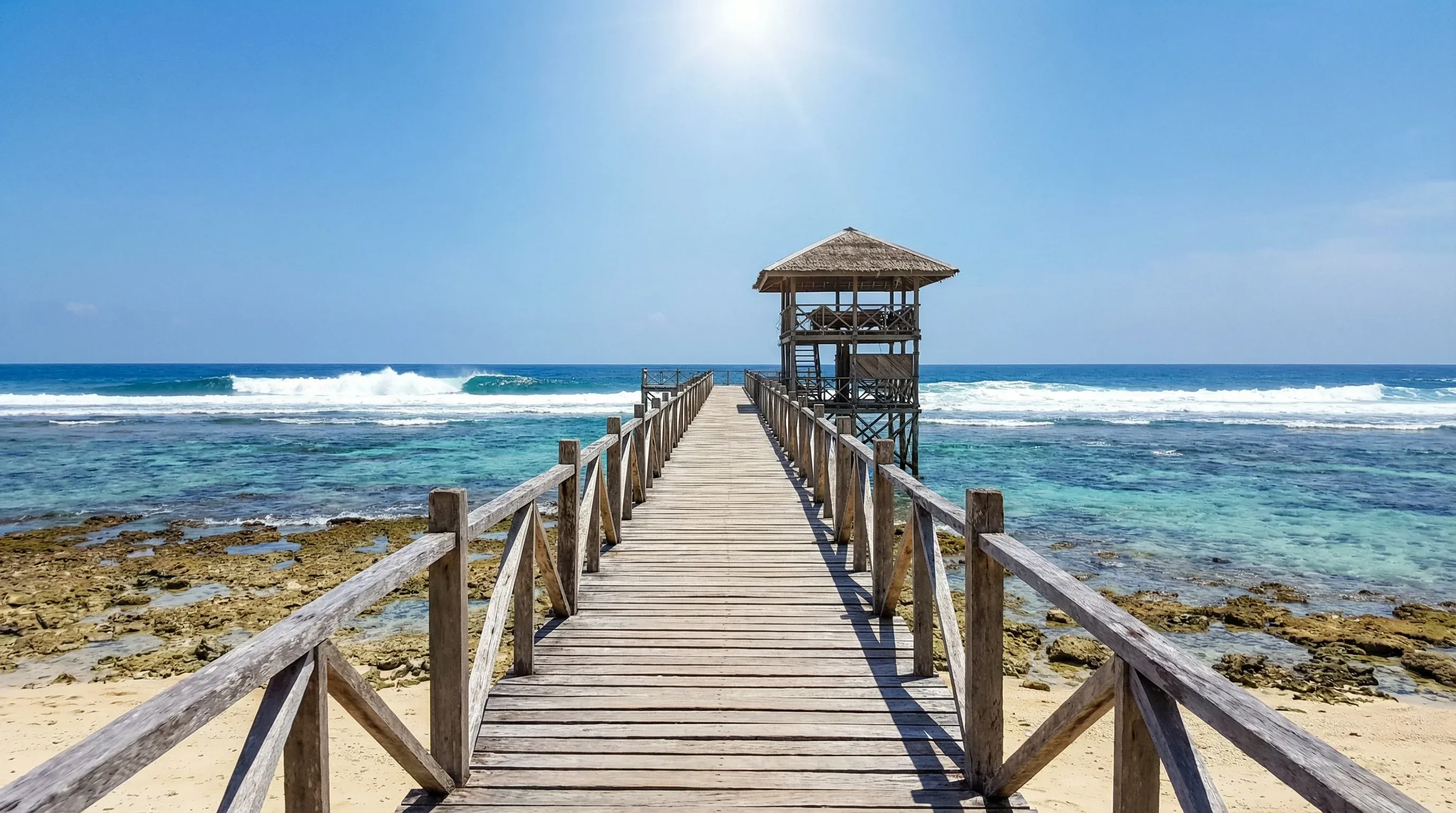

Siargao (surfing)
Surf, coconuts, and endless island vibes 🏄♂️🌴
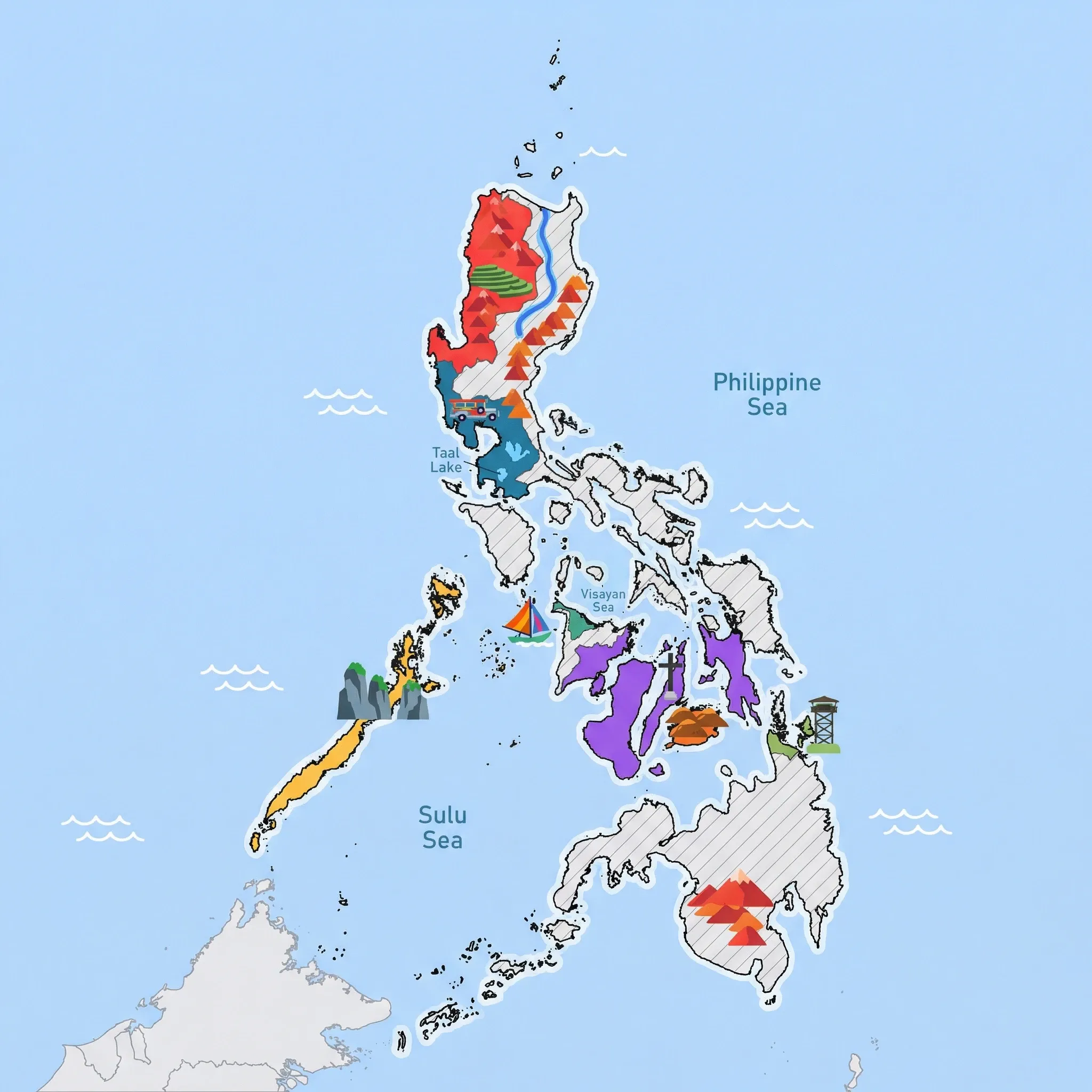
Click a region to explore
Once a secret backpacker spot, Siargao has evolved into a chic, family-friendly destination that retains its raw island magic. It is less commercial than Boracay and more rugged than Bohol. The island is blanketed in millions of coconut trees, creating a stunning green backdrop to the blue ocean. For families, the vibe is incredibly relaxed. Life moves slowly here; you travel by motorbike or tricycle, eat smoothie bowls in open-air cafes, and spend days in the water.
While famous for the 'Cloud 9' surf break, the island has plenty of flat water for kids. The Magpupungko Rock Pools (accessible at low tide) are natural swimming holes that are safe and fascinating for children to snorkel in. Island hopping to Guyam, Daku, and Naked Island offers pristine beaches with soft sand. The mangrove forests in Del Carmen offer a quiet boat tour alternative to the surf. Siargao has a 'cool' factor—it is where the hip families go—so expect excellent western food options alongside local island cuisine. Note that medical facilities are basic, so it is best for healthy families without complex needs.
Key Attractions
The Cloud 9 Boardwalk is the icon of the island; families can walk out to the viewing tower to watch expert surfers tackle the waves without getting wet. Magpupungko Rock Pools are a natural wonder—at low tide, the receding sea leaves behind crystal clear pools perfect for swimming and cliff jumping for brave teens. A boat trip to Sugba Lagoon takes you into a maze of mangroves and calm turquoise water, ideal for paddleboarding with kids. Naked Island is a sandbar in the middle of the sea—literally just sand and water—offering a unique castaway experience.
Practical Advice
Siargao is best visited from March to October. The rainy season (November-January) can be very wet. Bring a basic first aid kit as pharmacies can run low on stock. Internet connection can be spotty, which is great for a digital detox but something to plan for.
Food & Drink
Typical meal times: flexible island time. Lunch 11:00 am to 2:00 pm. Dinner 6:00 pm to 9:00 pm.
Typical meal costs: Western-style brunch costs ₱300–500 (approx. $5.50–9 USD / €5–8 EUR). Local grilled seafood meals are ₱200–400 (approx. $3.50–7 USD / €3–6.50 EUR).
Dietary requirements: Surprisingly good. Siargao attracts a health-conscious crowd, so vegan, smoothie bowls, and gluten-free breads are widely available in General Luna.
Signature dishes:
- Pan de Surf – A local bread shaped like a surfboard, cooked in wood-fired ovens. cheap and filling snack for kids.
- Sayongsong – A violet-colored native rice cake wrapped in banana leaves, made from glutinous rice and coconut milk.
- Smoothie Bowls – While not native, they are the 'official' breakfast of Siargao tourists, using fresh local tropical fruits.
Why this score?
The island's identity is built on surfing at Cloud 9, exploring rock pools, and island hopping in more rustic conditions. While the main town of General Luna is developed, the rest of the island offers a rugged experience with basic roads and a strong emphasis on outdoor, active living. It provides a good balance of island adventure without the extreme challenges of the northern mountains.
Why this score?
Medical care on the island is extremely limited, with only basic clinics and a small government hospital available. Serious surfing injuries or medical emergencies typically require evacuation to Surigao City or further to Cebu or Manila. Visitors are often warned that the island is not suitable for those requiring reliable, high-level medical support.
Why this score?
Siargao has transformed from a secret surfing spot into an emerging international destination, though it remains niche compared to the larger island hubs. It appeals to a younger, more adventurous demographic, and while its social media presence is massive, the actual number of hotel beds and visitors is still relatively low. It lacks the mass-market infrastructure found in Boracay or Manila.

Siargao has gentrified. While you can find budget homestays for ₱1,000 (approx. $18 USD / €16 EUR), boutique aesthetic resorts cost ₱5,000–10,000 (approx. $90–180 USD / €80–160 EUR). Dining is priced similarly to Manila's hip cafes. Surf lessons are standard at ₱500 (approx. $9 USD / €8 EUR) per hour including board and instructor.

Getting Here & Around
Getting Here
- Airports – Sayak Airport (IAO) serves the island. Direct flights are available from Manila, Cebu, and Davao. It is a small airport, about 45 minutes by van from General Luna.
- Ferry – Ferries run from Surigao City to Dapa Port on Siargao. This is mostly used by locals or those traveling overland through Mindanao.
Getting Around
- Tricycle / Bao-Bao – The main taxis. 'Bao-Bar' are three-wheeled enclosed vehicles that are cute and safer for families than open motorbikes.
- Motorbike Rental – Very popular, but only recommended for experienced parents. You can rent ones with surfboard racks.
- Habal-Habal – Motorcycle taxis. Not recommended for small children due to safety.
Nearby Airports (3 airports)
Butuan
BXUButuan
Sayak Airport
IAODel Carmin
Surigao Airport
SUGSurigao
View full flight map for Philippines →
Official Links

Packing List
Surfing spots and rock pools often have sharp reef bottoms.
Standard sunscreen washes off in the surf; zinc provides a physical barrier.
Island clinics are basic; bring antiseptic, bandaids, and paracetamol.
The island has a strong eco-movement and refill stations are common to reduce plastic.
Essential for protecting feet from sharp coral and rocks during island hopping and waterfalls.
You will be on and off small boats (bangkas) constantly; keeps your phone dry and sand-free.
Keeps towels and spare clothes dry during boat splashes or sudden tropical rain showers.
Sun is intense and jellyfish are common; locals wear them and they save on sunscreen.
Dengue fever is a real risk in tropical areas; bring a DEET or picaridin-based formula.
Long travel days on ferries and remote islands often mean no access to power outlets.

Activities & Best Times

Hiking, wildlife, outdoor exploration, ecotourism
Offers unique island adventures like Sohoton Cove and Sugba Lagoon, providing authentic immersion in karst landscapes and mangroves. Drier months from April to September ensure safe boat access and optimal visibility for exploring caves and lagoons.

Sport tourism, fitness activities, active recreation
An internationally recognized hub for surfing with world-class infrastructure including the Cloud 9 boardwalk and specialized schools. August to October provides the most consistent and powerful swells for serious sport enthusiasts and competitive events.

Beach resorts, marine activities: diving, snorkelling, kite surfing, wind surfing, sailing
A premier surfing destination featuring the iconic Cloud 9 break and beautiful rock pools; peak swells and drier weather occur from July to October. The November to March period is heavily impacted by the northeast monsoon, bringing extreme rainfall and rough sea conditions unsuitable for most families.

Urban tourism, museums, historical sites, architecture
While not a traditional city, the region has a distinct 'surf-town' culture with a growing art and boardwalk scene. The social atmosphere is most vibrant during the main surfing season, though it lacks the depth of world-class cultural capitals.

Events, celebrations, seasonal attractions
Centered almost exclusively on the International Surfing Festival in late September, which attracts a global crowd. Outside of this window, there are few organized events with significant international draw for sophisticated travelers.

Scenic drives, countryside tours, route-based travel
The Siargao Circumferential Road offers a scenic loop through coconut forests and coastal views, best enjoyed on two wheels or in a jeep. Travel is most pleasant during the dry season to avoid the hazardous conditions caused by the island's high annual rainfall.

Amusement parks, family entertainment venues
Siargao Wakepark provides a specific aquatic entertainment option for active families, though it is a niche facility rather than a global theme park destination. Operation is best during the drier, sunny months when outdoor activities are most comfortable.



Public Holidays & Calendar Next 12 months
Public holidays, festivals, cultural celebrations, and seasonal natural phenomena coming up in Siargao (surfing) over the next 12 months.
Loading holidays and events...

Travel Advisory
All major agencies agree that a baseline of increased vigilance is necessary when visiting the Philippines. While much of the country is safe for tourism, the presence of active extremist groups, kidnapping risks, and violent crime necessitates higher-than-normal caution. Several agencies maintain severe warnings for the Mindanao region.
Safety Topics
Traveller Advice (4 groups)

Ensure you register with the e-Travel system at least 72 hours before arrival. Carry identification at all times and be prepared for security checkpoints in public areas like shopping malls and transport terminals. Avoid walking alone at night and use reputable ride-sharing apps rather than hailing street taxis.

While generally tolerant in urban areas, social attitudes can be conservative in rural regions. Public displays of affection may attract unwanted attention. There are no laws criminalizing same-sex relationships, but legal protections against discrimination are limited.

Infrastructure in many parts of the country, including public transport and older buildings, may not be fully accessible. Modern malls and hotels in Manila and Cebu typically offer better facilities, but advance planning is recommended for those with mobility challenges.

Exercise caution when travelling alone, especially at night or in less populated areas. There have been reports of drink-spiking; never leave food or beverages unattended. Dress conservatively in rural or religious areas to respect local customs.
Agency Summaries
New Zealanders should be alert to the risks of kidnapping, terrorism, and violent crime, which are more prevalent than in New Zealand. While Manila and most tourist spots require standard caution, specific southern islands and provinces are under strict 'do not travel' or 'avoid non-essential travel' advisories due to security volatility.
Heightened vigilance is recommended across the country because of crime, terrorism, civil unrest, and kidnapping. Some southern regions, specifically the Sulu Archipelago and Marawi City, are designated as no-go zones where the U.S. government has extremely limited ability to assist citizens. Terrorist organizations continue to plot attacks in public areas.
Travellers should maintain a high level of vigilance throughout the Philippines due to the ongoing threats of kidnapping, terrorism, and violent crime. While major tourist areas are generally accessible, significant regional risks exist in Mindanao, where extreme caution or total avoidance is advised for certain provinces due to active insurgent groups and safety concerns.
While most of the country is open for travel, there are strict warnings against visiting western and central Mindanao and the Sulu archipelago due to the high likelihood of terrorist activity. Demonstrations in major cities like Manila can occur and may lead to disruptions; travellers are advised to avoid large gatherings.
Irish citizens are advised to be highly cautious due to security risks, including terrorism and kidnapping. Most visits are trouble-free, but regional instability in the south requires careful planning. Registration on the official e-Travel portal is mandatory for all arriving passengers.
Australia recommends a high level of caution for the entire Philippines due to the threats of violent crime and terrorism. Severe travel restrictions are in place for central and western Mindanao and the Sulu Sea, where the risk of kidnapping and conflict between armed groups is very high. Use official transport and stay alert in public hubs.
Information is provided for general guidance only and does not constitute travel, safety, medical, or legal advice. Conditions may change. Users are responsible for independently verifying information before travel.