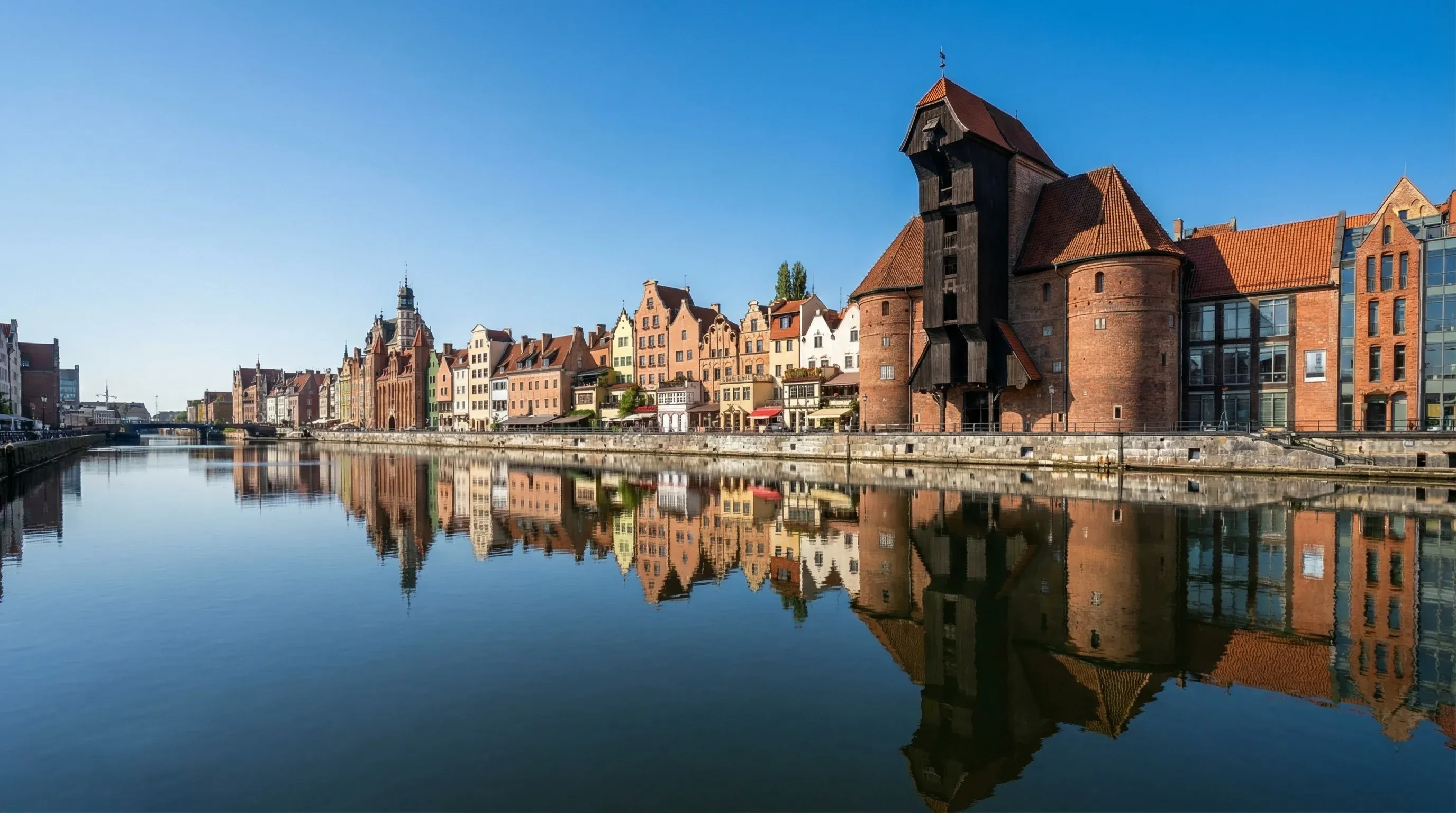

Gdańsk & Baltic Coast (Tricity, Sopot)
Amber beaches and Hanseatic history 🌊⚓️
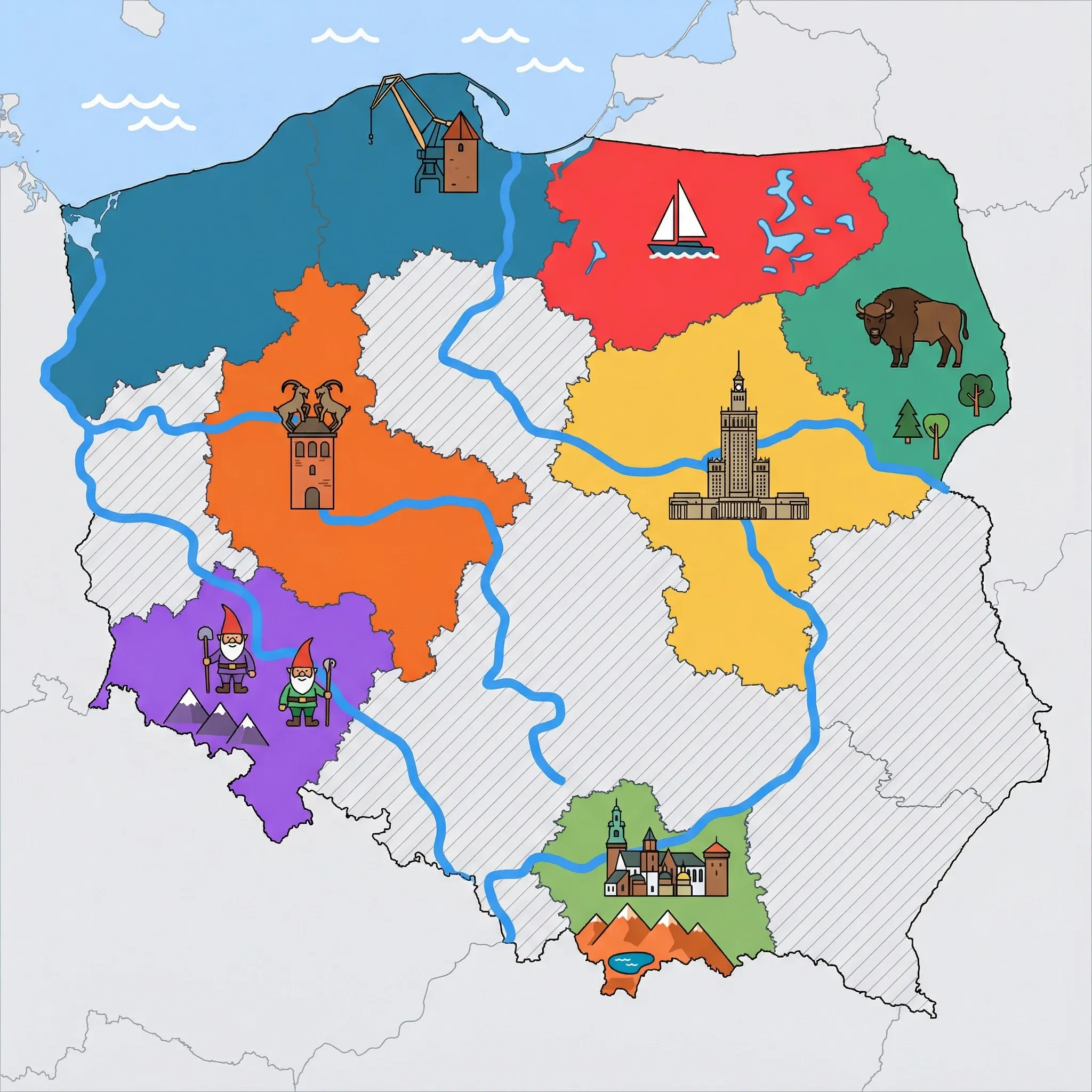
Click a region to explore
The Baltic Coast, anchored by the metropolitan hub of Tricity (Trójmiasto), is Poland's premier summer playground and a year-round destination for maritime discovery. For families, this region offers a unique "three-in-one" experience: the historic, Hanseatic architectural splendour of Gdańsk, the upscale resort atmosphere of Sopot with its famous pier, and the modern, nautical spirit of Gdynia. Beyond the cities, the coastline stretches into wild dunes and pine forests, offering a refreshing escape from the heat of central Europe. The air here is rich in iodine, and the shallow waters of the Bay of Gdańsk are generally calmer and warmer than the open sea, making them safer for younger swimmers.
Culturally, the region is fascinating for children. It is the world capital of amber, the "Gold of the North," and kids love scouring the beaches after a storm to find small golden nuggets. The maritime heritage is everywhere, from historic cranes to modern ships, sparking imaginations about pirates and explorers. Unlike many European coastal destinations that shut down in winter, the Tricity remains vibrant, with Christmas markets in Gdańsk that rival the best in Germany, and brisk coastal walks that invigorate the senses. Whether you are building sandcastles on the wide beaches of Sopot or climbing the lighthouse in Hel, the region balances relaxation with educational adventure perfectly.
Key Attractions
The region is packed with family-oriented sites. A top priority for active families is Hevelianum, a brilliant science centre located in a 19th-century fort overlooking the city; it combines military history with hands-on physics and astronomy experiments. For nature lovers, the Gdańsk Zoo in Oliwa is one of the largest in Poland, featuring a dedicated children's zoo and expansive, leafy enclosures that feel like a park walk. If the weather turns grey, Gdynia Aquarium is a fantastic indoor option where little ones can marvel at coral reefs and deep-sea creatures. For a full day trip, taking the ferry or driving to the Hel Peninsula is unforgettable; you can visit the seal sanctuary and enjoy beaches on both the bay and open sea sides.
Practical Advice
The best time for beach weather is late June to August, though this is also peak tourist season. May and September offer milder weather and fewer crowds. The water in the Baltic can be cool even in summer (around 18–20°C), so pack wetsuits for kids who want to stay in the water for long periods.
Food & Drink
Typical meal times: Lunch is usually served from 1:00 pm to 4:00 pm, and dinner is eaten later, typically between 7:00 pm and 9:00 pm, especially in the lively resort areas of Sopot.
Typical meal costs: A main course in a tourist area costs 45–80 PLN (approx. $11–20 USD / €10–19 EUR). A full family dinner runs about 200–300 PLN (approx. $50–75 USD / €47–70 EUR).
Dietary requirements: Extremely accommodating. The Tricity area is modern and cosmopolitan; vegan, vegetarian, and gluten-free options are standard in almost all restaurants in Gdańsk, Sopot, and Gdynia.
Signature dishes:
- Smażona Flądra (Fried Flounder) – The quintessential Baltic dish; fresh flatfish breaded and fried whole, usually served with chips and sauerkraut salads (surówki).
- Gofry (Waffles) – Huge, crispy waffles sold at seaside stalls, topped with mountains of whipped cream, fresh berries, and fruity gels. A mandatory beach treat.
- Zupa Rybna (Fish Soup) – A spicy or creamy soup made from the catch of the day, often rich with chunks of cod or salmon.
Why this score?
Adventure here is primarily centered on maritime activities such as windsurfing on the Hel Peninsula and cycling the Velo Baltica route. While the terrain is flat and highly accessible, the active coastal lifestyle offers good outdoor engagement for families without being rugged.
Why this score?
The Tricity metropolitan area is a major healthcare hub with several large university hospitals and modern private clinics. It is a well-established center for medical tourism in Northern Europe, offering high standards of care and widely available English-speaking staff.
Why this score?
This region is a recognized European seaside destination, drawing significant international flows from Scandinavia, Germany, and the UK. The combination of Hanseatic history in Gdańsk and the resort atmosphere of Sopot makes it Poland's premier coastal draw, though it remains a regional rather than global mega-destination.

The Tricity area is pricier than rural Poland but offers great value compared to Western Europe. Sopot is the most expensive, particularly for accommodation. A family apartment costs 350–600 PLN (approx. $88–150 USD / €81–140 EUR) per night. Public transport is very cheap.

Getting Here & Around
Getting Here
- Airports – Gdańsk Lech Wałęsa Airport (GDN) is the main hub, located just 20 minutes from the city centre, with connections across Europe.
- Train – High-speed Pendolino trains connect Gdańsk Główny to Warsaw (approx. 2.5 hours) and Kraków (approx. 5.5 hours).
- Ferry – Regular ferry connections arrive from Sweden (Nynäshamn, Karlskrona), making it accessible for Scandinavian travellers.
Getting Around
- Train (SKM) – The Szybka Kolej Miejska (SKM) is the lifeline of the Tricity, connecting Gdańsk, Sopot, and Gdynia frequently and cheaply. It is stroller-friendly and faster than driving during rush hour.
- Tram & Bus – Excellent network within Gdańsk. Tickets must be validated immediately upon boarding.
- Water Tram – In summer, water trams (tramwaj wodny) sail to the Hel Peninsula and Westerplatte, acting as both transport and a scenic tour.
Nearby Airports (2 airports)
Gdańsk Lech Wałęsa Airport
GDNGdansk
Goleniow
SZZSzczecin
View full flight map for Poland →
Official Links

Packing List
Essential Polish beach culture item to block the cool Baltic breeze.
Amber glows under UV light; great for night-time beach scavenging with kids.
Coastal weather changes rapidly; sunny mornings can turn into rainy afternoons.
Forests and parks in Poland have a high tick prevalence; checking kids after hikes is essential.
It is customary to remove shoes when entering Polish homes; some hosts provide guest slippers.
Foreign school IDs are often rejected; an international ISIC card is needed for student transport discounts.
Public toilets in parks or stations often use coin-operated turnstiles and may not take cards.
Essential if visiting the Masurian Lake District or forests where bugs can be intense in summer.

Activities & Best Times

Urban tourism, museums, historical sites, architecture
Gdańsk’s meticulously restored Hanseatic Old Town and Sopot’s Belle Époque charm offer a sophisticated atmosphere for well-travelled families. The city is vibrant from May to September and during the festive Christmas market in December.

Hiking, wildlife, outdoor exploration, ecotourism
Offers a mix of coastal cliffs, dense forests, and high-quality zoological gardens suitable for family exploration. Late spring through early autumn provides optimal conditions for the extensive trail networks and adventure parks.

Sport tourism, fitness activities, active recreation
Boasts high-quality cycling infrastructure like the EuroVelo 10 and exceptional windsurfing conditions on the Puck Bay. Activity peaks during the warmer, windier months from May to September.
Beach resorts, marine activities: diving, snorkelling, kite surfing, wind surfing, sailing
Features the unique Hel Peninsula and Sopot's historic pier, though water temperatures remain brisk even in mid-summer. Peak season is limited to July and August when the Baltic is most swimmable and beach infrastructure is fully operational.

Learning experiences, scientific sites, historical education
Home to state-of-the-art science centers and maritime museums that offer deep engagement with history and technology. These facilities are high-quality and largely indoor, making them viable across most of the year.

Spa retreats, wellness centers, peaceful getaways
Sopot's historic spa tradition and the Balneological Institute represent established wellness infrastructure that exceeds 'marginal'. The region has a documented spa heritage dating to the 19th century and modern facilities. This aligns with other Polish regions offering dedicated thermal complexes rated 'good'.

Scenic drives, countryside tours, route-based travel
Highlighted by the unique drive along the narrow Hel Peninsula and the scenic routes of the Kashubian Switzerland interior. Driving conditions are best from May to September when the landscapes are lush and roads are clear of ice.
Amusement parks, family entertainment venues
Primarily coastal amusement parks and high-quality indoor aquaparks like Reda that cater well to children. Outdoor venues are strictly seasonal, peaking in summer, while aquaparks provide year-round alternatives.

Events, celebrations, seasonal attractions
Anchored by the centuries-old St. Dominic's Fair and the internationally renowned Open'er music festival. These major events occur in July and August, drawing significant international crowds and creating a high-energy atmosphere.

Winter sports, ski resorts, snow activities
Features modest hills in the Kashubian Lake District suitable for beginners and families, though lacking the scale of international alpine resorts. Reliability is highest in January and February, while other months suffer from inconsistent snow cover.

Attractions (29 total)



Public Holidays & Calendar Next 12 months
Public holidays, festivals, cultural celebrations, and seasonal natural phenomena coming up in Gdańsk & Baltic Coast (Tricity, Sopot) over the next 12 months.
Loading holidays and events...

Travel Advisory
All major agencies maintain Poland at their lowest risk tier, recommending standard safety awareness without any country-wide elevated warnings.
Safety Topics
Traveller Advice (3 groups)

Dual citizens holding both Polish and another nationality must enter and exit the country using their Polish passport or national ID card. Failure to do so may result in travel delays or detention at the border.

While same-sex relations are legal, public displays of affection may attract negative attention or hostility in certain areas; travelers are encouraged to be discreet and aware of local attitudes.

Solo female travelers should avoid visiting bars or nightclubs alone and stick to well-lit, populated streets when walking at night.
Agency Summaries
Poland is considered a low-risk destination. Visitors are advised to follow routine safety measures, particularly in crowded tourist areas where petty crime occurs. Dual citizens must comply with specific entry and exit document requirements.
Standard precautions apply across the country. Travelers should be aware of new European Union entry/exit registration requirements and exercise caution when visiting districts adjacent to the borders with Russia, Belarus, and Ukraine.
The overall risk level is low. Travelers should remain alert to the potential for civil demonstrations in major cities and the broader moderate threat of terrorism affecting the European region.
Travelers should maintain standard safety awareness. Vigilance is specifically recommended in regions bordering Ukraine due to potential risks from stray debris or projectiles related to the ongoing conflict.
Irish citizens can travel freely for up to three months without a visa. The security environment is generally stable, though travelers are reminded that dual citizens must utilize Polish passports for border crossings.
No major travel restrictions are in place. However, authorities may restrict access to areas within 20km of the border with Ukraine without prior notice. British-Polish dual nationals should ensure they use correct documentation.
Information is provided for general guidance only and does not constitute travel, safety, medical, or legal advice. Conditions may change. Users are responsible for independently verifying information before travel.