
Click a region to explore
Warsaw is a city of incredible energy and resilience. Almost completely destroyed during WWII, it has risen to become a modern, green, and vibrant metropolis. For families, Warsaw offers a different experience to the fairytale charm of Kraków; it is spacious, full of wide boulevards, massive parks, and world-class modern museums. The symbol of the city is the Mermaid (Syrenka), a warrior protector, which sets the tone for a city that is proud and strong. One of the best features for families is the Vistula River Boulevards—a miles-long promenade along the riverbank packed with playgrounds, splash pads, food trucks, and science exhibits. It’s the city's summer living room.
Educational opportunities abound here. The city puts a huge emphasis on interactive learning. The Copernicus Science Centre is one of the best in Europe, requiring half a day just to scratch the surface. Warsaw is also incredibly green; nearly a quarter of the city is parkland. You can watch wild squirrels in Royal Łazienki Gardens or see peacocks roaming freely around the palaces. The public transport is fast, clean, and stroller-accessible, making it effortless to zip between the historic Old Town and the modern downtown.
Key Attractions
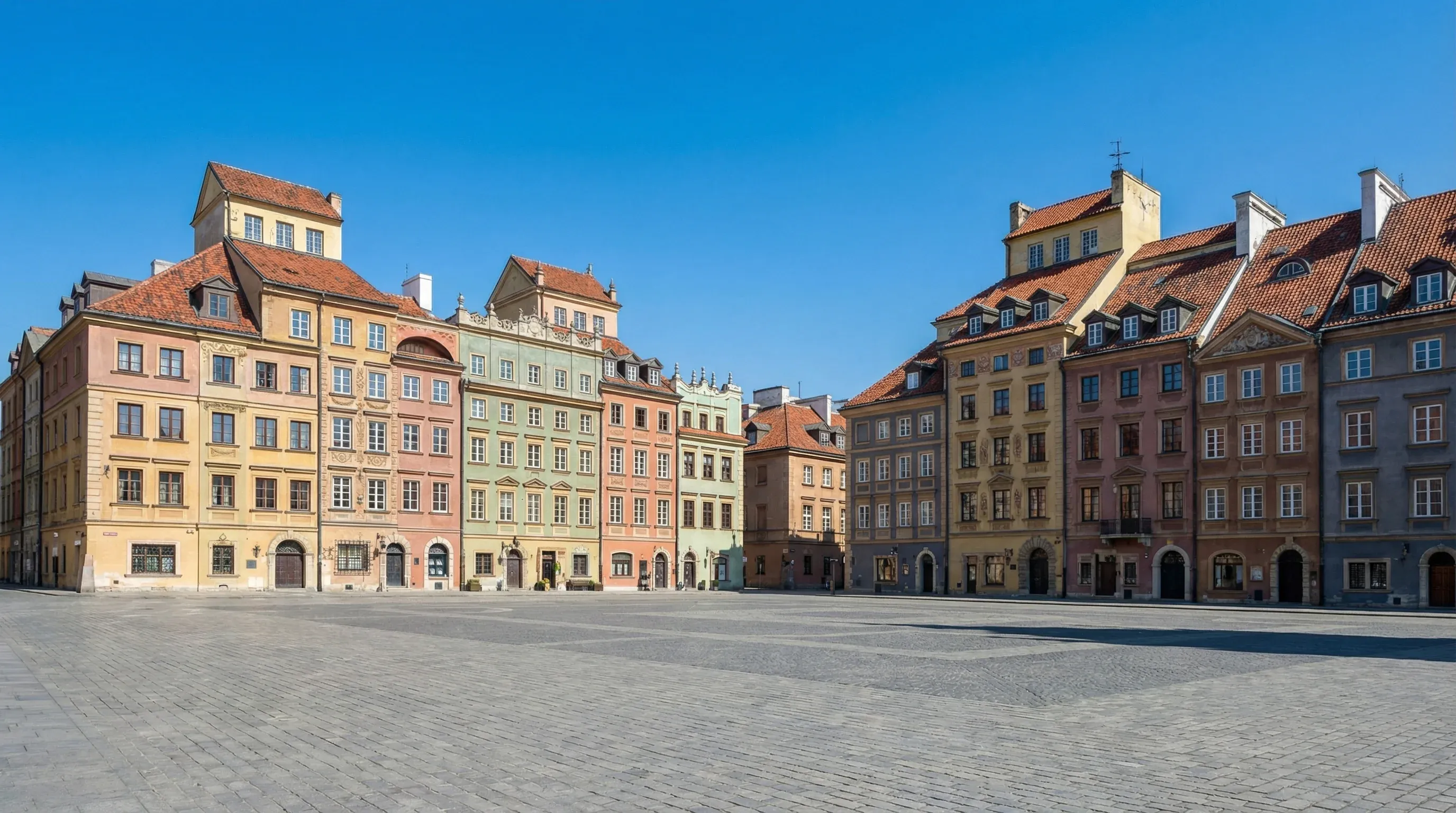
Start at the Warsaw Old Town, a UNESCO site meticulously rebuilt from rubble. Kids enjoy the colourful market square and the Royal Castle in Warsaw, which is dazzlingly gold and velvet inside. The absolute highlight for children is the Copernicus Science Centre; book tickets weeks in advance as it sells out daily. For outdoor time, the Royal Łazienki Gardens is a must—visit on Sundays in summer for free Chopin piano concerts (kids can sit on the grass). Across the river, the Warsaw Zoo is famous for its history (the Zookeeper's Wife story) and its modern enclosures.
Practical Advice
Warsaw is a business city, so hotels can actually be cheaper on weekends when the consultants go home. Traffic can be heavy, so rely on the Metro and trams.
Food & Drink
Typical meal times: Cosmopolitan hours. Lunch 12:00 pm – 4:00 pm, Dinner 6:00 pm – 10:00 pm.
Typical meal costs: Varies widely. Milk bars (Bar Mleczny) offer meals for 20–30 PLN (approx. $5–7.50 USD / €4.50–7 EUR). Trendy restaurants charge 50–90 PLN (approx. $12.50–22.50 USD / €11.50–21 EUR) for mains.
Dietary requirements: Warsaw is a top global vegan destination. You can find vegan sushi, ramen, burgers, and traditional Polish food everywhere.
Signature dishes:
- Wuzetka (WZ Cake) – A chocolate sponge cake with cream and marmalade, named after the East-West highway (W-Z) or the bakery that made it. A symbol of Warsaw.
- Pyzy w słoiku – Steamed round potato dumplings served in a glass jar with bacon and onions, a hipster revival of a traditional street snack.
- Chłodnik – Cold beet soup (shockingly pink!), served in summer with a hard-boiled egg. Refreshing on hot days.
Why this score?
Warsaw is an almost entirely urbanized region focused on history, culture, and science. Even the nearby Kampinos National Park offers flat, well-marked trails that provide little in the way of rugged adventure, catering more to weekend walkers and cyclists.
Why this score?
Warsaw offers the highest standard of medical care in Poland, with numerous world-class private and public hospitals. English is widely spoken in the medical community, and there is extensive experience in dealing with international patients and insurance providers.
Why this score?
As the national capital and primary flight hub, Warsaw sees high volumes of international visitors for both business and leisure. While its reconstructed Old Town is a UNESCO site, the city's popularity is driven by its status as a modern European metropolis rather than a pure tourist resort.

Warsaw has a wide price range. Luxury is expensive, but daily life is affordable. Museums often have free entry days (check websites). A modern apartment rental costs 350–600 PLN (approx. $88–150 USD / €81–140 EUR) per night.

Getting Here & Around
Getting Here
- Airports – Warsaw Chopin (WAW) is the main hub (20 mins to centre). Modlin (WMI) serves low-cost carriers (1 hour away).
- Train – Warsaw Centralna is the hub for all Polish rail. Berlin is 5.5 hours away; Vienna is 7 hours.
- Driving – The A2 motorway connects to Berlin and Poznań.
Getting Around
- Metro – Fast, clean, and easy. There are two lines (M1, M2). M2 connects the Science Centre and Zoo.
- Bus & Tram – Extensive network. 1-day or 3-day tickets offer great value.
- Bikes – Veturilo city bikes are available everywhere, including kids' bikes in some locations.
Nearby Airports (3 airports)
Radom Airport
RDOWarsaw
Warsaw
WAWWarsaw
Warsaw Modlin Airport
WMIModlin
View full flight map for Poland →
Official Links

Packing List
Warsaw is smart-casual; people dress up a bit more for dinner than in other cities.
Warsaw tap water is excellent (promoted as 'Warszawska Kranówka') and free fountains are common.
Essential app for navigating public transport live schedules.
Forests and parks in Poland have a high tick prevalence; checking kids after hikes is essential.
It is customary to remove shoes when entering Polish homes; some hosts provide guest slippers.
Foreign school IDs are often rejected; an international ISIC card is needed for student transport discounts.
Public toilets in parks or stations often use coin-operated turnstiles and may not take cards.
Summer weather is changeable with sudden showers common, especially in the mountains.
Essential if visiting the Masurian Lake District or forests where bugs can be intense in summer.

Activities & Best Times

Urban tourism, museums, historical sites, architecture
A world-class blend of meticulously reconstructed UNESCO heritage and a vibrant modern culinary scene, offering profound historical depth for discerning families. Peak visitation aligns with pleasant walking weather in late spring and early autumn, plus the festive Christmas season in December.

Hiking, wildlife, outdoor exploration, ecotourism
Extensive urban forests and the Kampinos National Park provide high-quality wilderness immersion and wildlife observation immediately adjacent to the city. Optimal conditions occur from May through September, while winter months are too damp and cold for authentic exploration.

Learning experiences, scientific sites, historical education
The Copernicus Science Centre is a premier international discovery hub that serves as a primary motivator for educational family travel. While accessible year-round, peak interest coincides with the main summer tourism and school trip seasons.

Sport tourism, fitness activities, active recreation
Features well-maintained cycling routes along the Vistula and significant hiking trails through the nearby national park. Peak months offer reliable weather for outdoor activities, while winter conditions generally restrict sport tourism to indoor facilities.
Amusement parks, family entertainment venues
Home to Suntago, one of Europe's largest indoor water parks, making it a viable year-round destination for families seeking high-quality entertainment. Peak demand follows international school holiday windows, though indoor facilities maintain suitability during colder months.

Beach resorts, marine activities: diving, snorkelling, kite surfing, wind surfing, sailing
River-based beach culture along the Vistula offers unique urban recreation but lacks the marine biodiversity and resort scale of world-class coastal destinations. Peak summer months provide the only viable window for sunbathing and river recreation.

Events, celebrations, seasonal attractions
Hosts respected international events like the Chopin Music Festival and Warsaw Film Festival, drawing a discerning global audience. These events create specific peak windows, supplemented by atmospheric winter holiday lights.

Scenic drives, countryside tours, route-based travel
Thematic routes like the Chopin Trail offer a sophisticated way to explore the rural Masovian landscapes. Best experienced in late spring or the golden light of September, avoiding the grey, short-daylight periods of the Polish winter.

Attractions (20 total)



Public Holidays & Calendar Next 12 months
Public holidays, festivals, cultural celebrations, and seasonal natural phenomena coming up in Warsaw over the next 12 months.
Loading holidays and events...

Travel Advisory
All major agencies maintain Poland at their lowest risk tier, recommending standard safety awareness without any country-wide elevated warnings.
Safety Topics
Traveller Advice (3 groups)

Dual citizens holding both Polish and another nationality must enter and exit the country using their Polish passport or national ID card. Failure to do so may result in travel delays or detention at the border.

While same-sex relations are legal, public displays of affection may attract negative attention or hostility in certain areas; travelers are encouraged to be discreet and aware of local attitudes.

Solo female travelers should avoid visiting bars or nightclubs alone and stick to well-lit, populated streets when walking at night.
Agency Summaries
Poland is considered a low-risk destination. Visitors are advised to follow routine safety measures, particularly in crowded tourist areas where petty crime occurs. Dual citizens must comply with specific entry and exit document requirements.
Standard precautions apply across the country. Travelers should be aware of new European Union entry/exit registration requirements and exercise caution when visiting districts adjacent to the borders with Russia, Belarus, and Ukraine.
The overall risk level is low. Travelers should remain alert to the potential for civil demonstrations in major cities and the broader moderate threat of terrorism affecting the European region.
Travelers should maintain standard safety awareness. Vigilance is specifically recommended in regions bordering Ukraine due to potential risks from stray debris or projectiles related to the ongoing conflict.
Irish citizens can travel freely for up to three months without a visa. The security environment is generally stable, though travelers are reminded that dual citizens must utilize Polish passports for border crossings.
No major travel restrictions are in place. However, authorities may restrict access to areas within 20km of the border with Ukraine without prior notice. British-Polish dual nationals should ensure they use correct documentation.
Information is provided for general guidance only and does not constitute travel, safety, medical, or legal advice. Conditions may change. Users are responsible for independently verifying information before travel.