
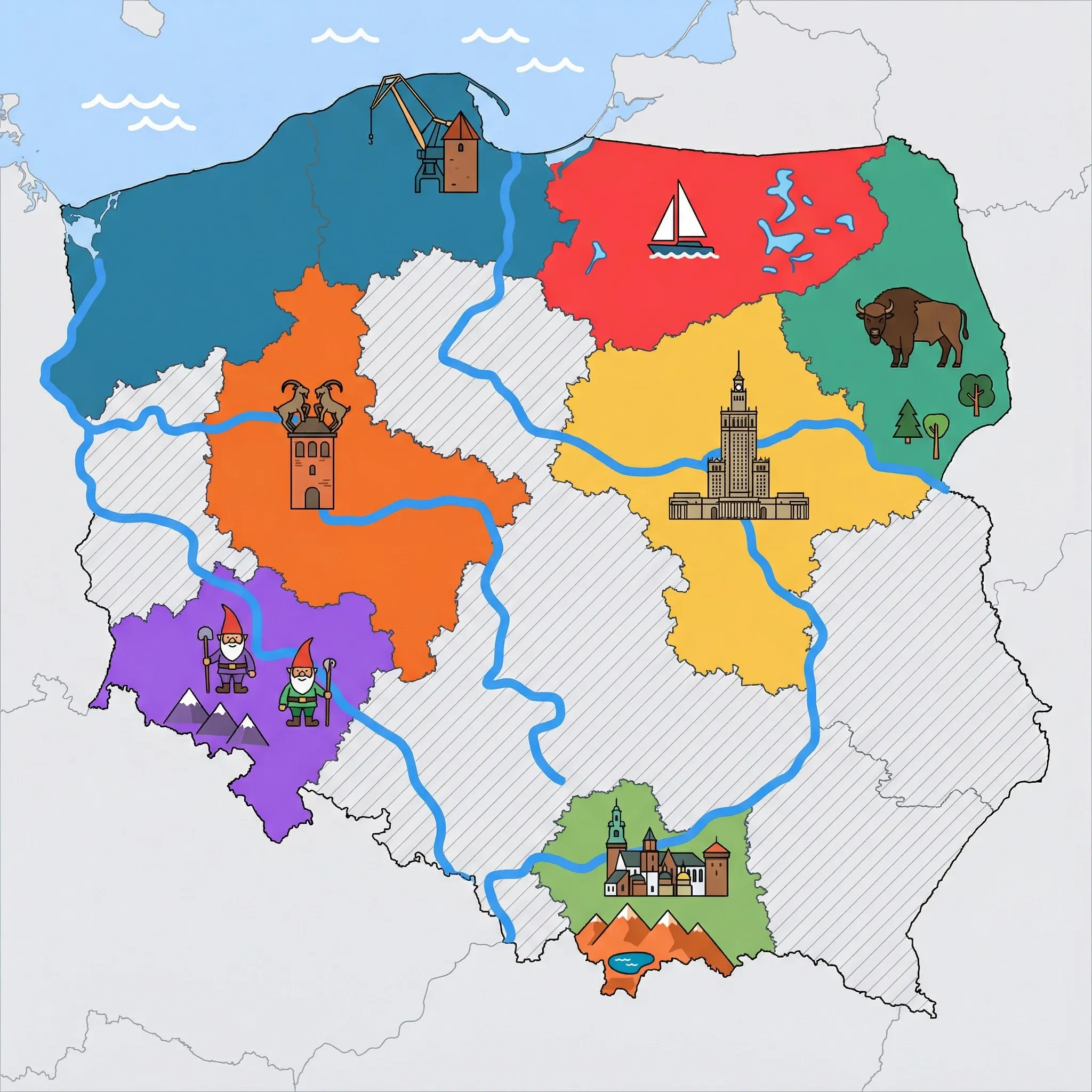
Click a region to explore
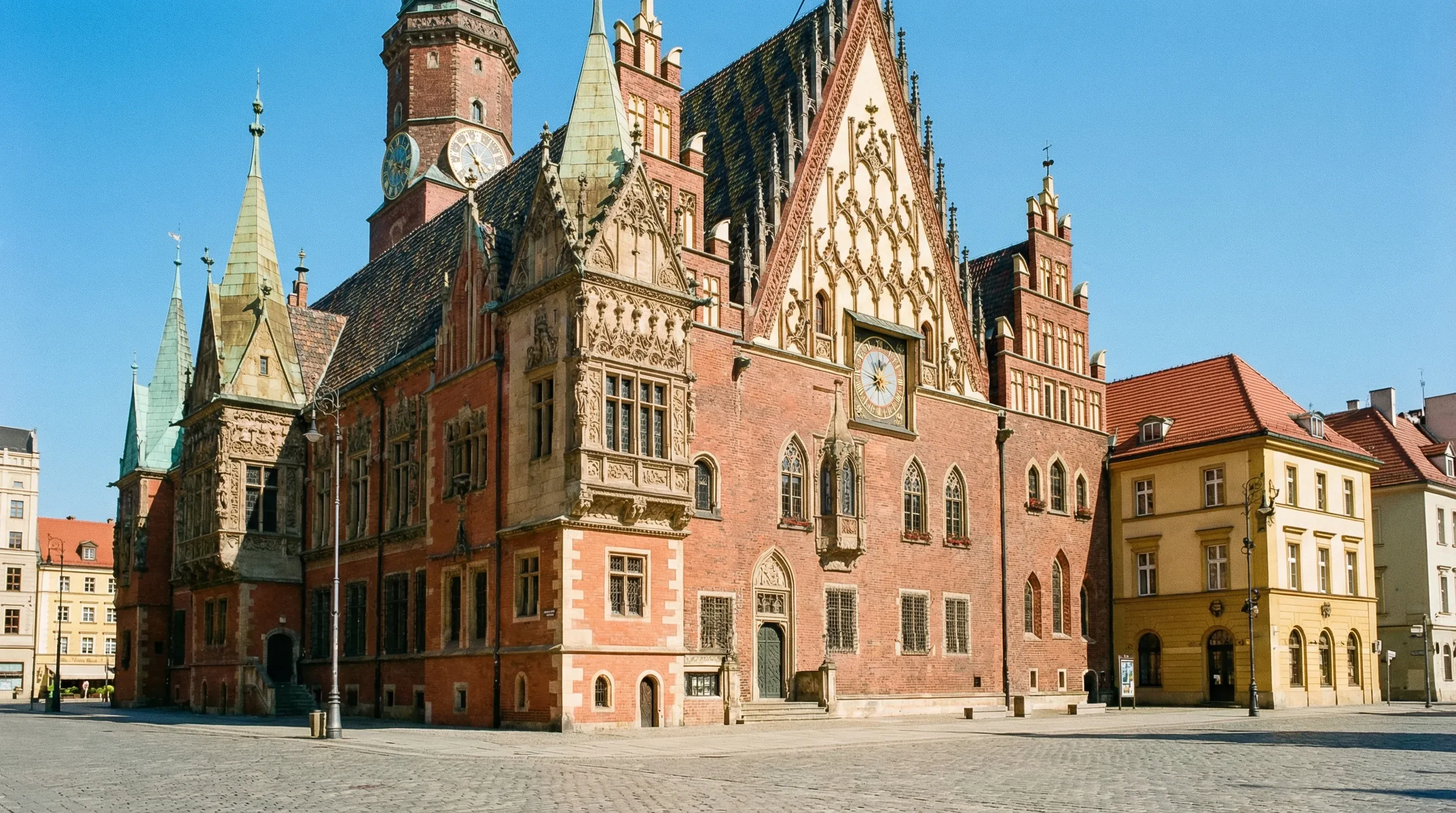
Wrocław is often voted the most liveable city in Poland, and for visiting families, it is pure joy. The city is defined by the Oder River, which splits into multiple channels, creating a labyrinth of islands and bridges that gives it a Venice-like atmosphere. But the real magic for children lies at their feet. Wrocław is home to over 600 small bronze gnomes (krasnale) scattered across the city. They are everywhere—climbing lampposts, eating ice cream, riding motorcycles. Buying a "gnome hunting map" turns a regular sightseeing walk into an exciting treasure hunt that keeps kids engaged for days. It is a brilliant way to explore the historic Market Square and Ostrów Tumski (Cathedral Island) without any complaints of boredom.
Beyond the gnomes, the region of Lower Silesia is rich in mystery. It has the highest concentration of castles in Poland, from hilltop ruins to the magnificent Książ Castle, which sits on a rock promontory and hides underground tunnels from WWII. The city itself boasts one of the best zoos in Europe, specifically the Afrykarium, a massive oceanarium dedicated to the waters of Africa. Whether you are walking through a shark tunnel or exploring the mountains to the south, Wrocław feels friendly, manageable, and full of surprises.
Key Attractions
The number one hit is the Afrykarium within the Wrocław Zoo; it is a world-class facility where you can see manatees, hippos, and sharks in huge immersive tanks. Rain or shine, Kolejkowo Wrocław is fantastic—it is a massive model railway world located in a skyscraper, featuring miniature versions of the region's landmarks with day/night cycles and moving cars. For a fairytale experience, travel an hour out of the city to Książ Castle, often called the "Pearl of Silesia." Back in town, the Hydropolis is a unique interactive knowledge centre dedicated entirely to water, located in an underground reservoir.
Practical Advice
Wrocław is one of the warmest cities in Poland. Summers can be hot and humid. The gnome hunting maps can be bought at the Tourist Information centre in the Market Square—get one immediately upon arrival.
Food & Drink
Typical meal times: Lunch 12:00 pm – 4:00 pm. The market square bustles late into the night.
Typical meal costs: Slightly cheaper than Warsaw. Mains 35–65 PLN (approx. $9–16 USD / €8–15 EUR).
Dietary requirements: Very high standard of vegetarian options. The city has a youthful, university vibe that supports diverse diets.
Signature dishes:
- Kluski Śląskie (Silesian Dumplings) – Chewy, dimpled potato dumplings (the dimple is for holding the gravy!). Usually served with rolled beef (rolada) and red cabbage.
- Żurek – Sour rye soup, often served in a bread bowl. In this region, it is particularly rich and garlicky.
- Pierogi Ruskie – Dumplings with potato and cottage cheese. Despite the name ("Ruthenian"), they are a staple of this region.
Why this score?
The nearby Sudetes mountains and Karkonosze National Park offer rugged granite peaks and significant hiking and skiing. This provides a good balance of accessible outdoor recreation and more challenging terrain for families looking for an active holiday.
Why this score?
Wrocław is a major medical hub with a high concentration of modern hospitals and specialized clinics. The city's infrastructure is well-suited for international visitors, offering high-quality services with many providers fluent in English and German.
Why this score?
Wrocław is a popular city-break destination known for its stunning architecture and unique gnome statues, attracting a moderate and growing stream of European tourists. The wider Lower Silesia region is prized for its castles, though it remains secondary to the Kraków region in popularity.

Wrocław offers excellent value. While the Zoo/Afrykarium is expensive (family ticket approx. 250 PLN / $63 USD / €58 EUR), many other activities like Gnome hunting or visiting Cathedral Island are free. Accommodation is reasonably priced.

Getting Here & Around
Getting Here
- Airports – Wrocław Copernicus Airport (WRO) is modern and well-connected to UK and European hubs.
- Train – Wrocław Główny is a stunning historic station (looks like a castle). Trains to Warsaw take 4 hours; to Berlin 4.5 hours.
- Driving – The A4 motorway runs west to Germany and east to Kraków.
Getting Around
- Tram – The blue trams are the best way to get around. They rattle over bridges and connect all islands.
- Polinka – A cable car across the river built for students, but fun for tourists to hop between sections of the city.
- Boat – Tour boats and rental kayaks are popular for seeing the city from the water.
Nearby Airports (1 airport)
Copernicus Airport Wrocław
WROWroclaw
View full flight map for Poland →
Official Links

Packing List
Buy one locally, but bring a pen to mark off the ones you find.
The Old Town has many cobblestones which are hard on heels or thin soles.
Useful if you plan to explore the underground tunnels (Project Riese) in the nearby mountains.
Forests and parks in Poland have a high tick prevalence; checking kids after hikes is essential.
It is customary to remove shoes when entering Polish homes; some hosts provide guest slippers.
Foreign school IDs are often rejected; an international ISIC card is needed for student transport discounts.
Public toilets in parks or stations often use coin-operated turnstiles and may not take cards.
Summer weather is changeable with sudden showers common, especially in the mountains.
Essential if visiting the Masurian Lake District or forests where bugs can be intense in summer.

Activities & Best Times

Hiking, wildlife, outdoor exploration, ecotourism
The Sudetes mountains offer high-quality hiking and unique rock formations, complemented by the world-class Afrykarium and major zoological facilities. Peak season provides the best visibility and trail access, while winter months are too cold for typical nature immersion.

Urban tourism, museums, historical sites, architecture
Wrocław's historic center and UNESCO-listed Centennial Hall provide a sophisticated cultural experience with an authentic Polish-German heritage. May through September offers vibrant street life and ideal walking weather, with December boosted by the famous Christmas market.

Sport tourism, fitness activities, active recreation
Polana Jakuszycka is a world-class hub for cross-country skiing and mountain biking with specialized infrastructure. Peak seasons are split between the winter snow window and the dry summer months for optimal cycling and trail use.

Learning experiences, scientific sites, historical education
Home to world-class facilities like Hydropolis and the Afrykarium that offer destination-level scientific engagement. While these are indoor venues, international families typically visit during the broader spring-to-autumn tourism window.

Spa retreats, wellness centers, peaceful getaways
The region features established historic spa towns and modern thermal complexes like Termy Cieplickie. Summer and early autumn provide the most pleasant environment for combining restorative wellness treatments with fresh mountain air.

Scenic drives, countryside tours, route-based travel
The Valley of Palaces and Gardens and the Road of a Hundred Bends offer highly scenic driving routes through historic Silesian landscapes. Optimal driving conditions and landscape visibility are best from late spring through early autumn.

Winter sports, ski resorts, snow activities
Regional resorts like Zieleniec and Czarna Góra offer reliable snow and modern infrastructure for families. The season is relatively short, with peak conditions limited to mid-winter when the snow base is most consistent for international standards.
Amusement parks, family entertainment venues
Features high-quality facilities like Aquapark Wrocław and the unique Kolejkowo, which are internationally competitive for family entertainment. Peak visitation aligns with school holidays in summer and winter to maximize facility utilization.

Attractions (31 total)



Public Holidays & Calendar Next 12 months
Public holidays, festivals, cultural celebrations, and seasonal natural phenomena coming up in Wrocław & Lower Silesia over the next 12 months.
Loading holidays and events...

Travel Advisory
All major agencies maintain Poland at their lowest risk tier, recommending standard safety awareness without any country-wide elevated warnings.
Safety Topics
Traveller Advice (3 groups)

Dual citizens holding both Polish and another nationality must enter and exit the country using their Polish passport or national ID card. Failure to do so may result in travel delays or detention at the border.

While same-sex relations are legal, public displays of affection may attract negative attention or hostility in certain areas; travelers are encouraged to be discreet and aware of local attitudes.

Solo female travelers should avoid visiting bars or nightclubs alone and stick to well-lit, populated streets when walking at night.
Agency Summaries
Poland is considered a low-risk destination. Visitors are advised to follow routine safety measures, particularly in crowded tourist areas where petty crime occurs. Dual citizens must comply with specific entry and exit document requirements.
Standard precautions apply across the country. Travelers should be aware of new European Union entry/exit registration requirements and exercise caution when visiting districts adjacent to the borders with Russia, Belarus, and Ukraine.
The overall risk level is low. Travelers should remain alert to the potential for civil demonstrations in major cities and the broader moderate threat of terrorism affecting the European region.
Travelers should maintain standard safety awareness. Vigilance is specifically recommended in regions bordering Ukraine due to potential risks from stray debris or projectiles related to the ongoing conflict.
Irish citizens can travel freely for up to three months without a visa. The security environment is generally stable, though travelers are reminded that dual citizens must utilize Polish passports for border crossings.
No major travel restrictions are in place. However, authorities may restrict access to areas within 20km of the border with Ukraine without prior notice. British-Polish dual nationals should ensure they use correct documentation.
Information is provided for general guidance only and does not constitute travel, safety, medical, or legal advice. Conditions may change. Users are responsible for independently verifying information before travel.