

Portugal is frequently voted one of the world's most family-friendly destinations, and for good reason. Nestled on the edge of Europe facing the Atlantic, it combines the warm climate of the Mediterranean with a rugged, adventurous spirit that captivates children of all ages. The culture is deeply family-oriented; here, children are not just tolerated in restaurants and public spaces-they are celebrated. You will often find waiters entertaining toddlers while parents finish their meal, and locals stopping to admire a baby. The geography is diverse yet accessible, ranging from the sun-baked cliffs of the south to the lush, green mountains of the north, all connected by an excellent infrastructure that makes travel easy and safe.
For active families, the coastline offers endless opportunities, from surfing lessons in the west to calm, shallow bays in the south. Inland, the landscape is dotted with hilltop castles that feel lifted straight from a storybook, perfect for sparking young imaginations. Whether you are navigating the cobbled streets of Lisbon & Coast or hiking through the magical forests of Central Portugal, the country feels manageable and welcoming. The relaxed pace of life allows families to slow down, enjoying long lunches and late sunsets without the frantic rush often found in other European capitals.
Key Attractions
Start your adventure in the capital, where the Belém Tower sits like a stone sentinel on the riverbank-kids love crossing the gangway to explore its dungeons and lookout points. Just a short train ride away lies Sintra, a mountain town of palaces where the Castle of the Moors allows families to walk along ancient stone walls with panoramic views of the Atlantic, feeling like knights on patrol. For a more laid-back historical experience, the walled village surrounding the Castle of Óbidos is completely pedestrianised, allowing children to run safely through flower-filled medieval streets.
Heading south to the Alentejo, animal lovers must visit the Badoca Safari Park, which offers a safari experience through open plains featuring giraffes and zebras. Nearby, the Fluviário de Mora is a fantastic river aquarium that introduces kids to local freshwater ecosystems and otters. If you venture further to the Algarve, the coastline itself is the main attraction; don't miss a boat trip to the spectacular Benagil Cave, a natural cathedral carved by the sea that looks like a hidden pirate lair. In the north, the Dom Luís I Bridge in Porto offers a thrilling high-level walk across the Douro River, while island-bound travellers in Madeira will enjoy the Madeira Theme Park, dedicated to the island's history and traditions.
Practical Advice
The best time to visit is spring (May–June) or early autumn (September–October) when the weather is warm but not scorching, and crowds are thinner. July and August can be very hot, especially inland. Portugal is extremely safe, though the "calçada" (cobblestone pavements) can be slippery and uneven-leave the flimsy stroller at home and bring a sturdy carrier or a rugged buggy. Tap water is safe to drink. Pharmacies are widely available and pharmacists can treat minor ailments (green cross sign).
Food & Drink
Typical meal times: Lunch is typically served from 12:30 pm to 3:00 pm. Dinner is later than in northern Europe, usually starting around 7:30 pm or 8:00 pm, though many tourist-friendly restaurants open earlier.
Typical meal costs: A "Prato do Dia" (dish of the day) lunch is great value at €10–15 (approx. $11–16 USD / £8–13 GBP). Dinner in a mid-range restaurant costs around €20–40 (approx. $22–44 USD / £17–34 GBP) per person.
Dietary requirements: Vegetarian and vegan options are abundant in Lisbon and Porto but can be limited in rural areas, where "vegetables" often means soup. Most restaurants are happy to adapt dishes (e.g., omelettes or salads) if asked.
Family-friendly dining: Children are welcome everywhere, often even in upscale venues until late. Highchairs are standard, and while "kids' menus" aren't universal, kitchens will happily serve half-portions (meia-dose) or plain grilled fish/chicken for little ones.
Signature dishes:
- Pastel de Nata – A warm, crispy custard tart dusted with cinnamon, an absolute favourite for children and adults alike.
- Bacalhau à Brás – Shredded salt cod mixed with shoestring fries and scrambled eggs; it's boneless, mild, and often called "cod for kids."
- Francesinha – A massive sandwich from Porto layered with meats and covered in melted cheese and tomato sauce-a fun challenge for hungry teenagers.
- Bifana – A simple, delicious pork steak sandwich served in a soft roll, perfect for a quick, cheap lunch on the go.
- Arroz de Marisco – A loose seafood rice stew similar to risotto, packed with prawns and clams, ideal for sharing family-style.
Family Travel Notice
Minors travelling alone or with an adult who is not their legal parent or guardian should carry a formal letter of authorization. Failure to present this documentation may result in significant delays or refusal of entry at the border.

Portugal remains one of Western Europe's most affordable destinations. A family of four can travel comfortably for €200–280 (approx. $220–305 USD / £170–240 GBP) per day, covering mid-range accommodation, meals, and car hire. Coffee and wine are exceptionally cheap, though attraction entry fees in popular hubs like Sintra have risen.
Age Suitability





Did you know? Portugal welcomes approximately 29.0 million international visitors per year. Most visitors come from Europe.

Explore Regions
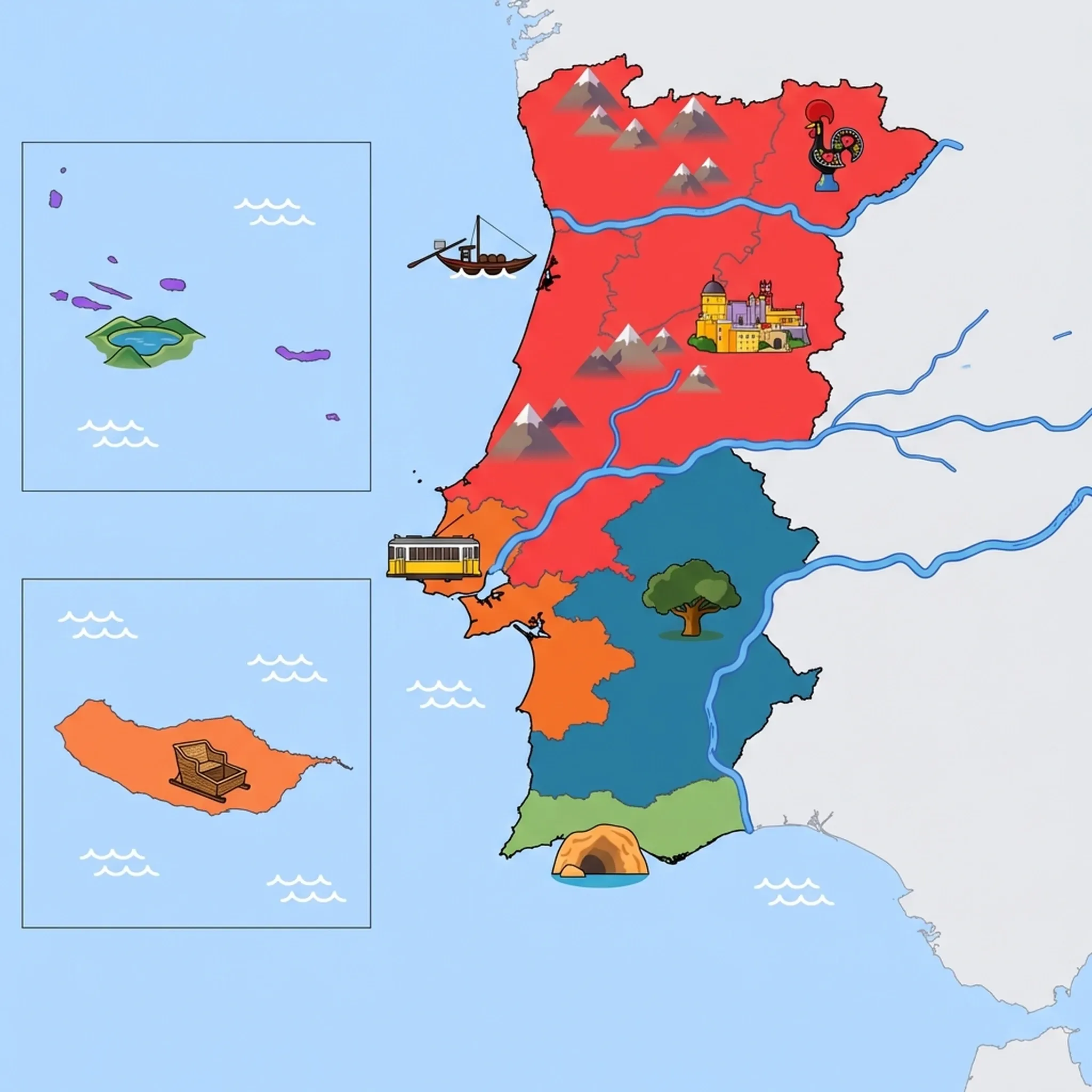
8 Regions
Alentejo
Golden plains, dark starry skies, and slow-paced family adventures 🌾✨
Algarve (beaches)
Golden cliffs, turquoise waters, and endless family fun 🏖️🐬
Azores
Europe's Hawaii: Volcanoes, whales, and adventure 🌋🐳
Central Portugal (Coimbra, Sintra)
Fairytale castles, giant waves, and living history 🏰🌊
Lisbon & Coast
Yellow trams, custard tarts, and seaside adventures 🚋🥧
Madeira
Subtropical adventures above the clouds 🌺🚠
Northern Portugal (Minho, Peneda-Gerês)
Where Portugal was born: Knights, nature, and legends ⚔️🌲
Porto & Douro Valley
River cruises, secret gardens, and cityscape magic 🍇🌉
Click on a region marker to explore details. Use the dropdown to color regions by activity suitability.

Getting There & Around
Getting There
- By Air – Lisbon (LIS) is the main hub, with frequent connections to North America and Europe. Porto (OPO) serves the north, while Faro (FAO) is the gateway to the Algarve beaches.
- By Train – High-speed rail connections from Spain are limited but improving; the main line enters from Vigo (north) or Badajoz (east).
- Entry Requirements – US, UK, CA, and AU citizens can enter visa-free for up to 90 days. Check your government website for the latest visa requirements, or use the IATA Travel Centre entry-requirements checker.
Getting Around
- Trains – The CP (Comboios de Portugal) network is reliable and scenic, connecting major hubs like Porto & Douro Valley to the south. Children under 4 travel free; ages 4-12 get 50% off.
- Car Hire – Essential for exploring the Alentejo and the Algarve coast. Motorways use an electronic toll system; ensure your rental has a "Via Verde" transponder.
- City Transport – Lisbon and Porto have excellent metro and tram systems. The historic Tram 28 in Lisbon & Coast is a fun ride, but watch out for pickpockets.

Packing List
Strollers struggle on Portugal's ubiquitous cobblestones and steep hills; a carrier is essential.
The limestone 'calçada' pavements become incredibly slippery when wet or worn smooth.
The Atlantic Ocean is surprisingly cold (often 18°C/64°F) even in the height of summer.
Roads in the Douro Valley, Madeira, and Sintra are famously winding and can induce nausea.
Many small family-run 'tascas' and kiosks do not accept foreign cards; cash is king.

Activities & Best Times

Adventure & Nature
ExcellentHiking, wildlife, outdoor exploration, ecotourism
A world-class destination for volcanic landscapes, offering dramatic caldera lakes and the highest peak in Portugal. Optimal visibility and trail accessibility occur during the drier summer months, while winter brings persistent cloud cover and heavy rainfall.
Home to the UNESCO-listed Laurissilva forest and dramatic volcanic peaks, the island offers an authentic immersion in unique Macaronesian ecosystems. Spring and early autumn provide the best balance of lush scenery and safe, clear conditions for exploring high-altitude trails.
Excellent diversity of ecosystems including the Ria Formosa wetlands and dramatic coastal trails like the Seven Hanging Valleys. Ideal conditions occur in spring and autumn for hiking and wildlife spotting; summer heat can be intense for strenuous outdoor activities.

City & Cultural
ExcellentUrban tourism, museums, historical sites, architecture
Porto's UNESCO-listed historic center and the iconic port wine lodges of Gaia provide a world-class cultural experience with unique architecture and an authentic atmosphere. Peak months coincide with the warmest weather and peak family travel windows, while rainy winters can diminish the urban exploration experience.
Features the UNESCO World Heritage site of Angra do Heroísmo and magnificent 18th-century botanical gardens. The unique blend of maritime history and Atlantic architecture is best explored during the temperate, sunnier months from May to September.
Home to the UNESCO-listed University of Coimbra and the fairytale palaces of Sintra, this region offers world-class heritage and authentic Portuguese identity. Peak visitation occurs during the mild spring and autumn, while the peak summer heat and winter rains make those months less ideal for walking historic quarters.

Relaxation & Wellness
Very GoodSpa retreats, wellness centers, peaceful getaways
Home to world-renowned geothermal springs like Poça da Dona Beija and Terra Nostra, providing a unique thermal bathing culture. While the hot springs are enjoyable in cooler weather, the surrounding park facilities are most pleasant during the extended tourist season.
Rooted in Roman tradition, the region offers authentic thermal experiences and high-end rural retreats focused on 'slow living.' These are best enjoyed in cooler transitional months; the peak summer heat typically discourages the use of thermal baths and saunas.
The region features historic thermal bath complexes and high-end vineyard spa retreats in the Douro Valley that cater to sophisticated international travelers. Peak season offers a tranquil riverside atmosphere, while the winter off-season is less ideal for outdoor relaxation.

Sports & Active
Very GoodSport tourism, fitness activities, active recreation
A premier European destination for golf and long-distance hiking (Rota Vicentina) with world-class infrastructure. The optimal seasons avoid the peak summer heat and mid-winter rains, focusing on the mild temperatures of spring and autumn.
The Rota Vicentina's Fishermen's Trail and Historical Way provide world-renowned hiking and cycling infrastructure that attracts international endurance tourists. The strenuous nature of these trails makes the moderate temperatures of spring and early autumn the only viable peak windows for families.
The region is a major hub for the Portuguese Coastal and Central routes of the Caminho de Santiago, supported by high-quality adventure parks and cycling infrastructure. Peak months avoid the high summer heat and winter rains, offering the best conditions for long-distance trekking and active family pursuits.

Theme Park & Entertainment
Very GoodAmusement parks, family entertainment venues
Featuring unique, high-quality parks like Dino Parque Lourinhã and the heritage-focused Portugal dos Pequenitos, the region excels in educational entertainment for children. Summer and school holiday periods see the highest demand and full facility availability.
The region hosts high-quality water parks like Aquashow and Slide & Splash that are major family draws. Operations are strictly seasonal, with peak demand during the hot summer months and total closures during the winter half-year.
Features quality regional water parks and treetop adventure courses suitable for families. These seasonal facilities are primarily operational and enjoyable during the warmest and driest summer months.

Beach & Sea
GoodBeach resorts, marine activities: diving, snorkelling, kite surfing, wind surfing, sailing
Offers iconic golden cliffs and sea caves like Benagil, though the Atlantic water remains cooler than Mediterranean benchmarks. Peak visitation aligns with the warmest sea temperatures and summer school holidays, while winter months are too cool and windy for swimming.
The Costa Vicentina offers dramatic, wild Atlantic beaches and high-quality coastal scenery, though water temperatures remain cool year-round. Peak visitation occurs during the warm summer months, while the Atlantic swell makes winter months less suitable for casual family beach visits.
Offers unique volcanic natural pools and the iconic Ilhéu de Vila Franca do Campo. The swimming season is relatively short, restricted to the peak of summer when sea temperatures are most comfortable and Atlantic swells are calmest.

Educational & Exploratory
GoodLearning experiences, scientific sites, historical education
Zoomarine and several science centers offer high-quality interactive marine biology and maritime history experiences for families. Peak periods follow the main tourism season, with reduced programming or limited access during the wetter winter months.
Features unique educational assets like the Dark Sky Alqueva Observatory and the Fluviário de Mora, providing specialized scientific engagement. Clear skies are most reliable in late spring and autumn, while winter months see increased cloud cover affecting astronomical observations.
Purpose-built facilities like World of Discoveries and SEA LIFE Porto provide engaging, high-quality educational experiences that highlight Portugal's maritime history. These venues are most vibrant during the primary tourism season, though being largely indoors makes them resilient to transitional weather.

Road Trips & Scenic
GoodScenic drives, countryside tours, route-based travel
Scenic routes like the EN2 and the Costa Vicentina offer spectacular coastal and mountain vistas on well-maintained roads. Peak summer is excluded due to heavy tourist traffic on narrow roads, while spring and autumn provide clear visibility and pleasant driving conditions.
Excellent driving conditions through rolling cork forests and along the scenic EN2, often compared to the California coast or Tuscany. Peak summer is avoided by savvy travelers due to the heat and parched landscape, with spring offering the most vibrant green vistas.
The N222 and N2 scenic routes through the Douro Valley offer internationally celebrated landscapes and well-maintained roads for rural touring. Autumn provides spectacular vineyard colors and spring offers fresh blooms, while winter conditions frequently involve heavy rain and poor visibility in the river valleys.

Festivals & Seasonal
MarginalEvents, celebrations, seasonal attractions
Features major international music events like Afro Nation and the traditional Loulé Carnival which attract global audiences. Peak months are strictly tied to specific event dates in the summer and late winter, with minimal international festival activity during other periods.
Home to the massive São João festival in June and the globally significant Douro wine harvest in September, providing authentic but time-specific cultural experiences. While internationally significant, these events are highly seasonal and limited to specific windows in the calendar.
The spring whale migration is a significant international event for nature enthusiasts. While specific to the migration window, it represents a primary seasonal draw for sophisticated travelers seeking rare marine encounters.

Ski & Snow
MarginalWinter sports, ski resorts, snow activities

Public Holidays & Calendar Next 12 months
Public holidays, festivals, cultural celebrations, and seasonal natural phenomena coming up in Portugal over the next 12 months.
Loading holidays and events...
Climate & Weather
Alentejo
Show Details
| Month | Temp °C | Rain | Humidity |
|---|
Algarve (beaches)
Show Details
| Month | Temp °C | Rain | Humidity |
|---|
Azores
Show Details
| Month | Temp °C | Rain | Humidity |
|---|
Central Portugal (Coimbra, Sintra)
Show Details
| Month | Temp °C | Rain | Humidity |
|---|
Lisbon & Coast
Show Details
| Month | Temp °C | Rain | Humidity |
|---|
Madeira
Show Details
| Month | Temp °C | Rain | Humidity |
|---|

Travel Advisory
All major agencies agree that Portugal is a safe destination requiring only standard safety awareness. There are no elevated country-wide risks, though petty crime and seasonal weather events remain the primary concerns.
Safety Topics
Traveller Advice (3 groups)

Minors travelling alone or with an adult who is not their legal parent or guardian should carry a formal letter of authorization. Failure to present this documentation may result in significant delays or refusal of entry at the border.

When hiking in the Azores or Madeira, choose trails suited to your experience level and check local weather conditions beforehand. Heavy rain can make paths slippery and unstable, increasing the risk of accidents.

It is a legal requirement in Portugal to carry photographic identification at all times. Additionally, be prepared for biometric registration (fingerprints and photos) when entering or exiting the Schengen Area.
Agency Summaries
The country is generally secure for tourists. Basic safety awareness is advised to avoid petty crimes like theft in high-traffic tourist zones and on public transit systems.
There is currently no specific travel advisory for the country, indicating a stable security situation. New Zealanders are advised to maintain typical safety measures and secure comprehensive medical insurance.
Travellers should use common sense and stay aware of their surroundings. Be mindful of the significant national terrorism alert and the possibility of transport delays caused by public strikes or environmental factors like wildfires and floods.
Portugal offers a safety environment comparable to Ireland. Visitors are encouraged to research local entry regulations for minors and ensure their travel documents are valid for the duration of their stay.
Portugal is considered safe for visitors, though standard vigilance is recommended. Travellers should be alert for pickpocketing in Lisbon, particularly on popular tram routes, and stay informed about local weather alerts and the national terrorism threat level.
While crime rates are relatively low, visitors should protect their belongings from opportunistic thieves in major cities. Recent updates highlight mandatory identification requirements and potential travel disruptions from seasonal weather conditions.
Information is provided for general guidance only and does not constitute travel, safety, medical, or legal advice. Conditions may change. Users are responsible for independently verifying information before travel.