
Algarve (beaches)
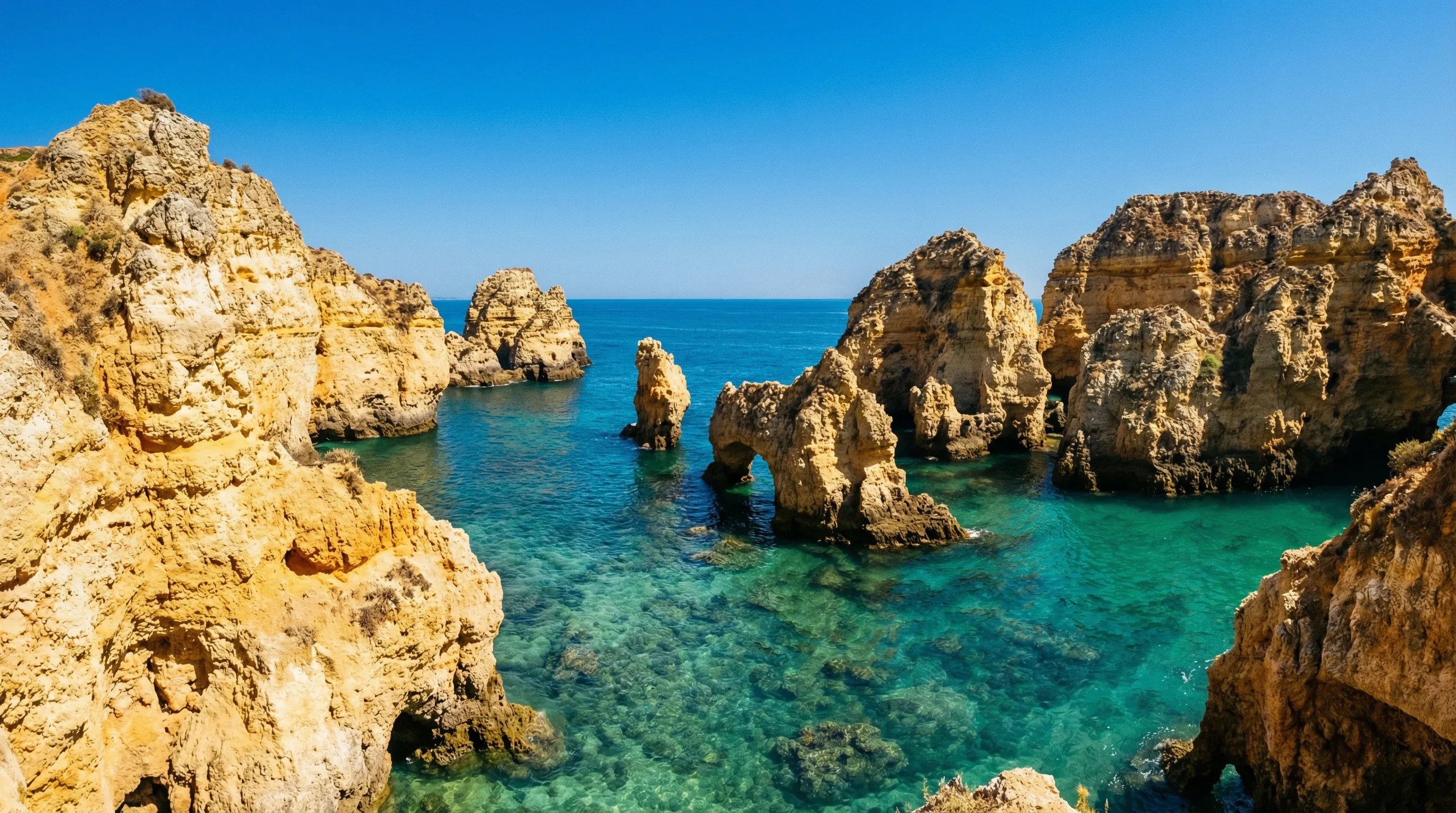
Golden cliffs, turquoise waters, and endless family fun 🏖️🐬
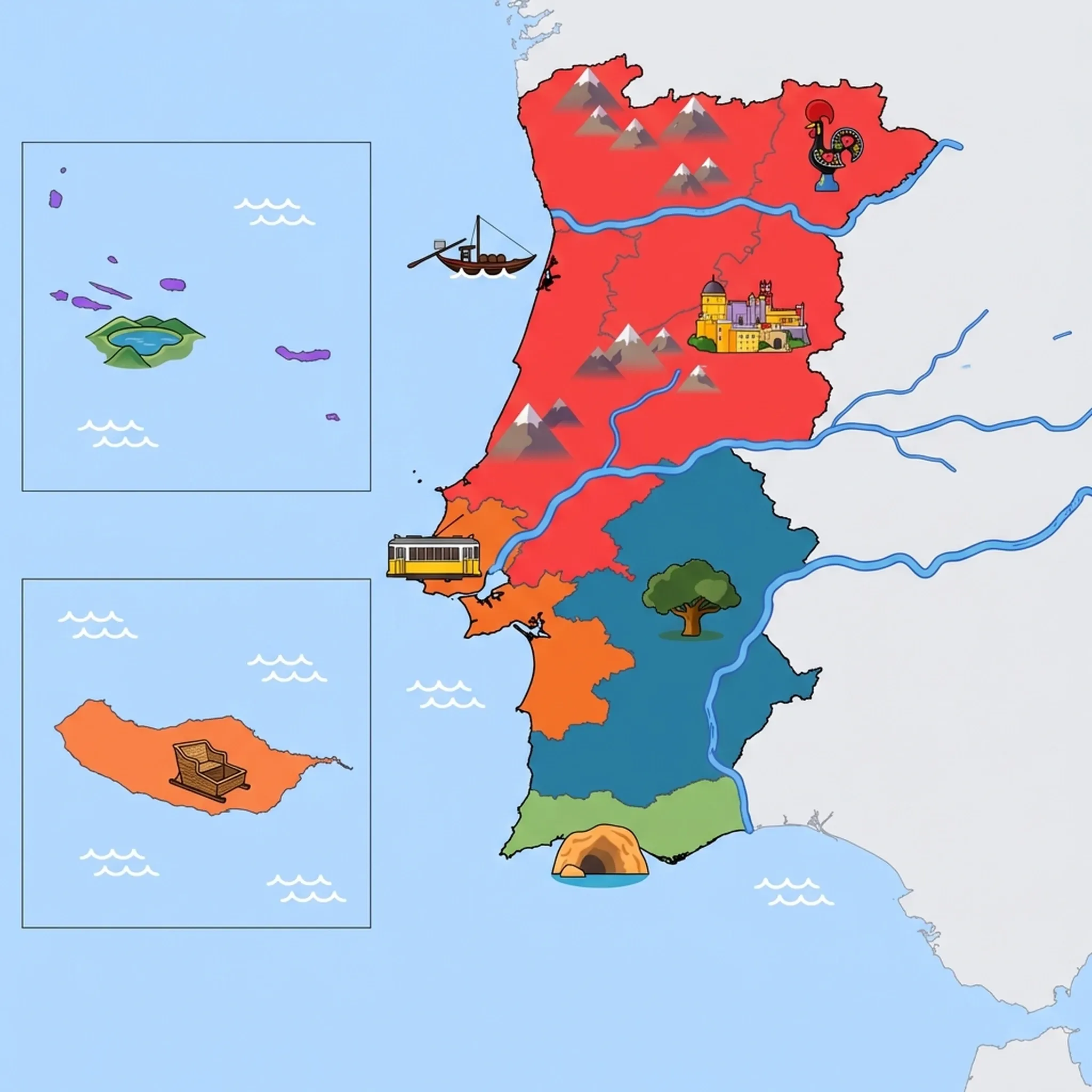
Click a region to explore
The Algarve is arguably one of Europe's most perfect family destinations. It is defined by its coastline, which shifts dramatically from west to east. In the west (Barlavento), ochre and gold limestone cliffs are carved into arches, stacks, and hidden grottos that look like they belong in a pirate movie. In the east (Sotavento), the landscape flattens into the warm, shallow lagoons of the Ria Formosa Natural Park, a haven for seahorses and flamingos where the water is calm enough for even the smallest toddlers. The climate is Mediterranean, with over 300 days of sunshine a year, mild winters, and hot summers tempered by Atlantic breezes. While parts of the region are heavily developed with resorts, water parks, and golf courses, it is easy to find authentic Portuguese culture just a few miles inland in the monchique mountains or quiet fishing villages.
For families, the infrastructure is superb. Supermarkets stock international brands, pharmacies are everywhere, and English is spoken almost universally. The beaches are the main draw, consistently winning 'World's Leading Beach Destination' awards. Most major beaches have lifeguards, sunbed rentals, and beach cafes, making full days by the sea stress-free. Beyond the sand, the Algarve offers a rich history of Moorish occupation, evident in the architecture and the almond trees that blossom in spring.
Key Attractions
The coastline is the star here. A boat tour to the Benagil Cave is a bucket-list experience; the cave has a natural skylight and a hidden beach inside that kids adore. For a classic beach day with plenty of space and amenities, Praia da Rocha is vast and accessible, with wooden boardwalks ideal for strollers. History comes alive at Silves Castle, a massive red sandstone fortress where children can walk the battlements and imagine medieval sieges. Nature-loving families should not miss the Ria Formosa Natural Park; taking a small ferry to the barrier islands feels like an adventure, and the wetlands are great for spotting wildlife. For a dramatic end-of-the-world feel, visit Cape Saint Vincent, the southwesternmost point of mainland Europe, where the lighthouse and crashing waves are awe-inspiring.
Practical Advice
July and August are very busy and expensive; June and September offer the best balance of weather and crowds. The sea temperature is surprisingly cool (around 21°C/70°F even in summer) because it is the Atlantic, not the Mediterranean. Book rental cars months in advance as shortages are common in peak season.
Food & Drink
Typical meal times: Lunch is 12:30 pm to 2:30 pm. Dinner is served later, typically 7:30 pm to 10:00 pm, though tourist resorts offer all-day dining.
Typical meal costs: Prices vary by location. A family meal in a resort area costs €60–100 (approx. $65–109 USD / £52–86 GBP), while inland 'tascas' are much cheaper.
Dietary requirements: Very easy. The Algarve caters to international tourists, so vegan, gluten-free, and kid-friendly menus (pizza/pasta) are available almost everywhere.
Signature dishes:
- Cataplana – A seafood stew named after the clam-shaped copper pot it is cooked in, sealing in the flavors of clams, prawns, and chouriço.
- Frango da Guia – The original Piri-Piri chicken; small, charcoal-grilled chickens with spicy sauce, usually served with chips and tomato salad.
- Dom Rodrigo – A very sweet dessert made from egg threads, cinnamon, and almonds, wrapped in colorful foil.
Why this score?
Despite some hiking opportunities along the coast, the region is highly developed with extensive tourism infrastructure, paved roads, and manicured resorts. Activities like visiting water parks or taking boat tours are highly managed, making the region far more comfortable than adventurous.
Why this score?
The region boasts a very high standard of medical care specifically tailored to foreigners, with numerous private hospitals like Hospital Particular do Algarve. Due to the high expat population, English is spoken fluently by most medical professionals, and international insurance is widely accepted and easily processed.
Why this score?
The Algarve is a major international draw, functioning as one of Europe's premier beach destinations for millions of British, German, and Scandinavian visitors. Its high density of hotels, world-renowned golf courses, and iconic attractions like Benagil Cave place it firmly in the top tier of European sun-and-sea regions.

The Algarve has the widest price range in Portugal. While luxury resorts are expensive, day-to-day costs can be managed. A beer costs €2–4 (approx. $2.20–4.35 USD / £1.70–3.45 GBP). Supermarket prices are standard for Europe. Toll roads (A22) can add up, costing around €10 (approx. $11 USD / £8.50 GBP) to drive the length of the coast.
Family Travel Notice
Minors travelling alone or with an adult who is not their legal parent or guardian should carry a formal letter of authorization. Failure to present this documentation may result in significant delays or refusal of entry at the border.

Getting Here & Around
Getting Here
- Airports – Faro Airport (FAO) is the main hub, centrally located. It serves flights from across Europe. Lisbon Airport (LIS) is a 2.5-hour drive away.
- Train – A scenic rail line connects Lisbon to Faro (approx. 3 hours). The Alfa Pendular is the fast service.
- Driving – The A2 motorway connects Lisbon to the Algarve. The A22 (Via do Infante) runs the length of the Algarve from Lagos to the Spanish border.
Getting Around
- Car – Highly recommended for families to reach hidden beaches like Praia da Marinha or the mountains. Note that the A22 is an electronic toll road.
- Train – The regional line runs from Lagos to Vila Real de Santo António, stopping at major towns. It is slow but cheap and scenic.
- Uber/Taxi – widely available and relatively affordable for short hops between resorts and water parks.
Nearby Airports (1 airport)
Faro Airport
FAOFaro
View full flight map for Portugal →
Official Links

Packing List
Many of the most beautiful cove beaches have rocky entrances or sharp shells hidden in the sand.
The Atlantic breeze can mask the strength of the sun; UV protective clothing is essential for kids.
The afternoon Nortada (north wind) can be strong on west coast beaches; shelter keeps sand out of sandwiches.
The Atlantic water is cold (19-22°C) even in summer; a shorty wetsuit helps kids stay in the water longer.
Strollers struggle on Portugal's ubiquitous cobblestones and steep hills; a carrier is essential.
The limestone 'calçada' pavements become incredibly slippery when wet or worn smooth.
The Atlantic Ocean is surprisingly cold (often 18°C/64°F) even in the height of summer.
Roads in the Douro Valley, Madeira, and Sintra are famously winding and can induce nausea.
Many small family-run 'tascas' and kiosks do not accept foreign cards; cash is king.

Activities & Best Times

Hiking, wildlife, outdoor exploration, ecotourism
Excellent diversity of ecosystems including the Ria Formosa wetlands and dramatic coastal trails like the Seven Hanging Valleys. Ideal conditions occur in spring and autumn for hiking and wildlife spotting; summer heat can be intense for strenuous outdoor activities.

Urban tourism, museums, historical sites, architecture
Features significant Moorish heritage in Silves and maritime history in Sagres, providing a sophisticated cultural layer beyond the coast. Shoulder seasons offer comfortable walking temperatures for exploring historic centers, whereas peak summer can be overcrowded and hot.

Sport tourism, fitness activities, active recreation
A premier European destination for golf and long-distance hiking (Rota Vicentina) with world-class infrastructure. The optimal seasons avoid the peak summer heat and mid-winter rains, focusing on the mild temperatures of spring and autumn.

Beach resorts, marine activities: diving, snorkelling, kite surfing, wind surfing, sailing
Offers iconic golden cliffs and sea caves like Benagil, though the Atlantic water remains cooler than Mediterranean benchmarks. Peak visitation aligns with the warmest sea temperatures and summer school holidays, while winter months are too cool and windy for swimming.

Learning experiences, scientific sites, historical education
Zoomarine and several science centers offer high-quality interactive marine biology and maritime history experiences for families. Peak periods follow the main tourism season, with reduced programming or limited access during the wetter winter months.

Scenic drives, countryside tours, route-based travel
Scenic routes like the EN2 and the Costa Vicentina offer spectacular coastal and mountain vistas on well-maintained roads. Peak summer is excluded due to heavy tourist traffic on narrow roads, while spring and autumn provide clear visibility and pleasant driving conditions.

Amusement parks, family entertainment venues
The region hosts high-quality water parks like Aquashow and Slide & Splash that are major family draws. Operations are strictly seasonal, with peak demand during the hot summer months and total closures during the winter half-year.

Events, celebrations, seasonal attractions
Features major international music events like Afro Nation and the traditional Loulé Carnival which attract global audiences. Peak months are strictly tied to specific event dates in the summer and late winter, with minimal international festival activity during other periods.

Spa retreats, wellness centers, peaceful getaways
The thermal baths at Monchique offer a unique inland restorative experience away from the coastal crowds. Best visited in the milder months to enjoy the mountain setting, as peak summer heat is too intense for thermal activities and winter can be damp.

Attractions (28 total)



Public Holidays & Calendar Next 12 months
Public holidays, festivals, cultural celebrations, and seasonal natural phenomena coming up in Algarve (beaches) over the next 12 months.
Loading holidays and events...

Travel Advisory
All major agencies agree that Portugal is a safe destination requiring only standard safety awareness. There are no elevated country-wide risks, though petty crime and seasonal weather events remain the primary concerns.
Safety Topics
Traveller Advice (3 groups)

Minors travelling alone or with an adult who is not their legal parent or guardian should carry a formal letter of authorization. Failure to present this documentation may result in significant delays or refusal of entry at the border.

When hiking in the Azores or Madeira, choose trails suited to your experience level and check local weather conditions beforehand. Heavy rain can make paths slippery and unstable, increasing the risk of accidents.

It is a legal requirement in Portugal to carry photographic identification at all times. Additionally, be prepared for biometric registration (fingerprints and photos) when entering or exiting the Schengen Area.
Agency Summaries
The country is generally secure for tourists. Basic safety awareness is advised to avoid petty crimes like theft in high-traffic tourist zones and on public transit systems.
There is currently no specific travel advisory for the country, indicating a stable security situation. New Zealanders are advised to maintain typical safety measures and secure comprehensive medical insurance.
Travellers should use common sense and stay aware of their surroundings. Be mindful of the significant national terrorism alert and the possibility of transport delays caused by public strikes or environmental factors like wildfires and floods.
Portugal offers a safety environment comparable to Ireland. Visitors are encouraged to research local entry regulations for minors and ensure their travel documents are valid for the duration of their stay.
Portugal is considered safe for visitors, though standard vigilance is recommended. Travellers should be alert for pickpocketing in Lisbon, particularly on popular tram routes, and stay informed about local weather alerts and the national terrorism threat level.
While crime rates are relatively low, visitors should protect their belongings from opportunistic thieves in major cities. Recent updates highlight mandatory identification requirements and potential travel disruptions from seasonal weather conditions.
Information is provided for general guidance only and does not constitute travel, safety, medical, or legal advice. Conditions may change. Users are responsible for independently verifying information before travel.