
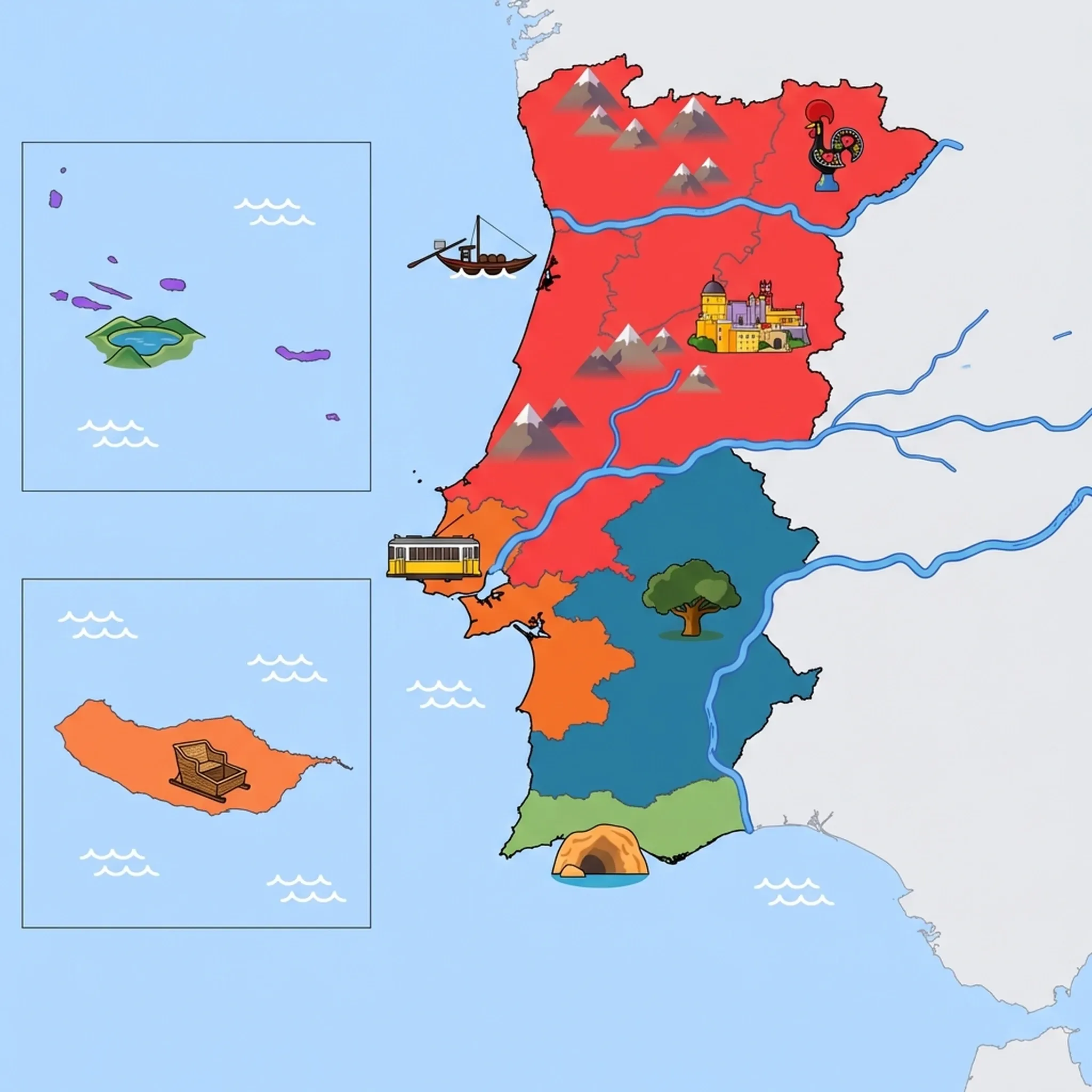
Click a region to explore
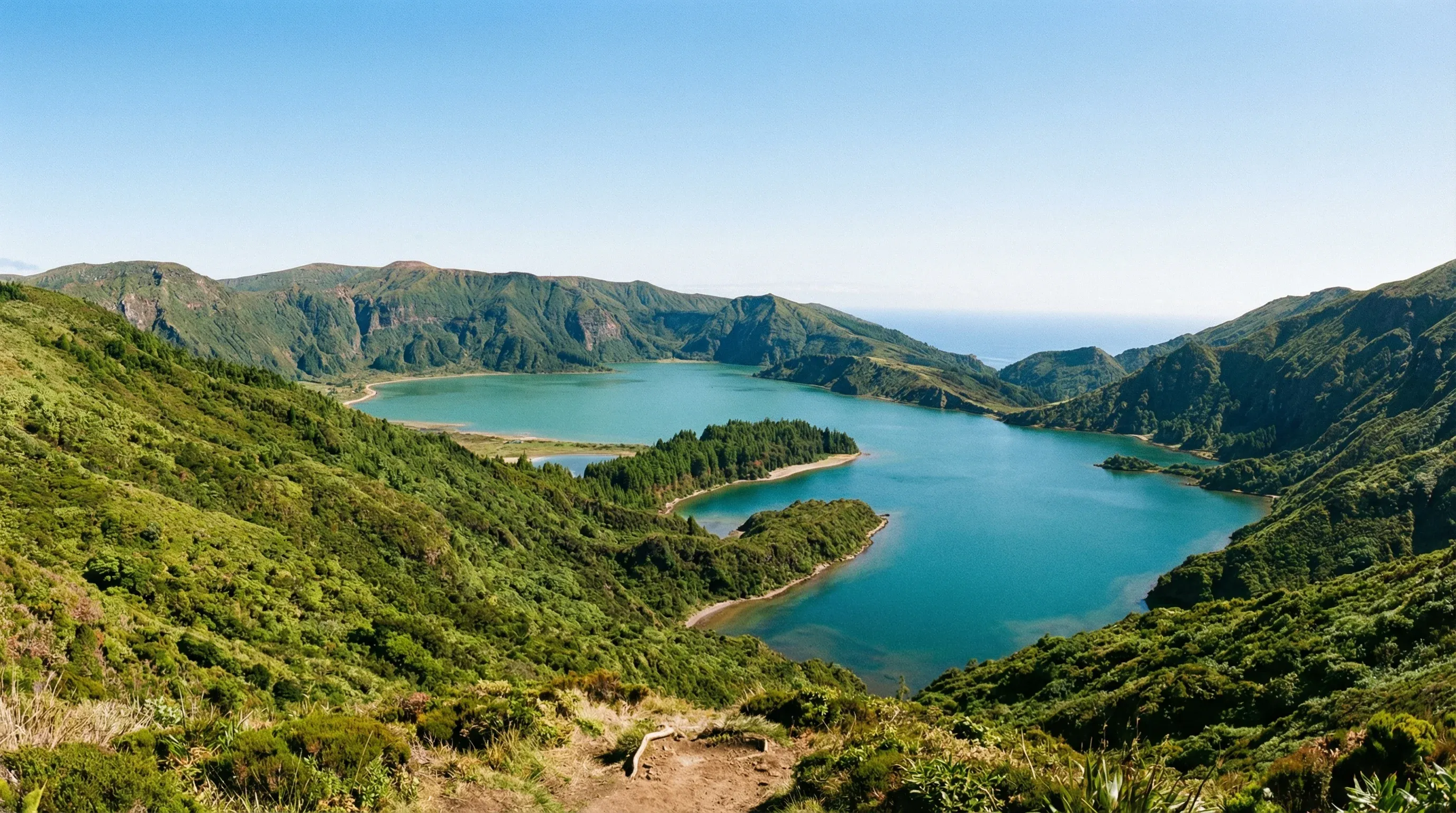
The Azores are often called the "Hawaii of Europe," and the comparison is apt. This archipelago of nine lush, green volcanic islands sits alone in the middle of the Atlantic Ocean, offering a landscape of crater lakes, steaming fumaroles, black sand beaches, and dramatic cliffs. For families who love nature and outdoorsy activities over lounging by a pool, this is paradise. The climate is subtropical and temperate, never getting too freezing in winter or uncomfortably hot in summer (highs usually around 25°C/77°F), though the weather is famous for changing four times in a single day.
São Miguel is the largest and most family-friendly island, packed with easily accessible natural wonders. You can eat stew cooked by volcanic heat, swim in naturally warm waterfalls, and spot sperm whales just off the coast. The islands are incredibly safe, clean, and uncrowded. There is a sense of Jurassic Park wonder here—giant ferns, intense greenery, and mist-covered peaks—that captures children's imaginations. It's not a destination for "kids' clubs" and all-inclusive resorts; it's a place for hiking, kayaking, and road-tripping to viewpoints that look like they belong on another planet.
Key Attractions
On São Miguel, the Poça da Dona Beija in Furnas is a highlight—a set of thermal iron-rich pools (bring dark swimwear as the orange water stains!) that are warm and shallow enough for children to enjoy safely. Nearby, you can visit the fumaroles where locals cook corn and stew in the boiling earth. A visit to Chá Gorreana is fascinating; it's the oldest tea plantation in Europe, where you can walk through the hedge-like tea fields and see the vintage machinery in action (and try free samples). On Terceira island, the Historic Center of Angra do Heroísmo is a UNESCO World Heritage site with colorful streets and a safe, sheltered city beach perfect for a dip. The Museu de Angra do Heroísmo offers great context on the islands' maritime history.
Practical Advice
The weather is unpredictable. It can be raining on one side of the island and sunny on the other, so use the local "SpotAzores" webcam app to check conditions before heading out. The best time to visit is May to September for the best chance of sun and calm seas for whale watching.
Food & Drink
Typical meal times: Lunch 12:00 pm to 2:30 pm; Dinner 7:00 pm to 9:30 pm. Restaurants in smaller villages may close early.
Typical meal costs: Very reasonable. A family dinner costs €50–80 (approx. $55–87 USD / £43–70 GBP). Local produce is excellent and cheap.
Dietary requirements: Seafood and beef are staples. Vegetarian options are available in main towns (Ponta Delgada, Angra) but limited in rural areas. Dairy is huge here (cheese, butter, milk).
Signature dishes:
- Cozido das Furnas – A meat and vegetable stew slow-cooked for hours in a pot buried underground using natural volcanic heat.
- Bolo Lêvedo – A sweet, fluffy muffin-bread cooked on a griddle, delicious with cheese or jam.
- Pineapples – Azorean pineapples are grown in greenhouses and are smaller, sweeter, and more intense than regular ones.
Why this score?
As a remote volcanic archipelago in the mid-Atlantic, the Azores offer significant adventure ranging from climbing Mount Pico to exploring thermal craters. The weather is famously unpredictable, and many activities involve deep-sea whale watching or trekking through dense, humid laurissilva forests.
Why this score?
The main islands of São Miguel and Terceira have modern hospitals in Ponta Delgada and Angra do Heroísmo that provide good care for most situations. However, the smaller islands have very limited facilities, and serious medical emergencies often require expensive and complex air evacuation to the mainland.
Why this score?
The Azores remain a niche destination for eco-tourists and outdoor enthusiasts, receiving significantly fewer visitors than mainland Portugal. While its popularity is growing rapidly due to increased flight connectivity, it remains an 'off-the-beaten-path' archipelago with a primary focus on sustainable, low-impact tourism.

While flights can be pricey, on-the-ground costs are lower than mainland Europe. Car rental is the biggest expense and prices surge in summer—book months ahead. A coffee is €0.80 (approx. $0.90 USD / £0.70 GBP). Many natural attractions (viewpoints, hikes) are free, though hot springs usually charge a small entry fee of €5–10 (approx. $5.50–11 USD / £4.25–8.50 GBP).
Family Travel Notice
Minors travelling alone or with an adult who is not their legal parent or guardian should carry a formal letter of authorization. Failure to present this documentation may result in significant delays or refusal of entry at the border.

Getting Here & Around
Getting Here
- Airports – João Paulo II Airport (PDL) in Ponta Delgada is the main gateway with flights from Lisbon, Porto, the US, and Canada. Direct flights also serve Terceira (Lajes).
- Ferry – Ferries operate between the islands (Atlanticoline), but distances are long. It works best for the "Triangle" islands (Faial, Pico, São Jorge).
Getting Around
- Car – Absolutely essential on all islands. Public transport is limited to infrequent buses that won't get you to the best viewpoints or trailheads.
- Plane – Inter-island flights (SATA Air Açores) are the most efficient way to hop between different island groups (e.g., from São Miguel to Terceira).
Nearby Airports (6 airports)
Santa Cruz Airport
FLWFlores Island (Azores)
Graciosa Island
GRWGraciosa Island (Azores)
Ponta Delgada
PDLPonta Delgada (Azores)
Sao Jorge Island Airport
SJZSao Jorge Island
Santa Maria
SMASanta Maria (Azores)
Terceira Island
TERTerceira
View full flight map for Portugal →
Official Links

Packing List
The iron-rich thermal water at Furnas will permanently stain light-colored bikinis and trunks orange.
Essential for spotting whales and dolphins from the coastal lookouts (vigias) found around the islands.
The weather changes rapidly; a lightweight poncho is better than a heavy coat for sudden tropical showers.
Roads are winding and hilly, and boat trips for whale watching can be choppy in the Atlantic swell.
Strollers struggle on Portugal's ubiquitous cobblestones and steep hills; a carrier is essential.
The limestone 'calçada' pavements become incredibly slippery when wet or worn smooth.
The Atlantic Ocean is surprisingly cold (often 18°C/64°F) even in the height of summer.
Many small family-run 'tascas' and kiosks do not accept foreign cards; cash is king.

Activities & Best Times

Hiking, wildlife, outdoor exploration, ecotourism
A world-class destination for volcanic landscapes, offering dramatic caldera lakes and the highest peak in Portugal. Optimal visibility and trail accessibility occur during the drier summer months, while winter brings persistent cloud cover and heavy rainfall.

Urban tourism, museums, historical sites, architecture
Features the UNESCO World Heritage site of Angra do Heroísmo and magnificent 18th-century botanical gardens. The unique blend of maritime history and Atlantic architecture is best explored during the temperate, sunnier months from May to September.

Spa retreats, wellness centers, peaceful getaways
Home to world-renowned geothermal springs like Poça da Dona Beija and Terra Nostra, providing a unique thermal bathing culture. While the hot springs are enjoyable in cooler weather, the surrounding park facilities are most pleasant during the extended tourist season.

Sport tourism, fitness activities, active recreation
Highly regarded for diverse hiking trails and outdoor adventure parks like Ribeira dos Caldeirões. High-quality infrastructure exists for active exploration, though conditions are best when Atlantic storms are less frequent in the summer.
Beach resorts, marine activities: diving, snorkelling, kite surfing, wind surfing, sailing
Offers unique volcanic natural pools and the iconic Ilhéu de Vila Franca do Campo. The swimming season is relatively short, restricted to the peak of summer when sea temperatures are most comfortable and Atlantic swells are calmest.

Learning experiences, scientific sites, historical education
The Capelinhos Volcano Interpretation Centre offers an internationally significant look at volcanic birth and history. High-quality museum facilities are available year-round, but site accessibility is best during the peak travel window.

Scenic drives, countryside tours, route-based travel
Stunning coastal routes like the Nordeste and the longitudinal road of Pico offer dramatic vistas. Driving is best enjoyed when visibility is high and fog is less likely to obscure the iconic volcanic viewpoints.
Amusement parks, family entertainment venues
Features quality regional water parks and treetop adventure courses suitable for families. These seasonal facilities are primarily operational and enjoyable during the warmest and driest summer months.

Events, celebrations, seasonal attractions
The spring whale migration is a significant international event for nature enthusiasts. While specific to the migration window, it represents a primary seasonal draw for sophisticated travelers seeking rare marine encounters.

Attractions (23 total)



Public Holidays & Calendar Next 12 months
Public holidays, festivals, cultural celebrations, and seasonal natural phenomena coming up in Azores over the next 12 months.
Loading holidays and events...

Travel Advisory
All major agencies agree that Portugal is a safe destination requiring only standard safety awareness. There are no elevated country-wide risks, though petty crime and seasonal weather events remain the primary concerns.
Safety Topics
Traveller Advice (3 groups)

Minors travelling alone or with an adult who is not their legal parent or guardian should carry a formal letter of authorization. Failure to present this documentation may result in significant delays or refusal of entry at the border.

When hiking in the Azores or Madeira, choose trails suited to your experience level and check local weather conditions beforehand. Heavy rain can make paths slippery and unstable, increasing the risk of accidents.

It is a legal requirement in Portugal to carry photographic identification at all times. Additionally, be prepared for biometric registration (fingerprints and photos) when entering or exiting the Schengen Area.
Agency Summaries
The country is generally secure for tourists. Basic safety awareness is advised to avoid petty crimes like theft in high-traffic tourist zones and on public transit systems.
There is currently no specific travel advisory for the country, indicating a stable security situation. New Zealanders are advised to maintain typical safety measures and secure comprehensive medical insurance.
Travellers should use common sense and stay aware of their surroundings. Be mindful of the significant national terrorism alert and the possibility of transport delays caused by public strikes or environmental factors like wildfires and floods.
Portugal offers a safety environment comparable to Ireland. Visitors are encouraged to research local entry regulations for minors and ensure their travel documents are valid for the duration of their stay.
Portugal is considered safe for visitors, though standard vigilance is recommended. Travellers should be alert for pickpocketing in Lisbon, particularly on popular tram routes, and stay informed about local weather alerts and the national terrorism threat level.
While crime rates are relatively low, visitors should protect their belongings from opportunistic thieves in major cities. Recent updates highlight mandatory identification requirements and potential travel disruptions from seasonal weather conditions.
Information is provided for general guidance only and does not constitute travel, safety, medical, or legal advice. Conditions may change. Users are responsible for independently verifying information before travel.