
Click a region to explore
Madeira is not your typical beach destination. It is a spectacular volcanic rock jutting out of the Atlantic, covered in prehistoric forests, waterfalls, and exotic flowers. For families, it offers an adventure that feels safe and manageable. The island is famous for its "eternal spring" climate, meaning it's rarely too hot or too cold, making it a year-round destination. The landscape is vertical—you can be swimming in the ocean in the morning and standing above the clouds on Pico do Arieiro an hour later.
The island is a wonderland for active kids. The famous levadas (irrigation channels) provide thousands of kilometers of flat walking paths that cut right through the mountains; many are safe for children and feel like exploring a jungle. Funchal, the capital, is sophisticated and clean, with cable cars crisscrossing the sky. While Madeira lacks vast sandy beaches (most are pebbly or black sand), it makes up for it with incredible hotel pools and the famous saltwater lidos. The atmosphere is relaxed and safe, with a slightly old-school charm that grandparents appreciate just as much as toddlers.
Key Attractions
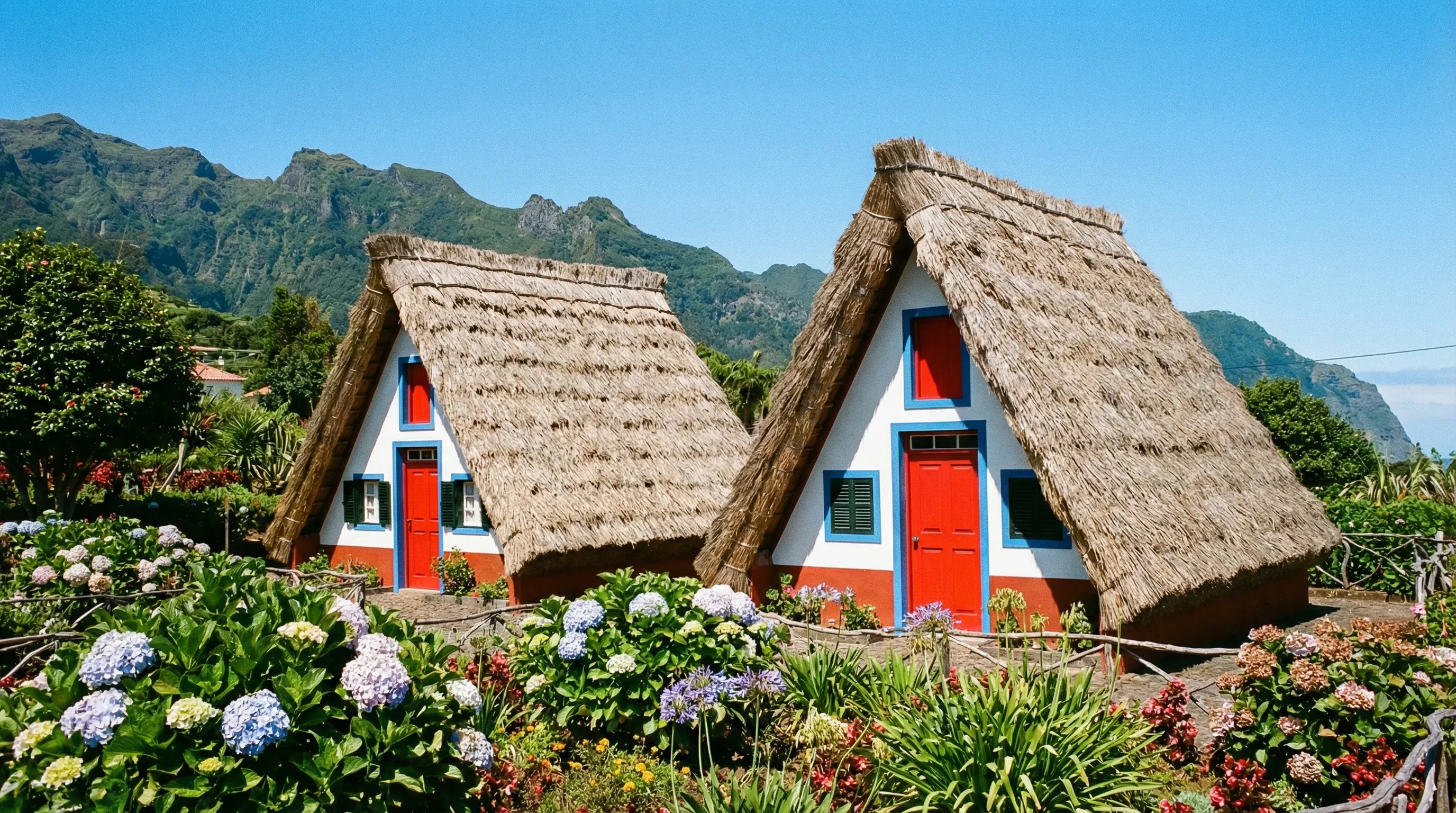
The Madeira Theme Park in Santana is great for younger kids, featuring the iconic A-frame thatched houses and traditional crafts. In Funchal, taking the cable car up to Monte is a must, followed by a visit to the Monte Palace Tropical Garden, which is full of koi carp, swans, and exotic tiles. The return journey is the most famous activity on the island: sliding down the steep streets in a wicker toboggan steered by two "carreiros" (men in straw boaters). It’s thrilling but safe. On the north coast, the Porto Moniz Living Science Centre is next to the natural volcanic swimming pools, where walls of lava rock protect swimmers from the crashing Atlantic waves—a unique swimming experience. For a walk into the past, the Laurissilva of Madeira forest is a UNESCO site where the twisted, mossy trees look like something from a fairy tale.
Practical Advice
If renting a car, choose an automatic with a decent engine; the hills are incredibly steep (25% gradients are common). If you suffer from vertigo, some mountain roads might be challenging. The weather varies by altitude and side of the island (sunny south vs. cloudy north), so pack layers for a single day out.
Food & Drink
Typical meal times: Lunch 12:00 pm to 3:00 pm; Dinner 7:00 pm to 10:00 pm.
Typical meal costs: Mid-range. €50–90 (approx. $55–98 USD / £43–78 GBP) for a family meal. Produce is grown locally and is cheap.
Dietary requirements: Good. Gluten-free is understood in Funchal. Vegetarians will find plenty of fruit and side dishes, though main courses are meat/fish heavy.
Signature dishes:
- Espetada – Cubes of beef rubbed with garlic and salt, skewered on a laurel (bay leaf) stick and grilled over wood embers. Often hung vertically at the table.
- Bolo do Caco – A circular flatbread made with sweet potato, served warm with garlic butter and parsley. Kids love this.
- Peixe Espada com Banana – Black scabbardfish (a terrifying-looking deep-sea fish) served with fried banana. It sounds odd, but the fish is mild and white, and the sweetness works perfectly.
Why this score?
The island is characterized by dramatic cliffs and a network of levada irrigation channels that serve as unique hiking paths through tropical landscapes. While the terrain is steep and rugged, the well-maintained nature of the trail network and the presence of tourist infrastructure keep the adventure level moderate and accessible.
Why this score?
Funchal has modern medical facilities, including the Dr. Nélio Mendonça Hospital, which are well-accustomed to treating international tourists and cruise passengers. However, the island's geography means that medical assistance in the remote northern interior can be delayed by narrow, winding mountain roads.
Why this score?
Madeira is a well-recognized destination with a loyal following of European travelers, particularly famous for its flower festivals and year-round spring climate. While it receives fewer visitors than the Algarve, its status as a major cruise port and hiking destination ensures moderate and consistent international traffic.

Madeira is excellent value compared to other winter sun destinations. A family meal is cheaper than in the Algarve. Attractions are reasonably priced (toboggan ride is approx. €30/$33/£26 for two). Car hire can be expensive due to limited fleet sizes on the island, so book early.
Family Travel Notice
Minors travelling alone or with an adult who is not their legal parent or guardian should carry a formal letter of authorization. Failure to present this documentation may result in significant delays or refusal of entry at the border.

Getting Here & Around
Getting Here
- Airports – Cristiano Ronaldo International Airport (FNC) is famous for its runway built on stilts over the ocean. It receives flights from major European cities.
- Ferry – There is a ferry to the smaller island of Porto Santo (2 hours), which has the sandy beaches Madeira lacks.
Getting Around
- Car – The best way to explore, but requires confident driving skills due to steep hills and tunnels.
- Cable Cars – Funchal has multiple teleféricos that are both transport and attraction, offering amazing views.
- Bus – The "Horários do Funchal" buses are yellow (city) or silver/red (interurban). They are reliable but winding.
Nearby Airports (2 airports)
Madeira Airport
FNCFunchal
Porto Santo
PXOPorto Santo (Madeira)
View full flight map for Portugal →
Official Links

Packing List
The roads twist and turn constantly, and even short journeys can be nauseating for sensitive kids.
Many 'levada' walks pass through unlit tunnels cut into the mountainside; kids love exploring them.
Most beaches are pebble or volcanic rock; shoes make entering the water much more comfortable.
You can leave the sunny coast at 24°C and reach the misty peaks at 12°C within 45 minutes.
Strollers struggle on Portugal's ubiquitous cobblestones and steep hills; a carrier is essential.
The limestone 'calçada' pavements become incredibly slippery when wet or worn smooth.
The Atlantic Ocean is surprisingly cold (often 18°C/64°F) even in the height of summer.
Roads in the Douro Valley, Madeira, and Sintra are famously winding and can induce nausea.
Many small family-run 'tascas' and kiosks do not accept foreign cards; cash is king.

Activities & Best Times

Hiking, wildlife, outdoor exploration, ecotourism
Home to the UNESCO-listed Laurissilva forest and dramatic volcanic peaks, the island offers an authentic immersion in unique Macaronesian ecosystems. Spring and early autumn provide the best balance of lush scenery and safe, clear conditions for exploring high-altitude trails.

Urban tourism, museums, historical sites, architecture
Funchal is a sophisticated hub of Atlantic history, featuring world-class botanical gardens, Manueline architecture, and the unique heritage of Santana. Summer months are exceptionally pleasant due to the temperate climate, while December attracts visitors for its festive atmosphere despite higher rainfall.

Sport tourism, fitness activities, active recreation
The island is world-renowned for its 'levada' walking network and challenging mountain veredas which provide purpose-built infrastructure for hiking. Peak months avoid the dangerous slippery conditions and heavy mountain mists common during the high-precipitation winter season.

Learning experiences, scientific sites, historical education
Specialized centers like the Whale Museum and Living Science Centre offer significant insights into Atlantic marine biology and volcanic geology. These are best visited during periods of moderate weather that allow for a mix of indoor learning and related outdoor field observation.

Scenic drives, countryside tours, route-based travel
The ER101 north coast drive and mountain routes provide spectacular scenery through tunnels and along sheer cliffs. Peak months offer the best visibility and dry road conditions, essential for navigating the steep, winding terrain safely.

Amusement parks, family entertainment venues
The region features high-quality aquatic centers and the Madeira Theme Park which provides family-oriented cultural entertainment. These facilities are most enjoyable during the warm, dry summer months when outdoor water activities are optimal.

Beach resorts, marine activities: diving, snorkelling, kite surfing, wind surfing, sailing
Notes explicitly state 'lacking sandy beaches' - rating 'good' is contradictory. Volcanic pools are unique but not competitive with traditional beach destinations. Marginal rating accurately reflects the niche nature of Madeira's coastal swimming options.

Events, celebrations, seasonal attractions
The Madeira Flower Festival and the New Year's Eve fireworks are globally recognized events that draw significant international crowds. Visitation for these types is strictly concentrated around May and December respectively, when the island's cultural displays are at their peak.

Attractions (27 total)



Public Holidays & Calendar Next 12 months
Public holidays, festivals, cultural celebrations, and seasonal natural phenomena coming up in Madeira over the next 12 months.
Loading holidays and events...

Travel Advisory
All major agencies agree that Portugal is a safe destination requiring only standard safety awareness. There are no elevated country-wide risks, though petty crime and seasonal weather events remain the primary concerns.
Safety Topics
Traveller Advice (3 groups)

Minors travelling alone or with an adult who is not their legal parent or guardian should carry a formal letter of authorization. Failure to present this documentation may result in significant delays or refusal of entry at the border.

When hiking in the Azores or Madeira, choose trails suited to your experience level and check local weather conditions beforehand. Heavy rain can make paths slippery and unstable, increasing the risk of accidents.

It is a legal requirement in Portugal to carry photographic identification at all times. Additionally, be prepared for biometric registration (fingerprints and photos) when entering or exiting the Schengen Area.
Agency Summaries
The country is generally secure for tourists. Basic safety awareness is advised to avoid petty crimes like theft in high-traffic tourist zones and on public transit systems.
There is currently no specific travel advisory for the country, indicating a stable security situation. New Zealanders are advised to maintain typical safety measures and secure comprehensive medical insurance.
Travellers should use common sense and stay aware of their surroundings. Be mindful of the significant national terrorism alert and the possibility of transport delays caused by public strikes or environmental factors like wildfires and floods.
Portugal offers a safety environment comparable to Ireland. Visitors are encouraged to research local entry regulations for minors and ensure their travel documents are valid for the duration of their stay.
Portugal is considered safe for visitors, though standard vigilance is recommended. Travellers should be alert for pickpocketing in Lisbon, particularly on popular tram routes, and stay informed about local weather alerts and the national terrorism threat level.
While crime rates are relatively low, visitors should protect their belongings from opportunistic thieves in major cities. Recent updates highlight mandatory identification requirements and potential travel disruptions from seasonal weather conditions.
Information is provided for general guidance only and does not constitute travel, safety, medical, or legal advice. Conditions may change. Users are responsible for independently verifying information before travel.