

Often confused with its larger and more turbulent neighbour to the east, the Republic of the Congo (Congo-Brazzaville) is a peaceful, sparsely populated nation that offers one of the world's most authentic rainforest experiences. For families, it presents a unique opportunity to explore the “green lungs” of Africa in relative safety. The country blends a laid-back, French-influenced urban culture with vast, untouched wilderness. In Brazzaville, you can enjoy croissants and cafe au lait on the Corniche overlooking the mighty Congo River, while just a few hours away, you can be drifting past families of gorillas on a riverboat.
While traditional gorilla trekking in the remote north is physically demanding and age-restricted (usually 15+), the country excels at accessible wildlife viewing. Sanctuaries near the major cities allow children to see great apes from the safety of boats, making this one of the few places where younger kids can connect with our closest relatives in a semi-wild setting. The infrastructure is developing, meaning travel here requires patience and a higher budget than typical safari destinations, but the reward is a crowd-free adventure that feels genuinely exploratory.
Key Attractions
For families, the undisputed highlight is the Lésio-Louna Reserve (often visited as a day trip from Brazzaville), where you can take a boat to see western lowland gorillas living on protected islands. Further north in the Northern Forests, Odzala-Kokoua National Park offers world-class luxury eco-tourism. While the treks are for teenagers and adults, the park's boat safaris and forest walks reveal forest elephants, buffalo, and bongo antelope to younger eyes.
On the coast, Pointe-Noire & Coast offers a different vibe with palm-lined beaches and the impressive Ancient Port of Loango, a poignant historical site marking the embarkation point of millions of enslaved people. Nearby, Conkouati-Douli National Park is a unique coastal reserve where elephants sometimes wander onto the beach and boat trips can spot chimpanzees in the mangroves. In the capital, the green-tiled roof of Basilique Sainte-Anne-du-Congo is a stunning example of modernist colonial architecture that mesmerises visitors of all ages.
Practical Advice
The best time to visit is during the dry seasons (June to September and December to February) when roads are passable and wildlife is easier to spot. A Yellow Fever vaccination certificate is mandatory for entry-you will be checked upon arrival. French is the official language; while staff at high-end lodges speak English, a phrasebook is essential for local interactions. Families should hire a reputable 4x4 with a driver for inter-city travel or use domestic flights, as distances are long.
Food & Drink
Typical meal times: 12:00 pm to 2:30 pm for lunch, and 7:00 pm to 9:30 pm for dinner.
Typical meal costs: 5,000–15,000 XAF (approx. $8–25 USD / €7.50–23 EUR) for local restaurants; 20,000–45,000 XAF (approx. $33–75 USD / €30–68 EUR) for western-style hotel dining.
Dietary requirements: Vegetarian options are available but limited. Dishes like saka-saka are vegetable-based but often flavored with fish or meat stock, so always ask. Gluten-free travellers should stick to grilled meats, fish, and fufu (cassava dough).
Family-friendly dining: French bakeries (boulangeries) are common in cities, offering familiar pastries and sandwiches for fussy eaters. Local grilled chicken and plantains are also generally a hit with kids.
Signature dishes:
- Moamb© Chicken – The national dish, a rich stew made with chicken, palm butter (from the nut), and spices, often served with rice or cassava leaves.
- Saka-Saka – Cassava leaves pounded and stewed for hours with palm oil, garlic, and sometimes smoked fish; it looks like creamed spinach but has a unique earthy taste.
- Liboke – Fish (often catfish) marinated with peppers and tomato, wrapped in banana leaves, and steamed or grilled over charcoal.
- Fufu – A thick, dough-like staple made from cassava or maize flour, used to scoop up sauces and stews (fun for kids to eat with their hands).
Safety
The Republic of the Congo is politically stable and generally safe for tourists, particularly compared to its neighbors. However, street crime can occur in cities. Avoid walking at night and keep valuables hidden. The ‘Pool’ region (outside Brazzaville) has had unrest in the past, so check current advice before travelling by road between Brazzaville and Pointe-Noire, although the route is currently considered open and the train is running.

While local street food is cheap (meals under 3,000 XAF / $5 USD), the cost of comfortable family travel is high. Secure hotels in Brazzaville start around 90,000–150,000 XAF (approx. $150–250 USD / €135–230 EUR) per night. Safari lodges like those in Odzala are luxury destinations costing thousands per person. Car hire with a driver is essential and pricey.
Age Suitability




Did you know? Republic of the Congo welcomes approximately 156,000 international visitors per year. Most visitors come from Africa.
Explore Regions
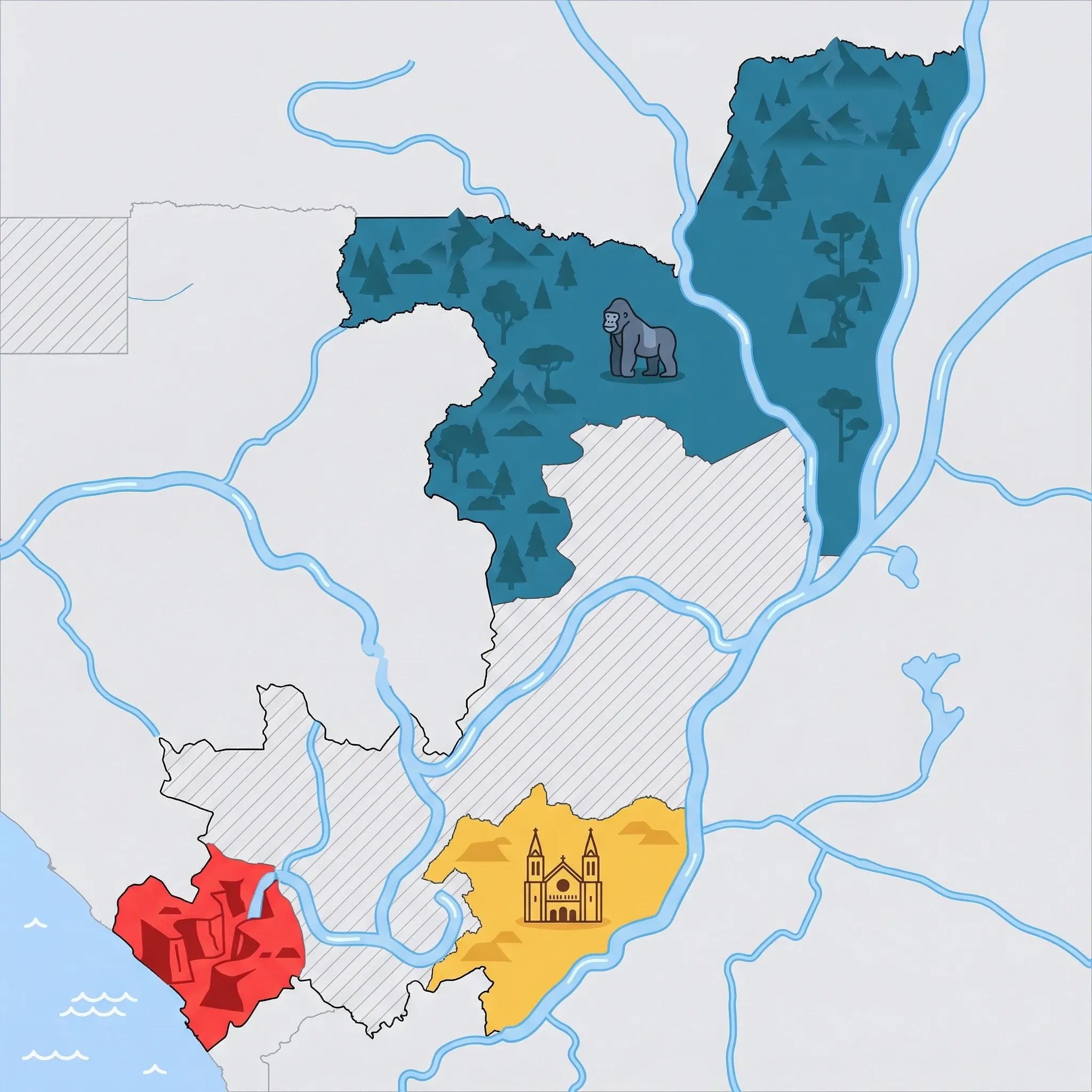
3 Regions
Brazzaville
A vibrant, riverfront capital of art and history 🇨🇬
Northern Forests (gorillas)
Deep rainforest adventures and gorilla encounters 🦍🌿
Pointe-Noire & Coast
Golden beaches and dramatic red gorges 🌊🦐
Click on a region marker to explore details. Use the dropdown to color regions by activity suitability.

Getting There & Around
Getting There
- By Air – Maya-Maya Airport (BZV) in Brazzaville is the main hub, with direct flights from Paris (Air France) and regional connections. Agostinho-Neto International Airport (PNR) serves Pointe-Noire & Coast.
- By Land – Borders with Gabon and Cameroon exist but can be bureaucratically challenging for families. The crossing from Kinshasa (DRC) by ferry (the "canot rapide") is strictly for adventurous travellers with all paperwork perfectly in order.
- Entry Requirements – A visa is required for most nationalities (US, UK, EU) and must be obtained before travel; there is no visa on arrival. A Yellow Fever vaccination certificate is mandatory. Check your government website for the latest visa requirements, or use the IATA Travel Centre entry-requirements checker.
Getting Around
- Trains – The legendary La Gazelle train connects Brazzaville and Pointe-Noire & Coast. It runs once or twice a week, takes about 16 hours, and offers air-conditioned sleeper cabins-a genuine family adventure through the jungle.
- Taxis – In Brazzaville, taxis are painted green and white; in Pointe-Noire, they are blue and white. They are unmetered, so negotiate the fare before getting in.
- Domestic Flights – Essential for reaching remote areas like Northern Forests. Carriers like Canadian Airways Congo serve major hubs.
- Car Hire – Self-driving is not recommended for families due to road conditions and police checkpoints. Hiring a car with a local driver is the standard and safest option.
Official Links

Packing List
Absolutely mandatory for entry; you will be refused borders without the original card.
English is rarely spoken outside luxury lodges; basic French is vital for taxis and markets.
Sudden, heavy tropical downpours occur frequently, even in drier months.
Power cuts are common in cities and electricity can be limited in eco-lodges.
Essential for boat safaris to see gorillas and chimps on sanctuary islands from a distance.
Bright blues and blacks attract painful tsetse flies in forest areas; wear khaki or tan.

Activities & Best Times

Adventure & Nature
ExcellentHiking, wildlife, outdoor exploration, ecotourism
This region contains THREE major national parks including the UNESCO Trinational Sangha site, plus Odzala-Kokoua and Nouabale-Ndoki. It offers world-class gorilla trekking comparable to Rwanda and Uganda. This is internationally recognized as a premier wilderness destination and deserves 'excellent' rating, not just 'good'.
Home to the Gorges de Diosso and Conkouati-Douli National Park, offering unique landscapes where rainforest meets the Atlantic and rare wildlife encounters like forest elephants and chimpanzees. The dry season from June to September is essential for navigating unpaved access roads and comfortable trekking in the Mayombe forest.
Brazzaville is described as a 'gateway' to gorilla reserves and Diosso Gorges, which are located in other regions. A gateway city should not be rated very_good for activities that occur elsewhere. The city itself lacks primary nature/adventure attractions.

City & Cultural
Very GoodUrban tourism, museums, historical sites, architecture
Brazzaville offers a sophisticated mix of French colonial architecture, the historic Basilique Sainte-Anne, and a thriving contemporary art scene at the Poto-Poto School of Painting. The dry winter months provide the most comfortable humidity and temperature levels for exploring the city's historic quarters and riverfront.
Features significant historical depth at the Loango Slavery Harbor and the Ma Loango Regional Museum, combined with the vibrant, French-influenced urban culture of Pointe-Noire. Best explored during the cooler dry months to avoid the extreme humidity and heavy rains that disrupt walking tours and site access.
Features UNESCO-listed heritage and opportunities to experience the living culture of the Ba'Aka people. Seasonal accessibility to remote cultural areas is significantly better during the drier months when regional infrastructure is more reliable.

Beach & Sea
GoodBeach resorts, marine activities: diving, snorkelling, kite surfing, wind surfing, sailing

Road Trips & Scenic
GoodScenic drives, countryside tours, route-based travel
The RN1 highway to Brazzaville is a celebrated scenic drive through the Mayombe mountains, while the coastal route to Diosso offers iconic cliffside views. These routes are safest and most visually spectacular during the dry season when visibility is high and road conditions are most reliable for private transport.
The scenic Corniche and the RN1 highway offer dramatic river views and routes toward the Batéké Plateaux. Traveling during the dry season is essential to ensure clear visibility of the Congo River landscape and reliable road conditions across the regional network.
Adventurous transit via the Route du Nord offers a unique glimpse of the deep interior, though infrastructure remains basic. Travel is highly seasonal as heavy equatorial rains frequently make unpaved forest sections impassable for families.

Sports & Active
GoodSport tourism, fitness activities, active recreation
Adventure centers like SFC Adventure and the Loufoulakari Falls trails offer structured active recreation including zip-lining and guided trekking. These facilities are most enjoyable and safest during the drier months when terrain is stable and outdoor infrastructure is fully operational.
Opportunities for hiking and coastal cycling exist along the Diosso Gorge rim and Conkouati trails, though dedicated sporting infrastructure is limited. Activities are restricted to the dry season when trails are firm and the tropical heat is moderated by lower humidity and cooler temperatures.
Infrastructure for active sports is limited to guided river kayaking and trekking programs within the national parks. These activities require specific equipment and guides, with peak conditions during the months of lowest rainfall.

Festivals & Seasonal
GoodEvents, celebrations, seasonal attractions

Public Holidays & Calendar Next 12 months
Public holidays, festivals, cultural celebrations, and seasonal natural phenomena coming up in Republic of the Congo over the next 12 months.
Loading holidays and events...

Climate & Weather
Brazzaville
Show Details
| Month | Temp °C | Rain | Humidity |
|---|
Northern Forests (gorillas)
Show Details
| Month | Temp °C | Rain | Humidity |
|---|
Pointe-Noire & Coast
Show Details
| Month | Temp °C | Rain | Humidity |
|---|

Travel Advisory
The majority of international agencies advise travellers to exercise a high degree of caution in the Republic of the Congo. While the capital Brazzaville is generally stable, risks from crime and regional insecurity in border areas require increased vigilance.
Safety Topics
Traveller Advice (3 groups)

Female travellers should review general safety guidelines for solo or group travel in the region.

While homosexuality is not illegal, social attitudes may be conservative, and travellers should be aware of local sensitivities.

Infrastructure for individuals with disabilities is limited; travellers should prepare for significant accessibility challenges.
Agency Summaries
Visitors should maintain high vigilance due to general crime levels and unstable security conditions near certain borders. Specific warnings advise avoiding travel to the Pool region and areas bordering the Central African Republic.
Travellers are urged to be more careful due to the presence of crime. Violent incidents like armed robbery occur, and the government has a limited capacity to assist citizens outside the capital.
There are notable safety concerns, particularly regarding violent crime and regional instability. Specific areas like the Pool department and the border with the CAR have higher risk levels and should be avoided.
The advisory recommends high vigilance due to the threat of violent crime and the potential for rapid changes in the local security environment, especially in rural areas and near border zones.
Irish citizens are advised to be very cautious regarding personal safety. Travel to areas within 50km of the border with the Central African Republic is strongly discouraged due to security concerns.
Authorities recommend avoiding all travel to regions within 50km of the border with the Central African Republic. Safety and security risks vary, and travellers should ensure they have proper insurance and documentation.
Information is provided for general guidance only and does not constitute travel, safety, medical, or legal advice. Conditions may change. Users are responsible for independently verifying information before travel.