
Pointe-Noire & Coast
Golden beaches and dramatic red gorges 🌊🦐
Click a region to explore
Overview
Pointe-Noire serves as the Republic of the Congo's window to the Atlantic. Distinctly different from Brazzaville, this coastal region feels more international due to the oil industry presence, resulting in better infrastructure and a wide array of dining options that families will appreciate. The vibe is decidedly laid-back, with weekends revolving around beach culture and seafood lunches. For children, the immediate draw is the ocean, although currents can be strong, so swimming is best done in sheltered bays or hotel pools.
Beyond the city, the landscape transforms into dramatic geology and lush lagoons. The region offers a mix of relaxation and history. It was a significant site during the trans-Atlantic slave trade, offering poignant educational opportunities for older children. Meanwhile, the biodiversity of the nearby national parks provides a chance to see wildlife in a coastal setting, including turtles and manatees, which is quite different from the deep forest interior.
Key Attractions
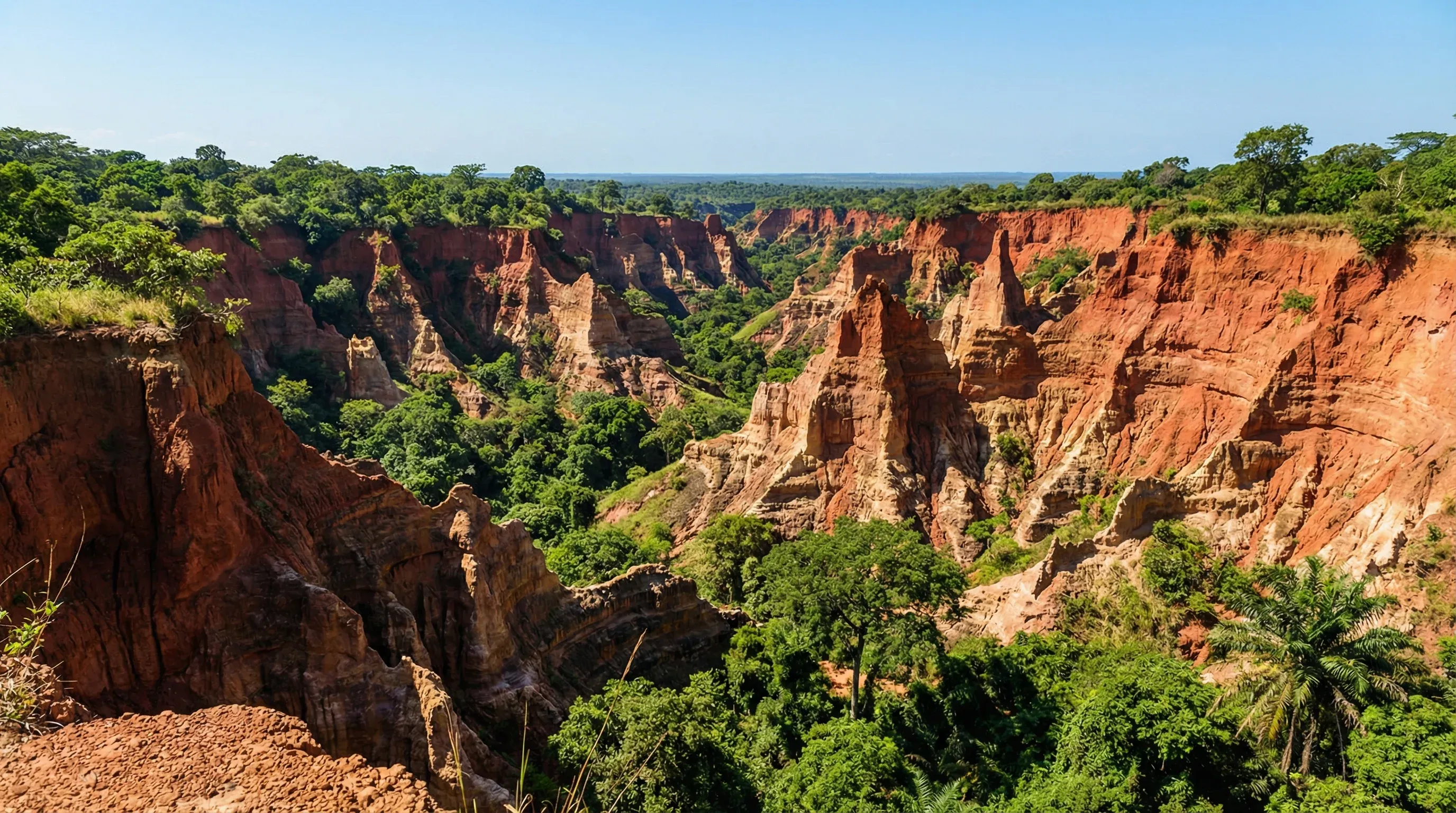
A short drive from the city lies the Ancient Port of Loango. This site is historically significant as a major embarkation point for enslaved Africans. Nearby, the Diosso Gorge is a spectacular natural amphitheater of red jagged rock ridges contrasting against the green vegetation—a geological wonder often compared to a miniature Grand Canyon. It is a fantastic spot for photography and light hiking.
For nature lovers, Conkouati-Douli National Park offers a unique ecosystem where the forest meets the sea. Families can potentially spot elephants on the beach or take boat trips through the lagoons. Closer to Pointe-Noire, the Tchimpounga Chimpanzee Rehabilitation Center (associated with the Jane Goodall Institute) is a world-famous sanctuary; while access to the sanctuary itself is restricted, the surrounding nature reserves offer guided opportunities to learn about conservation.
Practical Advice
Pointe-Noire is generally considered safer and more relaxed than Brazzaville, but petty crime still exists. The climate is humid year-round, but the ocean breeze makes it tolerable. Taxis are abundant. Swimming at public beaches requires caution due to strong undertows; Pointe Indienne offers calmer waters.
Food & Drink
Typical meal times: Lunch 12:00 pm to 3:00 pm; Dinner 7:00 pm to 10:00 pm. Restaurants stay open later here than in the interior.
Typical meal costs: A meal in a good seafood restaurant runs 15,000–30,000 XAF (approx. $25–50 USD / €22–45 EUR). Beach shack meals are cheaper, around 5,000 XAF ($8 USD / €7.50 EUR).
Dietary requirements: Excellent for pescatarians. Gluten-free is harder to guarantee in local sauces but grilled fish/meat is safe. French-style bakeries offer good bread and pastries.
Signature dishes:
- Capitaine à la Braise – The premier local catch (Captain fish), grilled whole or in fillets with garlic and lime, served with aloko (fried plantains).
- Camaron – Giant river prawns, grilled simply with garlic butter; a delicacy of the Pointe-Noire region.
- Ya Jean – A popular baguette sandwich sold on the streets, filled with avocado, tuna, spaghetti, and meat—a hit with hungry teenagers.
Why this score?
The region offers a blend of accessible coastal activities and more rugged excursions into the red-rock terrain of the Diosso Gorge. Exploring the Conkouati-Douli National Park involves significant off-road travel and basic conditions, providing a notable outdoor challenge for families. It is less extreme than the northern rainforest but significantly more adventurous than the capital's urban environment.
Why this score?
The presence of the international oil industry has fostered better-than-average medical facilities in Pointe-Noire compared to the rest of the country. Some private clinics offer decent diagnostic services and stabilized care for expatriates, though they still fall short of international standards for complex procedures. Access in the surrounding coastal rural areas remains very poor and limited to basic health posts.
Why this score?
Pointe-Noire is the economic engine of the country, attracting a steady flow of international business travelers in the petroleum sector but few pure leisure tourists. Attractions like the Diosso Gorge and Tchimpounga Chimpanzee Sanctuary are locally famous but have not yet achieved significant international draw. The coastal infrastructure is more developed for industry than for high-volume global tourism.

Driven by the oil industry, Pointe-Noire is expensive. A modern hotel room suitable for families costs 100,000–180,000 XAF (approx. $165–300 USD / €150–270 EUR). Dining out, especially for seafood and French cuisine, commands European prices. However, beach excursions and nature walks are relatively low cost compared to the northern safaris.

Getting Here & Around
Getting Here
- Airports – Agostinho-Neto International Airport (PNR) receives international flights from Paris and regional flights. It is the primary entry point for the coast.
- Train – The "La Gazelle" train connects Brazzaville to Pointe-Noire. The journey takes 14+ hours. While scenic, reliability varies, and families should check current operational status and safety reports before booking.
Getting Around
- Taxi – Taxis in Pointe-Noire are painted blue and white. They are plentiful and cheap. A shared ride is approx. 500–1,000 XAF, while a private hire ("course") is 2,000–3,000 XAF to the beach.
- Car Rental – Essential for visiting the Ancient Port of Loango or Conkouati-Douli National Park. A 4x4 with a driver is recommended due to sand and road conditions.
Nearby Airports (1 airport)
Pointe Noire
PNRPointe Noire
View full flight map for Republic of the Congo →
Official Links

Packing List
Beaches can have hidden rocks and sea urchins; essential for children wading in the ocean.
The combination of high humidity and salt air is very tough on long hair.
Theft on beaches is a risk; keep valuables on you while swimming or wading.
Public restrooms near beaches and remote sites like Diosso often lack running water.
Absolutely mandatory for entry; you will be refused borders without the original card.
English is rarely spoken outside luxury lodges; basic French is vital for taxis and markets.
Sudden, heavy tropical downpours occur frequently, even in drier months.
Power cuts are common in cities and electricity can be limited in eco-lodges.
Essential for boat safaris to see gorillas and chimps on sanctuary islands from a distance.
Bright blues and blacks attract painful tsetse flies in forest areas; wear khaki or tan.

Activities & Best Times

Hiking, wildlife, outdoor exploration, ecotourism
Home to the Gorges de Diosso and Conkouati-Douli National Park, offering unique landscapes where rainforest meets the Atlantic and rare wildlife encounters like forest elephants and chimpanzees. The dry season from June to September is essential for navigating unpaved access roads and comfortable trekking in the Mayombe forest.
Beach resorts, marine activities: diving, snorkelling, kite surfing, wind surfing, sailing
Offers dramatic Atlantic vistas at Côte Sauvage and family-friendly swimming at Pointe Indienne, though infrastructure remains less developed than global tier resorts. The dry season provides the most comfortable conditions for international families, as humidity is lower and rain is rare compared to the intense tropical downpours of the wet season.

Urban tourism, museums, historical sites, architecture
Features significant historical depth at the Loango Slavery Harbor and the Ma Loango Regional Museum, combined with the vibrant, French-influenced urban culture of Pointe-Noire. Best explored during the cooler dry months to avoid the extreme humidity and heavy rains that disrupt walking tours and site access.

Scenic drives, countryside tours, route-based travel
The RN1 highway to Brazzaville is a celebrated scenic drive through the Mayombe mountains, while the coastal route to Diosso offers iconic cliffside views. These routes are safest and most visually spectacular during the dry season when visibility is high and road conditions are most reliable for private transport.

Sport tourism, fitness activities, active recreation
Opportunities for hiking and coastal cycling exist along the Diosso Gorge rim and Conkouati trails, though dedicated sporting infrastructure is limited. Activities are restricted to the dry season when trails are firm and the tropical heat is moderated by lower humidity and cooler temperatures.




Public Holidays & Calendar Next 12 months
Public holidays, festivals, cultural celebrations, and seasonal natural phenomena coming up in Pointe-Noire & Coast over the next 12 months.
Loading holidays and events...

Travel Advisory
The majority of international agencies advise travellers to exercise a high degree of caution in the Republic of the Congo. While the capital Brazzaville is generally stable, risks from crime and regional insecurity in border areas require increased vigilance.
Safety Topics
Traveller Advice (3 groups)

Female travellers should review general safety guidelines for solo or group travel in the region.

While homosexuality is not illegal, social attitudes may be conservative, and travellers should be aware of local sensitivities.

Infrastructure for individuals with disabilities is limited; travellers should prepare for significant accessibility challenges.
Agency Summaries
Visitors should maintain high vigilance due to general crime levels and unstable security conditions near certain borders. Specific warnings advise avoiding travel to the Pool region and areas bordering the Central African Republic.
Travellers are urged to be more careful due to the presence of crime. Violent incidents like armed robbery occur, and the government has a limited capacity to assist citizens outside the capital.
There are notable safety concerns, particularly regarding violent crime and regional instability. Specific areas like the Pool department and the border with the CAR have higher risk levels and should be avoided.
The advisory recommends high vigilance due to the threat of violent crime and the potential for rapid changes in the local security environment, especially in rural areas and near border zones.
Irish citizens are advised to be very cautious regarding personal safety. Travel to areas within 50km of the border with the Central African Republic is strongly discouraged due to security concerns.
Authorities recommend avoiding all travel to regions within 50km of the border with the Central African Republic. Safety and security risks vary, and travellers should ensure they have proper insurance and documentation.
Information is provided for general guidance only and does not constitute travel, safety, medical, or legal advice. Conditions may change. Users are responsible for independently verifying information before travel.