

Overview
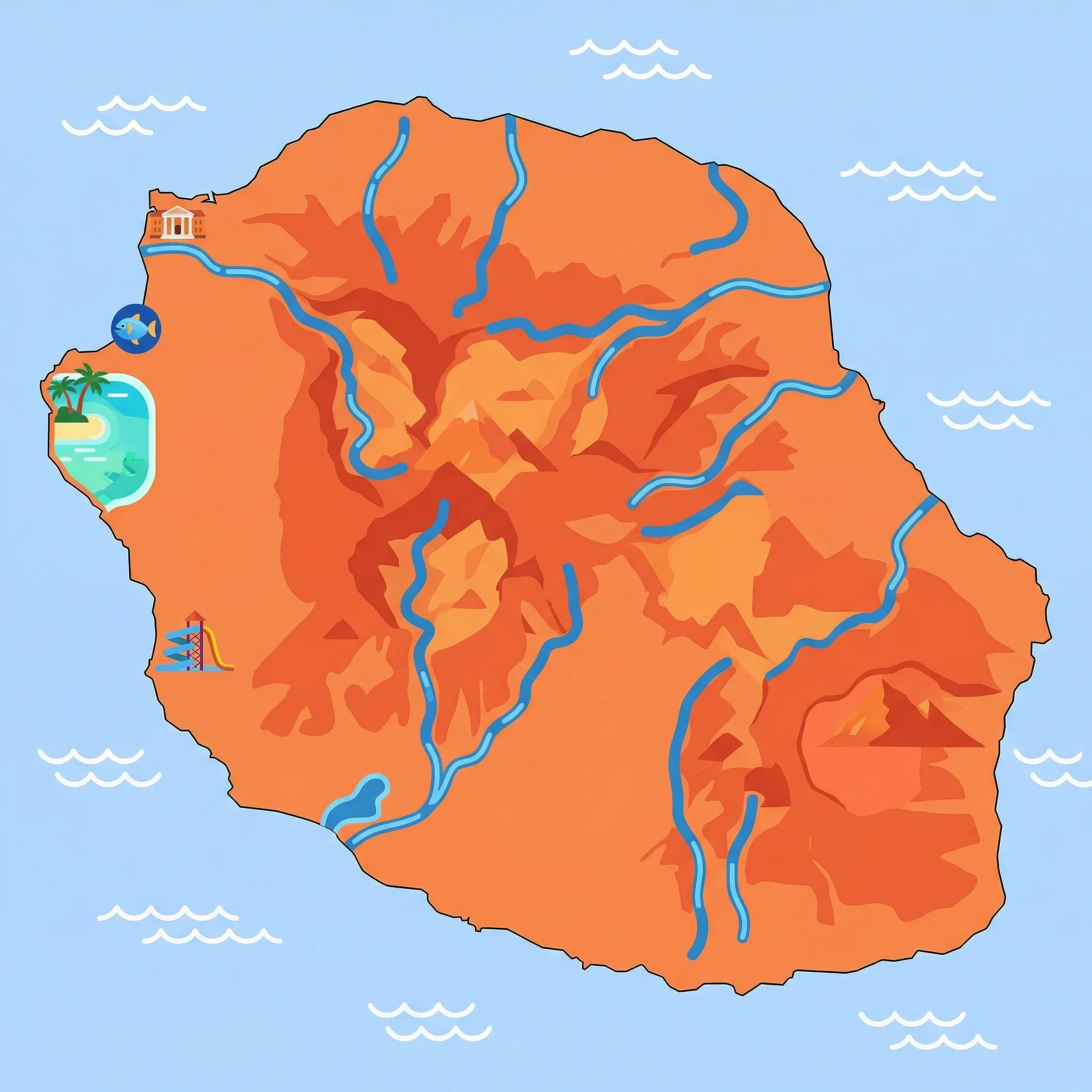
Réunion is unlike any other tropical island. A French overseas department in the Indian Ocean, it offers a unique blend of European comfort and raw, Jurassic-park-style nature. For families, this means you can explore active volcanoes, towering waterfalls, and lush rainforests by day, then return to high-quality roads, excellent healthcare, and French bakeries by evening. The island is dominated by its geography: the active Piton de la Fournaise volcano in the south and three massive natural amphitheatres-known as "cirques"-in the centre, which offer some of the world's most spectacular hiking and mountain scenery.
Culturally, the island is a harmonious melting pot of French, African, Indian, and Chinese influences, creating a vibrant atmosphere that is welcoming to children. While the coastline offers beautiful beaches, the real magic lies inland. Families can drive into the clouds on winding mountain roads, visit vanilla plantations, or explore the Mars-like landscapes of the Plaine des Sables. It is an active destination best suited for families who enjoy moving around and exploring rather than just sitting by a pool, offering an education in geology and biodiversity that feels like a living science lesson.
Key Attractions
The island's crown jewel is the Piton de la Fournaise, one of the world's most active and accessible volcanoes. Families can drive right up to the Pas de Bellecombe viewpoint for a breathtaking look at the main crater, or take the manageable hike down into the caldera itself. Before visiting, stop at the Cité du Volcan museum, which captivates children with interactive exhibits, 4D movies, and holographic displays explaining the island's fiery origins.
For marine life, Kélonia is a must-visit sea turtle observatory and rehabilitation centre. Unlike a standard aquarium, it focuses on conservation and education, allowing kids to see turtles being nursed back to health in large outdoor pools. Nearby, the Plage de l'Ermitage offers the safest swimming experience on the island; its shallow lagoon is protected by a coral reef, making it perfect for snorkelling with small children away from the open ocean currents.
Inland, a drive to the Cirque de Cilaos is an unforgettable adventure. The road winds through 400 turns to reach a charming mountain town famous for its lentils and thermal waters. Once there, families can explore Cilaos Village, take easy walks to waterfalls, or ride a pedal boat on the Mare à Joncs lake. For a sensory experience, the Le Jardin des Parfums et des Épices allows children to smell fresh vanilla, cinnamon, and cloves growing in the wild.
Safety
Réunion is generally very safe with low crime rates and European-standard medical facilities. However, there are two specific environmental risks families must respect. First, shark risk is significant in the open ocean. Swimming and water sports are strictly prohibited outside of the protected lagoons (like l'Ermitage) and specific netted zones. Always obey the red "risk shark" signs. Second, the tropical sun is intense, and mosquito-borne dengue fever can occur, so strong repellent is essential. The winding mountain roads can also be challenging for those prone to motion sickness.
Practical Advice
The best time to visit is during the dry, cooler winter months from May to November, which is perfect for hiking. Summer (December to April) is hot, humid, and cyclone-prone. Renting a car is virtually essential for exploring the interior. European citizens can enter with an ID card; others need a passport, but visas are generally not required for short tourist stays for US, UK, and Australian citizens (check specific DROM rules). Tap water is generally safe to drink, and pharmacies are widely available and well-stocked.
Food & Drink
Typical meal times: Lunch is typically served from 12:00 pm to 2:00 pm, and dinner from 7:00 pm to 9:00 pm. Many restaurants close strictly between shifts, so plan ahead.
Typical meal costs: €20–45 (approx. $22–50 USD / £17–38 GBP) per person for a sit-down meal. Street food "barquettes" (takeaway boxes) are excellent value at €6–10 (approx. $7–11 USD / £5–8 GBP).
Dietary requirements: Vegetarian options are relatively easy to find due to the Hindu influence in Creole cuisine (look for lentil or bean dishes called "grains"). Vegan options are growing but less common. Allergens are usually labelled in supermarkets (French standards), but ask clearly in smaller local eateries.
Family-friendly dining: Children are welcome everywhere. "Snacks" (roadside stalls) are great for families, offering sandwiches and dumplings (bouchons) that kids love. Most restaurants offer a "menu enfant" (kids' menu).
Signature dishes:
- Cari Poulet – A mild chicken curry stewed with tomatoes, onions, and turmeric, served with rice, beans, and spicy rougail (chutney) on the side.
- Rougail Saucisse – Smoked sausages cooked in a rich tomato, onion, and herb sauce-the island's most iconic comfort food.
- Bouchons – Steamed pork or chicken dumplings often sold as snacks or in a sandwich ("pain bouchon") with melted cheese.
- Lentilles de Cilaos – Famous locally grown lentils, often served as a creamy side dish accompanying curries.
- Gateau Patate – A dense, sweet cake made from sweet potatoes and vanilla, perfect for dessert.

Réunion is priced similarly to mainland France, often with a markup on imported goods. A family of four can expect to spend around €220–350 (approx. $240–380 USD / £185–295 GBP) per day covering car rental, mid-range accommodation, and meals. Supermarkets are well-stocked but expensive; buying local fruit and street food helps reduce costs.
Age Suitability

Did you know? Réunion welcomes approximately 495,000 international visitors per year. Most visitors come from Europe.
Why this score?
The island is a world-class trekking hub featuring the active Piton de la Fournaise volcano and the remote Cirque de Mafate, which is accessible only by foot or helicopter. While the terrain is rugged and offers significant vertical challenges, the adventure is moderated by a well-maintained network of GR hiking trails and mountain gîtes.
Why this score?
As a French Overseas Department, Réunion provides healthcare services that adhere to European Union standards, including high-tech hospitals like the CHU de La Réunion. This ensures that international visitors have access to sophisticated emergency care, specialized treatments, and pharmacies that are vastly superior to those found in neighboring regional nations.
Why this score?
With approximately 500,000 annual visitors, Réunion is a significant destination for French travelers but remains a niche market for the rest of the world compared to nearby Mauritius. Its tourism infrastructure is well-developed with over 6,000 hotel beds, yet it lacks the mass international appeal of major global beach or city destinations.
Réunion uses the Euro (€) and prices are comparable to mainland France, often slightly higher for imported goods. Accommodation varies from guesthouses at €60–90 (approx. $65–98 USD / £50–77 GBP) to luxury resorts at €200+ (approx. $215+ USD / £170+ GBP). Supermarket food is expensive, but local markets and takeaway "barquettes" are great value at €5–10 (approx. $5.50–11 USD / £4–8.50 GBP).

Getting There & Around
Getting There
- By Air – Roland Garros Airport (RUN) is the main international gateway, located near Saint-Denis. It receives daily long-haul flights from Paris (Orly and CDG) and regional flights from Mauritius, Madagascar, and South Africa.
- By Sea – Cruise ships occasionally dock at Le Port, but there are no regular passenger ferries connecting to the African mainland, only to nearby Mauritius.
- Entry Requirements – As a French Overseas Department, EU citizens can enter with a national ID card. US, UK, Canada, and Australia citizens do not need a visa for stays up to 90 days. Note that a standard Schengen visa for France is not valid here unless marked "Valid for Réunion". Check your government website for the latest visa requirements, or use the IATA Travel Centre entry-requirements checker.
Getting Around
- Car Hire – The only practical way for families to explore the interior and volcano. Roads are excellent but winding; the route to Cilaos Village has 400 bends. Booking in advance is essential.
- Buses (Car Jaune) – The yellow buses connect major coastal towns and are reliable but slow. They are not ideal for touring the mountains or reaching remote trailheads with children.
- Shuttles – Some hiking areas like the Piton de la Fournaise offer shuttle services from car parks to viewpoints during peak seasons.

Packing List
Roads to Cilaos and the volcano are extremely winding (over 400 bends) and tough on kids.
Strictly required to protect the fragile coral lagoons; difficult to find specific brands locally.
Temperatures at the volcano and in the mountains can drop to near freezing (0-5°C) at dawn.
Essential for the lagoon which has sharp coral, sea urchins, and stonefish in the sand.
Tropical rain showers ('grains') are sudden and heavy, especially in the rainforests.

Activities & Best Times

Adventure & Nature
ExcellentHiking, wildlife, outdoor exploration, ecotourism
Home to the Piton de la Fournaise and the UNESCO-listed Cirques, Réunion offers some of the world's most dramatic volcanic landscapes and pristine wilderness. The dry austral winter (May-Oct) provides optimal trail safety and visibility, while the Jan-Mar cyclone season presents significant risks.

City & Cultural
Very GoodUrban tourism, museums, historical sites, architecture
Features a unique blend of French and Indian Ocean Creole culture with high-quality museums like Musée de Villèle and the Stella Matutina heritage site. Peak months avoid the extreme humidity and heavy rainfall of the summer months that can disrupt exploration of historic sites and gardens.

Sports & Active
Very GoodSport tourism, fitness activities, active recreation
A global hotspot for elite-level trail running and canyoning, supported by world-class infrastructure and internationally recognized routes like the GR R1 and R2. The stable, cooler conditions from May to October are essential for these strenuous activities and high-altitude safety.
Beach & Sea
GoodBeach resorts, marine activities: diving, snorkelling, kite surfing, wind surfing, sailing
The lagoons of Saint-Gilles-les-Bains offer high-quality, safe swimming and snorkeling within protected coral reefs. Late austral spring (Oct-Dec) is ideal as water temperatures rise before the disruptive heavy rains and cyclone risk of early-year months.

Educational & Exploratory
GoodLearning experiences, scientific sites, historical education
Internationally significant scientific sites like the Cité du Volcan and Kélonia turtle sanctuary provide deep engagement for sophisticated families. While facilities are mostly indoor, travel across the island is best during the dry season to ensure access to mountain-based research centers.

Road Trips & Scenic
GoodScenic drives, countryside tours, route-based travel
The Route de Cilaos and Route du Volcan are legendary scenic drives with hundreds of switchbacks and stunning alpine-tropical panoramas. Dry season conditions (May-Oct) are critical for safe driving on steep mountain passes and ensuring clear views of the dramatic terrain.
Theme Park & Entertainment
GoodAmusement parks, family entertainment venues
Quality aquatic parks like Akoatys provide excellent family entertainment in the main resort areas of the leeward coast. Visitation peaks when weather is warmest (Oct-Dec), while the austral summer (Jan-Mar) is avoided due to potential cyclone-related closures.

Relaxation & Wellness
MarginalSpa retreats, wellness centers, peaceful getaways
Features a niche thermal bath tradition in the high-altitude village of Cilaos, offering a restorative mountain atmosphere. Best experienced in the cooler months when the contrast between the brisk mountain air and the thermal waters is most therapeutic.

Attractions (26 total)



Public Holidays & Calendar Next 12 months
Public holidays, festivals, cultural celebrations, and seasonal natural phenomena coming up in Réunion over the next 12 months.
Loading holidays and events...

Travel Advisory
The majority of international agencies classify Réunion as a safe destination where standard travel safety measures are sufficient. While some agencies note elevated health or security concerns shared with mainland France, the prevailing consensus is that no specific travel restrictions are necessary for the island.
Safety Topics
Traveller Advice (4 groups)

When exploring the island's volcanic terrain or remote hiking trails, travelers should hire professional local guides, avoid hiking alone, and ensure their insurance specifically covers medical evacuation by helicopter.
Accessibility infrastructure can vary significantly across the island; it is recommended to verify the availability of specialized transportation and accessible accommodation before arrival.

The territory follows French national law, which provides legal protections and recognizes rights for LGBTQ+ individuals; visitors should observe standard safety practices as in any Western European destination.

Female travelers, especially those traveling alone, should be cautious as there have been reports of verbal abuse and various forms of harassment.
Agency Summaries
Official guidance for French territories suggests increased vigilance due to a persistent threat of international terrorism. A secondary health alert is in place for mosquito-borne illnesses on the island.
The safety environment is considered stable, and risks are comparable to those found in major Australian cities. Standard personal safety measures are sufficient.
Travelers should maintain a standard level of safety awareness as they would in their home country. While general security is good, awareness of natural hazards and seasonal weather patterns is necessary.
Réunion is assessed as having a similar safety profile to New Zealand. Standard precautions for personal security and local laws are recommended.
No specific travel restrictions are in place. Visitors are advised to follow local laws and stay informed about regional safety and health recommendations.
Travelers are advised to exercise a heightened sense of vigilance due to specific local risks, particularly regarding health and natural environmental hazards.
Information is provided for general guidance only and does not constitute travel, safety, medical, or legal advice. Conditions may change. Users are responsible for independently verifying information before travel.