
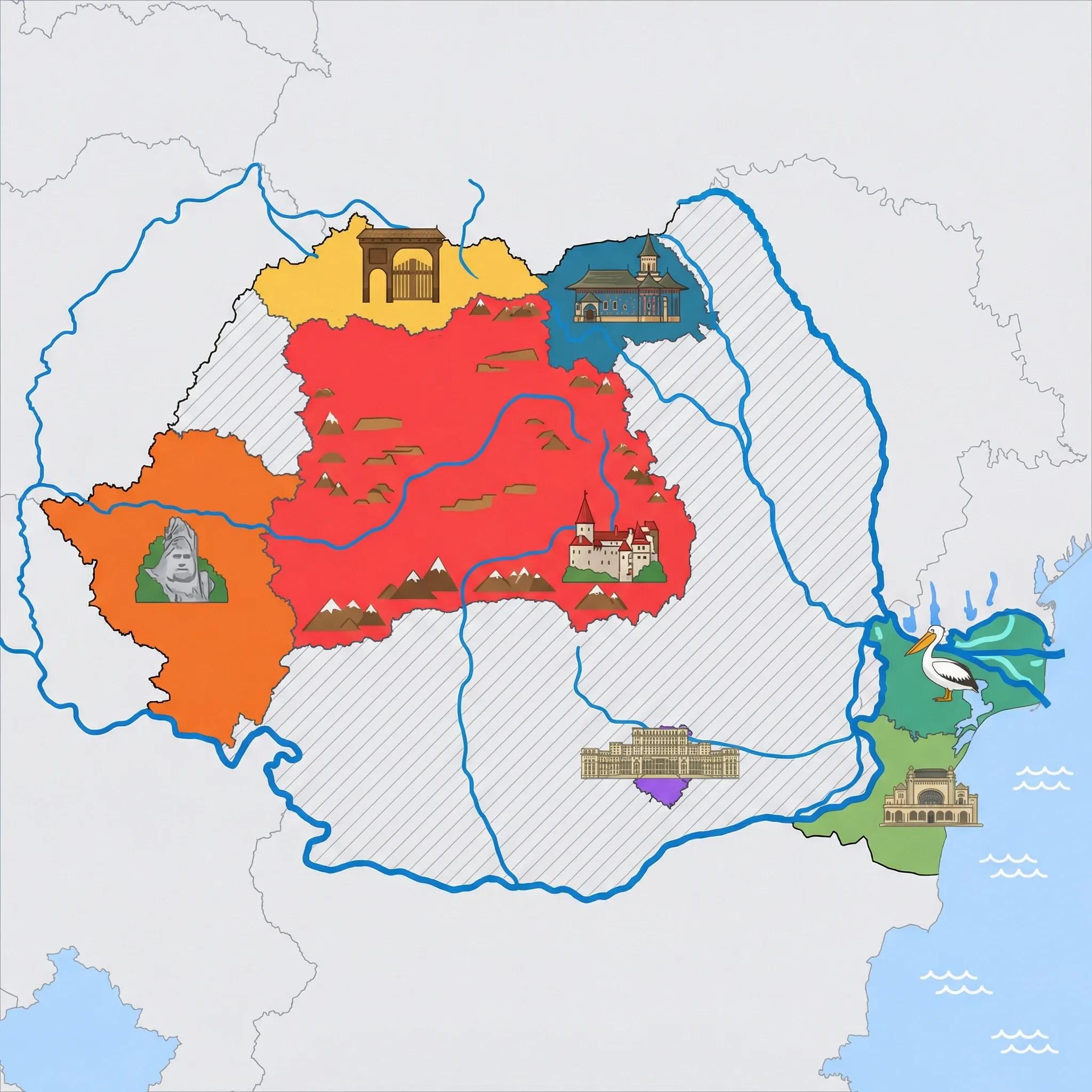
Click a region to explore
Overview
The Romanian Black Sea Coast is a distinct strip of land where the sun shines brighter and the history runs deeper than almost anywhere else in the country. For families, this is the primary summer playground. The coastline is divided into distinct zones: the northern resort of Mamaia is bustling, packed with luxury hotels, cable cars, and energetic beach clubs, while the southern resorts like Eforie Nord, Neptun, and Olympus are quieter, greener, and specifically designed for families seeking relaxation and therapeutic treatments. The sea here has low salinity and generally calm, shallow entry points, making it safe for younger swimmers.
Beyond the beach towel, the region is a treasure trove of antiquity. Constanța, the main city, is built atop the ancient Greek city of Tomis. Walking through its Old Town feels like peeling back layers of time, from Roman mosaics to Ottoman mosques and Art Nouveau palaces. The climate is dry and hot in summer, with sea breezes that temper the heat, but winters can be harsh and windy. While July and August are peak tourist months with vibrant energy, June and September offer the same beautiful light with significantly fewer crowds.
Key Attractions
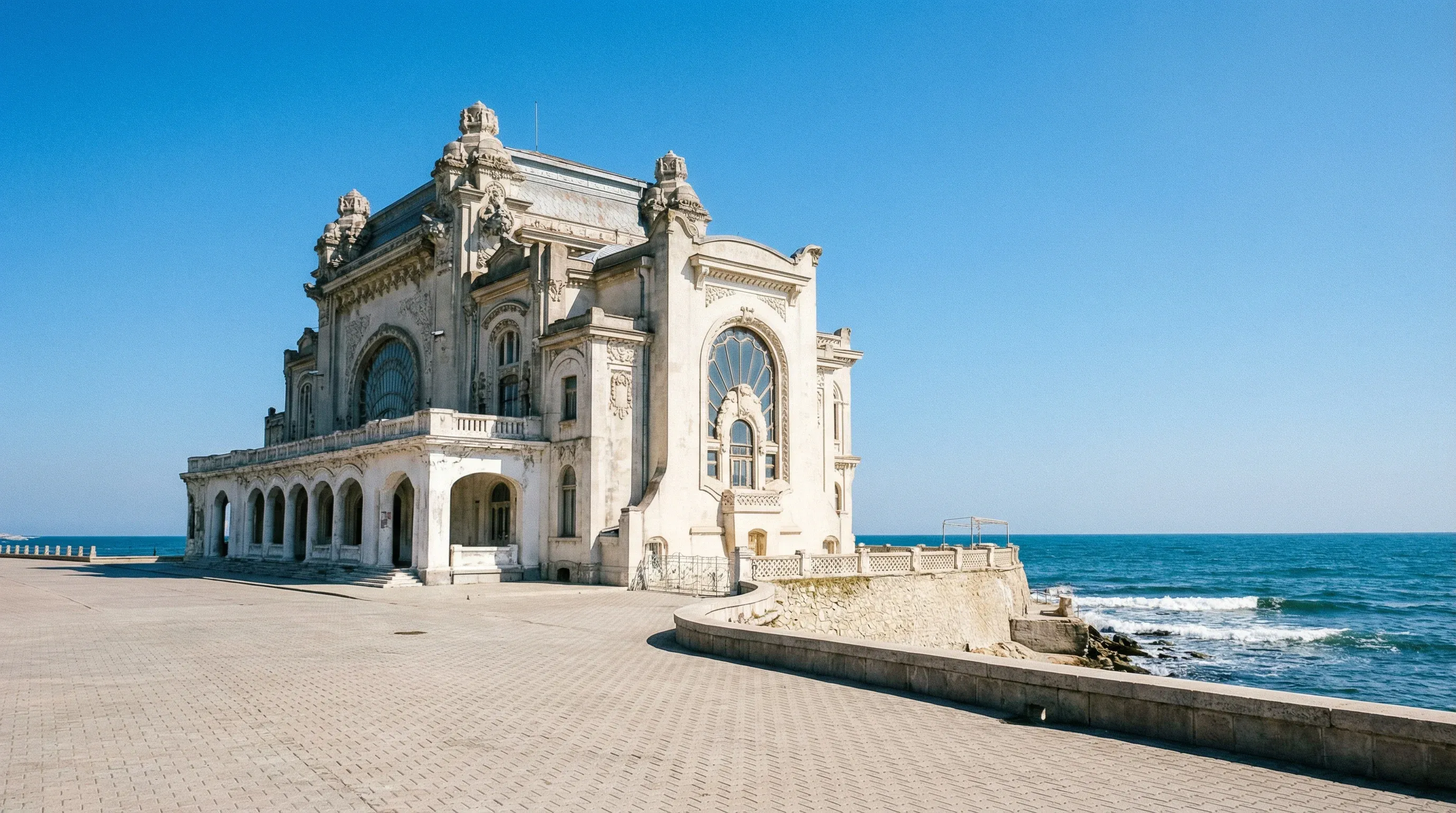
The crown jewel for a city walk is the Constanța Casino on the waterfront promenade; although currently under restoration, its shell is magnificent and the surrounding walkway is perfect for strollers. Just nearby, the Constanța Aquarium is small but charming, located right across from the Casino, offering kids a close-up look at sturgeons and exotic fish without taking up the whole day.
For a full day of sun, Mamaia Beach is the center of action. It features fine sand and very shallow water extending far out, which is ideal for toddlers. If your family enjoys history adventures, a drive north to Histria Fortress is unforgettable. It is the oldest city on Romanian territory, founded by Greek colonists. The ruins are extensive and open to exploration, allowing kids to scramble over ancient foundations while looking out over the wetlands of the Danube Delta Biosphere Reserve - Histria Sector.
Practical Advice
Visit between June and early September for swimming. Be aware that Mamaia can be extremely loud with music in July/August; families often prefer the northern end of Mamaia or the southern resorts (Eforie/Neptun) for better sleep. Traffic on the A2 highway from Bucharest to the coast is notoriously heavy on summer weekends.
Food & Drink
Typical meal times: Lunch is late, often 1:00 pm to 4:00 pm to escape the midday sun. Dinner is a lively affair, usually 8:00 pm to 11:00 pm.
Typical meal costs: Prices vary wildly by proximity to the sea. A family dinner in a resort costs 250–400 RON (approx. $55–85 USD / €50–80 EUR). In Constanța city, it is cheaper: 150–250 RON (approx. $33–55 USD / €30–50 EUR).
Dietary requirements: Seafood is king here. Gluten-free diners must be careful with fried fish (often dredged in flour), but grilled options are plentiful. Dairy is used liberally in appetizers.
Signature dishes:
- Saramură de crap – Carp grilled on salt and then briefly boiled in a spicy vegetable brine; a flavorful, quintessentially local way to eat fish.
- Hamsii cu mămăligă – Fried anchovies served with polenta and garlic sauce. The ultimate beach snack, eaten whole like fries.
- Suberec – A nod to the Tatar community in Dobrogea, this is a deep-fried pastry filled with minced meat or cheese, similar to a cheiburek.
Why this score?
The region is largely flat and highly developed with resorts, beach clubs, and urban infrastructure in Constanța. Adventure is limited to basic water sports and small-scale exploration of archaeological sites, making it a predictable and low-ruggedness environment for families.
Why this score?
Constanța offers substantial medical infrastructure, including several large public hospitals and private diagnostic centers. While services are reliable, they can be under significant pressure during the peak summer tourist season, and English proficiency among staff is more common in private clinics than in public emergency rooms.
Why this score?
This is Romania's primary domestic vacation spot, with resorts like Mamaia seeing massive crowds during the summer months. While it attracts some international travelers from neighboring European countries, it lacks the global recognition and year-round draw of major Mediterranean destinations.

During July and August, prices at the Black Sea Coast (especially Mamaia) can rival Western Europe. Accommodation spikes significantly. A hotel room in peak season can range from 600–1200 RON (approx. $130–265 USD / €120–240 EUR). Prices drop by 50% in June and September. Beach chair rentals are an extra daily cost, typically 40–80 RON (approx. $9–18 USD / €8–16 EUR) per person.
Family Travel Notice
Minors who are Romanian citizens or travelling with Romanian parents may require notarized parental consent and specific documentation to exit the country. There is also a noted history of complex international parental child abduction cases.

Getting Here & Around
Getting Here
- Airports – Mihail Kogălniceanu International Airport (CND) serves the coast, located 25km from Constanța, though flight options are fewer than Bucharest.
- Train – The "Sun Train" connects Bucharest North to Constanța in 2 to 2.5 hours. It is comfortable, air-conditioned, and the most stress-free way to arrive in summer.
- Driving – The A2 "Sun Motorway" connects Bucharest to Constanța (approx. 2.5 hours), but expect significant congestion on Friday evenings and Sunday nights in summer.
Getting Around
- Public Transport – Constanța has a good bus system, and double-decker tourist buses run between the city and Mamaia in summer.
- Minibuses – Shared vans (maxi-taxi) run frequently along the coast connecting resorts like Eforie and Mangalia along the The Black Sea Coastal Drive (DN39).
- Walking – In resorts like Mamaia Beach, walking or the local "Telegondola" (cable car) are the best ways to move around.
Nearby Airports (1 airport)
Mihail Kogalniceanu
CNDConstanta
View full flight map for Romania →

Packing List
Some areas (like Eforie Sud or rocky jetties) have sharp shells and stones.
The Black Sea sun is deceptive due to the breeze; burns happen quickly.
Essential for evenings, especially if visiting ruins near the Delta wetlands.
Resort hotels often have loud music or entertainment late into the night.
Essential for the Danube Delta and rural lakes where mosquitoes can be aggressive in summer.
Ticks are common in the Carpathian tall grass and forests; check kids after every hike.
Street lighting in rural villages is often minimal or non-existent after dark.
Mountain roads like the Transfăgărășan are incredibly winding and can affect children.
Required for women and girls to cover heads/shoulders when entering painted monasteries.
Many rural guesthouses and village shops do not accept cards; small change is vital.

Activities & Best Times

Hiking, wildlife, outdoor exploration, ecotourism
Features unique ecological sites like the Constanța Microreserve and adventure parks that appeal to families seeking nature-based exploration. Best experienced in late spring through early autumn before seasonal closures and colder weather arrive.

Beach resorts, marine activities: diving, snorkelling, kite surfing, wind surfing, sailing
While Romania's Black Sea beaches (Mamaia, Eforie) are the country's premier beach destination with modern resort infrastructure, they cannot compete internationally with Mediterranean, Caribbean, or Southeast Asian beaches in terms of water clarity, sand quality, or climate reliability. 'Good' rating overstates international appeal. 'Very_good' better reflects strong national/regional significance without implying global competitiveness.

Urban tourism, museums, historical sites, architecture
Constanța's Greco-Roman heritage (Histria, Roman mosaics) is nationally significant but lacks the attraction density or international recognition for very_good. No cultural attractions are in the DB. good is appropriate for a region with notable but not outstanding cultural heritage.

Learning experiences, scientific sites, historical education
The Museum of Natural Sciences Complex, including the Dolphinarium and Aquarium, provides high-quality scientific engagement for families. While indoor, these facilities align their peak programs with the summer tourist season.

Spa retreats, wellness centers, peaceful getaways
Famous for the therapeutic mud baths of Lake Techirghiol and established thermal spas in Eforie Nord. The wellness season is centered around the summer when outdoor thermal treatments are most effective and accessible.

Scenic drives, countryside tours, route-based travel
Scenic coastal drives and the Dobrogea Wine Route offer diverse landscapes and rural charm. May, June, and September are ideal to avoid the heavy traffic congestion and extreme heat typical of the July-August peak.

Sport tourism, fitness activities, active recreation
Features dedicated infrastructure like the EuroVelo 6 cycling route and Gravity Park for urban sports. Late spring and early autumn offer the most comfortable temperatures for long-distance cycling and active recreation.

Amusement parks, family entertainment venues
Home to major regional water parks like Aqua Magic Mamaia and adventure hubs like Paradis Land. These facilities are primarily outdoor-focused and operate seasonally, with peak demand during the summer school holidays.

Events, celebrations, seasonal attractions
Host to the Neversea Festival, one of Europe's largest beach-based music events, which draws significant international crowds in July. Outside of this specific window, the international festival scene is limited.

Attractions (17 total)



Public Holidays & Calendar Next 12 months
Public holidays, festivals, cultural celebrations, and seasonal natural phenomena coming up in Black Sea Coast over the next 12 months.
Loading holidays and events...

Travel Advisory
All major agencies agree that Romania is generally safe for travellers, requiring only standard safety awareness and adherence to local regulations.
Safety Topics
Traveller Advice (3 groups)

Specialized safety guides are available for solo or independent female travellers to help manage general safety and personal security while visiting.

While legal, travellers should be aware of local social attitudes and refer to specialized government resources for detailed guidance on safety and rights within the country.
Minors who are Romanian citizens or travelling with Romanian parents may require notarized parental consent and specific documentation to exit the country. There is also a noted history of complex international parental child abduction cases.
Agency Summaries
No significant travel warnings are in effect. Irish citizens should ensure their passports are valid for the full length of their visit. Stays exceeding three months require formal registration with Romanian immigration authorities.
Security risks are comparable to those found in Australian cities. New European Entry/Exit System (EES) protocols require biometric registration for non-EU visitors. Standard vigilance against suspicious behavior and petty theft is recommended.
General safety conditions are stable. Travellers should be aware of seismic risks, particularly in Bucharest, which is prone to earthquakes. Legal complexities regarding dual nationality and parental child abduction cases are noted, particularly for those with Romanian heritage.
While the country is safe for visitors, awareness of the military situation in neighboring Ukraine is advised. Demonstrations occur occasionally in major cities and are typically peaceful. Petty street crime remains a concern in crowded tourist areas and on public transit.
Travellers should maintain standard safety awareness. Entry is governed by Schengen area rules, allowing 90 days of visa-free travel. Local laws require carrying valid photo identification at all times. Restrictions apply to photographing sensitive government or military sites.
General security is stable. Recent health notices advise ensuring vaccinations are up to date due to measles outbreaks. Comprehensive medical insurance that includes evacuation coverage is strongly encouraged for all visitors.
Information is provided for general guidance only and does not constitute travel, safety, medical, or legal advice. Conditions may change. Users are responsible for independently verifying information before travel.