
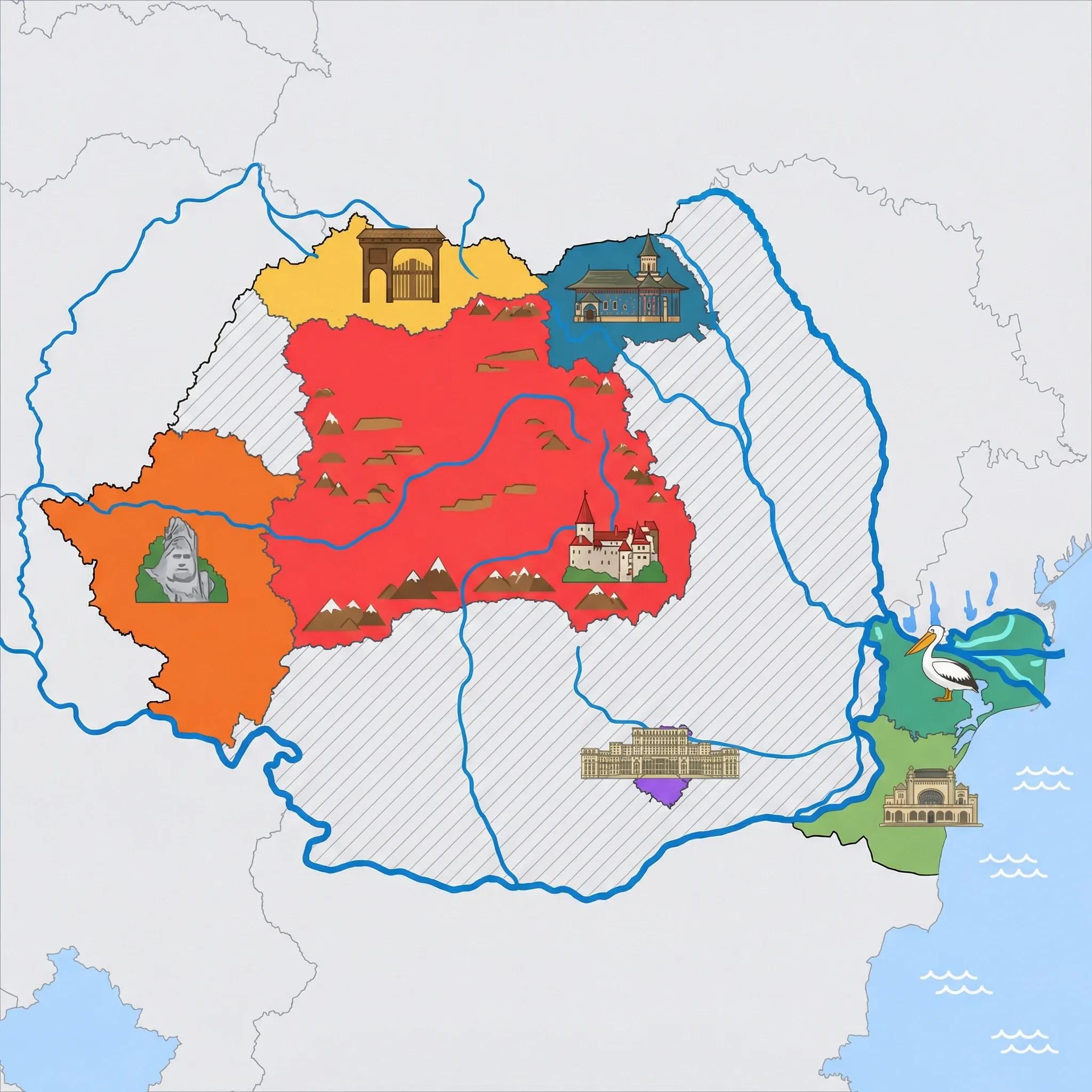
Click a region to explore
Overview
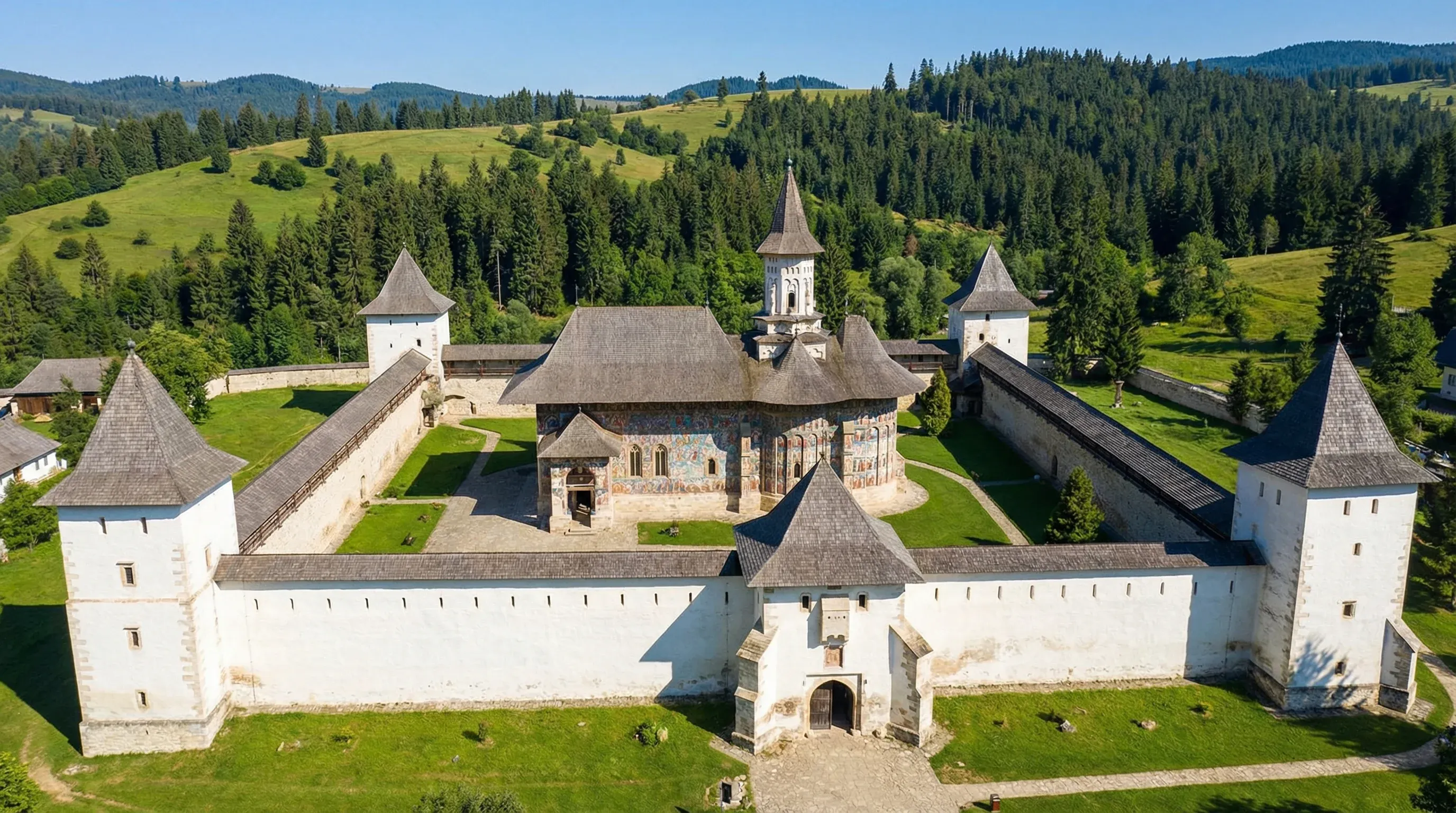
Bucovina is often called the "Switzerland of Romania" for its pristine, rolling landscapes and orderly, well-kept villages. It is a region of deep spirituality and living tradition. For families, the pace here is slow and calming. The air is fresh, the hills are a vibrant green, and the hospitality is legendary. While the main draw for adults is the collection of UNESCO Painted Monasteries—unique Byzantine masterpieces with frescoes painted on the exterior walls—there is plenty to engage children. The region feels like a storybook, with horse-drawn carts still common on the roads and forests that look like they hide fairy-tale creatures.
The culture here focuses heavily on preservation. From the intricately painted Easter eggs (a craft kids can try) to the wooden architecture, everything speaks of a pride in heritage. The climate is cooler than in the south, with snowy, picturesque winters and mild, pleasant summers perfect for hiking. It is a fantastic destination for families who want to disconnect from digital life and show their children a simpler, nature-connected way of living.
Key Attractions
The headline acts are the monasteries, but for kids, the best one is Voroneț Monastery. The vivid blue color (a shade whose composition remains a mystery) is striking, and the "Last Judgment" fresco is essentially a medieval graphic novel that parents can interpret for children. To burn off energy, head to the Suceava Princely Fortress. Unlike the quiet monasteries, this is a military stronghold with moats, drawbridges, and exhibitions of medieval weapons that will thrill young knights and princesses.
For a look at rural life, the Bucovina Village Museum in Suceava is excellent, showcasing watermills and traditional houses. If you are driving, the Ciocănești Painted Village is a visual delight; every house in the village is decorated with traditional geometric motifs, making the whole town look like an embroidered shirt. Nature-loving families should explore Călimani National Park, which offers trails through volcanic landscapes that are wild yet accessible.
Practical Advice
Bucovina is best explored by car. Public transport between monasteries is sparse. Modest dress is required for entering monasteries—women and girls should have a scarf to cover their heads, and shoulders/knees should be covered for everyone. Wraps are often provided at the entrance, but bringing your own is better.
Food & Drink
Typical meal times: Lunch is the main event, 1:00 pm to 3:00 pm. Dinner is often lighter.
Typical meal costs: Very affordable. A hearty traditional meal costs 60–100 RON (approx. $13–22 USD / €12–20 EUR) per person. Guest houses (pensiuni) often include abundant breakfast and dinner in the room price.
Dietary requirements: The food is heavy on cream, cheese, and meat. Vegetarians will rely on vegetable soups (ask if they have meat stock) and mushrooms (hribi), which are a local specialty.
Signature dishes:
- Ciorbă Rădăuțeană – A rich, garlic-laden soup made with chicken, sour cream, and vinegar. It was invented in Rădăuți and is smoother and creamier than tripe soup.
- Tochitură bucovineană – A stew of pork, sausages, and liver, served alongside polenta with a fried egg and cheese on top.
- Poale-n brâu – Soft, oven-baked pies filled with sweet cheese and raisins. The ultimate comfort food snack.
Why this score?
Located in the Eastern Carpathians, the region offers beautiful mountain scenery and activities like the Mocănița steam train and hiking in Călimani National Park. The terrain is moderately rugged, though the focus remains more on cultural exploration and traditional village life than extreme adventure.
Why this score?
Medical facilities are concentrated in Suceava, which has adequate regional hospitals, but options are very limited in the rural mountain villages. Foreign visitors may encounter significant language barriers and basic conditions in local clinics, necessitating travel to larger cities for serious issues.
Why this score?
The region is globally recognized by cultural travelers for its UNESCO-listed Painted Monasteries, though its remote location keeps visitor numbers moderate. It is primarily a niche destination for those interested in art, history, and religious heritage rather than a mass-market tourist hub.

Bucovina is one of the best-value regions in Romania. Accommodation in family-run guesthouses (Agroturism) is high quality and low cost, typically 150–250 RON (approx. $33–55 USD / €30–50 EUR) per night, often including breakfast. Monastery entry fees are negligible (around 10 RON / $2 USD), though photography fees may apply.
Family Travel Notice
Minors who are Romanian citizens or travelling with Romanian parents may require notarized parental consent and specific documentation to exit the country. There is also a noted history of complex international parental child abduction cases.

Getting Here & Around
Getting Here
- Airports – Suceava Ștefan cel Mare International Airport (SCV) has connections to London, Milan, and Bucharest. It is small and easy to navigate.
- Train – Direct trains run from Bucharest to Suceava (approx. 6 hours). The station at Suceava acts as the rail hub for the region.
- Driving – The E85 road connects Bucharest to Bucovina. It is a major artery but can be dangerous due to aggressive driving; drive defensively.
Getting Around
- Car – The only practical way to see the monasteries efficiently. The loop connecting Voroneț Monastery, Sucevița Monastery, and Moldovița Monastery is scenic and paved.
- Active Travel – The Via Transilvanica - Bucovina Section offers clearly marked hiking and cycling paths for active families.
Nearby Airports (1 airport)
Salcea
SCVSuceava
View full flight map for Romania →
Official Links

Packing List
Respectful attire is required for women entering active monasteries.
You may need to remove shoes or step quickly in and out of religious spaces.
The roads between monasteries wind constantly through hills and valleys.
Even in August, evenings in the Bucovina hills can get surprisingly chilly.
Essential for the Danube Delta and rural lakes where mosquitoes can be aggressive in summer.
Ticks are common in the Carpathian tall grass and forests; check kids after every hike.
Street lighting in rural villages is often minimal or non-existent after dark.
Mountain roads like the Transfăgărășan are incredibly winding and can affect children.
Required for women and girls to cover heads/shoulders when entering painted monasteries.
Many rural guesthouses and village shops do not accept cards; small change is vital.

Activities & Best Times

Hiking, wildlife, outdoor exploration, ecotourism
Bucovina offers a unique blend of pristine Carpathian wilderness and authentic rural life, highlighted by traditional stud farms and hiking routes like the Via Transilvanica. Peak season aligns with the lush summer months and traditional harvest, providing ideal conditions for exploring diverse ecosystems and high-altitude trails.

Urban tourism, museums, historical sites, architecture
Home to the UNESCO-listed Painted Monasteries and the Suceava Princely Fortress, the region provides a world-class cultural experience centered on Byzantine art and medieval history. Best visited from late spring to early autumn when natural light best illuminates the external frescoes and the monastic grounds are fully accessible.

Scenic drives, countryside tours, route-based travel
The region features iconic drives such as the Transrarău (The Treasures Road) and the Painted Monasteries Loop, offering a mix of high-altitude mountain passes and cultural heritage. Peak conditions occur from May to September when mountain roads are clear and landscapes are vibrant, while winter weather frequently closes the more scenic sections.

Winter sports, ski resorts, snow activities
Vatra Dornei and Rarău provide charming, family-friendly winter sports environments with reliable snow cover and established infrastructure in mid-winter. While the facilities are smaller than Alpine counterparts, they offer an authentic and accessible experience for international families during the core winter months.

Sport tourism, fitness activities, active recreation
Bucovina supports active travel through established segments of the Via Transilvanica and modern adventure parks like Mega Tiroliana La Palma. The optimal period for trekking and adventure activities is the summer when facilities are fully staffed and trails are dry, with shoulder months offering cooler conditions for endurance hiking.

Amusement parks, family entertainment venues
Local leisure complexes like Ariniș and Cacica provide seasonal aquatic and adventure entertainment suitable for families, though they lack the scale of international destination parks. These facilities are primarily summer-focused, with full operations and activities restricted to the warmest months.

Attractions (20 total)



Public Holidays & Calendar Next 12 months
Public holidays, festivals, cultural celebrations, and seasonal natural phenomena coming up in Bucovina over the next 12 months.
Loading holidays and events...

Travel Advisory
All major agencies agree that Romania is generally safe for travellers, requiring only standard safety awareness and adherence to local regulations.
Safety Topics
Traveller Advice (3 groups)

Specialized safety guides are available for solo or independent female travellers to help manage general safety and personal security while visiting.

While legal, travellers should be aware of local social attitudes and refer to specialized government resources for detailed guidance on safety and rights within the country.

Minors who are Romanian citizens or travelling with Romanian parents may require notarized parental consent and specific documentation to exit the country. There is also a noted history of complex international parental child abduction cases.
Agency Summaries
No significant travel warnings are in effect. Irish citizens should ensure their passports are valid for the full length of their visit. Stays exceeding three months require formal registration with Romanian immigration authorities.
Security risks are comparable to those found in Australian cities. New European Entry/Exit System (EES) protocols require biometric registration for non-EU visitors. Standard vigilance against suspicious behavior and petty theft is recommended.
General safety conditions are stable. Travellers should be aware of seismic risks, particularly in Bucharest, which is prone to earthquakes. Legal complexities regarding dual nationality and parental child abduction cases are noted, particularly for those with Romanian heritage.
While the country is safe for visitors, awareness of the military situation in neighboring Ukraine is advised. Demonstrations occur occasionally in major cities and are typically peaceful. Petty street crime remains a concern in crowded tourist areas and on public transit.
Travellers should maintain standard safety awareness. Entry is governed by Schengen area rules, allowing 90 days of visa-free travel. Local laws require carrying valid photo identification at all times. Restrictions apply to photographing sensitive government or military sites.
General security is stable. Recent health notices advise ensuring vaccinations are up to date due to measles outbreaks. Comprehensive medical insurance that includes evacuation coverage is strongly encouraged for all visitors.
Information is provided for general guidance only and does not constitute travel, safety, medical, or legal advice. Conditions may change. Users are responsible for independently verifying information before travel.