
Maramureș
A fairy-tale land of wooden churches and living traditions 🌲🪵
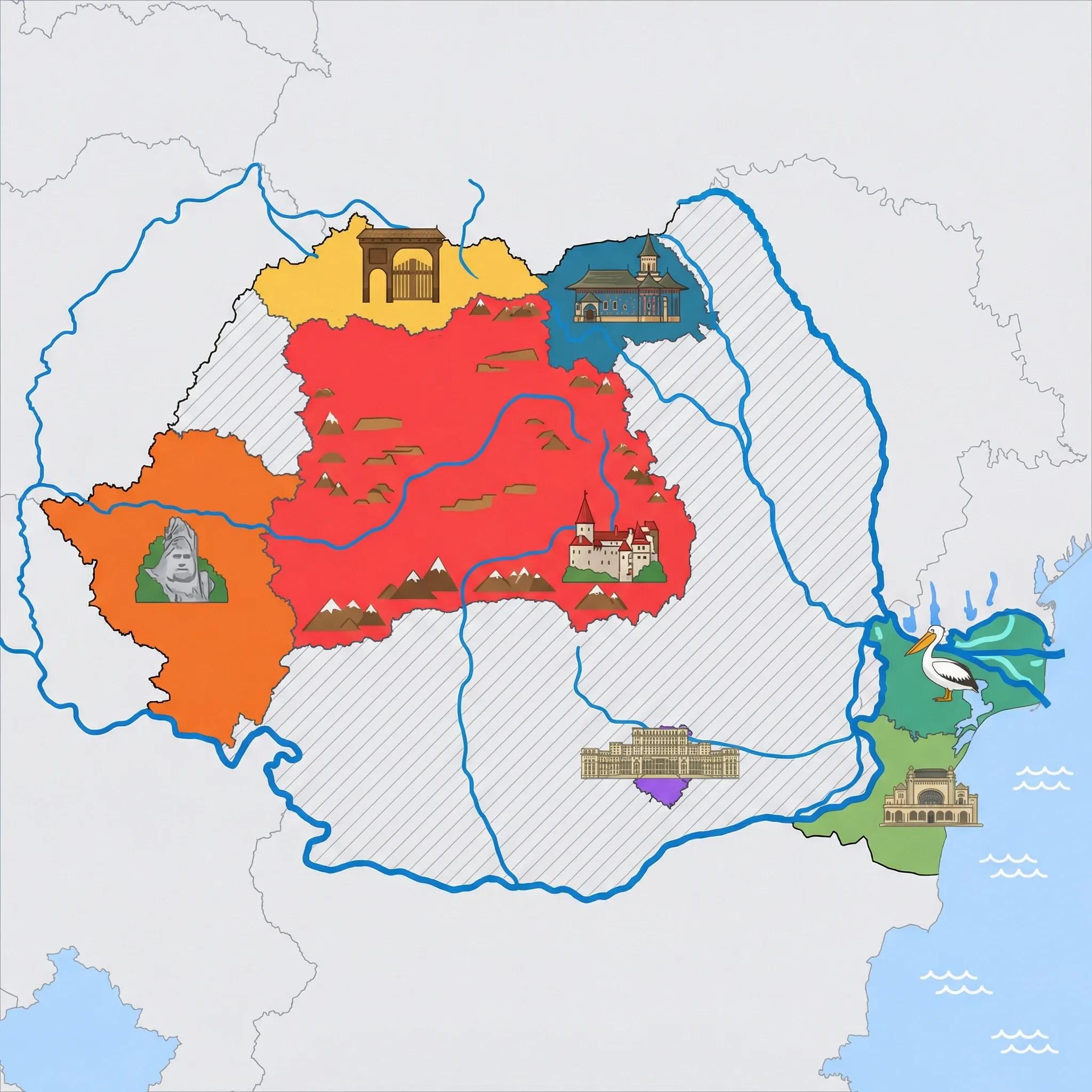
Click a region to explore
Overview
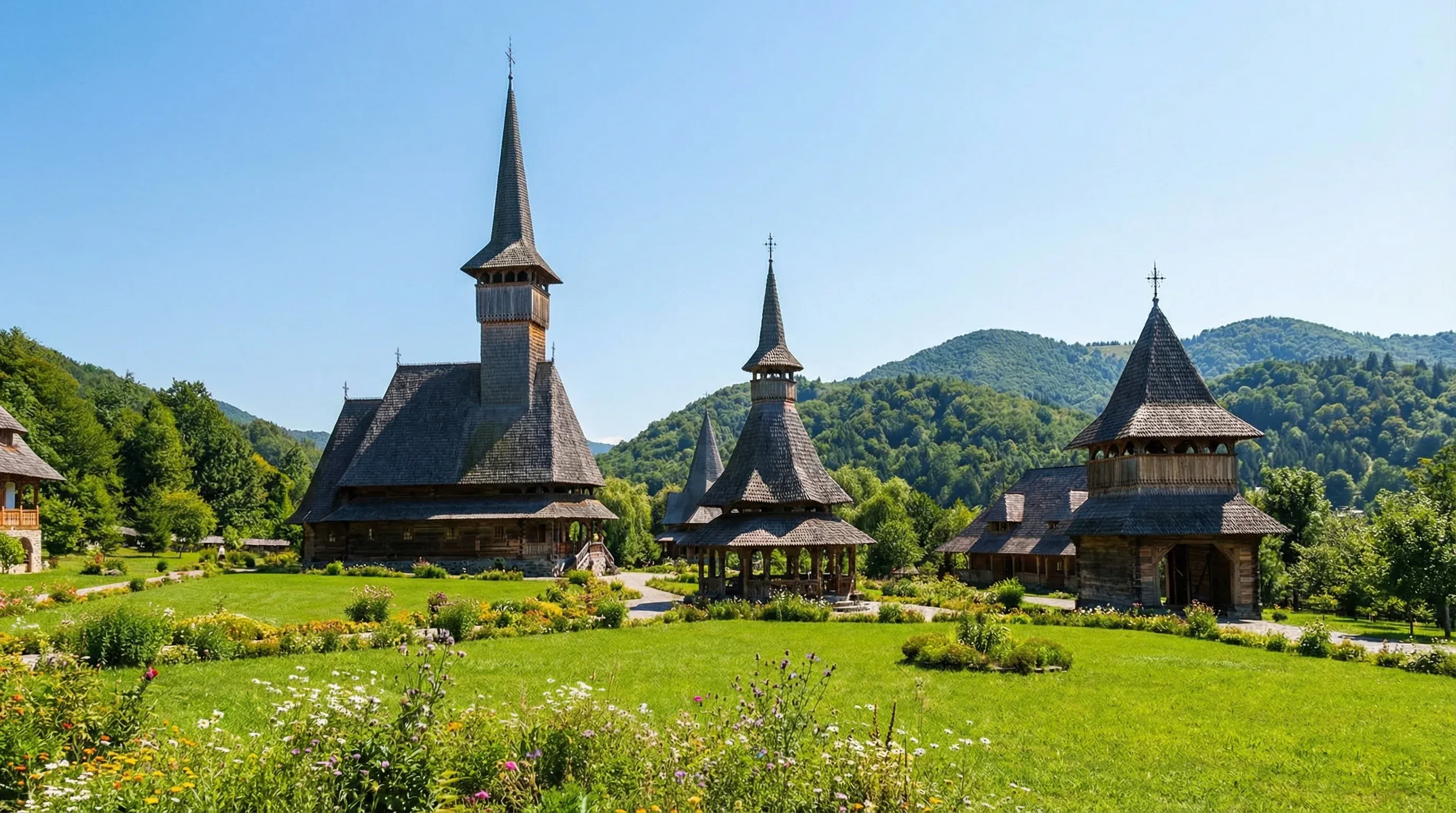
Stepping into Maramureș feels like walking into a Grimm's fairy tale. This is perhaps the most traditional region in the European Union, a place where the "old ways" are not just a show for tourists but daily life. The landscape is characterized by rolling green hills, towering wooden gates (which signify the status of the family), and pointed wooden churches that pierce the sky. For families, it is a chance to show children a world without skyscrapers, where milk comes from the cow next door and hay is stacked by hand.
The region is geographically isolated by mountains, which has helped preserve its unique culture. The people are incredibly hospitable and tough, having survived centuries of changing empires. The highlight for kids is often just seeing the animals—sheep, horses, and cows are everywhere on the roads. The vibe is rustic and slow. It is an excellent destination for road trips, though the roads can be winding and slow-going. Accommodations are often in traditional wooden houses that have been modernized inside, offering a cozy, cabin-like experience.
Key Attractions
The most famous site is the Merry Cemetery in Săpânța. Unlike any other graveyard in the world, this one is bright blue and full of funny, honest poems about the deceased (translations are often available or guidebooks can help). The cartoonish paintings on the crosses make it accessible and not at all scary for children. Nearby, the Bârsana Monastery is a masterpiece of wooden architecture. It is a convent with manicured gardens and soaring towers that look unparalleled against the backdrop of the hills. It is peaceful, beautiful, and offers plenty of space for kids to walk around.
For active families, the Rodna Mountains National Park offers serious hiking, but there are also easier walks in the foothills. The Maramureș Mountains Natural Park is another wild area where you can take a steam train (the Mocănița) into the forest—a massive hit with children (note: the train departs from Vișeu de Sus). For history buffs, the Memorial of the Victims of Communism and of the Resistance in Sighetu Marmației is a powerful museum located in a former prison; it is very well done but perhaps too somber for young children.
Practical Advice
Sundays are special here; everyone dresses in traditional clothes for church. It is a spectacle worth seeing. The roads are improving but expect low average speeds (40-50 km/h) due to villages and winding passes. Winters are snowy and magical but require a robust vehicle.
Food & Drink
Typical meal times: Early lunch (12:00 pm) and hearty dinners (7:00 pm). Hospitality often involves offering horincă (plum brandy) to adults upon arrival.
Typical meal costs: Low. A full dinner with drinks costs 50–90 RON (approx. $11–20 USD / €10–18 EUR). Portions are usually huge.
Dietary requirements: Very meat and dairy focused. Cornmeal (polenta) is the staple carbohydrate and is naturally gluten-free.
Signature dishes:
- Balmoș – A shepherd's dish of polenta boiled in sheep milk and sour cream, loaded with butter and cheese. Extremely rich and filling.
- Gulaș – Due to the proximity to Hungary, rich beef goulash is a staple in local restaurants.
- Plăcinte cu brânză – Fried bread/pastries filled with salty cheese and dill.
Why this score?
The region is defined by the high Rodna Mountains and a very traditional, agrarian lifestyle that can feel like stepping back in time. Rugged hiking, unpaved village roads, and the primitive charm of the Vaser Valley steam train offer a significant adventure for intrepid families.
Why this score?
While cities like Baia Mare have standard medical facilities, the heart of the tourist experience is in remote valleys where healthcare is very basic. Language barriers are common, and the specialized care required for major emergencies is often several hours away in larger Transylvanian cities like Cluj-Napoca.
Why this score?
Maramureș is a quintessential 'off-the-beaten-path' destination known for its wooden churches and preserved peasant culture. While it has a loyal following among cultural tourists, the lack of a major international airport and the long travel times keep foreign visitor numbers relatively low.

Maramureș is very budget-friendly. A stay in a traditional wooden pension often costs just 150–250 RON (approx. $33–55 USD / €30–50 EUR) for a family room. Food is inexpensive and locally sourced. The main costs will be fuel for the car and tickets for the steam train (which is pricier, around 80-100 RON per adult).
Family Travel Notice
Minors who are Romanian citizens or travelling with Romanian parents may require notarized parental consent and specific documentation to exit the country. There is also a noted history of complex international parental child abduction cases.

Getting Here & Around
Getting Here
- Airports – Maramureș International Airport (BAY) in Baia Mare is the local hub. Alternatively, fly to Cluj-Napoca (CLJ) and drive 3 hours north.
- Driving – The drive from Bucovina over the Prislop Pass is stunning but long. From Cluj, the drive takes you through scenic valleys.
- Train – Trains connect Bucharest and Cluj to Baia Mare and Sighetu Marmației, but they are very slow. The overnight sleeper from Bucharest is an adventure in itself.
Getting Around
- Car – Absolutely essential. Public transport does not effectively connect the scattered wooden churches and attractions like the Merry Cemetery.
- Walking – Within villages, walking is the best way to see the carved wooden gates and greet locals.
Nearby Airports (2 airports)
Tautii Magheraus
BAYBaia Mare
Satu Mare
SUJSatu Mare
View full flight map for Romania →

Packing List
The roads are notoriously winding and hilly; essential for kids in the back seat.
Mountain weather is unpredictable; it can rain and drop in temperature even in July.
Even village roads can be unpaved or muddy; heels or flimsy sandals won't work.
Many artisans and small village museums do not accept cards.
Essential for the Danube Delta and rural lakes where mosquitoes can be aggressive in summer.
Ticks are common in the Carpathian tall grass and forests; check kids after every hike.
Street lighting in rural villages is often minimal or non-existent after dark.
Mountain roads like the Transfăgărășan are incredibly winding and can affect children.
Required for women and girls to cover heads/shoulders when entering painted monasteries.
Many rural guesthouses and village shops do not accept cards; small change is vital.

Activities & Best Times

Hiking, wildlife, outdoor exploration, ecotourism
Home to the Rodna Mountains National Park and unique features like Horses' Waterfall, offering rugged, authentic wilderness experiences. The peak period provides stable weather for high-altitude trekking and exploring the diverse flora and fauna of northern Romania.

Urban tourism, museums, historical sites, architecture
Exceptional living culture centered around UNESCO wooden churches and the unique Merry Cemetery in Săpânța. Peak months offer warm weather for outdoor heritage exploration, while December provides a shoulder window into authentic, traditional winter festivities.

Scenic drives, countryside tours, route-based travel
The Iza Valley and high-altitude Prislop Pass offer spectacular, culturally immersive driving routes through traditional villages. Peak season encompasses the full range from spring blossoms to vibrant autumn foliage in the Rodna Mountains.

Winter sports, ski resorts, snow activities
Regional ski centers such as Cavnic and Borșa offer accessible winter sports facilities with decent snow reliability for families. Peak conditions occur in mid-winter, while the shoulder months offer variable snow coverage at these relatively low-altitude resorts.

Sport tourism, fitness activities, active recreation
Provides a range of mountain hiking trails and seasonal adventure parks like Măgura and Roata for active families. The summer months offer the most stable conditions for outdoor physical pursuits and facility operations.

Beach resorts, marine activities: diving, snorkelling, kite surfing, wind surfing, sailing
Limited to inland salt lakes and reservoirs like Ocna Șugatag and Firiza, providing refreshing but regional-standard aquatic recreation. Best during the peak summer heat of July and August when water temperatures are most suitable for family swimming.

Learning experiences, scientific sites, historical education
Offers specialized learning at the Baia Mare Mineralogy Museum and Sighetu Marmației Natural History Museum. These facilities are best visited as part of a broader cultural itinerary during the warmer, more accessible months.

Amusement parks, family entertainment venues
Features regional-scale aquatic centers and recreational parks such as Ocna Șugatag Salt Baths. These serve as supplementary entertainment for families visiting the region during the primary summer holiday window.

Attractions (14 total)



Public Holidays & Calendar Next 12 months
Public holidays, festivals, cultural celebrations, and seasonal natural phenomena coming up in Maramureș over the next 12 months.
Loading holidays and events...

Travel Advisory
All major agencies agree that Romania is generally safe for travellers, requiring only standard safety awareness and adherence to local regulations.
Safety Topics
Traveller Advice (3 groups)

Specialized safety guides are available for solo or independent female travellers to help manage general safety and personal security while visiting.

While legal, travellers should be aware of local social attitudes and refer to specialized government resources for detailed guidance on safety and rights within the country.

Minors who are Romanian citizens or travelling with Romanian parents may require notarized parental consent and specific documentation to exit the country. There is also a noted history of complex international parental child abduction cases.
Agency Summaries
No significant travel warnings are in effect. Irish citizens should ensure their passports are valid for the full length of their visit. Stays exceeding three months require formal registration with Romanian immigration authorities.
Security risks are comparable to those found in Australian cities. New European Entry/Exit System (EES) protocols require biometric registration for non-EU visitors. Standard vigilance against suspicious behavior and petty theft is recommended.
General safety conditions are stable. Travellers should be aware of seismic risks, particularly in Bucharest, which is prone to earthquakes. Legal complexities regarding dual nationality and parental child abduction cases are noted, particularly for those with Romanian heritage.
While the country is safe for visitors, awareness of the military situation in neighboring Ukraine is advised. Demonstrations occur occasionally in major cities and are typically peaceful. Petty street crime remains a concern in crowded tourist areas and on public transit.
Travellers should maintain standard safety awareness. Entry is governed by Schengen area rules, allowing 90 days of visa-free travel. Local laws require carrying valid photo identification at all times. Restrictions apply to photographing sensitive government or military sites.
General security is stable. Recent health notices advise ensuring vaccinations are up to date due to measles outbreaks. Comprehensive medical insurance that includes evacuation coverage is strongly encouraged for all visitors.
Information is provided for general guidance only and does not constitute travel, safety, medical, or legal advice. Conditions may change. Users are responsible for independently verifying information before travel.