
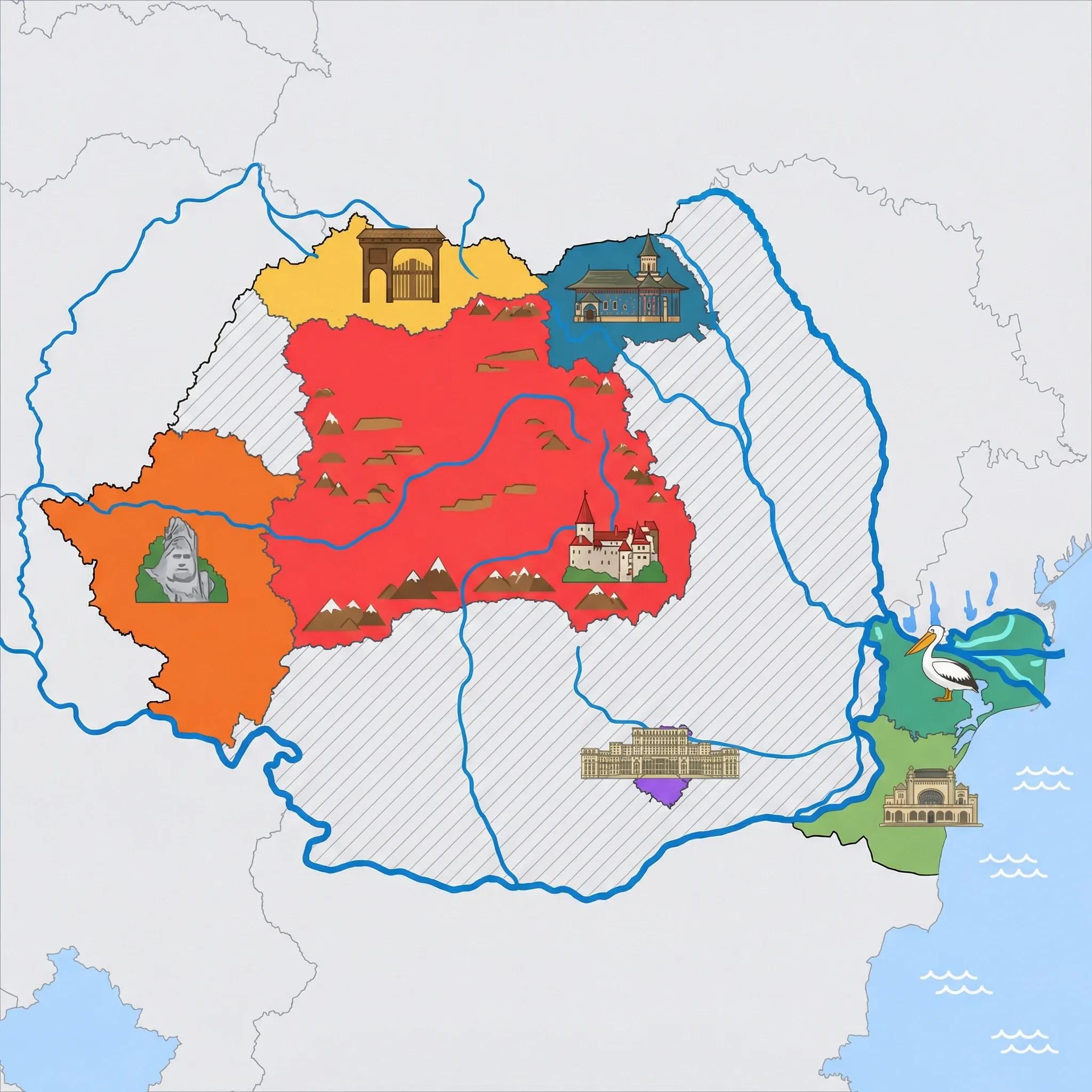
Click a region to explore
TRAVEL ADVISORY: This region is home to Europe's largest population of brown bears. While bear sightings are a tourist draw, they are wild animals. Do not hike alone in remote areas, never feed them, and consider carrying bear spray if trekking deep in the Carpathians.
Overview
Transylvania is the crown jewel of Romanian tourism and arguably the most family-friendly region in the country. Forget the vampires—the real magic here lies in the fortified Saxon villages, the pastel-colored medieval towns, and the spectacular Carpathian Mountains. The infrastructure is the best in Romania, with good roads and a wide range of accommodation. The vibe is distinctly Central European; cities like Sibiu and Brașov feel like cousins of Salzburg or Munich, with cobblestone streets and large, safe pedestrian squares where children can run free.
The geography is diverse, offering everything from the high peaks of the Piatra Craiului National Park to the rolling hills of the Saxon lands. It is a year-round destination: summer offers hiking and festivals, autumn brings stunning foliage, and winter opens up ski slopes in Poiana Brașov. For families, the density of attractions is a huge plus—you rarely have to drive more than an hour to find a castle, a fortress, or an adventure park.
Key Attractions
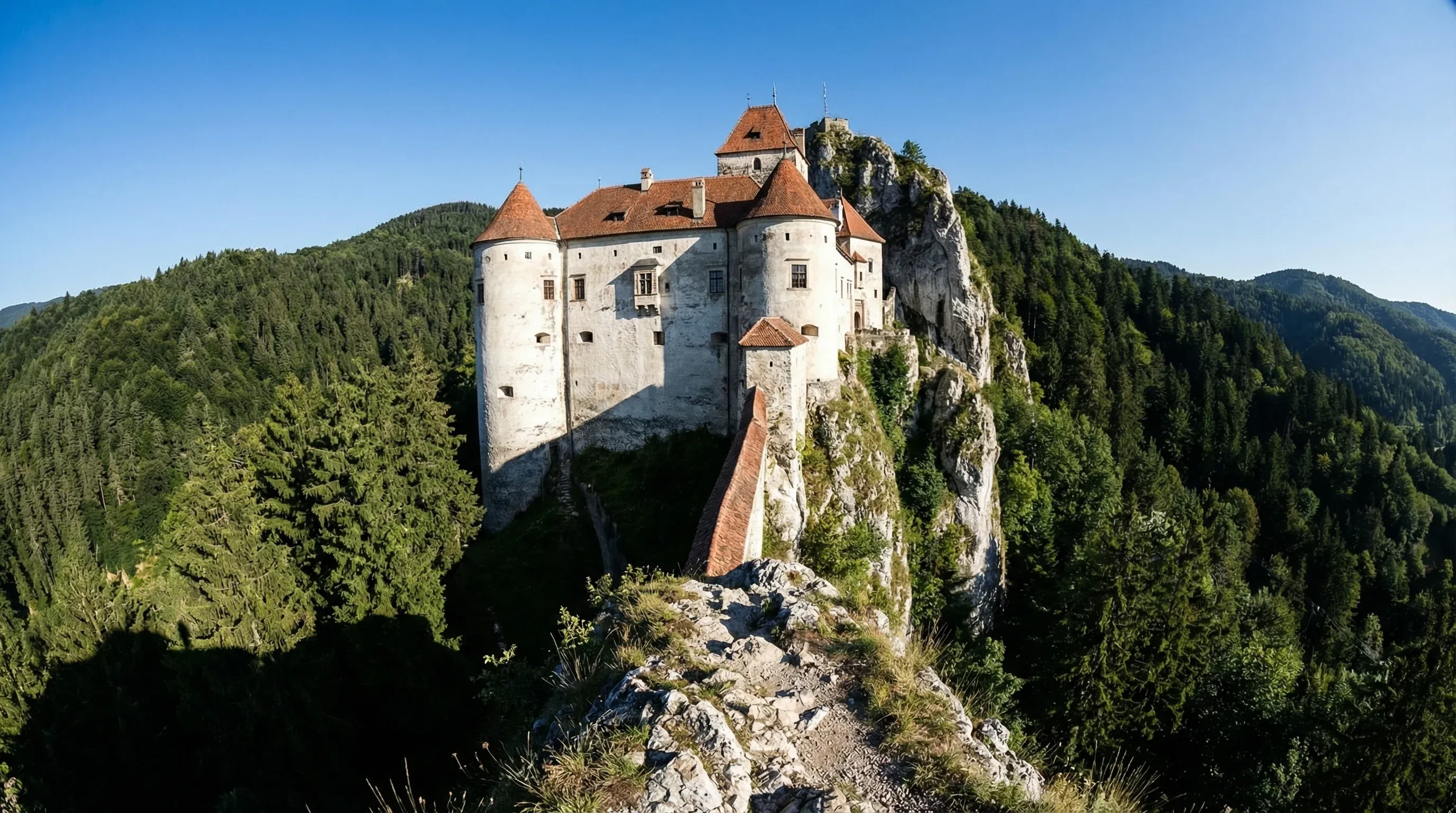
Everyone comes for Bran Castle. While it is crowded and the Dracula connection is tenuous, it is still a quintessential medieval castle that sparks children's imaginations. For a more authentic fairy-tale fortress, visit Corvin Castle in Hunedoara, which looks exactly like a knight's stronghold with its massive drawbridge. In Brașov, start at the Brașov Council Square and visit the Grădina Zoologică Brașov (Zoo), which is beautifully set in a forest.
However, the absolute winner for families is often Salina Turda Underground Activity Center. It is a massive salt mine converted into a sci-fi theme park deep underground, featuring a ferris wheel, mini-golf, and bowling—it is truly unique in the world. For open-air history, the Astra National Museum Complex in Sibiu is a gigantic outdoor museum with windmills and traditional houses, perfect for a sunny day walk. Nature lovers should drive the famous Bicaz Gorge or take the cable car to Balea Lake on the Transfăgărășan road for breathtaking views.
Practical Advice
Summer traffic in the Prahova Valley (road to Brașov) is terrible on weekends; take the train if possible or drive mid-week. Temperatures in the mountains are always 5-10 degrees cooler than in the cities, so pack layers.
Food & Drink
Typical meal times: Lunch 12:00 pm to 3:00 pm, Dinner 7:00 pm to 10:00 pm.
Typical meal costs: Mid-range. A family meal in Brașov or Sibiu costs 180–300 RON (approx. $40–66 USD / €36–60 EUR).
Dietary requirements: Very accommodating. Vegetarian options are common, and international cuisine (pizza, pasta) is everywhere in the main cities.
Signature dishes:
- Kürtőskalács (Chimney Cake) – A sweet dough strip wrapped around a cone, roasted over charcoal, and coated in sugar and nuts. You must eat this hot from a street stall.
- Varză a la Cluj – A "deconstructed" cabbage roll baked in a dish like a lasagna, with layers of sauerkraut and spiced meat.
- Goulaș de fasole in pâine – Bean soup with smoked meat served inside a hollowed-out loaf of crusty bread.
Why this score?
The Carpathian Mountains provide excellent opportunities for hiking, skiing, and wildlife spotting, including some of Europe's best bear-watching. While the terrain is high and wild, many of the most popular sites are well-connected by scenic drives and developed trails, balancing adventure with accessibility.
Why this score?
The region benefits from several major urban centers, most notably Cluj-Napoca, which is considered the premier medical hub of Romania outside the capital. Foreign families will find high-quality private hospitals and many English-speaking doctors in the main tourist cities, though rural mountain areas remain more limited.
Why this score?
Transylvania is Romania's most famous regional brand, drawing millions of international visitors to Bran Castle and medieval cities like Sibiu and Brașov. It is a well-established destination with a mature tourism infrastructure that competes with other major European cultural regions.

Transylvania fits the mid-range budget. Major tourist towns like Brașov and Cluj are priced similarly to Bucharest, while rural areas are cheaper. Entry to <a data-attraction-id="55572">Bran Castle</a> is pricey for Romania (approx. 60–70 RON per adult), but many other sites are cheaper. Skiing in Poiana Brașov is expensive compared to the rest of the country but cheap compared to the Alps.
Family Travel Notice
Minors who are Romanian citizens or travelling with Romanian parents may require notarized parental consent and specific documentation to exit the country. There is also a noted history of complex international parental child abduction cases.

Getting Here & Around
Getting Here
- Airports – Cluj-Napoca (CLJ) and Sibiu (SBZ) are the main regional airports with good European connections. The new Brașov-Ghimbav Airport (GHV) also serves the area.
- Train – Excellent connections from Bucharest to Brașov (2.5 hours) and Sibiu. The train ride through the Carpathians is scenic.
- Driving – The Alba Carolina Fortress and rural villages are best reached by car. Roads are generally good, though mountain passes are slow.
Getting Around
- Car – The best way to explore the fortified churches and reach trailheads in Bucegi Natural Park.
- Train – Good for hopping between major cities (Cluj - Sighisoara - Brașov), but slow for rural areas.
- Walking – The historic centers of Brașov, Sibiu, and Sighișoara are pedestrian-only and extremely walkable.
Nearby Airports (4 airports)
Cluj International Airport
CLJCluj-Napoca
Brasov Ghimbav Airport
GHVBrasov
Sibiu
SBZSibiu
Vidrasau
TGMTargu-Mures
View full flight map for Romania →
Official Links

Packing List
If hiking in the Carpathians, making noise is the best way to avoid surprising a bear.
Salina Turda is 10-12°C (50°F) year-round, and mountain evenings are cold.
Trails in Bucegi or Piatra Craiului are rocky and slippery when wet.
Useful for exploring unlit corners of caves or walking in rural villages at night.
Essential for the Danube Delta and rural lakes where mosquitoes can be aggressive in summer.
Ticks are common in the Carpathian tall grass and forests; check kids after every hike.
Street lighting in rural villages is often minimal or non-existent after dark.
Mountain roads like the Transfăgărășan are incredibly winding and can affect children.
Required for women and girls to cover heads/shoulders when entering painted monasteries.
Many rural guesthouses and village shops do not accept cards; small change is vital.

Activities & Best Times

Hiking, wildlife, outdoor exploration, ecotourism
The Carpathian Mountains offer world-class wilderness immersion and authentic trekking on routes like the Via Transilvanica. High summer provides optimal visibility and safety for mountain exploration, while snow and ice render high-altitude trails inaccessible during winter.

Urban tourism, museums, historical sites, architecture
UNESCO-listed Saxon towns like Sibiu and Sighișoara offer exceptionally preserved medieval heritage and sophisticated museum experiences. Late spring and early autumn are preferred by discerning travelers for comfortable walking temperatures and vibrant cultural schedules.

Scenic drives, countryside tours, route-based travel
Transylvania contains both the Transfăgărășan Highway and Transalpina Highway, both rated as major attractions and considered among Europe's most spectacular scenic drives. These two routes alone make Transylvania a nationally and continentally significant road trip destination, warranting very_good.

Learning experiences, scientific sites, historical education
Destination-level sites like Salina Turda and the Natural History museums offer significant geological and scientific insight. Peak timing avoids the heaviest summer crowds while ensuring full access to specialized guided tours and educational facilities.

Events, celebrations, seasonal attractions
Untold Festival in Cluj-Napoca is one of Europe's largest and most acclaimed electronic music festivals, drawing hundreds of thousands of international visitors annually. Combined with the Sibiu International Theatre Festival, Transylvania has nationally and internationally significant festival offerings that exceed marginal calibration.

Spa retreats, wellness centers, peaceful getaways
The region is home to unique heliothermal and saline lakes like Bear Lake, providing authentic therapeutic experiences. The effectiveness of these natural thermal features depends on the direct summer sun for surface heating.

Winter sports, ski resorts, snow activities
Poiana Brașov offers reliable winter sports infrastructure and a charming alpine atmosphere for family-oriented ski trips. The core season is relatively short, with peak snow conditions in January and February and rapid melting by late March.

Sport tourism, fitness activities, active recreation
High-quality infrastructure for organized adventure sports and internationally recognized cycling routes define the active tourism scene. Summer months offer the dry, stable conditions required for mountain biking and forest adventure parks.
Amusement parks, family entertainment venues
Salina Turda provides a unique, world-class underground entertainment complex within a historic salt mine. While the mine's interior is stable, peak visitation aligns with family summer holidays and the operational dates of outdoor parks like Dino Parc.

Attractions (33 total)



Public Holidays & Calendar Next 12 months
Public holidays, festivals, cultural celebrations, and seasonal natural phenomena coming up in Transylvania over the next 12 months.
Loading holidays and events...

Travel Advisory
All major agencies agree that Romania is generally safe for travellers, requiring only standard safety awareness and adherence to local regulations.
Safety Topics
Traveller Advice (3 groups)

Specialized safety guides are available for solo or independent female travellers to help manage general safety and personal security while visiting.

While legal, travellers should be aware of local social attitudes and refer to specialized government resources for detailed guidance on safety and rights within the country.
Minors who are Romanian citizens or travelling with Romanian parents may require notarized parental consent and specific documentation to exit the country. There is also a noted history of complex international parental child abduction cases.
Agency Summaries
No significant travel warnings are in effect. Irish citizens should ensure their passports are valid for the full length of their visit. Stays exceeding three months require formal registration with Romanian immigration authorities.
Security risks are comparable to those found in Australian cities. New European Entry/Exit System (EES) protocols require biometric registration for non-EU visitors. Standard vigilance against suspicious behavior and petty theft is recommended.
General safety conditions are stable. Travellers should be aware of seismic risks, particularly in Bucharest, which is prone to earthquakes. Legal complexities regarding dual nationality and parental child abduction cases are noted, particularly for those with Romanian heritage.
While the country is safe for visitors, awareness of the military situation in neighboring Ukraine is advised. Demonstrations occur occasionally in major cities and are typically peaceful. Petty street crime remains a concern in crowded tourist areas and on public transit.
Travellers should maintain standard safety awareness. Entry is governed by Schengen area rules, allowing 90 days of visa-free travel. Local laws require carrying valid photo identification at all times. Restrictions apply to photographing sensitive government or military sites.
General security is stable. Recent health notices advise ensuring vaccinations are up to date due to measles outbreaks. Comprehensive medical insurance that includes evacuation coverage is strongly encouraged for all visitors.
Information is provided for general guidance only and does not constitute travel, safety, medical, or legal advice. Conditions may change. Users are responsible for independently verifying information before travel.