
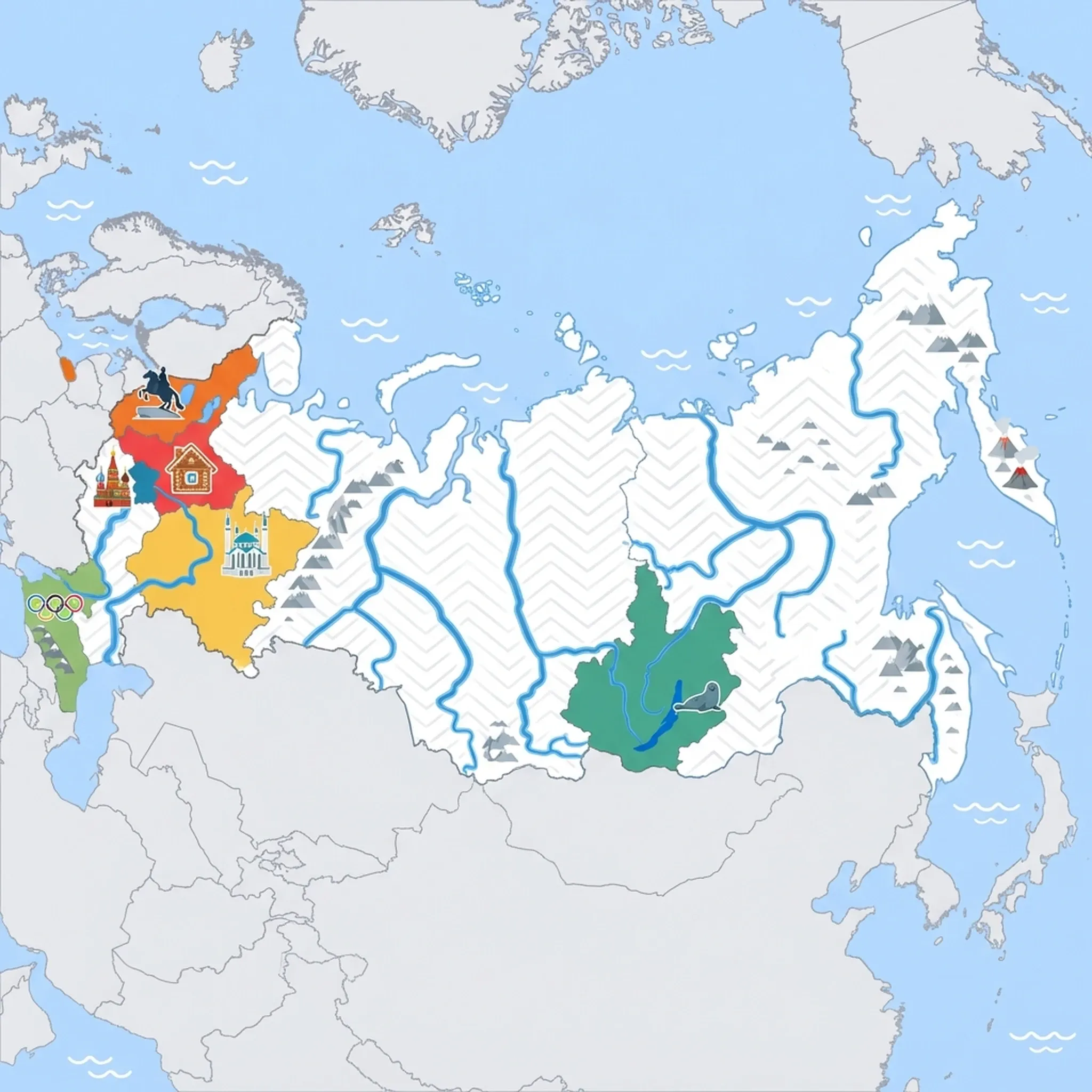
Click a region to explore
Overview
Siberia is often imagined as a cold, desolate place, but the region surrounding Lake Baikal is one of the most spiritually charged and visually stunning landscapes on the planet. For adventurous families, this is the ultimate playground. In summer, the lake sparkles with a transparency that lets you see 40 meters down, while the shores are lined with wildflowers and hiking trails. In winter, the lake freezes into a magical kingdom of turquoise ice, famous for its methane bubbles and ice grottos, where you can drive hovercrafts or skate across the world's largest rink. The energy here is palpable; local Buryat legends say that Baikal is a living entity, and shamanic ribbons flutter on trees at sacred sites, adding a layer of mystery that captivates older children and teens.
The journey usually begins in Irkutsk, a city known as the "Paris of Siberia" for its classic architecture and rich history as a trading post and exile destination. Unlike the gray Soviet blocks found elsewhere, Irkutsk preserves neighborhoods of traditional wooden houses with intricate lace-like carvings. A short drive away is Listvyanka, the most accessible lakeside village, where you can sample smoked fish at the market and visit the seal aquarium. For a deeper immersion, the island of Olkhon offers a rugged, off-grid experience with sandy beaches and dramatic cliffs, perfect for families who want to disconnect from screens and reconnect with nature.
Key Attractions
The lake itself is the main attraction. Lake Baikal is vast and mesmerizing. To learn about its unique ecosystem, the Baikal Museum of the ISC in Listvyanka is essential; it offers a virtual submarine dive and aquariums housing the endemic Baikal seals (nerpa), which are a huge hit with kids. For the best views and a bit of history, a ride on the Circum-Baikal Railway is a must. This historic steam train chugs slowly along the shoreline through dozens of tunnels and viaducts, offering perfect photo ops without the strenuous hiking.
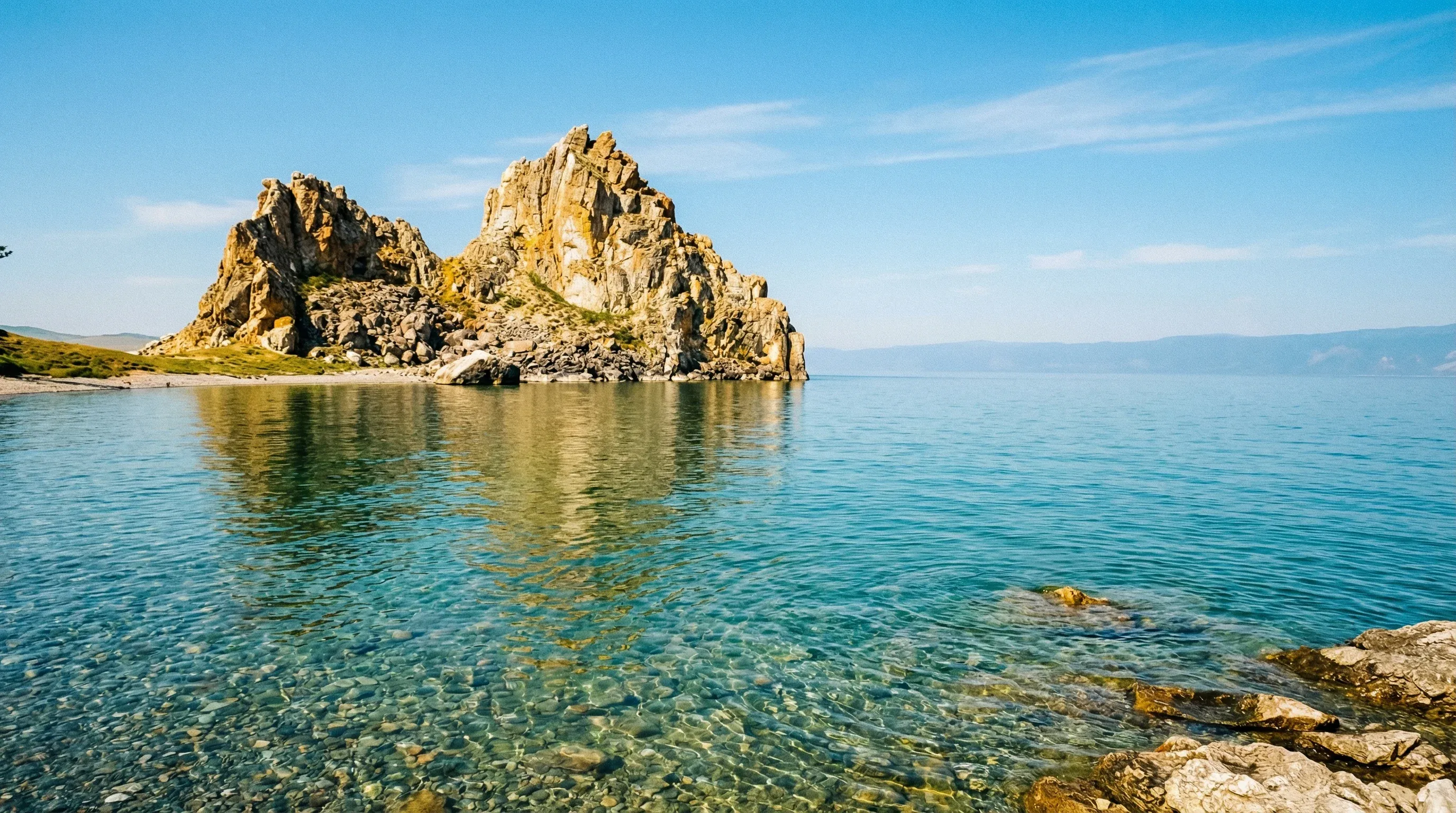
In Irkutsk, families should head to the 130th Kvartal (Irkutsk Sloboda). This reconstructed district of historic wooden mansions is now filled with souvenir shops, cafes, and a large mall, making it a safe and fun place to stroll. For a touch of local culture, a trip to Shamanka Rock (Cape Burkhan) on Olkhon Island reveals the most sacred site of Baikal shamanism, a place of stunning sunset views and ancient legends.
Practical Advice
Best time to visit: July and August for hiking and swimming (water is cold!). February and March for the famous blue ice. May and November are "mud seasons" and best avoided.
Logistics: Distances are huge. Exploring Olkhon Island requires a sturdy vehicle (UAZ van) and a ferry ride. Medical facilities in Irkutsk are adequate, but remote areas have little infrastructure. Bring all necessary medications.
Food & Drink
Typical meal times: Lunch 1:00 pm to 2:30 pm; Dinner 7:00 pm to 9:00 pm.
Typical meal costs: Moderate. A family dinner in Irkutsk costs ₽4,000–6,000 (approx. $44–66 USD / €40–60 EUR). In villages like Listvyanka, smoked fish from the market is a cheap and delicious lunch option.
Dietary requirements: The local diet is heavy on meat and fish. Vegetarians can rely on salads and potato dishes, but vegan options are rare outside Irkutsk.
Signature dishes:
- Omul – The legendary fish of Baikal. Try it hot-smoked (goryachego kopcheniya) fresh from the smoker at the market.
- Buuzy (Pozys) – Large Buryat steamed dumplings shaped like a yurt with a hole in the top. You drink the broth from the hole before eating the rest.
- Saguat – A raw fish dish, frozen and sliced thin, served with salt and pepper (more for adventurous eaters).
- Pine Nut Cake – Desserts made with local cedar pine nuts and honey.
Why this score?
This is a significant adventure destination featuring remote islands, vast wilderness, and the challenging terrain of the Siberian taiga. Activities like ice-trekking in winter or hiking the Great Baikal Trail require preparation and physical fitness.
Why this score?
While the city of Irkutsk has adequate hospitals, medical facilities around the lake itself are extremely basic and sparse. Emergency response in remote areas like Olkhon Island can be slow and may require long-distance transport to a major city.
Why this score?
Despite its status as a world-famous natural wonder, the sheer distance from Europe and Asia keeps Lake Baikal as a moderate, niche destination. Most international visitors arrive via the Trans-Siberian Railway, though domestic eco-tourism is substantial.

While general costs are lower than Moscow, the logistics of reaching remote parts of Baikal can add up. A tour to Olkhon Island including transfer and accommodation might cost a family ₽15,000–25,000 (approx. $165–275 USD / €150–250 EUR) for a few days. Food is reasonable, with a generous plate of buuzy costing only ₽300 (approx. $3.30 USD / €3 EUR). Hotel prices in Irkutsk are standard for a regional city.

Getting Here & Around
Getting Here
- Airports – Irkutsk International Airport (IKT) is the primary hub. It is a 6-hour flight from Moscow.
- Train – Irkutsk is a major stop on the Trans-Siberian Railway. Arriving by train is a classic adventure, taking about 3.5 days from Moscow.
- Driving – The Baikal Tract (Highway 25N-209) connects Irkutsk to Listvyanka (1 hour). Roads to Olkhon Island can be rough.
Getting Around
- Marshrutka (Minibus) – The most common way to get from Irkutsk to the lake. Fast but can be crowded.
- Ferry – Essential for reaching Olkhon Island. In winter, an official ice road is established.
- Private Driver – Highly recommended for families to explore the Baikalsky Nature Reserve at your own pace.
Nearby Airports (9 airports)
Bratsk Airport
BTKBratsk
Erbogachen Airport
ERGErbogachen
Irkutsk
IKTIrkutsk
Kirensk Airport
KCKKirensk
Nizhneangarsk International Airport
NZGNizhneangarsk
Bodaybo Airport
ODOBodaybo
Takismo Airport
TKMTakismo
Ust-Kut
UKXUst-Kut
Mukhino
UUDUlan-Ude
View full flight map for Russia →
Official Links

Packing List
Siberian forests have ticks that carry encephalitis; vaccination is ideal, but strong spray is mandatory.
Summer days are incredibly long with very short nights; essential for getting kids to sleep.
Even in July, nights on the lake can drop to near freezing; the weather changes instantly.
ATMs are non-existent in small villages and Olkhon Island; bring enough cash for the whole rural trip.
Western cards do not work. You must exchange cash, and banks often reject notes with even minor tears, ink marks, or folds.
Many Western websites and social media apps are blocked. VPNs are hard to download once inside the country.
GPS jamming in city centers (especially near the Kremlin) often makes phone navigation apps inaccurate or useless.
It is culturally mandatory to remove outdoor shoes in homes; they are also essential for overnight train journeys.
Cold weather drains phone batteries rapidly, and navigation/translation apps are battery-intensive.

Activities & Best Times

Hiking, wildlife, outdoor exploration, ecotourism
Home to the world's deepest lake and endemic Nerpa seals, offering unique blue ice trekking in late winter and wilderness exploration in summer. Peak seasons reflect the globally famous crystal ice conditions in Feb-Mar and the mild hiking weather of July-Aug.

Urban tourism, museums, historical sites, architecture
Irkutsk, the 'Paris of Siberia,' features a rare collection of 19th-century wooden architecture and a rich history linked to the Decembrist exiles. Summer months are peak for cultural immersion, as the severe Siberian winter limits walking tours and urban exploration.

Learning experiences, scientific sites, historical education
Features the Baikal Museum, an internationally significant limnological research station and museum dedicated to the lake's unique ecosystem. Peak months align with general tourism windows when educational programs and nerpinarium shows are most accessible.

Sport tourism, fitness activities, active recreation
The Great Baikal Trail offers dedicated infrastructure for long-distance hiking and mountain biking along the coastline. Activity is highly seasonal, restricted to the summer months when terrain is passable and weather is conducive to high-exertion sports.

Spa retreats, wellness centers, peaceful getaways
Authentic thermal spring resorts like Khakusy provide a unique wellness experience in a remote wilderness setting. The peak experience for international travelers is bathing in hot springs during the snowy winter months for a traditional Siberian restorative ritual.

Scenic drives, countryside tours, route-based travel
Routes like the Baikal Tract and the 'Little Sea' road to Olkhon provide dramatic scenic drives through Taiga and Steppe landscapes. Summer is the only recommended season for road travel due to the safety of non-ice roads and maximum daylight.

Winter sports, ski resorts, snow activities
Gora Sobolinaya offers solid alpine infrastructure with unique views of Lake Baikal. The peak season is late winter (Feb-Mar), known locally as 'velvet season,' when snow depth is maximum and extreme sub-zero temperatures begin to moderate.

Beach resorts, marine activities: diving, snorkelling, kite surfing, wind surfing, sailing
Although freshwater, the sandy beaches of Olkhon Island and Peschanaya Bay offer a unique, if brief, summer beach experience. Rated marginal as water temperatures remain very cold even in peak July and August.

Amusement parks, family entertainment venues
Small-scale water parks and ethno-parks cater primarily to domestic regional visitors. These offer supplementary entertainment for families during the peak summer window but do not represent destination-level attractions.

Attractions (19 total)



Public Holidays & Calendar Next 12 months
Public holidays, festivals, cultural celebrations, and seasonal natural phenomena coming up in Siberia - Lake Baikal over the next 12 months.
Loading holidays and events...

Travel Advisory
All major international travel agencies currently issue their highest warning level for Russia, advising against any travel and urging those currently in the country to depart immediately. This consensus is driven by the active armed conflict with Ukraine, the threat of arbitrary detention of foreigners for political leverage, and the lack of reliable commercial transport or consular assistance.
Safety Topics
Traveller Advice (3 groups)

Media professionals are at high risk of being targeted by security services. Authorities have used espionage and 'foreign agent' laws to arrest and prosecute foreign reporters. It is extremely difficult to operate safely without being subject to intense surveillance or potential detention.

Travellers face severe legal and personal risks following the designation of the international LGBTQ+ movement as an extremist organization. New laws broadly ban any public expression or 'propaganda' of non-traditional relationships, which can lead to significant fines, jail time, or harassment.

Anyone currently in the country should prioritize leaving while commercial options are still available. Individuals with dual citizenship should be aware that Russia considers them only as Russian nationals and may prevent them from leaving or force them into military service. Avoid all political discussions in public or on social media, as these can lead to immediate arrest.
Agency Summaries
Australia warns that the security environment in Russia is dangerous and unpredictable due to the war with Ukraine. Foreigners face a high risk of being arrested or detained without clear cause. Consular support is severely restricted, and Australians are viewed as being from an unfriendly nation by local authorities.
The British government advises against visiting any part of Russia. Concerns include security incidents such as drone attacks, a lack of available return flights, and a high probability of terrorism in major urban centers. There is a significant risk that foreign nationals could be detained for political reasons.
The Canadian government recommends staying away from Russia due to the dangerous fallout from the conflict with Ukraine and a pervasive threat of terrorist activity. Security is volatile, and military actions like drone strikes have occurred even deep within the country. Financial systems are restricted, and there are few ways to leave by air.
Ireland maintains its highest warning level for Russia, citing the rapid deterioration of transport links and banking services. Irish citizens are warned that remaining in the country could leave them without a viable way home and that the embassy's ability to offer assistance is very low.
American citizens are urged to avoid all travel to Russia and those currently present should leave immediately. Major risks include the threat of wrongful detention by security services, the arbitrary use of local laws, and ongoing dangers from the war in Ukraine. The embassy has extremely limited capacity to provide help.
New Zealanders are advised against any travel to Russia as the security situation can change without warning. The conflict in Ukraine has made it difficult to access money or find flights home. There is also a continuous threat of terrorism and civil unrest that may turn violent.
Information is provided for general guidance only and does not constitute travel, safety, medical, or legal advice. Conditions may change. Users are responsible for independently verifying information before travel.