
Sochi & Black Sea Coast
Where snowy peaks meet palm trees and the sea 🌴🏔️
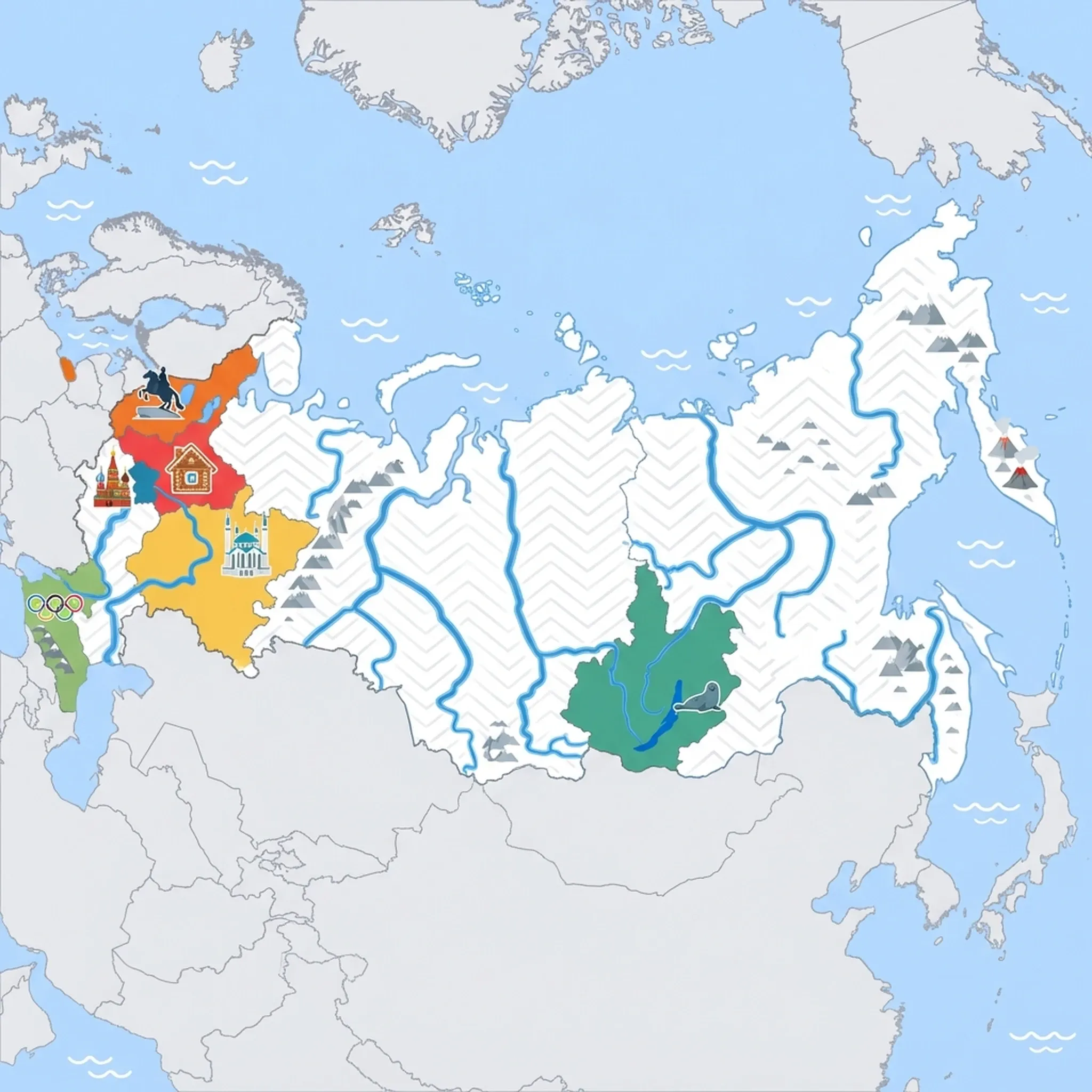
Click a region to explore
⚠️ SAFETY WARNING: Due to the proximity to the conflict zone in Ukraine, the risk of drone attacks, and the nationwide 'Do Not Travel' advisory, government agencies (including the US, UK, Canada, AU, IE, and NZ) advise avoiding all travel to this region. The security situation near the border and along the coast can be unpredictable. Families are strongly urged to consult their own government's official travel advisory before considering a trip.
Overview
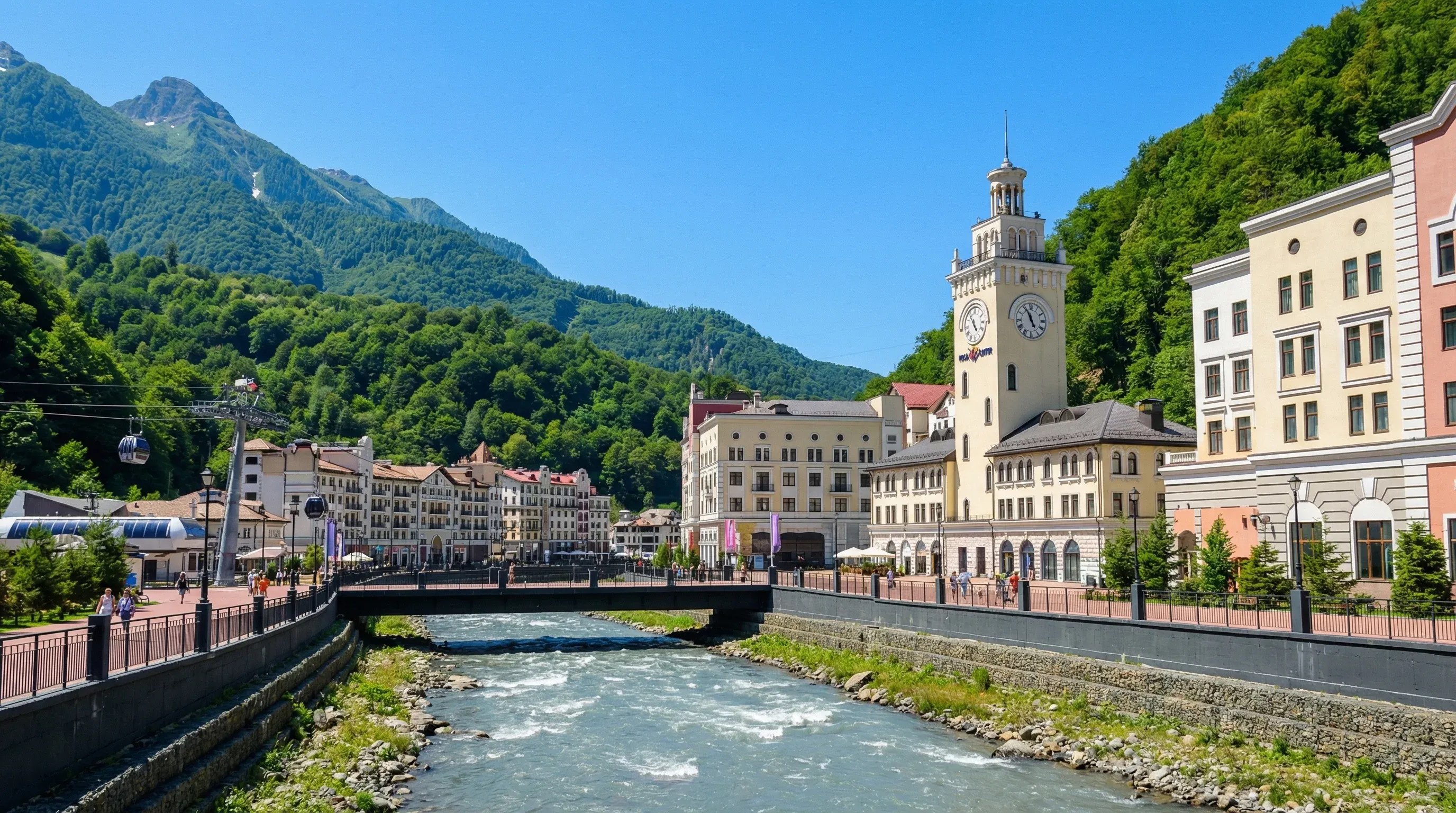
Sochi is unlike anywhere else in Russia. Stretching over 140 kilometers along the Black Sea coast, it sits at the same latitude as Nice and boasts a humid subtropical climate. For families, this is the country's biggest playground. The legacy of the 2014 Winter Olympics transformed the region, leaving behind modern train links, massive hotels, and world-class ski resorts in Krasnaya Polyana that rival the Alps. In the coastal clusters of Adler and Sirius, the vibe is pure beach holiday: promenades lined with souvenir stalls, pebble beaches, and the Formula 1 track winding through the Olympic Park.
What makes Sochi special is the vertical diversity. You can spend the morning sunbathing by the sea and the afternoon riding a gondola up to 2,300 meters in the Caucasus Mountains. The vegetation is lush and exotic, filled with magnolias, cypress, and palm trees. Beyond the glitz of the modern resorts, there is deep history to be found, from the sombre grandeur of Stalin's Dacha to the ancient dolmens hidden in the forests. It is a loud, busy, and energetic destination that caters specifically to domestic family tourism, meaning children are welcome everywhere.
Key Attractions
For kids, the number one destination is Sochi Park. Often called the "Russian Disneyland," it is based on Russian folklore and fairy tales, featuring high-quality roller coasters and shows. Just next door is the Olympic Park, where the singing fountains put on a spectacular light show every evening. Nature lovers should not miss the Sochi Arboretum (Dendrary), a massive botanical garden with a cable car that offers sweeping views of the city and sea. It’s a great place to let kids run free among exotic plants and ostriches.
If you head into the mountains, the Safari Park offers a chance to see animals in semi-wild conditions, while the Sochi Discovery World Aquarium in Adler impresses with its 44-meter-long acrylic tunnel surrounded by sharks and turtles. For a bit of exercise, a hike to the Agura Waterfalls is accessible for active families and rewards you with beautiful cascades and plunge pools.
Practical Advice
Best time to visit: June to September for beaches (very crowded in August). January to March for skiing. May and October are pleasant for sightseeing without the crowds.
Logistics: The coastline is long. The "Lastochka" electric train is the best way to move between the coast (Adler/Sochi) and the mountains (Rosa Khutor) to avoid heavy traffic jams.
Food & Drink
Typical meal times: Lunch 1:00 pm to 3:00 pm; Dinner 7:00 pm to 10:00 pm (restaurants stay open late in summer).
Typical meal costs: Prices are comparable to Moscow (high). A family meal at a seafront restaurant can cost ₽5,000–8,000 (approx. $55–88 USD / €50–80 EUR). Canteens (stolovaya) are very common and cheap.
Dietary requirements: Georgian cuisine is dominant here, offering excellent vegetarian dishes like bean stews and vegetable appetizers (pkhali). Gluten-free can be tricky with all the breads.
Signature dishes:
- Khachapuri – A cheese-filled bread boat topped with an egg and butter. The "Adjaruli" style is iconic here.
- Shashlik – Skewered meat (pork, chicken, or lamb) grilled over charcoal, sold at every street corner.
- Churchkhela – Strings of nuts dipped in thickened grape juice, hanging like sausages at market stalls. A healthy-ish energy snack for kids.
- Black Sea Mussels – Usually served in a creamy garlic or tomato sauce.
Why this score?
The region offers a high level of outdoor recreation, from alpine skiing in Krasnaya Polyana to hiking in the Caucasian State Nature Biosphere Reserve. The terrain is mountainous and can be rugged, though the proximity to a major city adds a layer of safety.
Why this score?
Post-Olympic investment has left Sochi with modern hospitals and specialized trauma centers capable of handling international travelers. While quality is high, the language barrier remains a factor for foreign families outside of the most prestigious clinics.
Why this score?
Sochi is a recognized international destination thanks to the 2014 Winter Olympics and its status as Russia's primary summer resort. It attracts a consistent flow of visitors from neighboring countries, though it remains secondary to European Mediterranean hubs.

Sochi is the most expensive resort area in Russia. In peak summer and peak ski season, hotel prices can exceed Moscow levels. A family room in a good resort hotel can cost ₽15,000–25,000 (approx. $165–275 USD / €150–250 EUR) per night. Lift passes and theme park tickets are also Western-priced. However, budget travelers can find cheap guest houses and eat at "stolovayas" for a fraction of the price.

Getting Here & Around
Getting Here
- Airports – Sochi International Airport (AER) in Adler is one of the few southern airports in Russia that remains open and busy, serving as a major hub.
- Train – Trains from Moscow take 24-30 hours. The route along the coast is incredibly scenic but slow.
- Car – Driving to Sochi involves navigating the winding "serpentine" mountain roads, which can be nauseating for children and dangerous for inexperienced drivers.
Getting Around
- Train – The Lastochka commuter train is fast, air-conditioned, and the most comfortable way to travel between Sochi, Adler, and the ski resorts.
- Taxi – Yandex Taxi works well, but traffic in summer can be gridlocked.
- Walking – The seaside promenades connect many districts, but the distances between major towns (e.g., Sochi to Adler) are too far to walk.
Nearby Airports (1 airport)
Sochi Airport
AERAdler/Sochi
View full flight map for Russia →
Official Links

Packing List
Most beaches are pebble/stone, not sand; walking into the water is painful barefoot.
The coastal roads and mountain ascents are extremely winding (serpentine).
The UV index is very high in summer, and the mountain sun in winter burns quickly.
Sochi is humid and subtropical; sudden, heavy downpours are common even in summer.
Western cards do not work. You must exchange cash, and banks often reject notes with even minor tears, ink marks, or folds.
Many Western websites and social media apps are blocked. VPNs are hard to download once inside the country.
GPS jamming in city centers (especially near the Kremlin) often makes phone navigation apps inaccurate or useless.
It is culturally mandatory to remove outdoor shoes in homes; they are also essential for overnight train journeys.
Cold weather drains phone batteries rapidly, and navigation/translation apps are battery-intensive.

Activities & Best Times

Hiking, wildlife, outdoor exploration, ecotourism
The Caucasus mountains offer world-class hiking, unique subtropical flora, and major adventure centers like Skypark; summer months provide ideal conditions for mountain exploration. Shoulder seasons offer cooler temperatures but some mountain trails may be muddy or inaccessible due to late snowmelt.

Urban tourism, museums, historical sites, architecture
Features a unique mix of Stalinist Empire architecture, the 'My Russia' ethnographic center, and world-class botanical gardens like the Dendrary. Spring and autumn are peak for walking, while July and August can be excessively humid and crowded for urban exploration.
Amusement parks, family entertainment venues
Sochi Park provides a high-quality theme park experience based on Russian folklore alongside major water parks like Zolotaya Bukhta. Facilities are fully operational during the summer school holidays, with reduced services or closures in the cold, damp winter months.

Sport tourism, fitness activities, active recreation
Infrastructure such as Gorky Fly and Skypark AJ Hackett provide world-class facilities for extreme sports and active family recreation. Activity is concentrated in the warmer months when outdoor ropes courses and jump sites are most safely accessible.
Beach resorts, marine activities: diving, snorkelling, kite surfing, wind surfing, sailing
Pebble beaches with cooler Black Sea waters do not constitute a compelling beach destination when compared to Mediterranean, Caribbean, or Southeast Asian standards. 'Good' rating should indicate a worthwhile beach holiday destination - Sochi's beaches are acceptable for regional visitors but not competitive internationally. The beaches exist and function but are not a primary draw.

Learning experiences, scientific sites, historical education
Features several significant aquatic learning centers like Sochi Discovery World Aquarium that offer educational insights into regional marine life. While high-quality, these are typically secondary activities for families rather than primary travel motivators.

Attractions (30 total)



Public Holidays & Calendar Next 12 months
Public holidays, festivals, cultural celebrations, and seasonal natural phenomena coming up in Sochi & Black Sea Coast over the next 12 months.
Loading holidays and events...

Travel Advisory
All major international travel agencies currently issue their highest warning level for Russia, advising against any travel and urging those currently in the country to depart immediately. This consensus is driven by the active armed conflict with Ukraine, the threat of arbitrary detention of foreigners for political leverage, and the lack of reliable commercial transport or consular assistance.
Safety Topics
Traveller Advice (3 groups)

Media professionals are at high risk of being targeted by security services. Authorities have used espionage and 'foreign agent' laws to arrest and prosecute foreign reporters. It is extremely difficult to operate safely without being subject to intense surveillance or potential detention.

Travellers face severe legal and personal risks following the designation of the international LGBTQ+ movement as an extremist organization. New laws broadly ban any public expression or 'propaganda' of non-traditional relationships, which can lead to significant fines, jail time, or harassment.

Anyone currently in the country should prioritize leaving while commercial options are still available. Individuals with dual citizenship should be aware that Russia considers them only as Russian nationals and may prevent them from leaving or force them into military service. Avoid all political discussions in public or on social media, as these can lead to immediate arrest.
Agency Summaries
Australia warns that the security environment in Russia is dangerous and unpredictable due to the war with Ukraine. Foreigners face a high risk of being arrested or detained without clear cause. Consular support is severely restricted, and Australians are viewed as being from an unfriendly nation by local authorities.
The British government advises against visiting any part of Russia. Concerns include security incidents such as drone attacks, a lack of available return flights, and a high probability of terrorism in major urban centers. There is a significant risk that foreign nationals could be detained for political reasons.
The Canadian government recommends staying away from Russia due to the dangerous fallout from the conflict with Ukraine and a pervasive threat of terrorist activity. Security is volatile, and military actions like drone strikes have occurred even deep within the country. Financial systems are restricted, and there are few ways to leave by air.
Ireland maintains its highest warning level for Russia, citing the rapid deterioration of transport links and banking services. Irish citizens are warned that remaining in the country could leave them without a viable way home and that the embassy's ability to offer assistance is very low.
American citizens are urged to avoid all travel to Russia and those currently present should leave immediately. Major risks include the threat of wrongful detention by security services, the arbitrary use of local laws, and ongoing dangers from the war in Ukraine. The embassy has extremely limited capacity to provide help.
New Zealanders are advised against any travel to Russia as the security situation can change without warning. The conflict in Ukraine has made it difficult to access money or find flights home. There is also a continuous threat of terrorism and civil unrest that may turn violent.
Information is provided for general guidance only and does not constitute travel, safety, medical, or legal advice. Conditions may change. Users are responsible for independently verifying information before travel.