
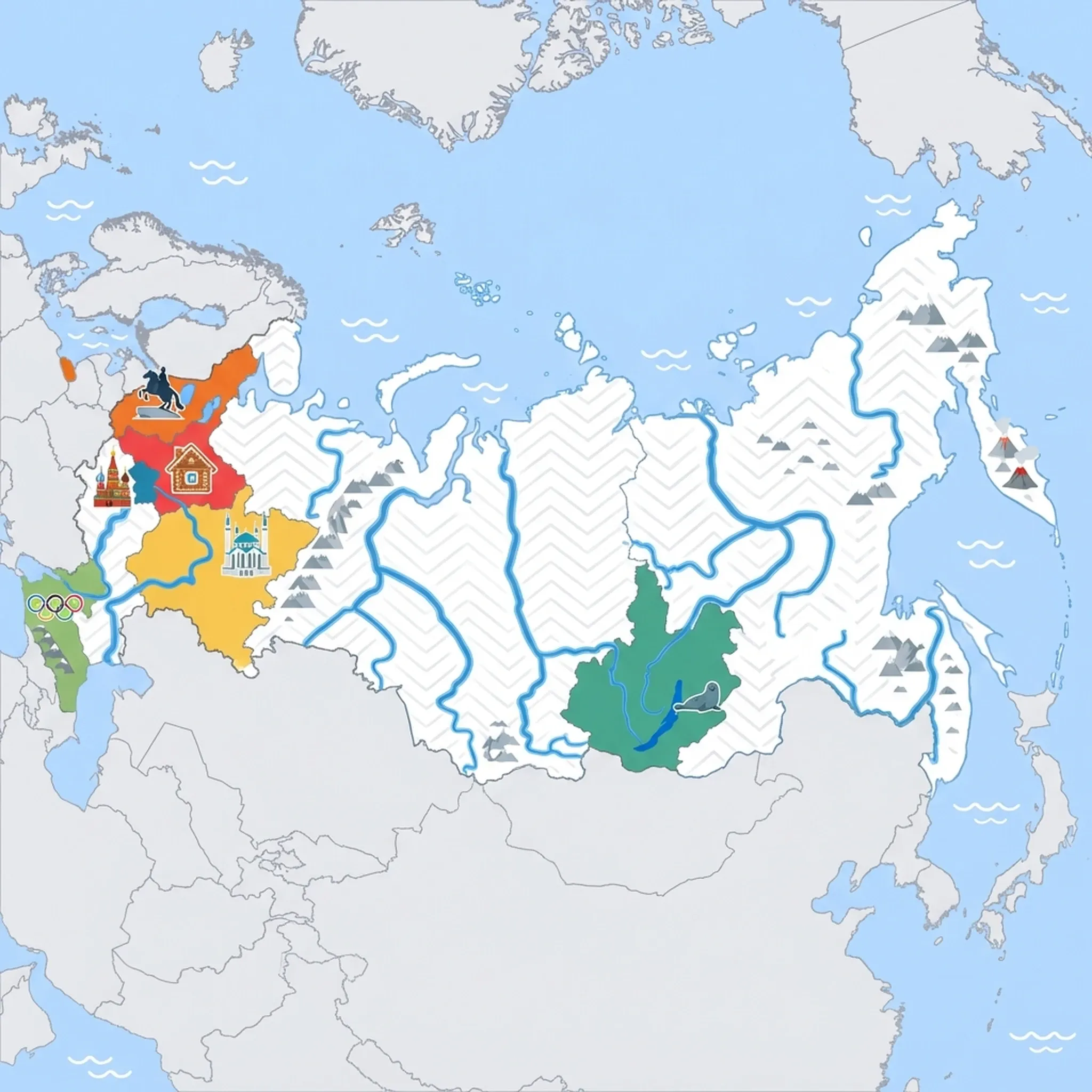
Click a region to explore
⚠️ SAFETY WARNING: Due to the volatile political situation, risk of arbitrary detention, and limited flight options, government agencies (including the US, UK, Canada, AU, IE, and NZ) advise avoiding all travel to St. Petersburg. While the city remains physically intact, Western travelers face significant logistical and legal risks with minimal consular support available. Families are strongly urged to consult their own government's official travel advisory before considering a trip.
Overview
St. Petersburg is Russia's cultural capital, a city built by Peter the Great to be a "Window to Europe." For families, it offers a visually stunning history lesson. The city is a network of islands connected by hundreds of bridges and canals, giving it a romantic, open feel that is distinct from Moscow's fortress-like layout. The architecture is pastel-colored and human-scale, making walking tours a delight. In summer, the phenomenon of the "White Nights" (late May to early July) means it stays light almost 24 hours a day, creating a festival atmosphere where families stroll the embankments at midnight to watch the massive Neva bridges raise to let ships pass.
Culturally, the city is unmatched. While the main Hermitage can be overwhelming for small kids, the sheer scale of the palaces like Peterhof Grand Palace—often called the Russian Versailles—will impress anyone. The gardens are designed for fun, featuring "trick fountains" hidden in paving stones that spray unsuspecting passersby, a joke planted by Peter the Great himself 300 years ago. From climbing the colonnade of St. Isaac's Cathedral for panoramic views to taking a boat tour through the winding canals, the city offers a mix of education and adventure.
Key Attractions
The Peter and Paul Fortress is the birthplace of the city. Kids love the daily firing of the cannon at noon and the sandy beach right outside the fortress walls where locals sunbathe. For a deep dive into art without the crowds of the main palace, the General Staff Building (Hermitage branch) across Palace Square hosts the Impressionist collection and is far more spacious and stroller-friendly.
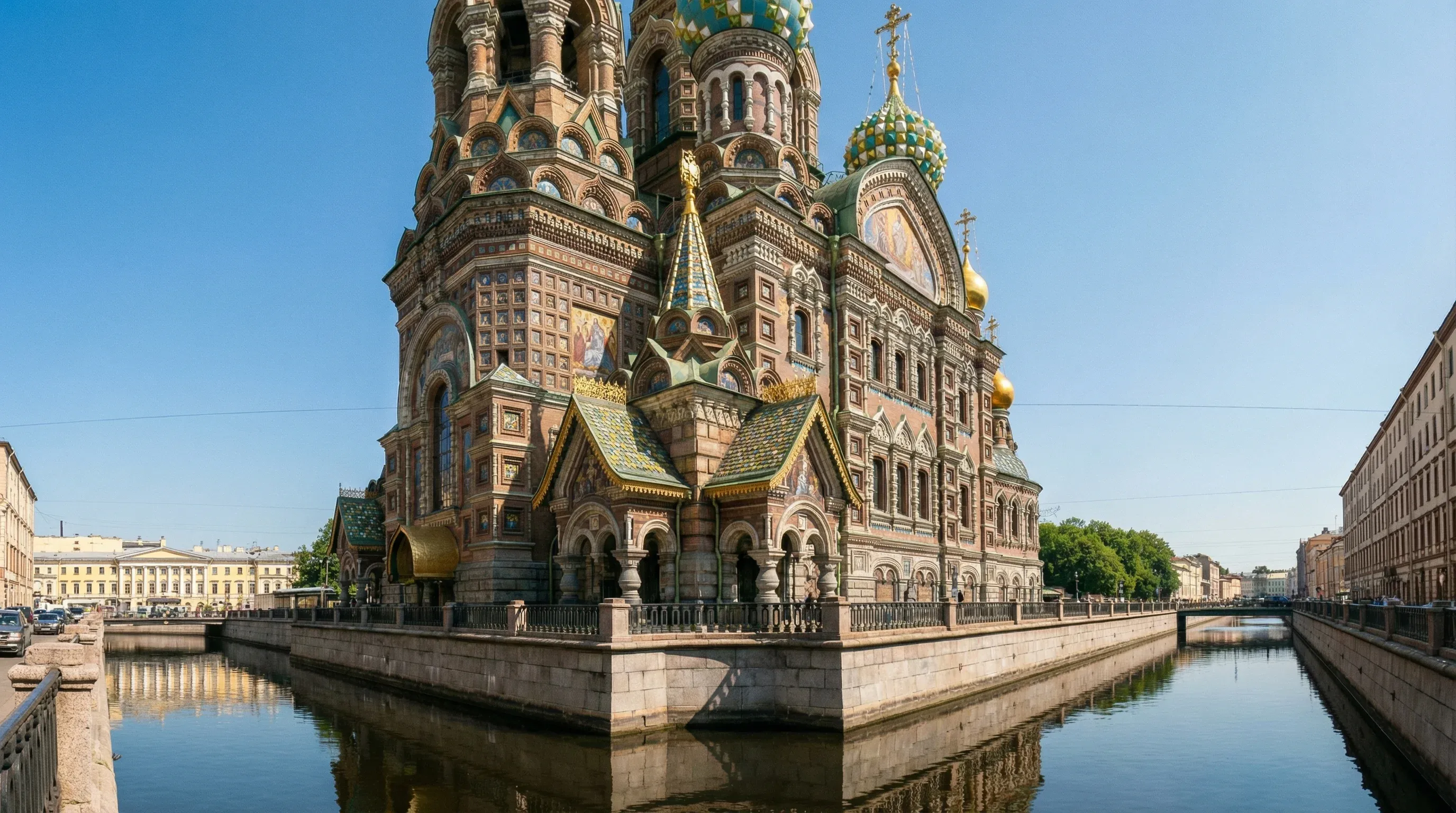
No trip is complete without visiting Peterhof Grand Palace and Gardens. The lower gardens are accessible via a hydrofoil ride from the city center, which is an adventure in itself. Back in the city, the Church of the Savior on Spilled Blood with its multi-colored mosaic domes is visually mesmerizing. For pure entertainment, Divo-Ostrov is a large amusement park located in a beautiful public park, offering rides for all ages.
Practical Advice
Best time to visit: Late May to July for White Nights. September is beautiful (golden autumn). Winter is dark and damp, though the snow-covered palaces are scenic.
Logistics: The Metro is deep and not very stroller-friendly (lots of stairs). Walking and canal boats are the best ways to see the center. The drawbridges open at night (usually 1:00 am - 5:00 am), cutting off connection between islands—check the schedule so you don't get stuck on the wrong side!
Food & Drink
Typical meal times: Lunch 1:00 pm to 3:00 pm; Dinner 7:00 pm to 10:00 pm.
Typical meal costs: Slightly cheaper than Moscow. A family dinner costs ₽4,000–7,000 (approx. $44–77 USD / €40–70 EUR). Bakeries (bulochnaya) are everywhere and offer cheap snacks.
Dietary requirements: Very high standard of vegan and vegetarian food. The city has a hipster food culture with many modern cafes catering to all allergies.
Signature dishes:
- Pyshki – Traditional donuts sprinkled with powdered sugar. The historic Pyshechnaya on Bolshaya Konyushennaya St is a cult spot.
- Smelt (Koryushka) – Small fried fish that smell like cucumber, a seasonal delicacy in spring (April/May).
- Beef Stroganoff – Invented here; sautéed pieces of beef served in a sauce with smetana (sour cream).
Why this score?
The tourism experience is almost entirely urban, focused on walking tours of the historic center and boat trips through the canal system. The region is flat, paved, and highly accessible for families with young children or seniors.
Why this score?
St. Petersburg offers excellent healthcare with several dedicated international medical centers that provide English-speaking doctors and direct billing to foreign insurance. It is one of the few places in Russia where medical care for tourists is streamlined and very accessible.
Why this score?
As the imperial capital, this city is a major international draw comparable to other European cultural capitals like Prague or Vienna. Its world-class museums and palace complexes attract millions of foreign tourists annually, particularly during the White Nights.

St. Petersburg caters to all budgets. You can stay in a hostel or a luxury palace hotel. A comfortable family apartment or hotel room costs ₽7,000–12,000 (approx. $77–132 USD / €70–120 EUR). Transport is cheap, but museum tickets for foreigners can be higher than for locals. Eating out offers great value, especially the business lunches in cafes.

Getting Here & Around
Getting Here
- Airports – Pulkovo Airport (LED) serves the city. International connections are currently limited mostly to Turkey and the Middle East.
- Train – The high-speed Sapsan train connects to Moscow in 4 hours. It is comfortable, modern, and family-friendly.
- Bus – Bus connections to Finland and Estonia exist but borders are subject to strict controls and potential closures.
Getting Around
- Metro – The deepest metro in the world. Stations are beautiful but navigating the escalators with small kids requires care.
- Hydrofoil – The fastest and most scenic way to reach Peterhof is by hydrofoil (Meteor) from the Hermitage embankment.
- Canal Boat – Essential for sightseeing. Hop-on hop-off options are available.
Nearby Airports (1 airport)
Pulkovo Airport
LEDSaint Petersburg
View full flight map for Russia →
Official Links

Packing List
The weather changes instantly; rain and wind are frequent even in summer.
Essential during White Nights (May-July) as it never gets fully dark.
The wind from the Gulf of Finland is piercing year-round; protect your throat.
Puddles and slush are common; wet feet will ruin a day of walking.
Western cards do not work. You must exchange cash, and banks often reject notes with even minor tears, ink marks, or folds.
Many Western websites and social media apps are blocked. VPNs are hard to download once inside the country.
GPS jamming in city centers (especially near the Kremlin) often makes phone navigation apps inaccurate or useless.
It is culturally mandatory to remove outdoor shoes in homes; they are also essential for overnight train journeys.
Cold weather drains phone batteries rapidly, and navigation/translation apps are battery-intensive.

Activities & Best Times

Urban tourism, museums, historical sites, architecture
Home to the Hermitage and spectacular Imperial palaces, St. Petersburg offers world-class art and architecture that rival any European capital. Peak season centers on the 'White Nights' in June, while December and January provide an authentic, albeit cold, winter experience with festive lighting and opera.

Hiking, wildlife, outdoor exploration, ecotourism
Offers a blend of high-end adventure parks and authentic rural experiences like Verkhnie Mandrogi village. These facilities are best enjoyed during the mild summer months when the Neva River and surrounding forests are fully accessible.

Sport tourism, fitness activities, active recreation
Infrastructure such as Okhta Park and Norway Park Elagin offers organized ropes courses and outdoor sports for active families. The season is limited by the northern climate, making May through September the only viable window for these activities.
Amusement parks, family entertainment venues
Features significant venues like Divo-Ostrov and Piterland Aquapark, providing high-quality family entertainment. Outdoor attractions are strictly seasonal, peaking in mid-summer when temperatures are comfortable for all-day park visits.

Beach resorts, marine activities: diving, snorkelling, kite surfing, wind surfing, sailing
While the Gulf of Finland offers scenic shoreline recreation at Peterhof and the Peter and Paul Fortress, it lacks traditional warm-water resort qualities. It serves as a pleasant coastal escape for sunbathing and walking only during the peak of summer.

Learning experiences, scientific sites, historical education
The Saint Petersburg Oceanarium provides a high-quality, purpose-built learning environment for families. While an indoor facility, visitation aligns with the city's broader tourism peaks when auxiliary services and transport are most frequent.

Attractions (22 total)



Public Holidays & Calendar Next 12 months
Public holidays, festivals, cultural celebrations, and seasonal natural phenomena coming up in St. Petersburg over the next 12 months.
Loading holidays and events...

Travel Advisory
All major international travel agencies currently issue their highest warning level for Russia, advising against any travel and urging those currently in the country to depart immediately. This consensus is driven by the active armed conflict with Ukraine, the threat of arbitrary detention of foreigners for political leverage, and the lack of reliable commercial transport or consular assistance.
Safety Topics
Traveller Advice (3 groups)

Media professionals are at high risk of being targeted by security services. Authorities have used espionage and 'foreign agent' laws to arrest and prosecute foreign reporters. It is extremely difficult to operate safely without being subject to intense surveillance or potential detention.

Travellers face severe legal and personal risks following the designation of the international LGBTQ+ movement as an extremist organization. New laws broadly ban any public expression or 'propaganda' of non-traditional relationships, which can lead to significant fines, jail time, or harassment.

Anyone currently in the country should prioritize leaving while commercial options are still available. Individuals with dual citizenship should be aware that Russia considers them only as Russian nationals and may prevent them from leaving or force them into military service. Avoid all political discussions in public or on social media, as these can lead to immediate arrest.
Agency Summaries
Australia warns that the security environment in Russia is dangerous and unpredictable due to the war with Ukraine. Foreigners face a high risk of being arrested or detained without clear cause. Consular support is severely restricted, and Australians are viewed as being from an unfriendly nation by local authorities.
The British government advises against visiting any part of Russia. Concerns include security incidents such as drone attacks, a lack of available return flights, and a high probability of terrorism in major urban centers. There is a significant risk that foreign nationals could be detained for political reasons.
The Canadian government recommends staying away from Russia due to the dangerous fallout from the conflict with Ukraine and a pervasive threat of terrorist activity. Security is volatile, and military actions like drone strikes have occurred even deep within the country. Financial systems are restricted, and there are few ways to leave by air.
Ireland maintains its highest warning level for Russia, citing the rapid deterioration of transport links and banking services. Irish citizens are warned that remaining in the country could leave them without a viable way home and that the embassy's ability to offer assistance is very low.
American citizens are urged to avoid all travel to Russia and those currently present should leave immediately. Major risks include the threat of wrongful detention by security services, the arbitrary use of local laws, and ongoing dangers from the war in Ukraine. The embassy has extremely limited capacity to provide help.
New Zealanders are advised against any travel to Russia as the security situation can change without warning. The conflict in Ukraine has made it difficult to access money or find flights home. There is also a continuous threat of terrorism and civil unrest that may turn violent.
Information is provided for general guidance only and does not constitute travel, safety, medical, or legal advice. Conditions may change. Users are responsible for independently verifying information before travel.