
Click a region to explore
Overview
Kigali defies many stereotypes of chaotic capital cities. It is immaculately clean, remarkably safe, and organized, making it a stress-free entry point for families visiting East Africa. Spanning several ridges and valleys, the city offers spectacular views at every turn. For parents, the orderliness—motorcycle taxis carry extra helmets, plastic bags are banned, and manicured medians are the norm—provides a sense of ease. Children will enjoy the ample green spaces and the friendly, welcoming nature of the locals. It is a city that invites walking in its car-free zones and exploring its emerging art scene without the hustle often associated with urban travel in the region.
Culturally, Kigali is the pulse of modern Rwanda. It balances a deep respect for the past with a forward-looking optimism. While the history of the 1994 Genocide against the Tutsi is omnipresent, the city focuses on reconciliation and rebirth. Families with older children will find the museums deeply moving and educational, fostering important conversations about humanity and resilience. For younger kids, the city's parks, swimming pools at family-friendly hotels, and colorful art centers offer plenty of entertainment. The climate is temperate year-round, meaning days are usually warm but rarely scorching, perfect for urban exploration.
Key Attractions
The Kigali Genocide Memorial is the city's most significant site. While emotionally heavy, it is essential for understanding the country. The outdoor gardens are peaceful, and many families choose to visit the grounds even if they skip the graphic interior exhibits with younger children. For a lighter cultural experience, the Inema Arts Center is fantastic; it’s colorful, creative, and often hosts dance performances or workshops that kids love.
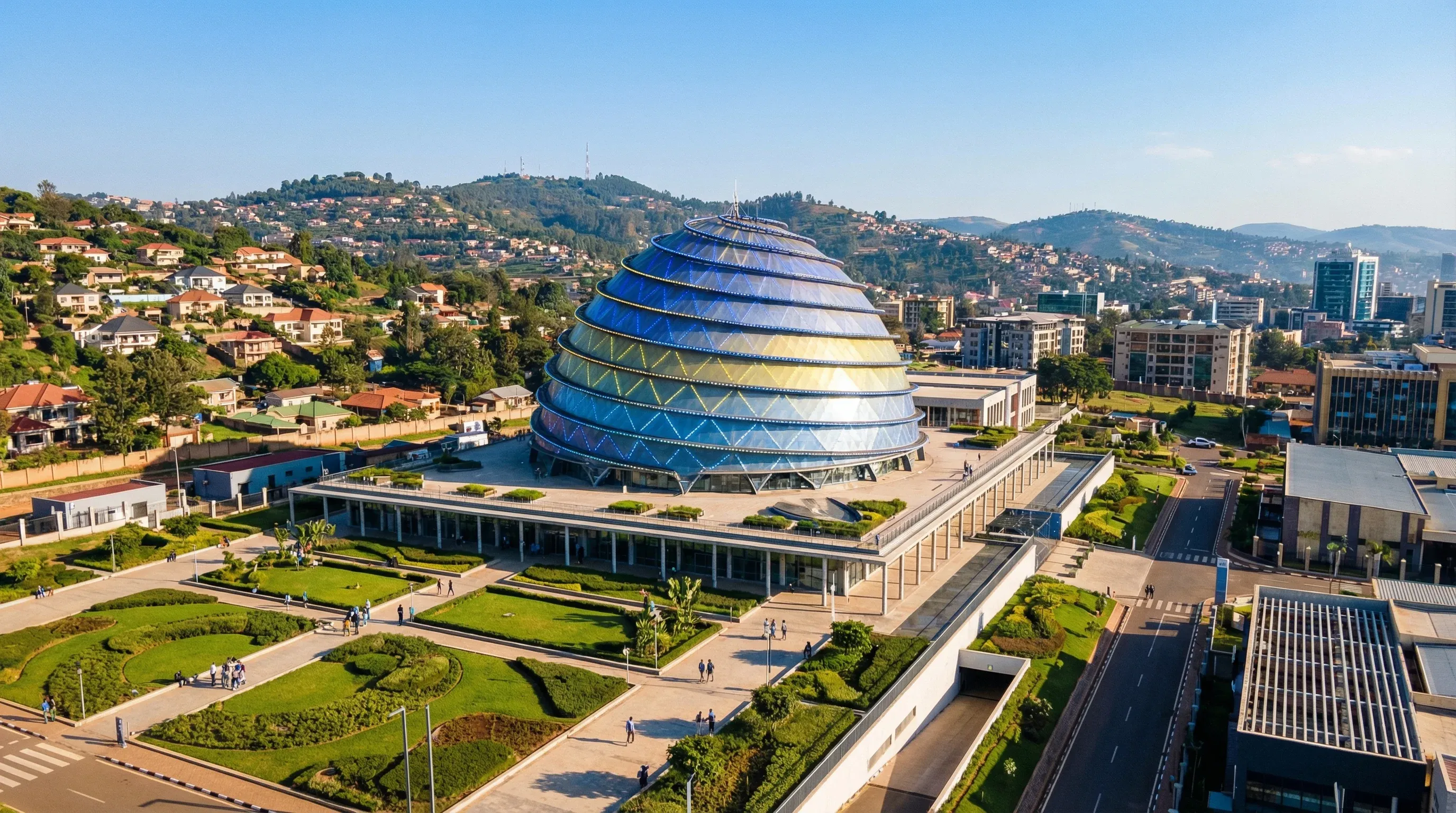
Nature-loving families should head to Nyandungu Eco-Park. This restored wetland offers paved walking and cycling trails that are stroller-friendly—a rarity in many safari destinations. It's a great spot to see local birds and let kids run off energy. Architecture fans will appreciate the illuminated dome of the Kigali Convention Centre, which lights up the night sky in the colours of the Rwandan flag.
Practical Advice
Kigali is hilly, so walking can be tiring for little legs; however, sidewalks are generally good in the main districts. The city is safe to walk in even after dark in most areas. Traffic laws are strictly enforced. The best time to visit is during the dry seasons (June–September), but the city is functional and pleasant year-round.
Food & Drink
Typical meal times: Lunch is usually 12:00 pm to 2:00 pm. Dinner is eaten slightly later, often from 7:30 pm to 9:30 pm.
Typical meal costs: A main dish in a mid-range cafe costs 8,000–15,000 RWF (approx. $6.50–12 USD / €6–11 EUR). High-end dining can reach 30,000–50,000 RWF (approx. $24–40 USD / €22–37 EUR) per person.
Dietary requirements: Kigali is very cosmopolitan. You will easily find Italian, Indian, and Chinese restaurants with plenty of vegetarian and vegan options. Gluten-free is understood at expat-focused cafes.
Signature dishes:
- Akabenz – Roast pork with a lime/BBQ glaze, a very popular dish in local pubs (named after the Mercedes Benz logo).
- Isombe – Mashed cassava leaves cooked with spinach, eggplant, and peanut butter—a nutritious, creamy side dish.
- Rwandan Coffee – World-class Arabica; cafes often serve "café noir" (black) or "café au lait" (with lots of hot milk).
Why this score?
Kigali is a highly developed, safe, and hilly urban center where most activities involve museums, markets, and restaurants. While the 'thousand hills' offer some walking opportunities, the infrastructure is paved and modern, offering very little rugged adventure for families.
Why this score?
Kigali hosts the country's best healthcare facilities, including King Faisal Hospital, which has experience treating international patients and expats. While adequate for many emergencies and basic surgeries, it still lacks the comprehensive specialized services found in world-class medical hubs.
Why this score?
As the main international gateway and a rising hub for business and conferences in Africa, Kigali receives the vast majority of Rwanda's foreign arrivals. Its clean streets and genocide memorials make it a mandatory stop for tourists, though it lacks the volume of a major global tourism capital.

Kigali accommodates all budgets. You can find guesthouses for 35,000–60,000 RWF (approx. $28–48 USD / €25–44 EUR) or 5-star luxury hotels for 300,000+ RWF (approx. $240+ USD / €220+ EUR). Transport is cheap; a taxi across town rarely exceeds 10,000 RWF (approx. $8 USD / €7.50 EUR).

Getting Here & Around
Getting Here
- Airports – Kigali International Airport (KGL) is the main gateway, located in Kanombe, just 15–20 minutes from the city center.
- Bus – The Nyabugogo Bus Park is the central hub for national buses arriving from all other provinces and neighboring countries.
Getting Around
- Taxi – Official cabs (often white with orange stripes) are safe and can be booked via phone or apps like Yego Cabs.
- Moto-taxi – Motorcycle taxis are ubiquitous and cheap, but may not be suitable for families with small children due to safety risks. Helmets are mandatory.
- Walking – Areas like the pedestrian zone in the city center (Car Free Zone) are excellent for walking.
Nearby Airports (1 airport)
Kigali International
KGLKigali
View full flight map for Rwanda →
Official Links

Packing List
Plastic bags are strictly banned and confiscated at the airport; bring totes.
Evenings can be surprisingly cool due to the altitude.
Rwanda uses Type C/J plugs; older buildings may have varied sockets.
Rain showers can be sudden and heavy, even in 'dry' seasons.
Plastic bags are strictly banned and confiscated at the airport; pack reusable totes for shopping and laundry.
Essential for grabbing stinging nettles and thorny branches during jungle treks or nature walks.
Prevents safari ants and mud from entering your boots during forest hikes in Nyungwe or Volcanoes NP.
Rwanda is the 'Land of a Thousand Hills'—roads are endlessly winding and can affect kids easily.
Mornings in the mountains (Volcanoes/Nyungwe) are surprisingly cold (10°C/50°F) despite being near the equator.
Physical proof of vaccination is often requested at the airport border control.

Activities & Best Times

Urban tourism, museums, historical sites, architecture
As one of Africa's cleanest and safest capitals, Kigali features the world-class Genocide Memorial and a vibrant contemporary art scene. Peak visitation aligns with the primary dry seasons and end-of-year holidays when the city's outdoor cafes and eco-parks are most enjoyable.

Hiking, wildlife, outdoor exploration, ecotourism
Kigali offers unique urban-edge nature experiences like the Umusambi Village crane sanctuary and hiking on Mount Kigali. The dry seasons from June to September provide the best trail conditions, while heavy rains in April and November can make hiking paths difficult.

Scenic drives, countryside tours, route-based travel
Kigali serves as the essential hub for Rwanda's spectacular scenic highways leading to Musanze and the Kivu Belt. Driving is best during dry months to ensure clear mountain vistas and safe road conditions on winding highland routes.

Sport tourism, fitness activities, active recreation
The region is an emerging cycling destination featuring the UCI World Championships Circuit and significant mountain biking trails. Activities are most accessible during the long dry season when infrastructure is most reliable and weather is conducive to high-intensity outdoor sport.




Public Holidays & Calendar Next 12 months
Public holidays, festivals, cultural celebrations, and seasonal natural phenomena coming up in Kigali over the next 12 months.
Loading holidays and events...

Travel Advisory
While half of the major agencies consider Rwanda safe for standard travel, the other half recommend increased caution due to persistent regional tensions and border risks. This split assessment suggests a need for heightened situational awareness.
Safety Topics
Traveller Advice (3 groups)

Rwanda is generally considered safe for women, including solo travellers; however, standard precautions should be taken when walking alone at night, and conservative dress is often respected in rural areas.

While consensual same-sex acts are not criminalized and discrimination is constitutionally prohibited, local society remains conservative. Public displays of affection may attract negative attention or harassment.

Visitors should always carry identification, follow local authority directives, and avoid night-time travel outside of major urban centers. It is recommended to stay informed through local media regarding border status.
Agency Summaries
Travellers should maintain standard safety awareness throughout the country, though specific border regions require significantly higher vigilance.
The general security environment is stable, though conflict in neighboring DRC may occasionally impact safety near the western border.
A high level of vigilance is advised because of the volatile situation in the wider Great Lakes region and potential for rapid changes in security.
Travellers should remain alert in public spaces and monitor border conditions which can deteriorate with little warning.
Increased caution is recommended due to potential armed violence, particularly in districts bordering the Democratic Republic of the Congo.
No country-wide warnings are in place, but visitors are advised to avoid certain border areas due to regional instability.
Information is provided for general guidance only and does not constitute travel, safety, medical, or legal advice. Conditions may change. Users are responsible for independently verifying information before travel.