
Lake Kivu & West
A scenic inland sea of relaxation and adventure 🏖️🚤
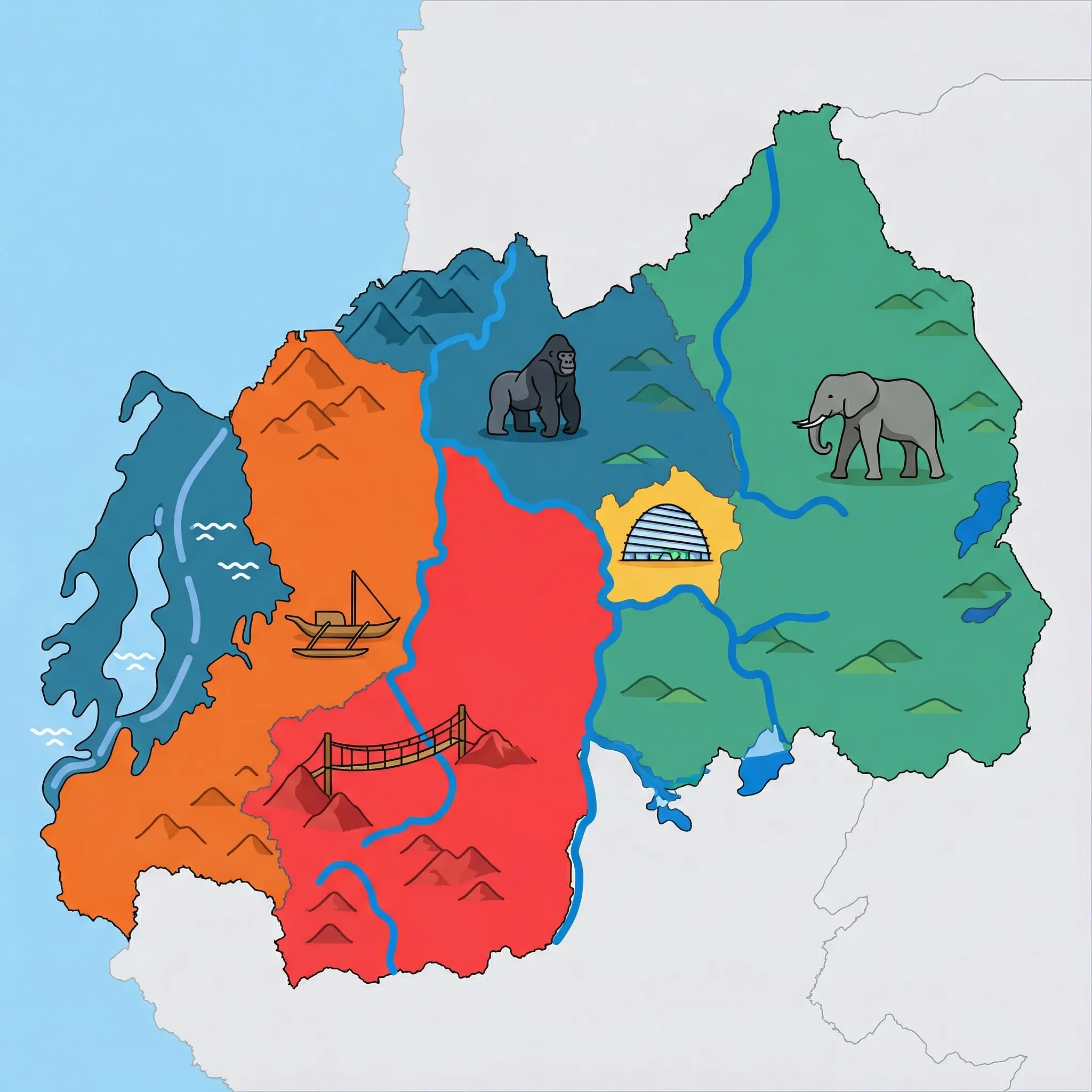
Click a region to explore
⚠️ SAFETY WARNING: Due to the volatile security situation in the neighboring Democratic Republic of the Congo (DRC), government agencies (including the US, UK, and Australia) advise increased caution or reconsideration of travel near the border areas. While the resort towns of Rubavu and Karongi are generally considered stable tourist zones, the border region can be unpredictable. Families are strongly urged to consult their own government's official travel advisory before considering a trip, as circumstances and risk assessments vary.
Overview
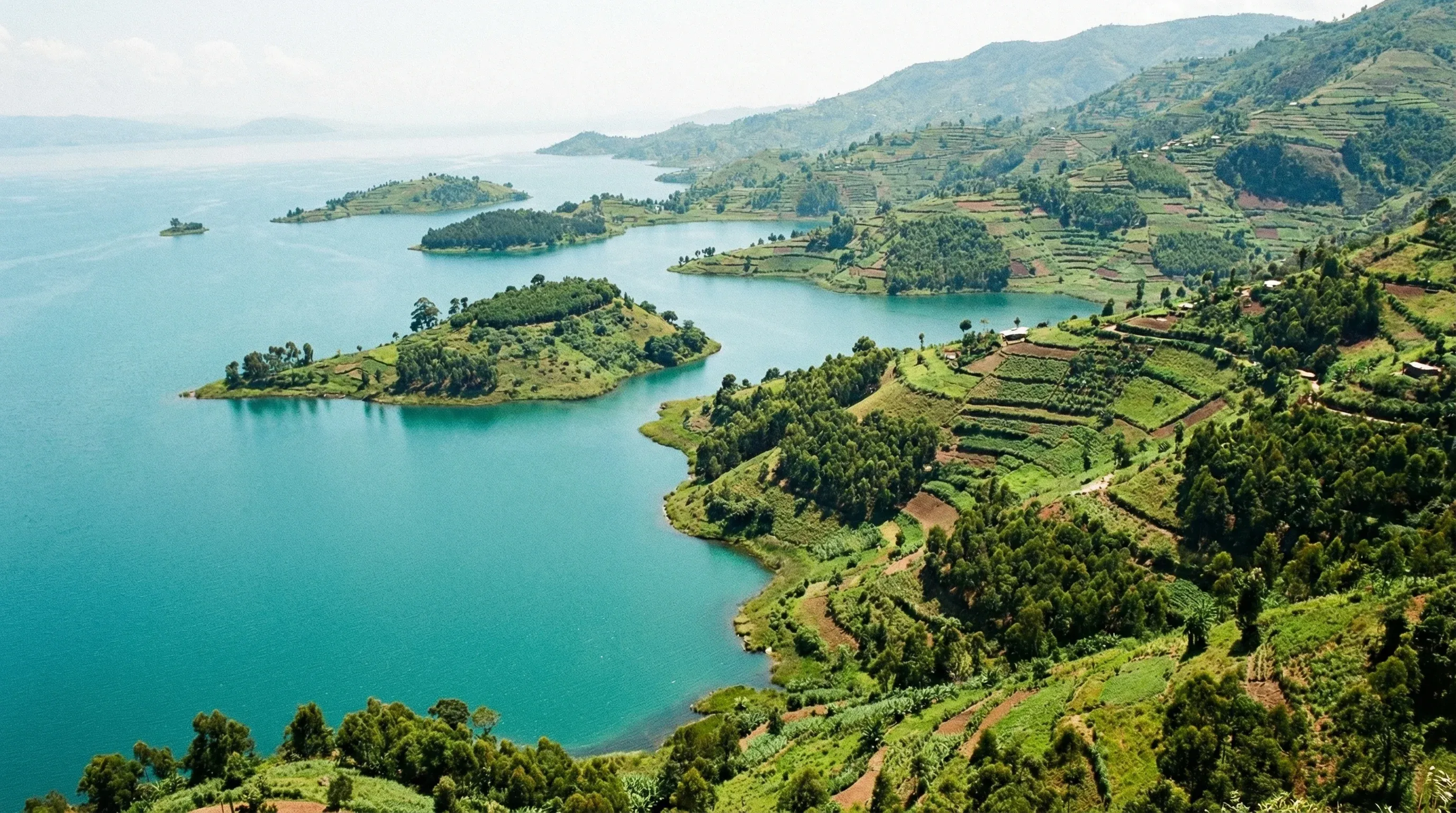
Lake Kivu is a glittering jewel in the Albertine Rift, offering a Riviera-like experience in the heart of Africa. For families who have spent days hiking through rainforests or sitting in safari vehicles, the West offers a welcome change of pace with its relaxed lakeside atmosphere. The lake itself is free of bilharzia and crocodiles, making it one of the safest water bodies in Africa for swimming. The resort towns, particularly Rubavu (formerly Gisenyi) in the north and Karongi (formerly Kibuye) further south, provide comfortable hotels with beaches, gardens, and watersports.
The landscape is dramatic, with steep terraced hills plunging into deep emerald waters. It is a place for slow travel. Children can play in the sand, kayak on the calm waters, or take boat trips to see the 'singing fishermen' who head out at sunset with their three-hulled canoes. The region connects the brooding volcanoes of the north with the ancient rainforests of the south, serving as a scenic corridor known as the Congo Nile Trail, which can be explored in small sections by bike or on foot.
Key Attractions
The primary draw is Lake Kivu itself. Boat tours are a highlight, often stopping at Napoleon Island (near Karongi) to see a colony of fruit bats, which fascinates older children. In Rubavu, the Gisenyi Public Beach is a popular spot where locals and tourists mix; it's lively, safe, and offers a real slice of Rwandan recreational life. Just outside the main towns, the scenery is breathtaking, with tea and coffee plantations covering the hillsides.
For families interested in history, the Bisesero Genocide Memorial near Karongi is a powerful site of resistance known as the "Hill of Resistance." It is historically significant but emotionally challenging, so parental discretion is advised. Further south, the road leads toward the fringes of Nyungwe National Park, making the lake a perfect stopover before or after a primate trek.
Practical Advice
The road between Rubavu and Karongi (the Kivu Belt Road) is paved and offers spectacular views, but it is very winding. If your children suffer from car sickness, bring medication. The water is safe for swimming, but always supervise children as depth increases quickly in some areas.
Food & Drink
Typical meal times: Lunch is a leisurely affair here, often from 1:00 pm to 3:00 pm. Dinner is served 7:00 pm to 9:30 pm, often with lake views.
Typical meal costs: Fresh fish meals at lakeside hotels cost 10,000–18,000 RWF (approx. $8–14 USD / €7.50–13 EUR). Street snacks are very cheap, under 2,000 RWF (approx. $1.60 USD / €1.50 EUR).
Dietary requirements: Fish is the staple here. Vegetarians will find plenty of potato, rice, and bean dishes. Vegan options are available but may require explanation in smaller establishments.
Signature dishes:
- Sambaza – Tiny, sardine-like fish from Lake Kivu, deep-fried and eaten whole with lime. The ultimate lakeside snack.
- Whole Grilled Tilapia – Often large enough to share, served with fries or plantains.
- Dodo – Local amaranth greens, sautéed with onions and tomatoes, similar to spinach.
Why this score?
The region offers diverse physical activities such as kayaking, island hopping, and sections of the Congo Nile Trail for biking and hiking. The steep escarpments and rift valley geography provide a scenic and active backdrop, though lakeside resorts offer a comfortable safety net.
Why this score?
Regional towns like Rubavu and Karongi have basic hospitals that can handle minor ailments and stabilization. However, English-speaking staff may be limited, and any complex medical issues would necessitate a transfer to the capital.
Why this score?
Lake Kivu is a popular stopover for tourists transitioning between the national parks, offering a mix of domestic weekenders and international leisure travelers. Towns like Rubavu (Gisenyi) are well-established for tourism, though they remain minor destinations on a global scale.

Accommodation is generally good value compared to the safari lodges. A nice family suite in a lakeside resort costs 100,000–180,000 RWF (approx. $80–145 USD / €75–135 EUR). Boat rides vary; a private hour-long tour might cost 30,000–50,000 RWF (approx. $24–40 USD / €22–37 EUR).

Getting Here & Around
Getting Here
- Driving – Rubavu is a 3-hour drive from Kigali or 1 hour from Musanze. Karongi is about 3.5 hours from Kigali. The roads are good but winding.
- Bus – Regular Ritco buses connect Kigali to Rubavu and Karongi. They are safe and scheduled but can be crowded.
Getting Around
- Boat – The "Kivu Queen" and other public boat services connect Rubavu, Karongi, and Rusizi. Chartering a private boat for excursions on Lake Kivu is popular for families.
- Car – The Kivu Belt Road connecting the lakeside towns is one of the most scenic drives in Africa.
- Moto-taxi – Available in towns for short hops, but standard taxis are safer for families.
Nearby Airports (1 airport)
Kamembe
KMEKamembe
View full flight map for Rwanda →
Official Links

Packing List
The Kivu Belt road is extremely winding with constant hairpin turns.
Some lake entry points can be pebbly or rocky rather than soft sand.
Lake Kivu is very deep; safety equipment at hotels varies in quality.
Breezes coming off the lake in the evening can feel quite cool.
Plastic bags are strictly banned and confiscated at the airport; pack reusable totes for shopping and laundry.
Essential for grabbing stinging nettles and thorny branches during jungle treks or nature walks.
Prevents safari ants and mud from entering your boots during forest hikes in Nyungwe or Volcanoes NP.
Rwanda is the 'Land of a Thousand Hills'—roads are endlessly winding and can affect kids easily.
Mornings in the mountains (Volcanoes/Nyungwe) are surprisingly cold (10°C/50°F) despite being near the equator.
Physical proof of vaccination is often requested at the airport border control.

Activities & Best Times

Hiking, wildlife, outdoor exploration, ecotourism
Features the world-class Congo Nile Trail and unique lakeside forest ecosystems. Dry seasons are essential for trail navigability and clear vistas across the Rift Valley.

Sport tourism, fitness activities, active recreation
Internationally recognized for the multi-day Congo Nile cycling route and the Nyungwe canopy walk. Ideal conditions for active sports require the dry grip of the non-monsoon months.

Urban tourism, museums, historical sites, architecture
Authentic cultural insights at Bisesero and Rubavu's museums provide a deep historical context. Best visited when travel between towns is not hampered by the heavy spring rains.

Scenic drives, countryside tours, route-based travel
The Kivu Belt Road is a spectacular scenic drive with world-class lake views. Travel is restricted in wet months due to high landslide risk and poor visibility on winding mountain passes.

Learning experiences, scientific sites, historical education
The Uwinka Visitor Center offers significant natural history education within the forest. Access is best during dry periods when educational forest walks are most viable.

Spa retreats, wellness centers, peaceful getaways
Bugarama Hot Springs provides a natural, though rustic, restorative experience. Peak visitation aligns with dry months to avoid flooding or mud at the natural sites.




Public Holidays & Calendar Next 12 months
Public holidays, festivals, cultural celebrations, and seasonal natural phenomena coming up in Lake Kivu & West over the next 12 months.
Loading holidays and events...

Travel Advisory
While half of the major agencies consider Rwanda safe for standard travel, the other half recommend increased caution due to persistent regional tensions and border risks. This split assessment suggests a need for heightened situational awareness.
Safety Topics
Traveller Advice (3 groups)

Rwanda is generally considered safe for women, including solo travellers; however, standard precautions should be taken when walking alone at night, and conservative dress is often respected in rural areas.

While consensual same-sex acts are not criminalized and discrimination is constitutionally prohibited, local society remains conservative. Public displays of affection may attract negative attention or harassment.

Visitors should always carry identification, follow local authority directives, and avoid night-time travel outside of major urban centers. It is recommended to stay informed through local media regarding border status.
Agency Summaries
Travellers should maintain standard safety awareness throughout the country, though specific border regions require significantly higher vigilance.
The general security environment is stable, though conflict in neighboring DRC may occasionally impact safety near the western border.
A high level of vigilance is advised because of the volatile situation in the wider Great Lakes region and potential for rapid changes in security.
Travellers should remain alert in public spaces and monitor border conditions which can deteriorate with little warning.
Increased caution is recommended due to potential armed violence, particularly in districts bordering the Democratic Republic of the Congo.
No country-wide warnings are in place, but visitors are advised to avoid certain border areas due to regional instability.
Information is provided for general guidance only and does not constitute travel, safety, medical, or legal advice. Conditions may change. Users are responsible for independently verifying information before travel.