

Overview
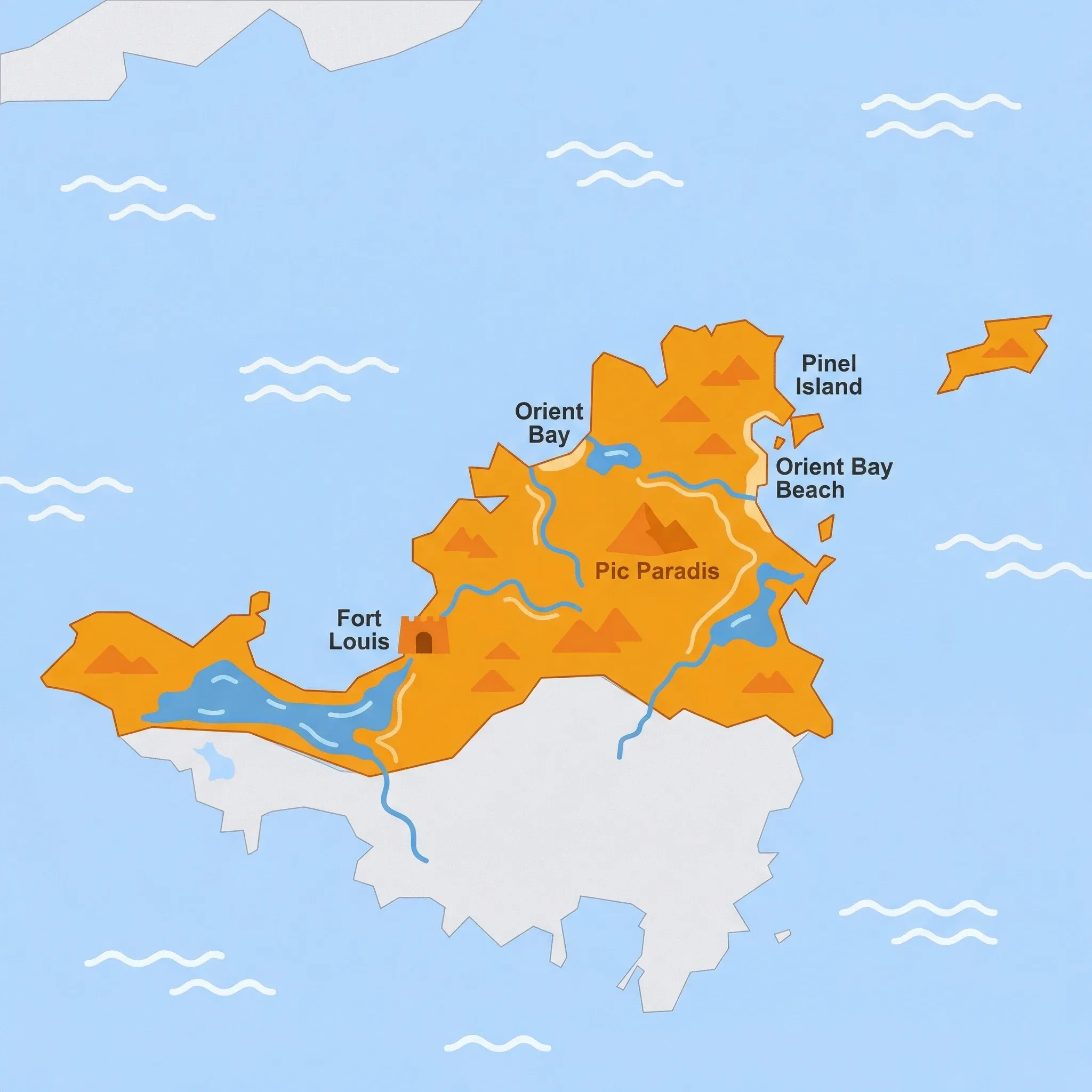
Saint Martin is the French northern half of an island shared with Dutch Sint Maarten, offering families a fascinating blend of European culture and Caribbean relaxation. Known as "The Friendly Island," it provides a safe and sophisticated environment where children can practice their French while building sandcastles on pristine white sands. The vibe here is distinctly more relaxed and chic than the bustling Dutch side, with a strong emphasis on long lunches, protected nature reserves, and boutique shopping in the capital, Marigot. For families, the island offers the perfect balance: calm, shallow bays ideal for toddlers, and adventurous hiking or snorkeling for older children.
Geographically, Saint Martin is lush and hilly, fringed by turquoise waters and diverse coastlines ranging from rugged cliffs to soft sandy crescents. The climate is tropical and sunny year-round, though the hurricane season (June to November) requires attention. What truly sets this destination apart for families is the food culture; even picky eaters will delight in fresh pastries for breakfast and savory barbecue ribs at a beachside "lolo" for dinner. It is a place where you can hike a tropical peak in the morning and feel like you are in the South of France by afternoon.
Key Attractions
A trip to Saint Martin must include a day at Pinel Island. This tiny, protected islet is reached by a gentle 10-minute ferry ride and offers arguably the most family-friendly beach experience in the Caribbean. The water is knee-deep for dozens of meters, allowing young children to play safely while parents relax at the serviced beach clubs. Kids will love spotting the wild iguanas that roam the island and snorkeling in the shallow, crystal-clear water.
For a dose of history and exercise, climb the stone steps to Fort Louis overlooking Marigot bay. Built in 1789, the ruins are safe for children to explore, and the panoramic views offer a spectacular backdrop for family photos. Afterward, head to Grand Case Village, a charming seaside town that transforms into a vibrant pedestrian boulevard during the "Les Mardis de Grand Case" festival (Tuesday nights, January to April), featuring street musicians, dancers, and local artisans.
Nature-loving families should explore the Réserve Naturelle de Saint-Martin, which protects vast swathes of the island's land and sea. A boat trip to Rocher Créole (Creole Rock) within the reserve offers exceptional snorkeling where kids can see sea turtles and colorful fish in their natural habitat. The reserve also manages trails through the mangroves and coastal scrub, perfect for spotting local birds and learning about the island's ecosystem.
Practical Advice
The best time to visit is December to April, when the weather is dry and pleasant. While the official currency is the Euro (€), the US Dollar is widely accepted, though exchange rates vary. Crucially, electricity on the French side is 220V with European plugs, unlike the Dutch side's 110V US standard-bring adapters. A rental car is essential for families to explore the many beaches scattered across the island. Medical facilities are good, with a hospital in Marigot, but travel insurance is highly recommended.
Food & Drink
Typical meal times: Lunch is a leisurely affair from 12:00 pm to 2:30 pm. Dinner typically begins later than in the US, with restaurants opening around 6:00 pm or 7:00 pm, but 7:30 pm to 8:30 pm is prime dining time.
Typical meal costs: €15–25 (approx. $16–27 USD / £13–21 GBP) for casual dining at a lolo; €50–90 (approx. $55–98 USD / £42–76 GBP) per person for fine dining in Grand Case.
Dietary requirements: Vegetarian and gluten-free options are increasingly common in tourist areas, though French cuisine relies heavily on bread, butter, and seafood. Nut allergies are well-understood in fine dining establishments, but always ask at local shacks.
Family-friendly dining: Children are welcome everywhere, but the best option for families is the Lolo-open-air barbecue shacks, particularly in Grand Case Village. They offer loud, lively atmospheres, finger food kids love (ribs, chicken legs), and very affordable prices.
Signature dishes:
- Johnny Cakes – Fried dough discs, fluffy inside and crispy outside, often eaten at breakfast or as a side with barbecue meals.
- Ribs & Chicken leg – The staple of the "lolo" barbecue shacks, marinated in secret spices and grilled over open flames.
- Court-bouillon de poisson – A traditional Creole fish stew poached in a spicy, tomato-based broth, often served with rice.
- Acras de morue – Small, deep-fried saltfish fritters that make a perfect starter or snack for children adventurous enough to try seafood.
- French Pastries – Authentic croissants, pains au chocolat, and baguettes are available at bakeries island-wide, tasting just as they do in Paris.
Family Travel Notice
Saint Martin is generally family-friendly. Ensure you have the necessary documentation for minors, as authorities may check parental consent for children travelling with only one parent or a guardian.

Travel costs can vary significantly. Dining at local "lolos" is affordable, but resort hotels and fine dining in Grand Case are pricey. A family of four should budget around €200–300 (approx. $220–330 USD / £170–255 GBP) per day for mid-range accommodation, car rental, and meals. Supermarket prices are higher than in Europe or the US due to importation costs.
Age Suitability




Why this score?
The region is largely developed and focused on luxury tourism, gourmet dining, and accessible beach activities rather than rugged wilderness. While Loterie Farm and Pic Paradis provide opportunities for canopy ziplining and light hiking, the terrain is well-managed and lacks the physical challenge or remoteness associated with high-adventure destinations.
Why this score?
As a French Overseas Collectivity, the island hosts the Louis-Constant Fleming Hospital, which operates under French standards and provides reliable care for most tourist needs. However, due to the island's small scale, medical facilities are basic compared to mainland Europe, and serious or specialized cases frequently require air evacuation to Guadeloupe or Miami.
Why this score?
Saint Martin is a premier Caribbean destination globally recognized for its unique blend of French culture and tropical landscapes, attracting significant international flow from North America and Europe. While it is a major draw within the region with hotspots like Orient Bay and Grand Case, its total visitor volume is moderate compared to global mega-destinations like Bali or Phuket.
Saint Martin is one of the pricier Caribbean destinations, particularly the French side which operates on the Euro. Accommodation ranges from €150–300 (approx. $160–325 USD / £130–255 GBP) per night for mid-range family suites. Beach chair rentals often cost €20–30 (approx. $22–33 USD / £17–25 GBP) per set. You can save money by eating at "Lolos" (local BBQ shacks) where generous plates cost €12–18 (approx. $13–20 USD / £10–15 GBP).

Getting There & Around
Getting There
- By Air – Most international visitors arrive at Princess Juliana International Airport (SXM) on the Dutch side, which handles large jets from the US and Europe. The French side has a smaller regional airport, Grand Case-Espérance (SFG), serving flights from Saint Martin's neighbors like Guadeloupe and Saint Barthélemy.
- By Sea – frequent high-speed ferries connect Marigot to Anguilla (20 minutes) and Saint Barthélemy (45–60 minutes), making for easy island-hopping day trips.
- Entry Requirements – Saint Martin is a French overseas collectivity but is not part of the Schengen Area. However, visa rules are similar: EU, US, Canadian, and UK citizens generally do not need a visa for short tourist stays. Check your government website for the latest visa requirements, or use the IATA Travel Centre entry-requirements checker.
Getting Around
- Car Hire – Essential for families to reach secluded beaches like Pinel Island ferry docks or remote hiking trails. Driving is on the right. Traffic can be heavy in Marigot and Grand Case during peak hours.
- Taxis – Available but expensive. They do not use meters; rates are fixed based on destination and number of passengers. Always confirm the price in Euros or Dollars before getting in.
- Minibuses – Privately owned vans that act as public transport. They are cheap (around €1.50–2.00) and fun for short hops, but schedules are informal and they may not be suitable for families with lots of beach gear or small strollers.

Packing List
The French side uses 220V European plugs, unlike the Dutch side's US standard.
Strictly enforced in the Nature Reserve to protect coral; standard brands may be banned.
Dengue fever is present; mosquitoes are active day and night, especially after rain.
Sea urchins are common in rocky areas and seagrass beds away from the main swim zones.
Buses and small local shops often prefer Euro cash; using USD can result in poor exchange rates.
Rental sizes for children are often poor quality or unavailable at remote beaches.

Activities & Best Times

Adventure & Nature
Very GoodHiking, wildlife, outdoor exploration, ecotourism
Features impressive biodiversity in the Réserve Naturelle and unique inland experiences like Loterie Farm and Pic Paradis. Best explored during the cooler, drier months when trail conditions on the Sentier des Froussards are optimal.

Sports & Active
Very GoodSport tourism, fitness activities, active recreation
Excellent infrastructure for windsurfing and kitesurfing at Orient Bay, alongside managed adventure parks for zip-lining and hiking. Peak visitation occurs when the trade winds are most consistent and temperatures are conducive to active outdoor pursuits.

Beach & Sea
GoodBeach resorts, marine activities: diving, snorkelling, kite surfing, wind surfing, sailing
Home to iconic spots like Orient Bay and Pinel Island, offering high-quality Caribbean beach experiences and sailing. Peak season aligns with the dry winter months, while the late summer off-season carries significant hurricane risk and high humidity.

City & Cultural
GoodUrban tourism, museums, historical sites, architecture
While Grand Case is known for its culinary scene, 'very_good' city/cultural rating typically requires significant museums, UNESCO heritage sites, or major cultural institutions. The island's small size and limited cultural infrastructure beyond restaurants suggests 'good' is more appropriate. Culinary excellence alone is insufficient for 'very_good' cultural rating.

Road Trips & Scenic
GoodScenic drives, countryside tours, route-based travel
The island offers scenic coastal drives through Terres Basses and steep, rewarding ascents to Pic Paradis. The winter months provide the best visibility and most comfortable conditions for navigating the island's varied terrain.

Educational & Exploratory
MarginalLearning experiences, scientific sites, historical education
Amuseum Naturalis provides a significant look at local natural history and heritage for families. While an excellent educational stop, it is a secondary attraction rather than a primary global motivator for travel.

Festivals & Seasonal
MarginalEvents, celebrations, seasonal attractions
The SXM Festival in March and traditional Carnival celebrations in February draw international crowds for specific cultural and musical events. Outside of these months, the island lacks large-scale, internationally significant festival programming.




Public Holidays & Calendar Next 12 months
Public holidays, festivals, cultural celebrations, and seasonal natural phenomena coming up in Saint Martin over the next 12 months.
Loading holidays and events...

Travel Advisory
The country is considered generally safe with a stable security environment. Travellers should follow standard safety awareness and stay informed about seasonal weather patterns.
Safety Topics
Traveller Advice (3 groups)

The French side of the island is generally accepting and safe for LGBTQ+ travellers, following the legal and social standards of mainland France.

Saint Martin is generally family-friendly. Ensure you have the necessary documentation for minors, as authorities may check parental consent for children travelling with only one parent or a guardian.

Maintain standard safety vigilance, especially in crowded tourist areas and on beaches. Ensure you have comprehensive insurance that covers natural disasters and medical evacuation.
Agency Summaries
Travellers should maintain standard security awareness. While the island is generally safe, petty crime like theft from vehicles and beaches occurs. The road infrastructure is well-kept, though traffic is heavy during peak winter months. There are no formal border controls between the French and Dutch sides of the island.
Ireland advises its citizens to follow standard safety routines. The island has an established rule of law and functioning public services. Visitors should be aware of the seasonal risk of tropical cyclones and ensure they have adequate travel insurance and are registered with the embassy.
The security environment is considered stable and similar to that of a large Australian city. Travellers should remain vigilant against opportunistic crime such as bag snatching and theft from accommodation. Natural hazards include hurricanes between June and November.
British nationals should follow standard safety procedures. Petty theft and street crime are present, particularly in less populated areas or after dark. Legal requirements include carrying a photo ID at all times. Comprehensive travel insurance is strongly recommended to cover potential medical emergencies or hurricane-related disruptions.
The U.S. government advises standard safety measures for the French West Indies. Visitors are encouraged to enroll in the Smart Traveler Enrollment Program. Standard health concerns include mosquito-borne illnesses, and travellers should prepare for potential tropical storms during the designated season.
The safety environment is comparable to New Zealand. Travellers are advised to monitor local media for weather warnings during the hurricane season and to take standard precautions against theft in tourist hotspots and beach areas.
Information is provided for general guidance only and does not constitute travel, safety, medical, or legal advice. Conditions may change. Users are responsible for independently verifying information before travel.