

Saint Pierre and Miquelon
Territorial Collectivity of Saint Pierre and Miquelon
Saint-Pierre-et-Miquelon
Overview
Saint Pierre and Miquelon is a fascinating geographical anomaly-a self-governing French territory nestled just 25 kilometers off the coast of Newfoundland, Canada. For families, this archipelago offers the thrill of visiting Europe without the long-haul flight. The moment you step off the ferry or plane, the atmosphere shifts: 220V power outlets, Peugeot cars, and the aroma of fresh baguettes signal that you have arrived in France. The main town of Saint-Pierre is compact, walkable, and filled with brightly painted wooden houses that look like they have been plucked from a storybook, making it visually engaging for children.
Beyond the charm of the town, the islands are a haven for nature-loving families. The landscape is rugged and windswept, with rolling bogs, craggy coastlines, and pristine lagoons. The pace of life is slow and safe, allowing older children some freedom to explore. Whether it is practicing school French with friendly locals or taking a zodiac boat to see puffins and seals, Saint Pierre and Miquelon provides a rich cultural and educational experience wrapped in an adventurous island getaway.
Key Attractions
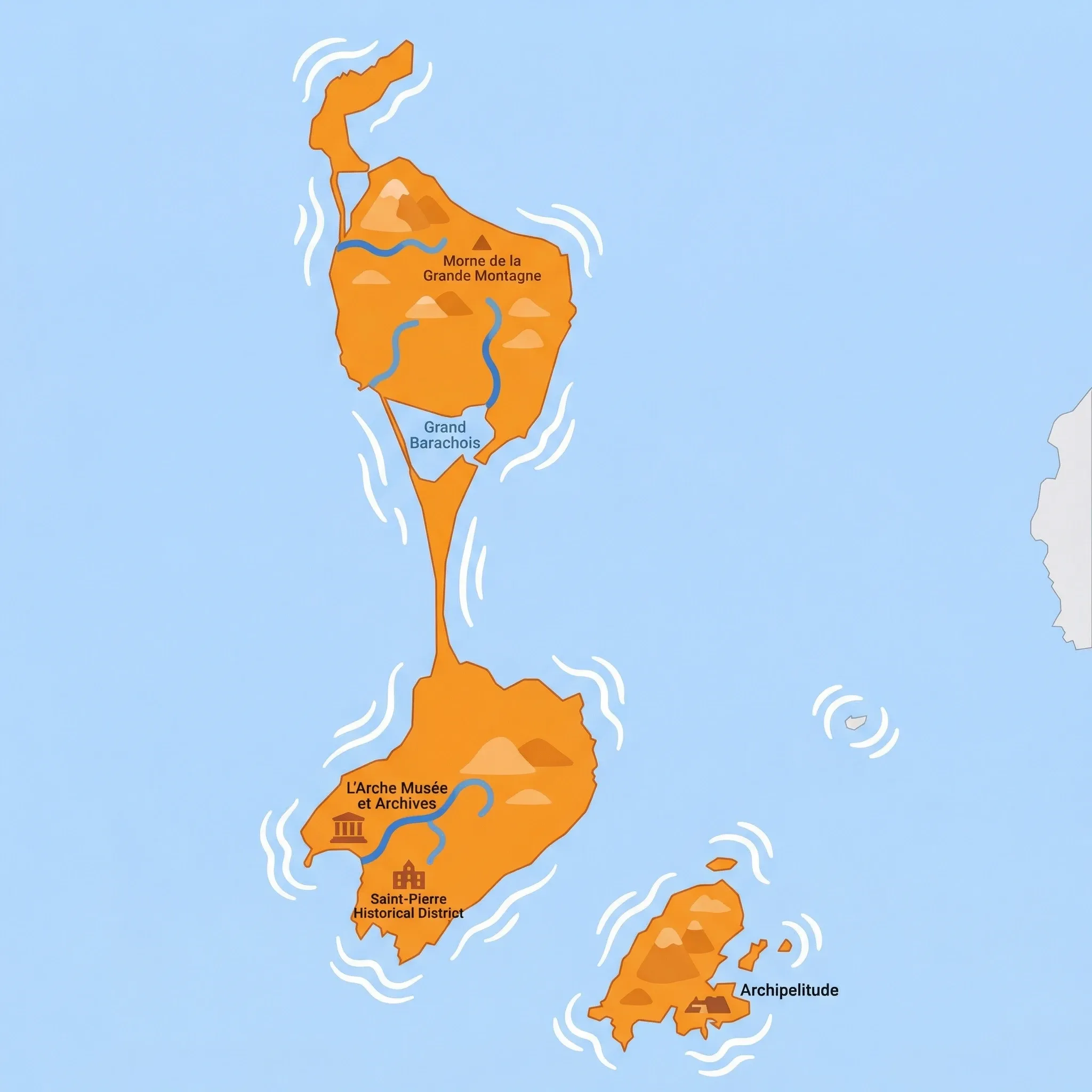
The crown jewel for adventurous families is the Isthme de Miquelon-Langlade. This spectacular 12-kilometer sand isthmus connects the islands of Miquelon and Langlade and is home to a herd of wild horses that roam freely. Families can take guided tours to admire the endless beaches and the lagoon of Grand Barachois, where hundreds of seals can often be seen basking on the sandbanks at low tide. It is a raw, natural playground that feels worlds away from modern life.
Back near the capital, a short boat ride takes you to L'Île-aux-Marins (Sailor's Island). Once a bustling fishing village, it is now a preserved ghost town that sparks children's imaginations. Families can wander through the open-air museum, peeking into the old schoolhouse, the church, and the drying fields where cod was once prepared. The car-free paths make it safe for little ones to run around while parents soak in the history of the fearless fishermen who once lived here.
Practical Advice
The best time to visit is during the summer months (July and August) when the weather is mildest, though fog can roll in at any time. Families should be aware that the islands use the Euro (€) and 220V European plugs, so adapters are essential for North American travelers. English is widely spoken in tourist areas, but a little French goes a long way. Medical facilities are excellent, adhering to French standards, but serious cases may require medical evacuation to Canada.
Food & Drink
Typical meal times: Lunch is strictly served from 12:00 pm to 2:00 pm, and many kitchens close promptly afterwards. Dinner typically begins around 7:00 pm or 7:30 pm and can last until 9:30 pm or 10:00 pm.
Typical meal costs: €25–45 (approx. $27–49 USD / £21–38 GBP) per person for a main course in a sit-down restaurant. Bakery lunches are cheaper, around €8–15 (approx. $9–16 USD / £7–13 GBP).
Dietary requirements: Vegetarian options are available but limited compared to mainland Europe; the diet is heavily meat and seafood-focused. Gluten-free bread is rare in traditional bakeries. It is best to notify restaurants of allergies in advance.
Family-friendly dining: Most restaurants welcome children, though highchairs may not be available in smaller bistros. The boulangeries (bakeries) are a hit with kids, offering sandwiches, quiches, and pastries perfect for picnics.
Signature dishes:
- Homard et Crabe des Neiges – Fresh locally caught lobster and snow crab, often served simply with mayonnaise or in rich gratins.
- Les Macarons de Saint-Pierre – A local variation of the famous cookie, these are more rustic than the Parisian version, made with cocoa and almonds.
- Cabillaud (Cod) – The fish that built the islands, served in endless ways, from salt cod fritters (acras) to fresh pan-fried filets.
- Gâteau Basque – A nod to the islands' Basque heritage, this is a buttery, crumbly cake filled with pastry cream or black cherry jam.
Family Travel Notice
Parents traveling with minors should carry appropriate legal documentation, such as custody papers or consent letters if one parent is absent, as international child abduction laws (Hague Convention) are strictly enforced.

A family of four should budget approximately €250–350 (approx. $270–380 USD / £210–295 GBP) per day. Accommodation and restaurant meals are priced similarly to mainland France or major Canadian cities, and most goods are imported, keeping grocery prices high. Ferries and tours add to the daily cost.
Age Suitability




Why this score?
The islands offer scenic North Atlantic landscapes, seal watching at Grand Barachois, and hiking trails like Sentier de l'Anse-à-Henry. While the environment is rugged and coastal, the small geographic scale and established transport links between the islands mean it provides accessible outdoor recreation rather than high-stakes adventure.
Why this score?
Medical care is provided through the French system at the hospital in Saint-Pierre, ensuring high standards of treatment and equipment for general needs. However, the facility's small size means that specialized care or major emergencies often require medical evacuation to St. John's, Canada, or mainland France.
Why this score?
The islands are a niche destination with very low annual visitor numbers, primarily consisting of travelers from Atlantic Canada and mainland France. While its unique status as a French outpost in North America is a draw, it lacks the global recognition and infrastructure to compete with major international tourist regions.
As an island territory importing most goods from France or Canada, prices are high. Budget accommodation is scarce. A standard hotel room costs €120–180 (approx. $130–195 USD / £100–155 GBP) per night. Groceries, especially fresh produce, can be double North American prices. However, French wine and cheese are reasonably priced compared to Canada. A coffee and pastry breakfast costs around €8–12 (approx. $9–13 USD / £7–10 GBP).

Getting There & Around
Getting There
- By Air – Air Saint-Pierre operates flights from Canadian cities including St. John's (YYT), Halifax (YHZ), and Montreal (YUL). In summer, there is a direct weekly flight from Paris.
- By Sea – SPM Ferries operates a passenger and vehicle ferry service from Fortune, Newfoundland. The crossing takes about 90 minutes. Note that the crossing can be rough.
- Entry Requirements – Canadian citizens need a passport or official ID. US and EU citizens need a passport but no visa for short stays. Check your government website for the latest visa requirements, or use the IATA Travel Centre entry-requirements checker.
Getting Around
- Walking – The town of Saint-Pierre is compact and best explored on foot. Most shops, restaurants, and the ferry terminal are within walking distance of each other.
- Ferries – Essential for island hopping. Regular foot-passenger ferries connect Saint-Pierre to Miquelon, Langlade, and L'Île-aux-Marins. The crossing to Miquelon takes about 90 minutes.
- Car Hire – Recommended if you plan to explore the larger island of Miquelon-Langlade extensively. Rental cars are available but limited, so book well in advance.
- Taxis and Tours – Van tours are a popular way for families to see the sights without renting a car. Taxis are available but can be expensive for short hops.

Packing List
The islands use 220V European standard outlets, unlike the surrounding North American region.
The ferry crossing from Newfoundland is notorious for rough seas and strong swells.
Weather is unpredictable and often windy, even on sunny summer days.
Small shops and some taxis may not accept foreign cards, and it is the official currency.
Essential for spotting puffins, seals, and wild horses on the outer islands.

Activities & Best Times

Adventure & Nature
Very GoodHiking, wildlife, outdoor exploration, ecotourism
Features a rugged North Atlantic ecosystem with 6 supporting attractions including the major Grand Barachois lagoon, offering families unique opportunities to observe seals and wild horses. Peak months reflect the brief window of manageable maritime weather and wildlife activity seasons.

City & Cultural
GoodUrban tourism, museums, historical sites, architecture
Provides a highly authentic French cultural enclave in North America through its distinct architecture, cuisine, and museums like L'Arche. Seasonal timing is restricted by the harsh Atlantic winter, with July and August offering the best atmosphere and local event calendars.

Road Trips & Scenic
MarginalScenic drives, countryside tours, route-based travel
While Route de l'Isthme is scenic, the total road network across all islands is minimal (estimated 50-100km). A 'good' road trip destination should offer varied multi-day driving routes. Saint Pierre and Miquelon has only a few short scenic drives on tiny islands. 'marginal' better reflects the limited scope - visitors can drive everything in a day or two.




Public Holidays & Calendar Next 12 months
Public holidays, festivals, cultural celebrations, and seasonal natural phenomena coming up in Saint Pierre and Miquelon over the next 12 months.
Loading holidays and events...

Travel Advisory
All major travel agencies agree that Saint Pierre and Miquelon is a safe destination requiring only standard safety awareness. There are no significant security, health, or political risks identified.
Safety Topics
Traveller Advice (2 groups)

It is highly recommended to book your lodging and dining well in advance, particularly during the peak summer months, due to the limited number of facilities available on the islands.

Parents traveling with minors should carry appropriate legal documentation, such as custody papers or consent letters if one parent is absent, as international child abduction laws (Hague Convention) are strictly enforced.
Agency Summaries
There are no significant safety or security concerns for travelers. Most visitors can enter without a visa for short stays. Personal security should be managed as it would be in the United Kingdom.
The archipelago is considered safe with a low crime rate. Visitors should be aware that demonstrations or strikes may occasionally cause minor disruptions to services and traffic. Drivers must strictly adhere to the right-of-way rule, especially since there are no traffic lights on the islands.
This destination is classified at the lowest risk level. Travelers are encouraged to follow standard safety measures. Consular services for the islands are managed through the U.S. Consulate General in Halifax, Canada.
The overall security environment is stable. Travelers should maintain a standard level of awareness and check for any local updates regarding weather or maritime conditions during their stay.
Irish citizens can generally visit the islands without specific travel restrictions. Consular assistance is provided directly through the Department of Foreign Affairs in Dublin as there is no local diplomatic mission.
Standard safety precautions are sufficient for this territory. Travelers should ensure they have comprehensive insurance and are familiar with local entry requirements for French overseas territories.
Information is provided for general guidance only and does not constitute travel, safety, medical, or legal advice. Conditions may change. Users are responsible for independently verifying information before travel.