

Overview
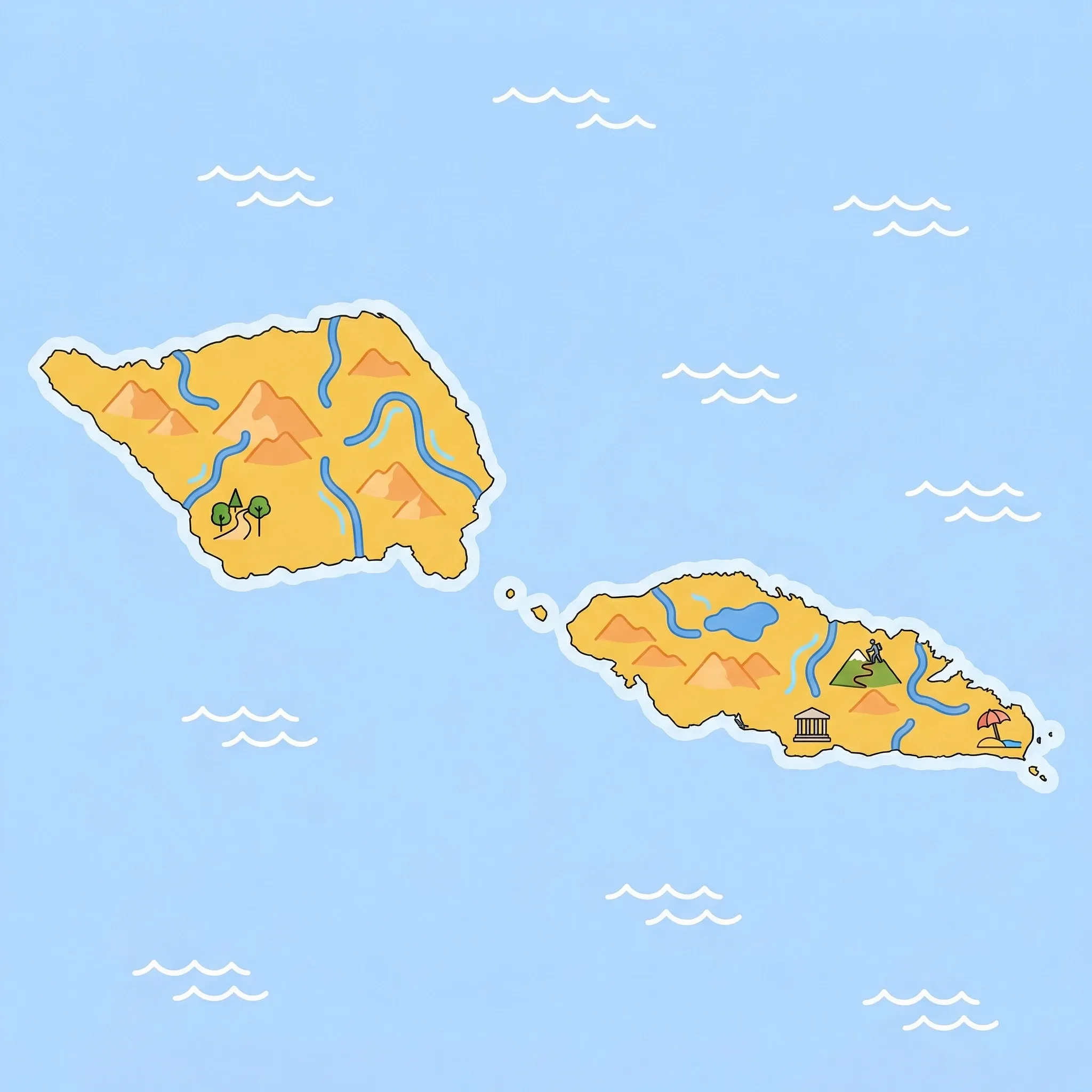
Samoa is not just a holiday destination; it is a cultural immersion into the heart of Polynesia. Comprising two main islands, Upolu and Savai‘i, this nation offers families a rare blend of accessible adventure and deeply rooted tradition. Unlike highly commercialised Pacific neighbours, Samoa retains an authentic charm where life moves at a gentle pace. Families will find themselves driving through immaculate villages where walls are non-existent and flower gardens are meticulously kept, reflecting the pride of the local people.
For children, the islands are a natural playground. The geography shifts from the lush, waterfall-laden interior of Upolu to the dramatic volcanic lava fields of Savai‘i. You can swim in freshwater cave pools, snorkel safely in protected lagoons, or watch powerful blowholes shoot water hundreds of feet into the air. The concept of family is central to Samoan culture, meaning children are adored and welcomed everywhere. Whether you are staying in a luxury resort or a traditional open-sided fale on the beach, the warmth of the hospitality makes families feel instantly at home.
Key Attractions
Most family adventures begin on Upolu. A visit to the Robert Louis Stevenson Museum is essential; set in the author's magnificent former home, Villa Vailima, it offers a fascinating glimpse into history with expansive gardens that kids can explore. Just a short drive away, the Museum of Samoa in Apia provides a bite-sized introduction to the islands' heritage, perfect for younger attention spans. For a day of pure relaxation, Lalomanu Beach on the south coast is frequently voted one of the world's most beautiful beaches, offering calm, turquoise waters safe for swimming and snorkelling directly off the sand.
Nature lovers should head to the O Le Pupu-Pu'e National Park, the first national park in the South Pacific. It features accessible hiking trails through rainforests leading to dramatic coastlines and waterfalls. Beyond these listed sites, families should not miss the iconic To Sua Ocean Trench (a giant swimming hole) or the Piula Cave Pool. On the bigger island of Savai‘i, the Alofaaga Blowholes provide thrilling natural entertainment as waves force water through volcanic tubes, launching coconuts into the air to the delight of onlookers.
Practical Advice
Best time to visit: The dry season (May to October) is ideal for families, with lower humidity and pleasant temperatures. The wet season (November to April) is hotter and brings tropical storms.
Sundays: Sunday is strictly observed as a day of rest. Most shops close, and quiet is expected in villages. It is a wonderful day to observe locals in their white Sunday best attending church, where the singing is harmonious and powerful.
Health & Logistics: Tap water is generally not recommended for drinking; stick to bottled or filtered water. Dengue fever exists, so mosquito repellent is a must. The sun is extremely strong, so high-SPF sunscreen and rash vests are essential for kids.
Food & Drink
Typical meal times: 7:00 am to 9:00 am for breakfast, 12:00 pm to 2:00 pm for lunch, and 6:00 pm to 9:00 pm for dinner.
Typical meal costs: 30–60 WST (approx. $11–22 USD / €10–20 EUR) for a main dish in a mid-range restaurant. Budget street food or market lunches can cost 10–20 WST (approx. $4–7 USD / €3–7 EUR).
Dietary requirements: Vegetarian options are increasingly common in resorts but can be limited in traditional villages where pork and chicken dominate. Gluten-free awareness is growing in tourist hubs but less common elsewhere. Fresh fruit and root vegetables are abundant.
Family-friendly dining: Samoans love children, and restaurants are very accommodating. Highchairs are available in resorts and western-style cafes in Apia. "Fiafia" nights (cultural shows with buffet dinners) are a highlight for kids, featuring fire dancing and traditional music.
Signature dishes:
- Oka – A refreshing raw fish salad marinated in coconut cream, lime juice, onions, and cucumber. It is mild, creamy, and often a hit with adventurous kids.
- Palusami – Young taro leaves filled with coconut cream and onions, baked in an earth oven (umu). It tastes like a rich, creamy spinach dip.
- Panipopo – Soft, fluffy buns baked in a sweet coconut cream sauce. A guaranteed favourite for children.
- Koko Samoa – A hot chocolate drink made from local cacao beans, often drunk black and sweetened with sugar.
- Sapasui – Samoan chop suey, a savoury dish of vermicelli noodles, soy sauce, and meat (usually beef or chicken), omnipresent at family gatherings.
Safety
Samoa is generally very safe, but there are specific things to watch. Stray dogs are common in villages and can be aggressive; carry a stick or walk confidently, and teach children not to approach them. Ocean currents can be strong, even inside lagoons; always check with locals before swimming in unmarked areas. Basic medical facilities are available in Apia, but serious conditions may require evacuation to New Zealand, so comprehensive travel insurance is vital.
Family Travel Notice
Ensure all children are fully vaccinated against measles (MMR vaccine) at least 14 days before arrival, as strict health protocols are in place to prevent transmission.

Samoa is affordable compared to Hawaii but more expensive than Southeast Asia. A family of four can expect to spend around 450–700 WST (approx. $165–260 USD / €150–235 EUR) per day. This covers mid-range accommodation (or beach fales), car rental, and meals. Local produce is cheap, but imported goods are pricey.
Age Suitability




Did you know? Samoa welcomes approximately 49,000 international visitors per year. Most visitors come from East Asia and the Pacific.
Why this score?
Samoa offers significant outdoor appeal through its rugged volcanic terrain, natural rock slides at Papase’ea, and the wild coastal landscapes of Savai’i. While the islands are accessible via coastal ring roads, the experience of staying in traditional open-air fales and exploring rainforest preserves provides a genuine sense of adventure for active families.
Why this score?
Medical facilities are very limited, with the primary hospital located in the capital, Apia, and only basic clinics available on the larger island of Savai'i. Serious medical emergencies or specialized treatments almost always necessitate expensive air evacuation to New Zealand or Australia, which is a critical consideration for international travelers.
Why this score?
With approximately 50,000 annual international arrivals and limited hotel capacity, Samoa remains an emerging niche destination in the South Pacific. While iconic sites like the To Sua Ocean Trench attract social media attention, the country lacks the high-volume infrastructure and flight connectivity of more established regional hubs like Fiji or Bali.
Samoa is generally more affordable than Tahiti or Hawaii but pricier than Southeast Asia. A mid-range family fale or hotel room costs WST 300–600 (approx. $110–220 USD / €100–200 EUR) per night. Resort meals can add up, but local roadside BBQ stands and market produce offer excellent value, with meals for WST 15–25 (approx. $5–9 USD / €5–8 EUR). Entry fees for village attractions (beaches, waterfalls) are typically WST 5–20 (approx. $2–7 USD / €1.50–6.50 EUR) per person, cash only.

Getting There & Around
Getting There
- By Air – Faleolo International Airport (APW) is the main gateway, located about 40 minutes west of Apia. Direct flights arrive regularly from Auckland (New Zealand), Sydney/Brisbane (Australia), Nadi (Fiji), and Honolulu (Hawaii).
- By Sea – Cruise ships occasionally dock in Apia, but the primary sea route for travellers is the inter-island ferry between Upolu and Savai‘i.
- Entry Requirements – Visitors from many countries (including US, UK, EU, NZ, Australia) do not need a visa for stays up to 60 or 90 days (depending on nationality) but must have a return ticket and a passport valid for at least 6 months. Check your government website for the latest visa requirements, or use the IATA Travel Centre entry-requirements checker.
Getting Around
- Car Hire – The most convenient way for families to explore. You drive on the left. You must obtain a temporary Samoan driver's license from the rental agency or the Land Transport Authority for approx. 20 WST (approx. $7 USD / €6.50 EUR).
- Buses – Iconic, brightly painted wooden buses offer a cheap and culturally rich experience. There are no fixed schedules; you wave them down. Payment is cash-only upon exit. Note that they can be crowded and loud-fun for a short adventure but maybe not for long trips with toddlers.
- Ferries – The Lady Samoa ferry connects Upolu and Savai‘i. The crossing takes 60–90 minutes. Vehicle bookings are essential in advance, especially during holidays. It is a scenic ride passing small islands like Manono.
- Taxis – Widely available in Apia and near resorts. They are unmetered, so you must agree on a price before getting in. A short trip within Apia costs 5–10 WST (approx. $2–4 USD / €1.50–3.50 EUR).

Packing List
Essential for covering legs in villages and churches; widely used by men and women for cultural respect.
Sharp coral and volcanic rock are common on beaches; protects feet while swimming and exploring tide pools.
If you plan to attend a Sunday church service (highly recommended cultural experience), wearing white is customary.
Village shops, markets, and local buses rarely accept cards; you need coins and small notes.
Many open-air beach fales do not provide towels, and humidity means thick cotton takes forever to dry.
Bikinis are fine at resorts, but modest swimwear (shorts/shirt) is expected when swimming in village pools or waterfalls.

Activities & Best Times

Adventure & Nature
Very GoodHiking, wildlife, outdoor exploration, ecotourism
Features diverse tropical ecosystems including the Falealupo Canopy Walkway and Mount Vaea trails. Trails and natural attractions are best enjoyed during the cooler, drier months to avoid slippery conditions and extreme humidity.

Sports & Active
Very GoodSport tourism, fitness activities, active recreation
Provides excellent infrastructure for cycling with the Savai'i Perimeter route and unique snorkeling at Palolo Deep. The dry season is optimal for physical exertion and water-based sports before the onset of oppressive humidity and tropical storms.

Beach & Sea
GoodBeach resorts, marine activities: diving, snorkelling, kite surfing, wind surfing, sailing
Home to iconic sites like Lalomanu Beach and To Sua Ocean Trench, offering stunning turquoise waters and vibrant marine life. Peak season is the dry period (May-Oct) when sea visibility and safety are highest; the wet season (Nov-Apr) risks cyclones and high rainfall.

City & Cultural
GoodUrban tourism, museums, historical sites, architecture
While Samoa has an authentic living culture (Fa'a Samoa), only one cultural attraction (Robert Louis Stevenson Museum) is documented. A 'very_good' rating requires substantial cultural infrastructure. Downgrade to 'good' unless additional cultural attractions can be documented (traditional villages, cultural centers, etc.). The living culture is valuable but doesn't constitute tourism infrastructure.

Educational & Exploratory
GoodLearning experiences, scientific sites, historical education
Features unique ecological education at the Satoalepai Turtle Sanctuary and Savaia Giant Clam Sanctuary. Best visited when drier weather facilitates outdoor viewing of these marine species in their natural/semi-natural habitats.

Road Trips & Scenic
GoodScenic drives, countryside tours, route-based travel
The Savai'i Coastal Ring Road and Upolu South Coast drive offer stunning volcanic and coastal scenery. Dry season months provide the best visibility and road safety, while heavy tropical rains in the off-season can cause localized flooding and poor driving conditions.

Theme Park & Entertainment
MarginalAmusement parks, family entertainment venues
Limited to local-scale facilities like the Apia Waterfront Splash Park and Aquatic Centre. These provide family entertainment but do not meet international destination standards; peak periods align with regional school holidays.




Public Holidays & Calendar Next 12 months
Public holidays, festivals, cultural celebrations, and seasonal natural phenomena coming up in Samoa over the next 12 months.
Loading holidays and events...

Travel Advisory
All major agencies agree that Samoa is a safe destination requiring only standard travel safety awareness. There are no significant security threats or regional travel warnings, though health and weather-related precautions are advised.
Safety Topics
Traveller Advice (4 groups)

Practice standard safety measures, especially at night in downtown Apia. Secure valuables and avoid carrying large amounts of cash. Be aware of the presence of stray dogs, which can occasionally be aggressive.

Ensure all children are fully vaccinated against measles (MMR vaccine) at least 14 days before arrival, as strict health protocols are in place to prevent transmission.

Dressing modestly when outside of resorts is recommended to align with local cultural expectations. Avoid walking alone at night in less populated or dimly lit areas of Apia.

Be aware that same-sex sexual acts are legally prohibited in Samoa. While the law is not frequently enforced against tourists, public displays of affection may attract negative attention or legal risk.
Agency Summaries
Maintain standard safety awareness. An active dengue outbreak has been declared, requiring strict mosquito protection. Criminal activity like robbery and theft exists, particularly in urban and waterfront zones after dark.
No major travel restrictions are in place. Travelers are encouraged to respect local cultural norms and be aware of health advisories regarding dengue and measles. Consular support is provided through the mission in New Zealand.
The overall risk is low, but health notices regarding measles and dengue fever are currently high priorities. Travelers are advised to prepare for natural hazards given the country's position in a seismic and cyclone zone.
General safety levels are high, but petty crime is a persistent issue. Health alerts for dengue are active. Visitors should ensure their passports have at least six months of validity beyond their stay.
Samoa is generally safe, though visitors should remain vigilant in Apia's nightlife areas where occasional violent incidents occur. New health protocols regarding measles and mosquito-borne illnesses are currently in effect.
The safety situation is stable, and travelers should follow typical security routines. Petty theft and increasing home burglaries are the primary concerns. Seasonal cyclones and limited local infrastructure require preparation.
Information is provided for general guidance only and does not constitute travel, safety, medical, or legal advice. Conditions may change. Users are responsible for independently verifying information before travel.