

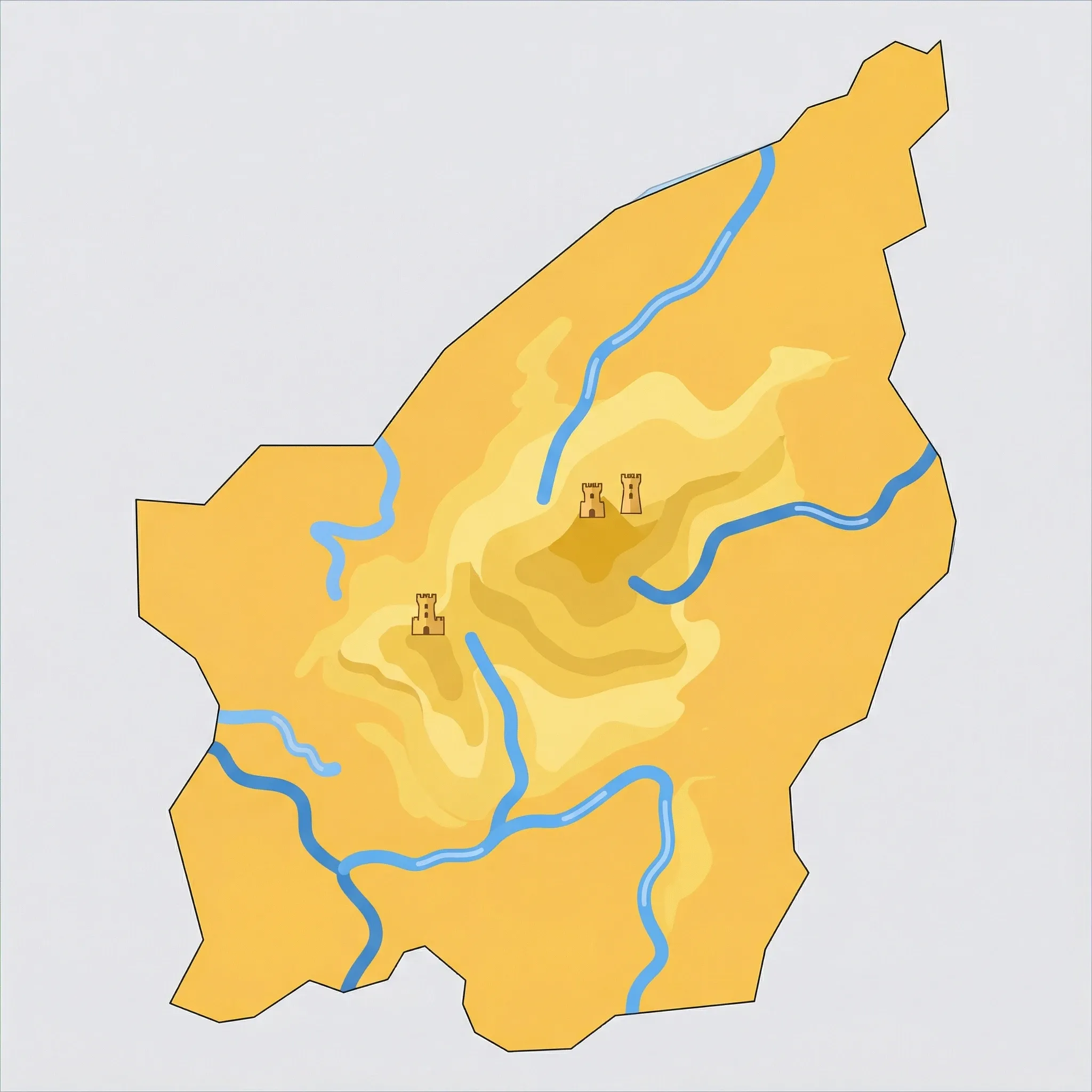
Overview
Perched dramatically on the limestone ridge of Mount Titano, San Marino is the world's oldest surviving republic and a fascinating destination for families. This microstate, completely surrounded by Italy, feels like a separate world with its pristine medieval streets, polite guards in green uniforms, and panoramic views that stretch all the way to the Croatian coast on clear days. For children, the experience is akin to stepping into a storybook; the entire historic centre is a UNESCO World Heritage site filled with castle towers, ancient walls, and narrow cobblestone lanes that are largely car-free and safe for exploration.
While small in size, the country packs a punch in terms of character. Families can escape the bustle of the nearby Italian Riviera to breathe cool mountain air and enjoy a slower pace of life. The atmosphere is distinct from Italy-calmer, immaculately clean, and fiercely independent. Whether you are collecting a passport stamp at the tourism office, watching the changing of the guard, or simply eating gelato while looking out over the clouds, San Marino offers a unique European adventure that is manageable, safe, and unforgettable for travelers of all ages.
Key Attractions
The skyline of San Marino is dominated by its three iconic towers, which are the absolute highlight for any visiting family. The Guaita Tower (First Tower) is the oldest and most castle-like, built directly into the rock with battlements that kids can climb for epic views. A scenic cliff-top path, the Passo delle Streghe (Witches' Path), connects it to the Cesta Tower (Second Tower), located on the highest peak and housing a Museum of Ancient Arms that fascinates older children with its display of medieval weaponry. The third tower, Montale, is viewed from the outside but completes the fairytale silhouette.
Beyond the fortifications, the San Marino Cable Car is an attraction in itself, whisking families from the lower town of Borgo Maggiore up the sheer cliff face to the historic capital in just two minutes. For a break from history, the Museum of Curiosities is a hit with children, displaying oddities like the world's tallest man and nose-clocks. Active families might also enjoy the San Marino Adventures park, one of the largest high-rope adventure parks in Italy and San Marino, located in a pine forest just outside the city walls.
Practical Advice
The best time to visit is spring (April–June) or autumn (September–October) when the weather is mild and the summer crowds from Rimini have dissipated. Winters can be cold and windy, though the Christmas market is magical. San Marino is very steep; families with toddlers should opt for a sturdy baby carrier rather than a stroller, which can be difficult to maneuver on the cobblestones and steps. The historic centre is small enough to see in a day, but staying overnight allows you to enjoy the quiet, atmospheric streets after the day-trippers depart.
Food & Drink
Typical meal times: Lunch is typically served from 12:30 pm to 2:30 pm, and dinner from 7:30 pm to 9:30 pm. Cafés serve snacks and light meals throughout the day.
Typical meal costs: €60–90 (approx. $65–95 USD / £50–75 GBP) for a family of four at a mid-range trattoria. Fine dining options can cost significantly more.
Dietary requirements: Vegetarian options are widely available (pasta, pizza, salads). Gluten-free options are common in larger restaurants, often marked as senza glutine. Chefs are generally accommodating to children's allergies.
Family-friendly dining: Most restaurants are very welcoming to children, offering highchairs (seggiolone) and half-portions of pasta. Pizza is universally available and a safe bet for picky eaters.
Signature dishes:
- Nidi di Rondine – "Swallow's Nests," a baked pasta dish of rolled lasagna sheets filled with ham, cheese, and béchamel sauce, beloved by children.
- Torta Tre Monti – The national dessert, a circular wafer cake layered with hazelnut cream and chocolate, representing the three towers.
- Piadina Sammarinese – A local flatbread similar to the Italian version but often slightly thinner, filled with soft cheese (squacquerone) and prosciutto.
- Passatelli – Thick, worm-like pasta made from breadcrumbs, eggs, and parmesan, usually served in a comforting chicken broth.
Age Suitability





Did you know? San Marino welcomes approximately 94,000 international visitors per year. Most visitors come from Europe.
Why this score?
San Marino is a highly developed and compact microstate where most activities occur on well-maintained paths and in historic urban centers. While the San Marino Adventures park and trails around Mount Titano offer some outdoor recreation, the area lacks the ruggedness or remote wilderness required for a higher adventure rating.
Why this score?
The republic provides excellent medical care through its modern State Hospital and is tightly integrated with the high-standard healthcare network of surrounding Italy. Visitors can expect efficient emergency services and professional staff, with the small geographic size of the country ensuring very rapid access to treatment.
Why this score?
With under 100,000 annual inbound tourists and a small hotel capacity of about 1,500 beds, San Marino is a niche destination primarily visited by day-trippers from Italy's Adriatic coast. While its UNESCO-listed historic center is a significant local draw, it lacks the massive international visitor volume seen in major European capitals or top-tier regions.

San Marino is generally comparable to or slightly cheaper than major Italian tourist cities like Florence or Venice. Accommodation for a family costs €90–150 (approx. $100–165 USD / £75–130 GBP) per night. Dining offers good value, especially set menus. As a tax-free zone, shopping for perfumes, electronics, and souvenirs can be cheaper than in Italy.

Getting There & Around
Getting There
- By Air – The nearest international airport is Federico Fellini International Airport (RMI) in Rimini, Italy (approx. 30 mins away). Bologna Guglielmo Marconi Airport (BLQ) is a larger hub about 90 minutes away.
- By Bus – A regular shuttle bus runs between Rimini railway station (Italy) and San Marino historic centre. The journey takes about 50 minutes.
- By Car – Driving is the most flexible option. Visitors must park in one of the designated car parks (P1–P12) at the foot of the walls or in Borgo Maggiore, as the historic centre is restricted.
- Entry Requirements – There are no border controls between Italy and San Marino. A visa is not required for a stay of up to 90 days, but you must meet Italy's entry requirements. Check your government website for the latest visa requirements, or use the IATA Travel Centre entry-requirements checker.
Getting Around
- Walking – The historic centre of San Marino is pedestrian-only and best explored on foot. Be prepared for steep inclines and steps; comfortable shoes are essential.
- Cable Car (Funivia) – Connects Borgo Maggiore (lower town) with the historic centre (upper town). It runs every 15 minutes and offers spectacular views. Children under 1.20m travel free.
- Tourist Train – A blue-and-white road train connects various parking lots and Borgo Maggiore with the historic centre, which can be a fun alternative to walking up the hill for tired little legs.

Packing List
The medieval streets are paved with polished cobblestones that become surprisingly slippery, especially on steep inclines.
Mount Titano is exposed and high; it is often significantly windier and cooler at the top than in the valley below.
The historic centre is full of stairs and steep slopes where pushing a stroller is physically exhausting and impractical.
The road from Rimini up to the historic centre winds up the mountain with many hairpin turns.
Although not needed for entry, you can get a cool official souvenir tourist stamp at the Information Office for €5.

Activities & Best Times

City & Cultural
Very GoodUrban tourism, museums, historical sites, architecture
As the world's oldest republic, San Marino offers a unique, high-altitude medieval atmosphere with UNESCO-listed fortifications and world-class museums. Peak visitation occurs during the warm summer months when the historic center is most vibrant, while winter can be damp and cold for outdoor exploration.

Adventure & Nature
GoodHiking, wildlife, outdoor exploration, ecotourism
Focused on the dramatic limestone ridges of Mount Titano and the scenic Passo delle Streghe, the region offers accessible hiking and panoramic nature views. May, June, and September provide the most comfortable temperatures for exploring the trails, while winter conditions can make the stone paths slippery and visibility poor.

Sports & Active
MarginalSport tourism, fitness activities, active recreation
Supported primarily by the San Marino Adventures park, offering aerial obstacle courses and active family entertainment. Peak suitability aligns with the main operating season and dry summer weather, while the facility is less practical or closed during the colder, wetter winter months.




Public Holidays & Calendar Next 12 months
Public holidays, festivals, cultural celebrations, and seasonal natural phenomena coming up in San Marino over the next 12 months.
Loading holidays and events...

Travel Advisory
San Marino is a very safe destination where travellers should exercise standard safety and security awareness. The vast majority of international agencies classify the country at their lowest risk level, despite a shared regional concern regarding terrorism across Europe.
Safety Topics
Traveller Advice (4 groups)

Female travellers can consult standard safety guidelines for solo and group travel in Europe, focusing on personal security in tourist-heavy areas.

Check the accessibility of historic sites and steep terrain in the capital city before planning your visit.

Ensure you carry a valid passport at all times when crossing between Italy and San Marino, even though there are typically no formal border controls. Comprehensive travel insurance is essential as most foreign governments do not maintain a resident diplomatic presence in the country.

Travellers should review general guidance on local social customs and legal frameworks, though the country is generally considered welcoming.
Agency Summaries
No specific travel restrictions are in place. Access is primarily through Italy, and visitors should consult Italian travel guidance. There is no resident British embassy in the country; consular assistance is provided by the mission in Italy.
There is currently no specific travel advisory for this destination. New Zealanders should maintain routine security awareness and ensure they hold comprehensive travel insurance. Carrying a passport is advised when moving within the Schengen area.
Travellers should maintain standard safety awareness. The country has a very low crime rate, though a general threat of terrorism persists across the European continent. Driving regulations require an International Driving Permit and specific safety equipment in vehicles.
Irish citizens are advised to follow standard safety measures. While no specific high-risk threats are identified, visitors are encouraged to register their travel details and maintain awareness of their surroundings as they would at home.
The security environment is considered stable and comparable to that of a large Australian city. Travellers should follow standard safety routines and ensure they have adequate insurance coverage for their trip through the surrounding Italian territory.
Increased vigilance is recommended due to the threat of terrorism. Extremist groups continue to plan potential attacks in the region, including within microstates like San Marino, targeting tourist locations, transportation hubs, and public venues.
Information is provided for general guidance only and does not constitute travel, safety, medical, or legal advice. Conditions may change. Users are responsible for independently verifying information before travel.