
Príncipe Island
A real-life lost world of ancient jungles and chocolate legends 🦜🍫
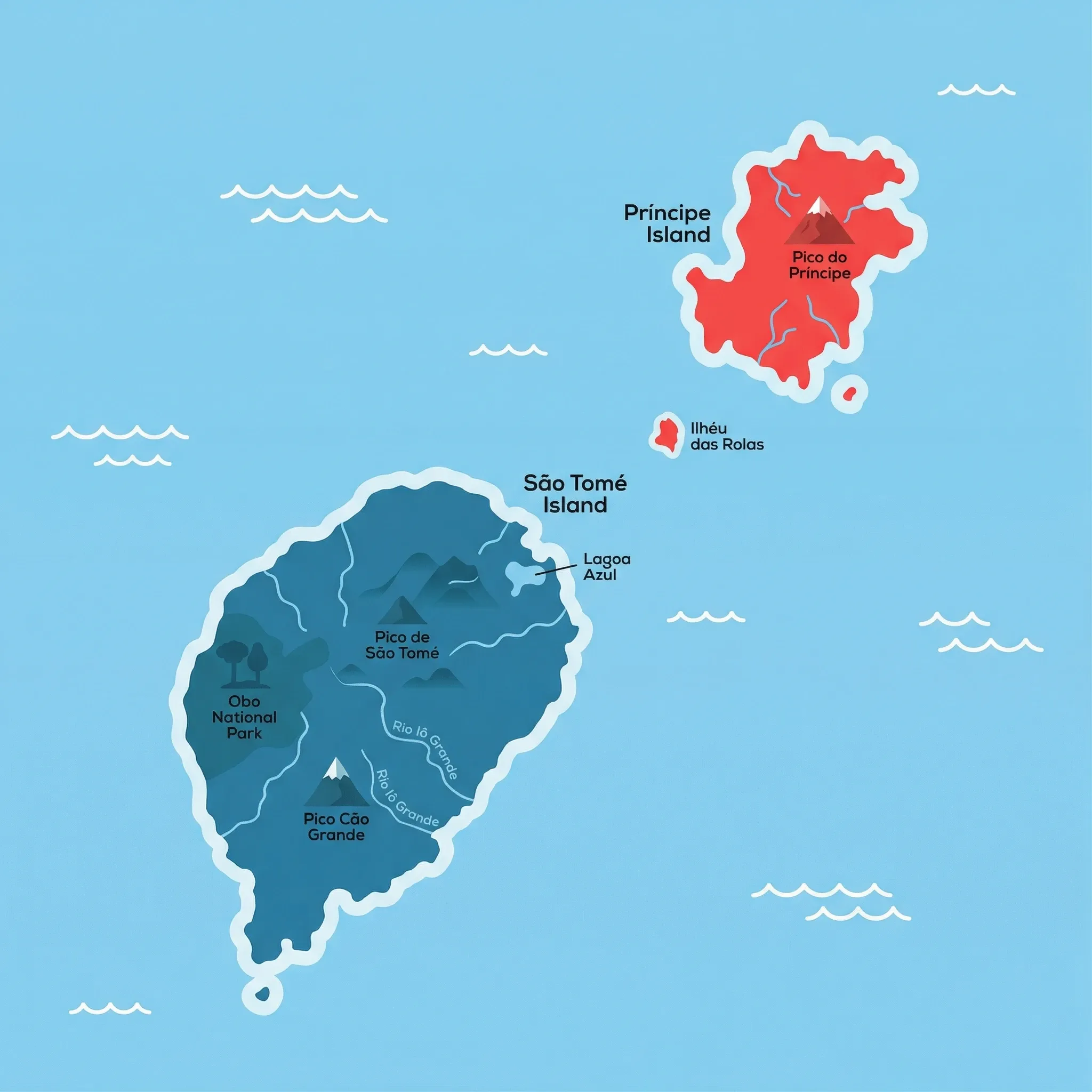
Click a region to explore
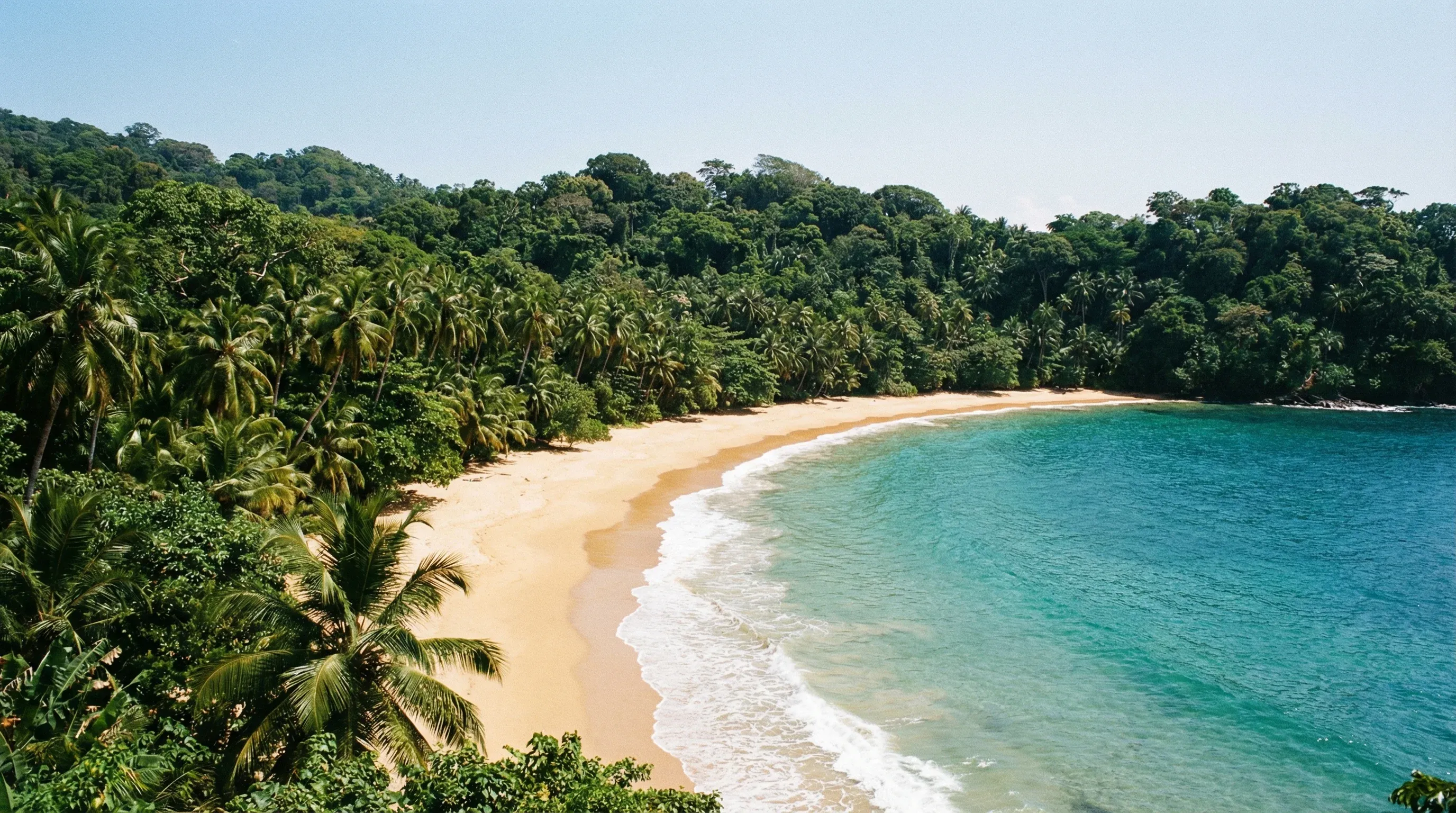
Príncipe is a destination that feels entirely undiscovered, a "Lost World" of prehistoric phonolith peaks and emerald jungles that drop directly into turquoise waters. For families, it offers a rare combination: the thrill of a remote, wild expedition with the safety and welcoming atmosphere of a small village. Designated a UNESCO Biosphere Reserve, the island is heavily protected, meaning its beaches remain untouched and its forests teeming with endemic birds and monkeys. Life here moves at a slow, hypnotic pace known as "leve-leve," allowing parents to disconnect completely while children run free on golden sands that rarely see footprints other than their own.
Culturally, Príncipe is deeply intertwined with the history of chocolate. The island was once the world's largest producer of cocoa, and the remnants of this era—the grand "Roças" (plantation estates)—have been transformed into fascinating living museums and eco-hotels. Exploring these estates isn't dry history; it's a sensory experience where kids can taste raw cacao pulp, learn how chocolate is made from bean to bar, and sleep in restored colonial houses surrounded by the sounds of the jungle. The island is small enough to navigate easily but diverse enough to offer rainforest hikes, river boat trips, and world-class snorkelling in a single holiday.
Key Attractions
The island's crown jewel for nature lovers is Obo National Park. While the treks here can be steep, there are family-friendly guided walks that reveal giant ferns, wild orchids, and the mischievous local monkeys that children delight in spotting. Guides often teach kids how to identify medicinal plants or spot the endemic Príncipe Kingfisher.
For a mix of history and relaxation, Roça Sundy is essential. This restored plantation is famous not just for its chocolate, but as the site where Eddington proved Einstein's theory of relativity during the 1919 eclipse—a fantastic science lesson brought to life. Afterward, head to the coast to visit Bom Bom Island. Connected to the mainland by a long wooden walkway, it offers sheltered beaches with shallow, warm waters perfect for young swimmers and novice snorkellers.
Finally, a visit to the sleepy capital, Santo António, provides a gentle introduction to local life. It is often called the world's smallest city, looking more like a colourful colonial village. Families can walk its quiet streets, admire the pastel-coloured architecture, and watch fishermen bring in the day's catch without the chaos of a busy metropolis.
Practical Advice
The best time to visit is during the drier seasons (June to September or December to February), though the island is humid and lush year-round. Malaria prophylaxis is strongly recommended for all family members, and you should bring plenty of insect repellent. Medical facilities are basic, so comprehensive travel insurance including evacuation cover is non-negotiable.
Food & Drink
Typical meal times: Lunch is usually served from 12:30 pm to 2:30 pm, and dinner is a relaxed affair from 7:00 pm to 9:00 pm.
Typical meal costs: A meal at a local eatery costs around 150–300 STN (approx. $7–13 USD / €6–12 EUR). Dining at hotel lodges is significantly more expensive, often priced in Euros, ranging from €25–45 (approx. $27–48 USD / £22–38 GBP) per person.
Dietary requirements: The local diet is heavily reliant on fish and tropical fruit. Vegetarians can rely on rice, beans, plantains, and breadfruit (fruta-pão), but strict vegan options may require advance notice at hotels. Gluten-free travellers should be cautious with sauces but will find plenty of naturally gluten-free tubers and fruits.
Signature dishes:
- Molho no Fogo – A traditional fish dish cooked in a heavy pot with vegetables and local herbs, often served with funje (cassava flour paste).
- Banana Pão – Fried or boiled breadfruit, a starchy staple that tastes like potato and is a hit with fussy eaters.
- Chocolate – Not a meal, but the local organic chocolate (often from Corallo or Sundy) is world-famous and a must-try.
Why this score?
The island is a UNESCO Biosphere Reserve characterized by dense, prehistoric rainforests and dramatic volcanic phonoliths like Pico Papagaio. Its remote nature, lack of widespread paved roads, and the 'lost world' feel of its primary jungle provide a significant sense of wilderness and exploration.
Why this score?
Medical infrastructure is extremely limited, consisting of basic clinics in Santo António that are unequipped for serious emergencies. Any significant medical issue necessitates a charter flight to the main island or an international medical evacuation.
Why this score?
With São Tomé and Príncipe receiving only about 15,000 visitors annually, the secondary island of Príncipe sees only a small fraction of that total. It remains one of the least visited inhabited islands on Earth, catering almost exclusively to a tiny niche of high-end eco-tourists and researchers.

Príncipe caters to high-end eco-tourism. While local street food is cheap (approx. 50–100 STN / $2–4 USD), accommodation is dominated by luxury lodges charging €250–600 (approx. $270–650 USD / £215–515 GBP) per night. Activities and transport are also priced at a premium compared to the main island.

Getting Here & Around
Getting Here
- Airports – The only practical way to reach the island is flying into Príncipe Airport (PCP). Flights operate from São Tomé Island (TMS) via STP Airways and take approximately 35 minutes.
- Ferry – A ferry service exists but is generally not recommended for families due to long travel times (6–8 hours), rough seas, and variable safety standards.
Getting Around
- Hotel Transfers – Most eco-lodges, such as Roça Sundy, provide shuttle services for guests, which is the easiest way to manage family logistics.
- Car Rental – 4x4 vehicles can be rented with a driver. Self-driving is possible but roads can be rough and signage is minimal.
- Walking – The capital, Santo António, is tiny and best explored on foot.
Nearby Airports (1 airport)
Principe Airport
PCPPrincipe
View full flight map for São Tomé and Príncipe →
Official Links

Packing List
ATMs are unreliable/non-existent for international cards; Euros are widely accepted.
Vital for protecting the delicate biosphere ecosystem you will be swimming in.
Boat transfers and sudden tropical downpours are common; keeps electronics safe.
Roads are winding and boat trips to islets can be choppy.
ATMs often reject foreign cards and credit cards are rarely accepted; cash is essential for daily spending.
Street lighting is scarce and power cuts can occur; essential for walking back to hotels after dinner.
Many beaches have volcanic rocks and sea urchins; protects children's feet while swimming.
Essential for boat trips (like to the Equator) and sudden tropical rain showers to keep electronics safe.

Activities & Best Times

Hiking, wildlife, outdoor exploration, ecotourism
A UNESCO Biosphere Reserve offering high endemism and dramatic volcanic phonolith peaks within primary rainforest. Exploration is best during the drier gravana (June-August) and the short dry window in January to avoid impassable jungle mud.

Beach resorts, marine activities: diving, snorkelling, kite surfing, wind surfing, sailing
Features pristine, secluded beaches like Praia Banana and world-class eco-resorts with high privacy. Peak visitation aligns with dry seasons when sea conditions are calmest and underwater visibility is optimal for snorkeling.

Urban tourism, museums, historical sites, architecture
Offers a unique glimpse into the Luso-African history of the Roças (plantation estates) and the colonial charm of Santo António. Visiting during the drier months is essential for comfortable walking tours of the historic architecture.

Scenic drives, countryside tours, route-based travel
Scenic routes connect historic Roças and remote beaches through dense jungle, providing an authentic sense of discovery. Travel is limited to the dry seasons when unpaved roads and forest tracks are safe for 4x4 vehicles.

Sport tourism, fitness activities, active recreation
Rugged hiking trails to Pico Papagaio offer world-class challenges for active families. These steep, primitive routes require the sustained dry weather of the gravana (June-August) for safety and accessibility.

Learning experiences, scientific sites, historical education
Home to Roça Sundy, the site where Eddington proved Einstein's Theory of Relativity in 1919. While a significant historical milestone, the educational infrastructure is niche and best visited during general tourism peaks.




Public Holidays & Calendar Next 12 months
Public holidays, festivals, cultural celebrations, and seasonal natural phenomena coming up in Príncipe Island over the next 12 months.
Loading holidays and events...

Travel Advisory
The majority of international agencies classify the country as having a stable security environment where standard safety precautions are sufficient. However, some agencies highlight specific health risks and limited medical infrastructure as reasons for increased vigilance.
Safety Topics
Traveller Advice (2 groups)

While same-sex relations are not illegal, local society is generally less tolerant than in some Western nations. Public displays of affection may lead to unwanted attention or negative reactions.

Female travellers should follow standard safety protocols and research local customs. Solo travel is generally safe but requires typical awareness of surroundings.
Agency Summaries
Increased vigilance is recommended due to significant health risks and the limited availability of medical services. Facilities for emergency care and trauma are inadequate, often requiring expensive medical evacuation for even minor conditions.
General safety levels are comparable to those in major international cities. Travellers should stay informed via local media and maintain standard personal security awareness.
Travellers are advised to follow standard safety measures similar to those in Canada. Security risks are generally low, but visitors should remain aware of their surroundings and safeguard personal property.
Due to various safety and security considerations, visitors should exercise heightened vigilance. Consular assistance is limited as there is no resident Irish diplomatic mission.
The country is generally peaceful with low crime rates. Visitors are advised to take common-sense precautions against petty theft and be aware of limited local infrastructure and medical resources.
There is currently no specific travel advisory in place, indicating a stable safety environment. Travellers are encouraged to maintain typical personal security and ensure comprehensive travel insurance is obtained.
Information is provided for general guidance only and does not constitute travel, safety, medical, or legal advice. Conditions may change. Users are responsible for independently verifying information before travel.