
São Tomé Island
Stand on the equator and hike volcanic giants 🌋🏝️
Click a region to explore
São Tomé Island is a place of vivid contrasts, where black volcanic rock meets lush green jungle and turquoise ocean. As the larger and more populated of the two islands, it serves as the cultural and logistical hub of the country, offering families a wider variety of activities, from bustling markets to silent mountain trails. The landscape is dominated by dramatic geology, most notably the towering phonolithic skyscrapers that jut out of the rainforest, looking like something from a fantasy novel. For children, the island is a giant natural playground where they can swim in lagoons, learn about the history of pirates and plantations, and literally jump back and forth across the equator line.
The atmosphere here is vibrant and friendly. The capital city is a sensory delight of crumbling Portuguese colonial architecture, pink and yellow churches, and the smell of roasting fish and fresh coffee. Beyond the city, the "Roças" (old plantations) offer a glimpse into the island's past as the world's cocoa capital. Many of these are now open to the public, allowing families to see how cocoa and coffee are grown and processed. The southern part of the island feels wilder and more remote, with palm-lined roads that hug the coastline, offering spectacular views at every turn. It is an adventurous yet accessible destination where nature is the main attraction, and the warm ocean is never more than a few minutes away.
Key Attractions
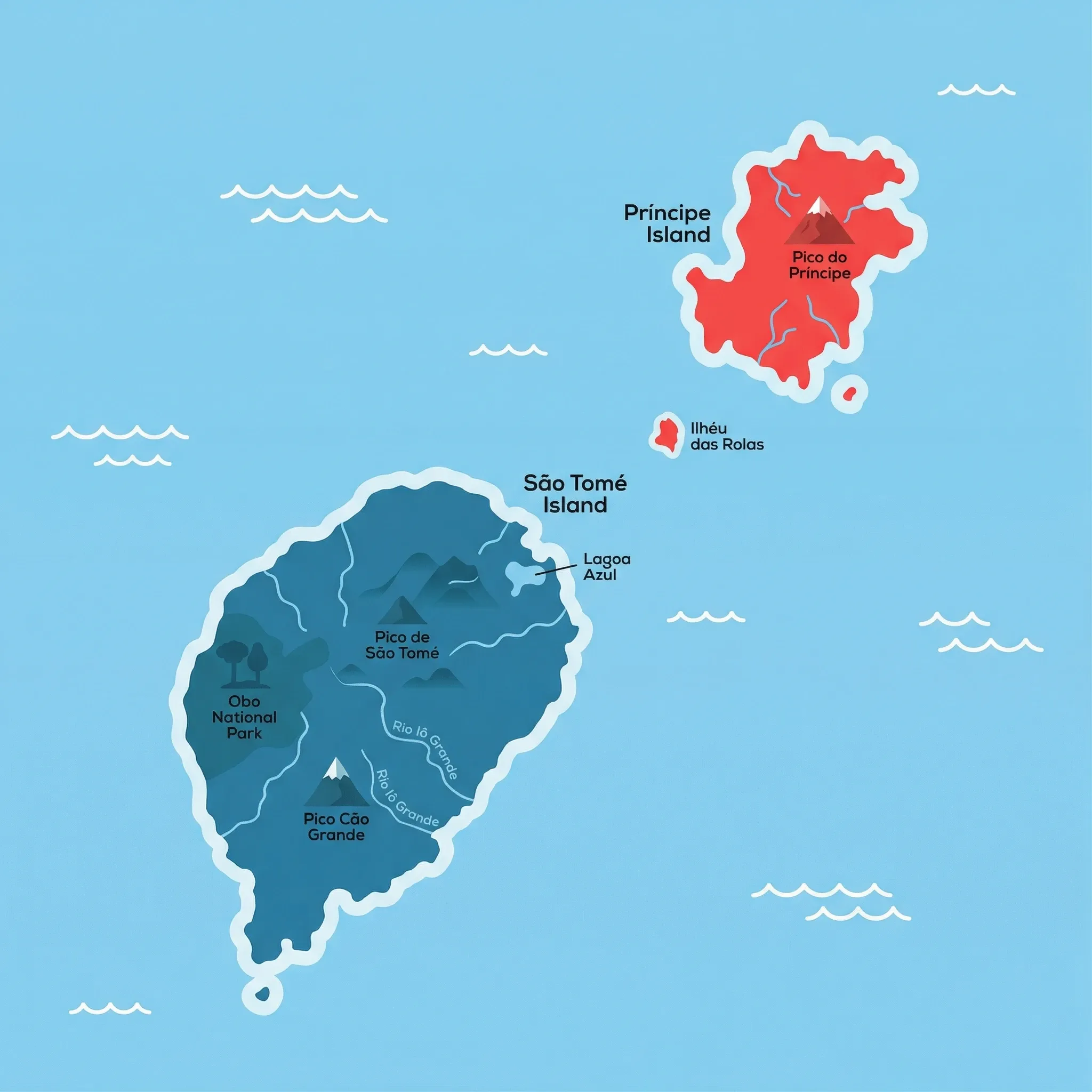
A bucket-list experience for any young explorer is visiting Ilhéu das Rolas, a small islet off the southern tip. Here, you can walk to the equator mark and stand with one foot in the Northern Hemisphere and one in the Southern Hemisphere—a perfect photo opportunity. The islet is accessible by a short boat ride and also features beautiful blowholes (geysers) where seawater blasts through volcanic rock.
For swimming, Lagoa Azul (Blue Lagoon) in the north is unmissable. It is a sheltered bay with baobab trees growing right on the shore and water so clear that children can see colourful fish without even putting their heads underwater. It’s shallow and safe, making it ideal for younger kids.
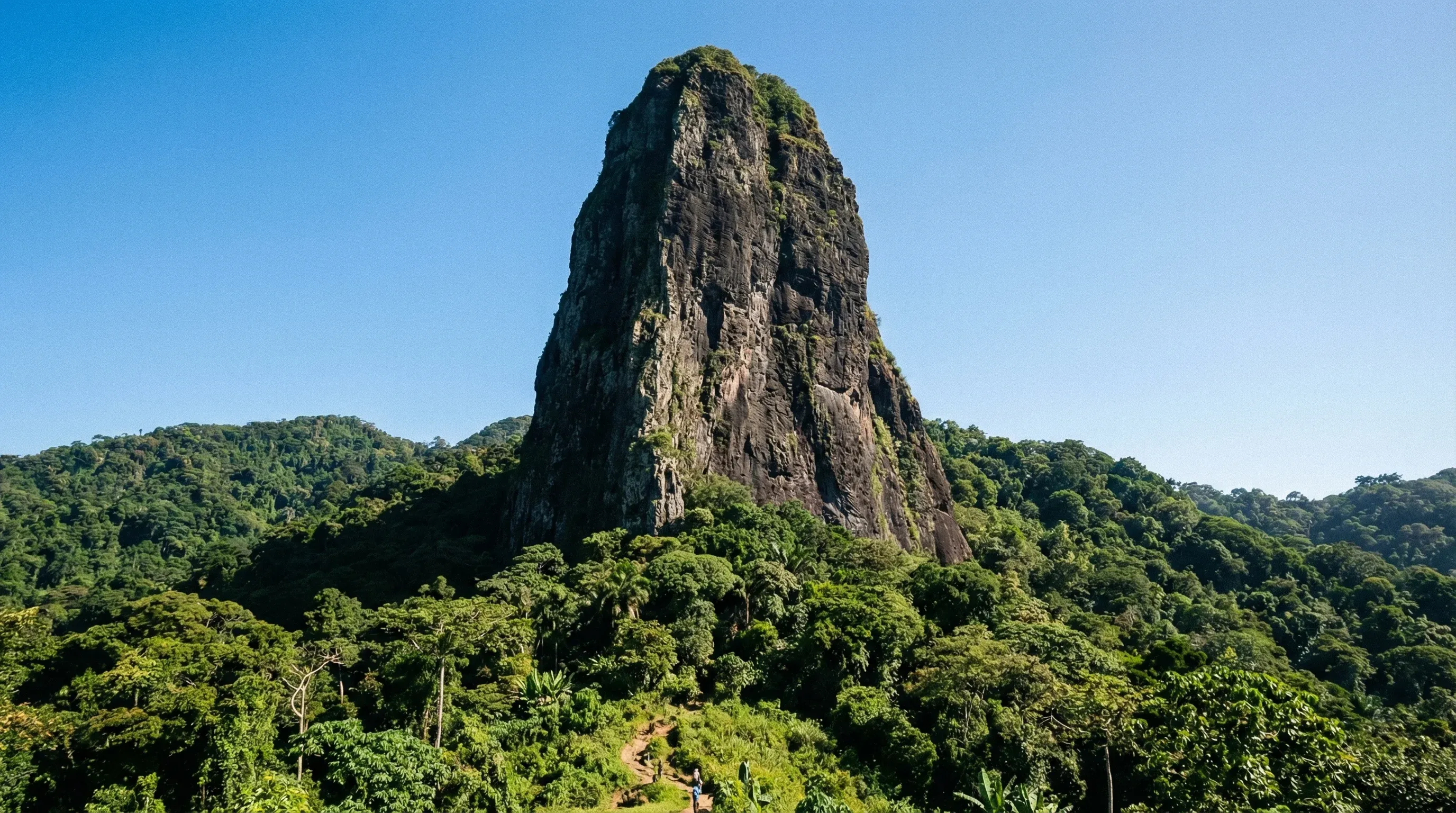
Nature-loving families should not miss Obo National Park. While the deep interior treks are tough, the park's edges offer accessible waterfalls and botanical gardens. From many points on the south road, you can marvel at the Pico Cão Grande, a needle-like volcanic plug that rises over 300 metres vertically from the jungle floor—it looks impossibly steep and is sure to capture children's imaginations.
In the capital, the Museu Nacional de São Tomé e Príncipe is housed in the old Fortress of São Sebastião. It’s small but packed with pirate lore, religious art, and colonial history that helps contextualise the island’s unique culture.
Practical Advice
São Tomé is generally safe, but families should be careful with swimming currents on unmarked beaches; stick to known spots like Lagoa Azul. The main roads are paved but can be potholed, so allow extra time for travel. Cash is king—international credit cards rarely work outside top hotels, so bring sufficient Euros or USD to exchange.
Food & Drink
Typical meal times: Lunch is strictly 12:00 pm to 2:30 pm. Dinner usually starts around 7:00 pm, with kitchens closing by 9:30 pm or 10:00 pm.
Typical meal costs: Local restaurants (tascas) serve generous meals for 150–250 STN (approx. $7–11 USD / €6–10 EUR). Mid-range tourist restaurants charge around 400–600 STN (approx. $18–27 USD / €16–24 EUR) per main course.
Dietary requirements: Vegetarian options are improving, with beans, rice, and omelettes widely available. Vegan travellers may struggle in rural areas and should be prepared to eat a lot of fruit, boiled roots, and salads. Nut allergies are rare locally, but palm oil is used in almost everything.
Signature dishes:
- Calulu – The national dish; a smoked fish or chicken stew cooked with okra, eggplant, mosquito herb, and palm oil, usually taking hours to prepare.
- Santola – Giant spider crabs, typically steamed and served with toasted bread and lime, particularly famous in the town of Neves.
- Búzios – Large sea snails, often grilled on skewers or cooked in a spicy sauce, a chewy but popular local snack.
Why this score?
The island offers notable outdoor challenges, including trekking to the 2,024-meter Pico de São Tomé and viewing the sheer volcanic spire of Pico Cão Grande. Much of the southern coast and the Obo National Park interior remains rugged and difficult to access without specialized guides and vehicles.
Why this score?
The capital city contains the country's primary hospital, but facilities are basic and often suffer from shortages of specialized equipment and supplies. While it is the best available care in the country, foreigners are typically advised to seek treatment in Lisbon or Libreville for anything beyond minor ailments.
Why this score?
As the main entry point for the country, this island hosts the majority of the nation's 1,958 hotel beds and 15,000 annual visitors. While it is the center of the country's tourism, its global visitor footprint is negligible compared to even minor regional destinations in Africa.

São Tomé is generally more affordable than Príncipe. A comfortable family guesthouse costs 1,200–2,500 STN (approx. $55–110 USD / €50–100 EUR) per night. Supermarket goods are imported and expensive, but local fruit and street food are very cheap. Activities like boat trips to <a data-attraction-id="32461">Ilhéu das Rolas</a> cost around €15–30 (approx. $16–32 USD / £13–26 GBP) per person.

Getting Here & Around
Getting Here
- Airports – São Tomé International Airport (TMS) is the main entry point, with flights from Lisbon (TAP Air Portugal, STP Airways) and regional African hubs like Accra or Libreville.
- Ferry – There are no regular international passenger ferries; all family arrivals will be by air.
Getting Around
- Car – Hiring a 4x4 (approx. €50–70 per day) is the best way to see the island. Driving allows you to stop at Pico Cão Grande viewpoints at your own pace.
- Taxi – Yellow shared taxis are cheap but crowded and not ideal for families with luggage. Private taxis can be hired for day trips.
- Tours – Many families opt for a private driver-guide to navigate the winding roads to places like Obo National Park.
Nearby Airports (1 airport)
Sao Tome International
TMSSao Tome Island
View full flight map for São Tomé and Príncipe →
Official Links

Packing List
Rental gear is often adult-only or poor quality; essential for the lagoons.
Street lighting is sparse and power cuts can occur in the evenings.
Often checked upon arrival at the airport; essential documentation.
Hard to buy on the island and protects the coral life.
ATMs often reject foreign cards and credit cards are rarely accepted; cash is essential for daily spending.
Street lighting is scarce and power cuts can occur; essential for walking back to hotels after dinner.
Many beaches have volcanic rocks and sea urchins; protects children's feet while swimming.
Essential for boat trips (like to the Equator) and sudden tropical rain showers to keep electronics safe.
Wastewater treatment is limited; helps protect the pristine river and marine ecosystems.

Activities & Best Times

Hiking, wildlife, outdoor exploration, ecotourism
Home to the Obo National Park and iconic volcanic plugs, the island offers raw, world-class jungle immersion and endemic biodiversity. The dry 'Gravana' season (June-September) is the only reliable time for deep forest exploration and navigating steep volcanic trails.

Beach resorts, marine activities: diving, snorkelling, kite surfing, wind surfing, sailing
Offers stunning, uncrowded volcanic beaches and snorkeling in crystal-clear lagoons like Lagoa Azul. Conditions are best during the two dry spells when sea visibility is at its peak and the Atlantic swell is manageable for family swimming.

Urban tourism, museums, historical sites, architecture
While the Luso-African cultural fusion and roça heritage are unique and interesting, 'very_good' suggests this is a top cultural destination on a regional/international scale. The island lacks the density of cultural institutions (major museums, theaters, UNESCO World Heritage sites beyond plantation heritage) that would justify very_good when calibrated against international standards. The cultural experience is authentic and worthwhile ('good') but not nationally or regionally outstanding ('very_good').

Scenic drives, countryside tours, route-based travel
The scenic drive south along the EN2 provides dramatic views of the rainforest meeting the ocean and the towering Pico Cão Grande. Heavy rainfall in the peak wet seasons often leads to landslides and difficult driving conditions on the interior mountain coffee routes.

Sport tourism, fitness activities, active recreation
Serious trekking opportunities exist for the summit of Pico de São Tomé and the Lagoa Amélia crater. These high-altitude activities are highly seasonal, requiring the dry 'Gravana' weather for safety on the island's notoriously slippery volcanic mud trails.

Learning experiences, scientific sites, historical education
Specific educational opportunities exist at the Bom Sucesso Botanical Garden and sea turtle conservation sites. These provide authentic insights into equatorial ecology, best visited during drier periods when accessibility to conservation centers is guaranteed.




Public Holidays & Calendar Next 12 months
Public holidays, festivals, cultural celebrations, and seasonal natural phenomena coming up in São Tomé Island over the next 12 months.
Loading holidays and events...

Travel Advisory
The majority of international agencies classify the country as having a stable security environment where standard safety precautions are sufficient. However, some agencies highlight specific health risks and limited medical infrastructure as reasons for increased vigilance.
Safety Topics
Traveller Advice (2 groups)

While same-sex relations are not illegal, local society is generally less tolerant than in some Western nations. Public displays of affection may lead to unwanted attention or negative reactions.

Female travellers should follow standard safety protocols and research local customs. Solo travel is generally safe but requires typical awareness of surroundings.
Agency Summaries
Increased vigilance is recommended due to significant health risks and the limited availability of medical services. Facilities for emergency care and trauma are inadequate, often requiring expensive medical evacuation for even minor conditions.
General safety levels are comparable to those in major international cities. Travellers should stay informed via local media and maintain standard personal security awareness.
Travellers are advised to follow standard safety measures similar to those in Canada. Security risks are generally low, but visitors should remain aware of their surroundings and safeguard personal property.
Due to various safety and security considerations, visitors should exercise heightened vigilance. Consular assistance is limited as there is no resident Irish diplomatic mission.
The country is generally peaceful with low crime rates. Visitors are advised to take common-sense precautions against petty theft and be aware of limited local infrastructure and medical resources.
There is currently no specific travel advisory in place, indicating a stable safety environment. Travellers are encouraged to maintain typical personal security and ensure comprehensive travel insurance is obtained.
Information is provided for general guidance only and does not constitute travel, safety, medical, or legal advice. Conditions may change. Users are responsible for independently verifying information before travel.